The Outgoing Co Outty Review: My Honest Results (Focus, Mood, Sleep)

I’m always on the lookout for ways to gain an advantage and get the most out of life. I don’t mean this in a “hustle-bro,” “grind for life” sort of way.
As of this writing, I’m 40 years old with a wife and kids. That type of life is not only impossible but also unappealing.
Rather, what I’m looking for is a way to lock in when I need to, and let loose when it’s time to chill, relax, and recharge with my friends and family.
I want to accomplish the former without any hard stimulants—I already drink enough coffee, and I enjoy the occasional Celsius—and I want to accomplish the latter without alcohol, as I’ve been sober since December 23rd, 2013.
One day while browsing my X feed, I noticed that the founding of Ramp Health was following me, and they produce a very interesting supplement called “B4” that seemed to hit both birds with one stone.
When I messaged him about trying it out, he told me to hold off for about two months, as he was in the middle of a rebrand. I admit I thought that was strange, but I didn’t realize the rebrand was also a product redesign.
Ramp Health has become The Outgoing Co., and B4 has become Outty.
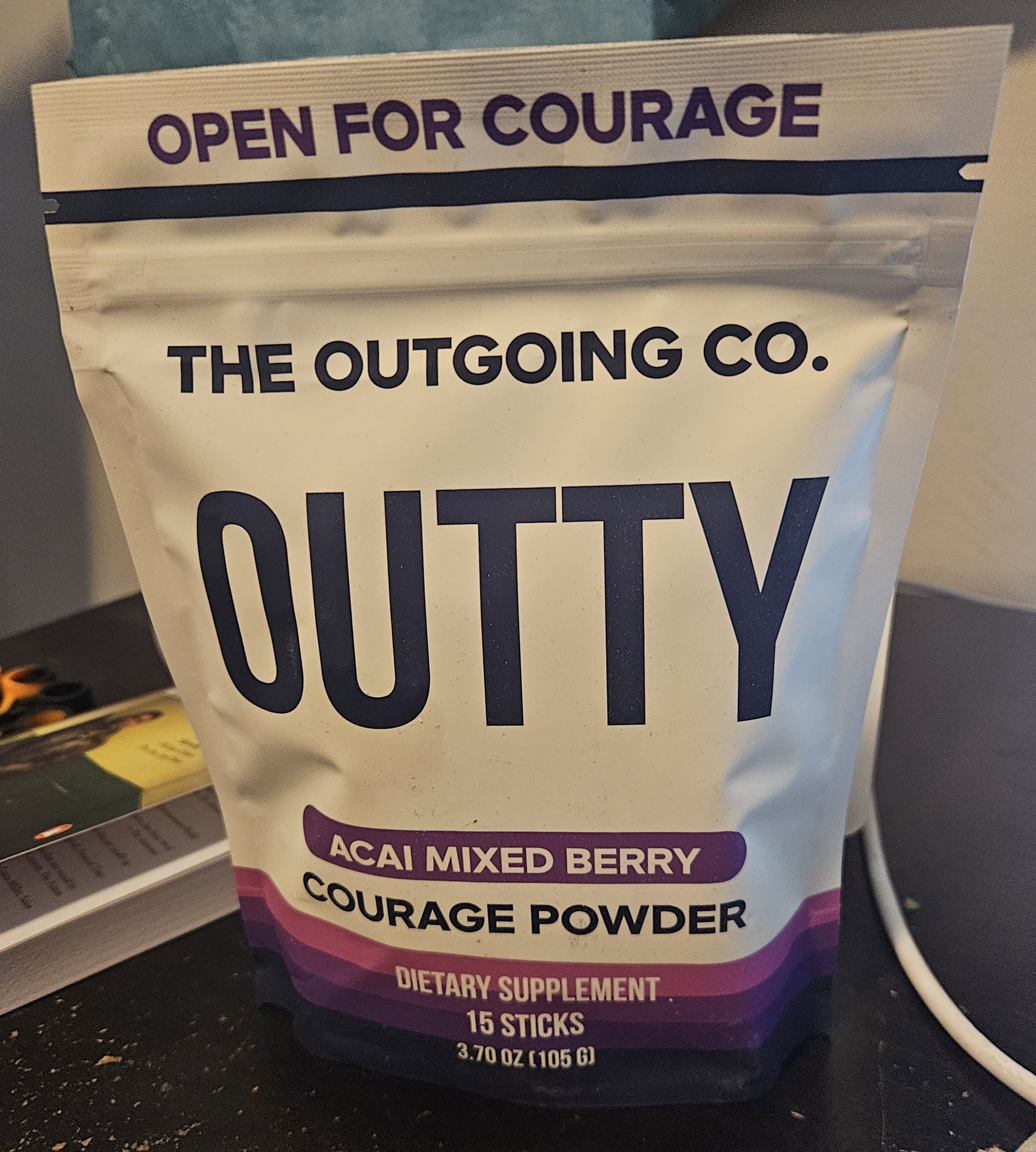 These changes are not just in name, but in formula and company goals, and reflect something that I’m guessing TJ Biongiorno—the founder—figured out after over 35,000 people used his product:
This is good at what I wanted it to do, but I can make this even better
That “something else” is what I describe as “focus without the jitters,” “extroversion without alcohol,” and “controlled, sustainable motivation.”
The rest of this article will review Outty, why it’s something that people who want to be outgoing without drinking need, and how it’s also dramatically improved the quality and quantity of my work.
Outty Ingredients (What Actually Matters)
Then summarize:
- Taurine → stabilizes energy
- L-theanine → reduces mental noise
- GABA → calms overthinking
- Rhodiola → stress resilience
- Oroxylin A → motivation + dopamine
Taurine (2000 mg): The Nervous System Stabilizer
Taurine forms the foundation of Outty’s new formula. It supports calm, steady energy by helping regulate nervous system activity and cellular signaling, especially under mental or emotional load.
You don’t feel revved up, but you also don’t feel flat. It’s easier to stay mentally present for longer periods without feeling fried, shaky, or overstimulated.
L-Theanine (1000 mg): The Noise Filter
Outty includes 1000 mg of Taurine, which is a decent dose for supporting mental resilience under stress. Taurine isn’t a stimulant or a sedative—it’s a regulatory amino acid that helps stabilize neuronal signaling, manage calcium flow in brain cells, and buffer the nervous system against overstimulation.
Its calming and protective effects are fairly noticeable, especially during prolonged cognitive load. This improves the brain’s ability to stay steady under pressure, reducing mental fatigue, irritability, and that wired-but-tired feeling that builds over long days.
What this feels like is emotional steadiness and mental endurance while working or not getting frustrated/annoyed by social situations. We’ve all been in positions where we’d simply rather not be there, and l-theanine effectivly increases your tolerance.
You’re less reactive, less drained by stress, and better able to maintain focus over time—not because you’re being pushed, but because your nervous system is better supported.
GABA (140 mg): The Overthinking Brake
Instead of just supporting your system to feel calmer, the Outty supplies the brain’s primary inhibitory neurotransmitter itself, giving an immediate braking signal when mental activity starts to run hot.
This is especially useful for people who are prone to rumination, overthinking, or stress-induced mental loops. If you’re the type, you already know how difficult it can be shut your mind down and just enjoy life or stay focused on the task at hand without worrying about other stuff.
GABA provides a fairly rapid, noticeable reduction in mental noise and it works well in conjunction with the other ingredients to amplify that calming signal. And it does so in a way that smooths out the edges rather than sedate you or flatten your cognition.
Basically, the chill out feeling you get from booze without dulling everything else and making you a liability behind the wheel.
Magnesium Acetyl-Taurinate (100 mg): The Calm Nerve Support
Magnesium acetyl-taurinate helps you remain calm without stupifying you. On top of that, magnesium is a crucial element for helping your nervous system to relax.
On honestly, most of us are deficient in anyway.
Magnesium also works synergistically by binding with taurine to improve its bioavailability and direct its effects toward the nervous system rather than muscle relaxation or sedation.
Rhodiola Rosea (400 mg): The Stress Shield
Rhodiola helps your body respond to stress more efficiently, rather than suppressing it outright. You feel more resilient under pressure. The best way to describe this feeling is that you feel more courageous and bold, like you nothing can beat you down.
As a result, stressful moments aren’t as draining, and you recover faster after they pass. As a nootropic ingredient, the ability to deal with potential boredom of rote work or forcing yourself to stay focused to the point where you can reach a flow state is important.
In this modern digital era of constant notifications, many of us have underdeveloped our ability to push through the initial resistance we feel in the face of hard tasks that are rewarding or simply need to be done. And if you’re a loner, that “hard task” is socializing.
So this ingredient will, true to its name, help you get “Outty.”
DL-Phenylalanine (500 mg): The Mood Lifter
DL-phenylalanine supports mood and motivation by contributing to dopamine and endorphin pathways.
Unlike stimulant-adjacent compounds, it works upstream, helping effort feel more emotionally rewarding.
Magnolol (100 mg) + Honokiol (100 mg): The Edge Softener
These are interesting compounds that come from magnolia bark. Both are known for their calming, anti-anxiety properties—without heavy sedation. They work alongside GABA and theanine to reduce emotional tension.
The best way to think of this is a lightweight, legal, non-addictive version of xanax.
If you get anxious about socializing, this is part of what makes Outty a game changer for you and a much better option than booze—or other drugs, for that matter, if you use them to them “take the edge off.”
As for helping you to do work, I find that a major problem with hitting deadlines is how anxious the mere presence of a deadline makes me feel. This ingredient helps a lot with that.
Pure Oroxylin A (25 mg): The Focus Amplifier
Rather than working indirectly through a blend of plant flavonoids, pure Oroxylin A acts more directly by slowing dopamine reuptake, allowing dopamine to stay active longer in the brain.
A lot of people think of dopamine as a pleasure chemical, but it’s more accurate to call it a reward chemical. To make a long neurochemical discussion short, dopamine tells your brain what’s important and rewarding, and so you are motivated to pursue those actions.
So the introduction of this ingredients serves two very important, very powerful purposes:
First, it makes work more enjoyable. You look forward to getting things done and, very often, not wanting to do the work is half the battle. The second way this helps is that it makes you look forward to fun things, in general.
Outty was original designed to help people be more social. If your dopamine is wired to socializing and you get a little fired up for it (as most of us do), Outty is going to help “keep you in the fight longer,” so to speak. In other words, you’ll want to party more, but it won’t be because you look forward to getting wasted or high.
That’s a win all around. Plus, you’ll just enjoy life more.
How does Outty taste?
If you don’t get the water mix right, it’s going to taste like a watered-down version of non-alcoholic wine. Yes, they make non-alcoholic wine, and if you’ve never had it, you’re missing out.
The best way to describe non-alcoholic wine is like good natural grape juice, but without the sugar to balance out the tartness.
I haven’t drunk alcohol in 13 years, so I actually can’t remember exactly what a wine cooler tastes like, but I think Outty tastes like that—if you get the water right.
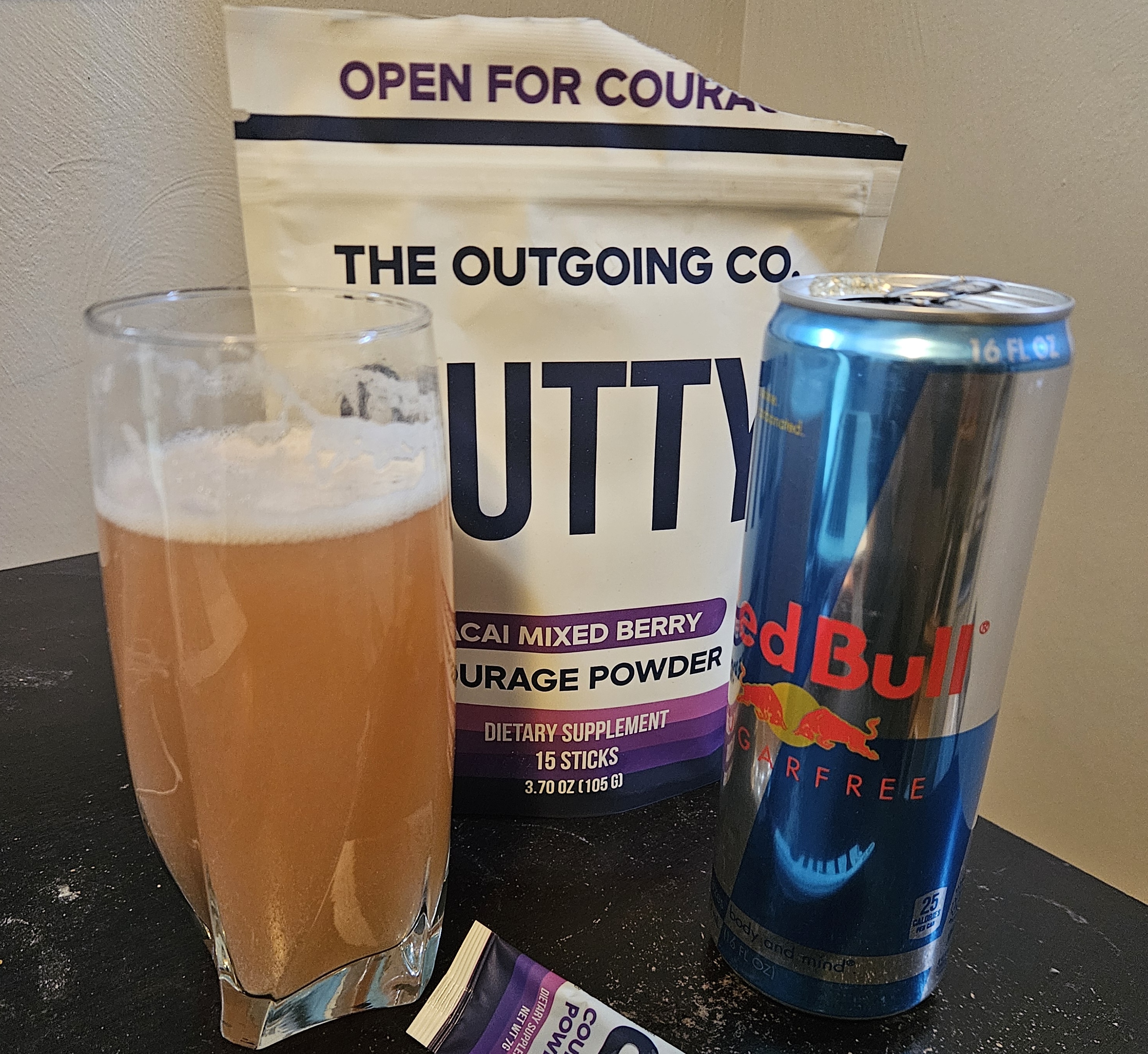
In my first try, I got this horribly wrong. I filled my 18-ounce glass up with water to mix it in. While it didn’t taste bad, it was nothing to write home about—at all.
The packaging recommends 12-18 ounces. I find it tastes much better and more like a non-alcoholic mixed drink if you go closer to 12 than 16.
It’s also delicious when you put it over ice. I even mix with a little sugar-free Red Bull, and that’s great too.
How much does Outty cost?
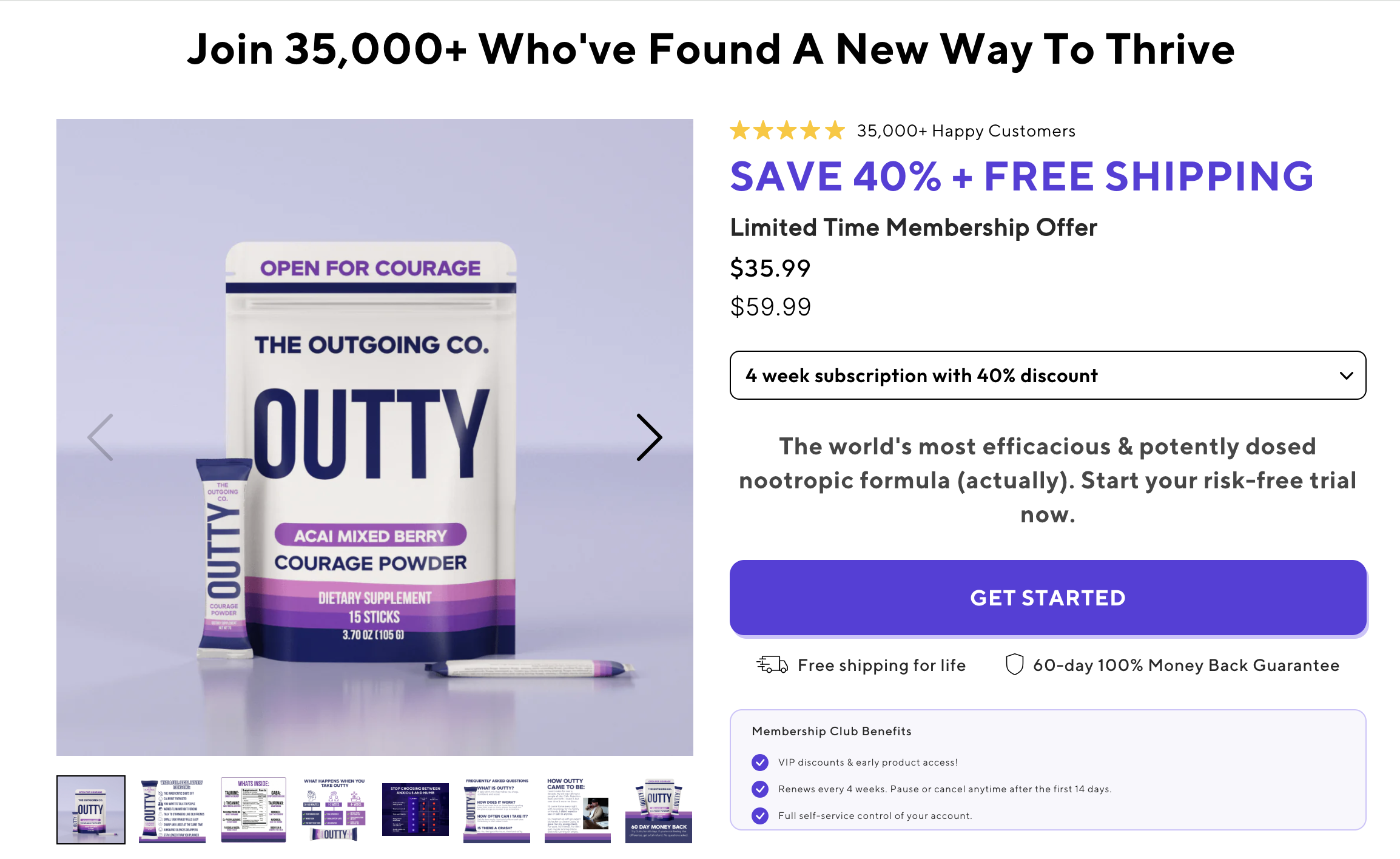
One bag, which comes with 15 sticks, is $59. However, sign up for the subscription, and it drops to $35 with free shipping. From a selling standpoint, that’s genius.
Now your first thought might be, “I don’t plan on being in situations where alcohol is an option 15 days a month.”
Now, if that’s what immediately, you’ll get even more from Outty because drinking every 2 days is serious work and—I’m gonna keep it real with you—you need to cut back.
In all seriousness, almost no one has just one drink.
If you’re having people over to your house who are sober, sober curious, or just looking for something tasty to drink, you will quickly go through all 15 packs.
And you will want more—especially if you get that water mix right, put it on ice, and find a nice non-alcoholic mixer to go with it.
Honestly, getting the $35 is more practical. And even if you don’t host people or take them with you to the bar because you don’t go there in the first place, there are a number of interesting use cases you have for Outty beyond an alcohol substitute.
The next section covers some of the ways I used Outty
Who Outty Is For
- People who want focus without caffeine
- People who want to socialize without alcohol
- People who struggle with mental noise or overthinking
Who Outty Is NOT For
- People looking for strong energy or stimulation
- People expecting a traditional pre-workout
- People who want instant, dramatic effects
My Experiences With Outty
I’ve tested Outty in four specific areas:
- Doing deep writing work
- Right before winding down for bed
- As a pre-workout supplement
- Playing chess/studying European Portuguese
Some of those scenarios are obvious, while others might seem misplaced, but I swear there is a method to the madness of these testing scenarios.
I did not test Outty in the situations they are marketed to help most in, which is socializing sober. However, I wrote about how I used it in a similar situation to drinking—sorta.
You can read about that and how Outty works as an alcohol substitute here.
I’ve been sober since Dec 23rd, 2013, and aside from the odd football game I watch with my friends, I’m never in bars. Oh, and I’ve been married for 13 years, so I’m definitely not in nightclubs.
While I definitely don’t have an issue with anxiety and talking to people, I occasionally have found small talk annoying, but more in a “I have a pebble in my shoe” sorta way, not “my leg is broken, and I can’t walk at all.”
I say all this to say that I found the use cases that are most applicable to my life, and from those, I can make a pretty good guess about how Outty will affect you if you’re going to use it as a stand-in for alcohol—and you definitely should.
But I wanted you to have that in mind for the rest of the review.
Now the use cases.
Using Outty For Deep Work
I write for a living. Between my own content, content for other people, SEO optimization for websites, and private projects, I easily log 30,000 words a week—and that’s on the light end.
To keep up with that kind of output while also having a toddler and training at the boxing gym, I need to be locked in.
Not hyped. Not jittery.
Just mentally present and able to sit with the work long enough to make progress. My biggest problem isn’t a lack of ideas—it’s friction. That subtle resistance that shows up when you open a new document, and your brain would rather do anything else than put words on the page.
Outty makes that friction noticeably smaller.
What it seems to do—based on how it feels and how the formula is structured—is reduce mental noise while selectively supporting motivation and engagement.
Instead of forcing energy, it helps my brain stay on task once I start. I’m less likely to tab-hop, less likely to check my phone, and more likely to stay inside the problem I’m working on.
That’s why I’m glad The Outgoing Co. continues to market Outty as a nootropic, because it genuinely functions like one—a great one that’s also delicious.
I can focus and produce without leaning on caffeine or nicotine gum, which matters a lot when I’m working late after my wife and son are asleep. There’s no adrenaline edge, no wired feeling—just sustained attention and less of a need to will myself to keep going.
I also need to be clear about what it doesn’t do.
If I’m truly exhausted and trying to squeeze out a few hundred words on fumes, Outty doesn’t override that. I’ve tried.
I just end up wanting to go to bed, which is probably the correct response anyway. But if I have baseline energy, it reliably helps me extend my productive window and, more importantly, enjoy the process of using it.
That’s the difference between stimulation and support. Outty doesn’t create energy—it helps you use the energy you already have more effectively.
Outty as a Sleep Aid
When I told TJ that I had used Outty as a sort of sleep aid and that it helped me relax, he was genuinely surprised. His exact response was, “Oh snap. I thought the rhodiola might hurt. But that’s cool to hear.”
That reaction makes sense. Rhodiola is typically considered an adaptogen that supports alertness and stress resilience, especially under cognitive or physical load. It’s not something you’d normally associate with winding down before bed.
What I suspect made the difference is that Outty’s formula isn’t built around stimulation. In situations where I was already primed for sleep, the ingredients that reduce mental noise and emotional friction—particularly L-theanine and the broader calming structure of the stack—seemed to outweigh any activating effect from the rhodiola.
Instead of pushing me “up,” Outty helped my nervous system settle.
To be clear, I took it when I was already naturally getting sleepy. I don’t want to give the impression that Outty will knock you out or make you want to crawl into bed.
It’s not designed to do that. What it is designed to do is make it easier to relax—and I’ll be the first to admit that I don’t always show up to bedtime in a relaxed state.
It’s rare that I lie down without my mind spinning: thinking about word counts, unfinished projects, how I’m going to fit my workouts in, or when I’ll carve out time to land new clients and pay the bills.
I’m generally good at keeping anxiety in check, but bedtime has always been the hardest place to fully let go.
If you’re someone who worries at night or has trouble shutting your mind off enough to rest, Outty may help smooth that transition.
You probably would benefit from using a grounding sheet too, so that’s worth checking out.
I suspect this is also part of what makes it such a compelling alternative to alcohol—because for a lot of people, drinking isn’t about chasing a buzz. It’s about quieting the noise, easing self-consciousness, and giving yourself permission to relax.
Outty as a Pre-Workout Supplement
Now we’re at the use case that Outty accidentally inherited: a pre-workout.
I’m far from a biochemistry expert, but I know enough to know that neither B4 nor Outty was designed to function like a traditional pre-workout supplement.
There’s no stimulant load, no adrenaline spike, and nothing in the formula aimed at directly increasing strength, endurance, or physical output.
I’ve written before about my experiences using Morning Would as a non-stim pre-workout, and that led me to learn a lot about how stim-based and stim-free formulas work through completely different mechanisms. Looking at Outty’s ingredient list, nothing about it says, “This is going to help you lift heavier or train harder.”
That said, I understand why some people still reach for it.
If you’re someone who struggles to feel motivated to start a workout, the inclusion of pure Oroxylin A makes that more understandable.
Oroxylin A supports dopamine efficiency and task engagement, which can make effort feel more appealing once you get moving. And if your issue is staying mentally present in the gym, the same clarity and focus-supporting effects can help you stay locked in between sets.
Neither of those problems really applies to me. While I no longer box for a living, I just fought again this summer, and motivation or focus in the gym has never been an issue. Still, I’ll admit that when I trained after taking Outty, I felt noticeably upbeat about being there. Then again, I’m usually excited to train anyway, so I’m not going to overstate the effect.
I can see how someone might use Outty as a pre-workout, but buying it for that purpose alone would be a mistake. There are better products on the market if your primary goal is physical performance. However, if what’s holding you back from training is mental friction rather than physical energy, Outty can help lower that barrier.
It doesn’t turn your workout into something it’s not. It just makes showing up and staying engaged feel easier—and that’s a very different role than a true pre-workout supplement.
Outty as a Learning Aid
This one surprised me—and honestly, it’s a benefit The Outgoing Co. probably isn’t emphasizing enough.
For context, I’m currently learning European Portuguese. My wife is Portuguese, and this year I finally decided to stop splitting my attention between languages. I’d spent a long time chasing B2-level Spanish, but at some point, it made more sense to go all-in on Portuguese.

Of course, “abandoning” Spanish for Portuguese is easier said than done. The countries sit right next to each other, and the languages share a lot of surface similarities—but they’re spoken very differently. Portuguese, especially European Portuguese, sounds nothing like it looks on the page. The challenge isn’t vocabulary as much as processing speed, pronunciation, and real-time comprehension.
That’s where Outty came in unexpectedly.
When I practice Portuguese while using Outty, I’m noticeably quicker in my responses, and my comprehension feels smoother. I’m not translating as much in my head. I’m reacting. Conversations flow more naturally, and I recover faster when I miss something or make a mistake.
I wasn’t even planning to test Outty as a learning aid. But while researching the updated formula, I realized why this makes sense. Pure Oroxylin A—one of the ingredients in Outty that wasn’t in the original B4—has been linked to improvements in verbal fluency, cognitive flexibility, and task engagement. Those are exactly the mental skills you need when learning a new language, especially one that requires you to think and respond quickly in social contexts.
If a product is designed to help people feel more comfortable socializing—speaking, responding, staying mentally present—it follows naturally that it would also support language learning. You’re calmer, less self-conscious about making mistakes, and more willing to stay engaged in real-time conversation.
Outty doesn’t make you magically fluent. But it does make the learning process feel less effortful and more natural—and that’s often the difference between practicing consistently and giving up halfway through.
Frequently asked questions about Outty
Is Outty a Scam or Legit?
Outty is a legitimate supplement with well-known ingredients used for focus, mood, and stress support. The real question isn’t whether it works—it’s whether it works for your specific use case.
Does Outty really work?
Outty works by reducing mental noise and improving focus rather than increasing energy. Most people notice smoother concentration and less anxiety rather than stimulation.
What is Outty by The Outgoing Co?
Outty is a nootropic supplement designed to improve focus, reduce anxiety, and make socializing easier without relying on alcohol or stimulants.
Is Outty safe to take?
Outty uses common nootropic and calming ingredients like taurine, L-theanine, and magnesium, which are generally considered safe for most people.
How long does Outty take to work?
Most users notice effects within 30–60 minutes, especially in terms of reduced mental noise and improved focus.
Does Outty help with anxiety?
Yes, many of its ingredients—like GABA and L-theanine—are specifically included to reduce anxiety and promote calm focus.
Can you use Outty instead of alcohol?
Outty is designed to reduce social anxiety and increase engagement, making it a potential alternative to alcohol in social settings.
Is Outty worth it?
Outty is worth it if you value focus, calmness, and social ease. It may not be worth it if you’re looking for strong energy or performance enhancement.
Final Verdict on Outty
If you want to stop drinking, this is better than just switching to non-alcoholic beer and coffee.
That’s what I did when I stopped drinking 13 years ago, and while it worked for me, I’m a naturally more outgoing person who never needed alcohol to socialize. I just abused it.
But if you’re someone who needs alcohol to feel less awkward at social events, Outty not only tastes great, but its ingredients help you get over the initial awkwardness.
If you do deep work that requires focus and/or creativity, then this is a no-brainer to pick up.
Not just because it’s going ot help you focus, but it’s always going to keep you motivated, locked in, and more resilient to the stress of the work you’re doing.
And it will help you learn a few new skills.
I don’t recommend it for going to sleep unless you have trouble going to sleep, specifically because you have a lot on your mind. If you decide to use it as a pre-workout, mix it with a real pre-workout.
If you found this article helpful, I’d love for you to pick up a big using my link here, or any that are scattered through the page.
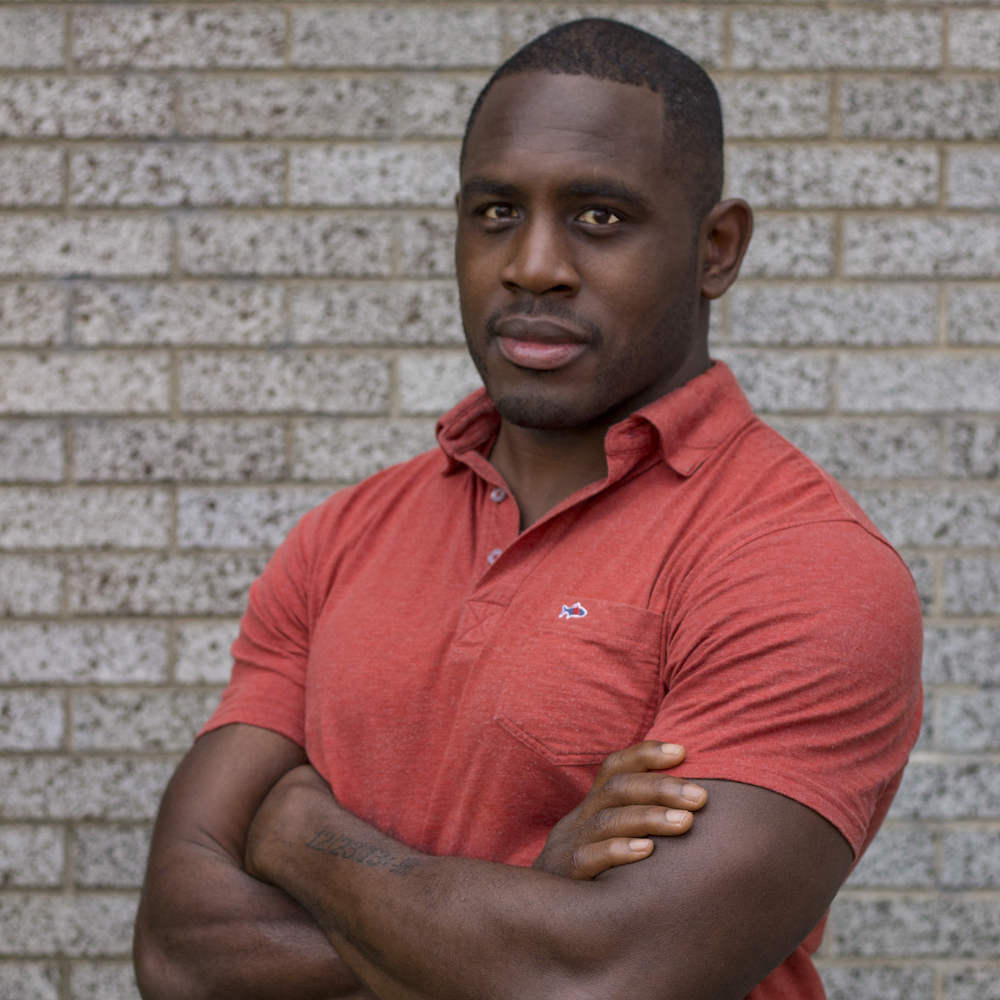
Written by
Ed Latimore
Ed Latimore is a best-selling author, professional heavyweight boxer, and physicist. He writes about self-improvement, sobriety, fighting, and the lessons he learned growing up in the projects of Pittsburgh.
Follow @EdLatimore