How to Get Better at Math (7 Proven Steps That Actually Work)

How to Get Better at Math
You get better at math by focusing on understanding—not memorization—while practicing consistently and strengthening your foundation. Most people struggle because they skip basics, rely on shortcuts, or don’t spend enough time solving problems.
This post will teach you how to get better at math faster and with less studying. You’ll still have to study, but it tells you the right things to focus on.
A common issue with most people is that they think math skills are innate. They believe that either you get math or you don’t.
Can Anyone Get Better at Math?
Yes. Math skill is built through practice and understanding—not talent. While some people learn faster, almost anyone can improve significantly by strengthening their foundation and practicing consistently.
In high school, I had this issue as well. I figured that I didn’t get the math gene and ,because of this, there was no chance of me doing anything in my future that required crunching numbers, writing computer programs, or science.
According to psychology, I was a victim of a fixed mindset. I simply didn’t think I could actually get better at math. Or at the very least, I wasn’t willing to sacrifice the time and energy necessary to get my math grade and number skills up.
I was one of those students who actually took pride in my lack of math skills. I avoided challenging myself with more difficult and interesting math and science courses. Beyond what was mandatory, I only took biology so that I could avoid math-heavy physics and chemistry courses
If I couldn’t rely on memorization to get through the class, I didn’t want to study it.
I ordered my high school transcripts to look at my math grades. As you can see, I was not.
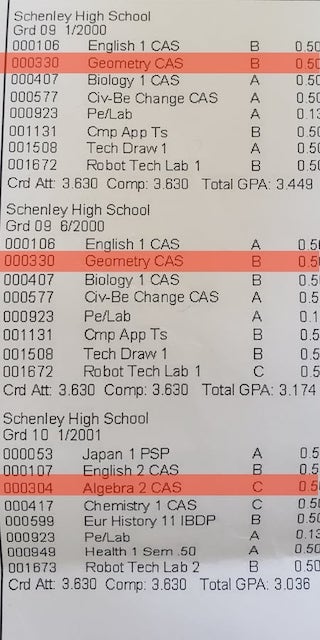
It should come as no surprise that I struggled in high school to get even a C in my high school math courses
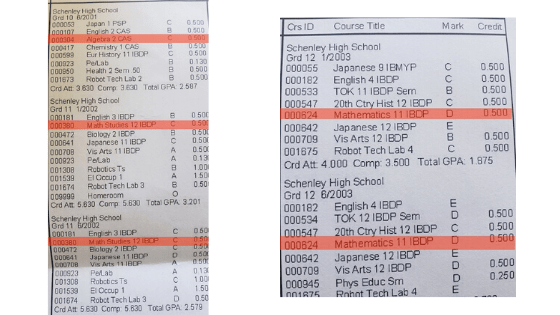
Even when I graduated in 2003, I figured that it didn’t make sense to get a degree in anything that didn’t require learning math. So I tried again. This time, my failure would cause me to fail out of college in my third semester in 2004.
Fast forward 14 years to 2018.
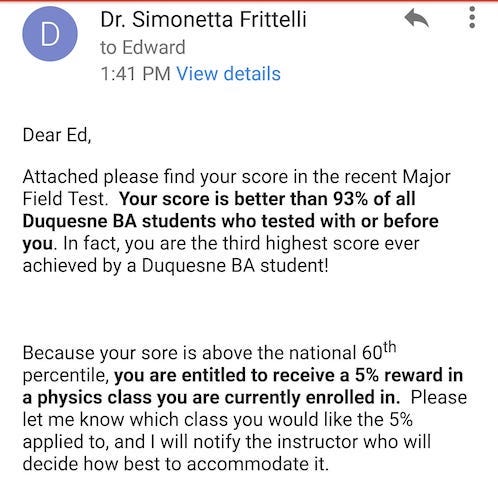
At the age of 33, I not only graduated from Duquesne University with a B.A. in Physics and a minor in Mathematics, but I was also making $1000 per week as a tutor for high school students in physics, chemistry, and math.
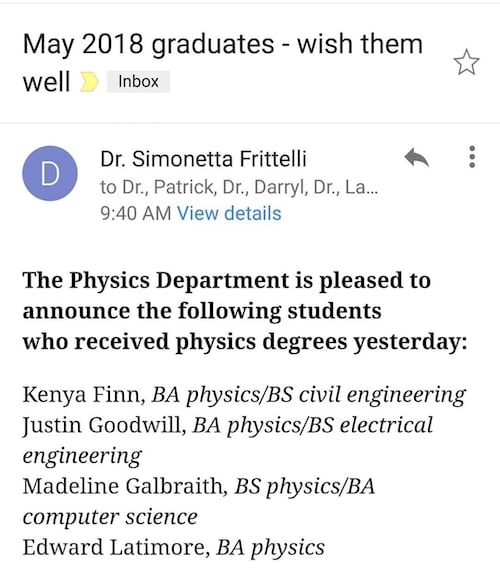
Academically, I didn’t get lower than a B in any of my math classes. Professionally, I was doing such a great job as a tutor that I had a new issue: I had to turn down business. So the question is how did I do it??
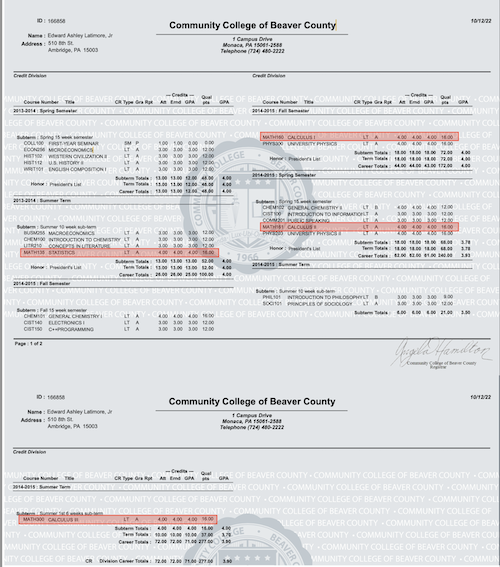
What did I do to finally handle my issues with math?
How did I go from being a mediocre student in high school who could barely get basic math concepts to earning a degree that’s so math intensive that you automatically get a math minor by completing it?
How did I go from someone who was terrified of trigonometry and doing derivatives to someone who got several high school students through AP Calculus and AP Physics?
How Long Does It Take to Get Better at Math?
You can see noticeable improvement in a few weeks with consistent practice. Major improvement usually takes a few months of focused effort, especially if you’re rebuilding foundational skills.

This article details the simple step-by-step method I used to handle my issues with basic arithmetic, help me to understand higher-level calculus, and be able to do every level of math in between.
This article will take your abilities to the next level if you want to get better at math. You’ll feel more confident when you solve problems with numbers.
If you’re reading this as a parent instead of a student, the same principles apply to your kid. What turned things around for my tutoring students usually wasn’t some genius insight, it was consistent practice and someone walking through the fundamentals with them until it clicked.
If your child needs that kind of structured, one-on-one help, online math tutoring for kids can fill the same role a good tutor filled for my students.
Common Mistakes That Keep You Bad at Math
- memorizing instead of understanding
- skipping fundamentals
- not practicing enough
- relying too much on calculators or tools
- quitting too early
1) Change your mindset about math
Most people struggle with math because they believe they’re bad at it.
They think they weren’t “born with a math brain.” That belief becomes a self-fulfilling cycle—if you don’t think you can improve, you won’t put in the effort needed to get better.
But math isn’t a talent. It’s a skill.
If you can learn anything else—sports, writing, a job—you can learn math. The difference is that math requires patience and practice, not memorization.
I used to think I was bad at math too. I avoided it, relied on memorization, and struggled to keep up. But once I realized that improvement came from effort—not ability—everything changed.
Two things helped shift my mindset:
- You’re probably capable already. Most math students aren’t geniuses—they just practiced more and built stronger foundations.
- You’ve done hard things before. I started boxing at 22 with no natural talent and still became successful. That showed me improvement comes from work, not talent.
If you’ve improved at anything in your life, you can improve at math.
The first step isn’t studying harder—it’s believing that getting better is actually possible.
When I saw this, I figured that I could understand this subject.
If you ever feel stuck or overwhelmed while trying to master math, just remember that the key is persistence. Sometimes, you might need support along the way—whether through tutoring or even finding a paper writing service to help lighten the academic load while you focus on mastering the tough stuff like math and physics.
Sharpen Your Thinking, Not Just Your Skills
Finally, a supplement that’s proven to make it easier to learn math.
Mind Lab Pro has been shown to improve:
- Auditory memory by 11%
- Visual memory by
It supports the kind of sustained concentration, memory, and mental clarity that deep problem-solving requires — without stimulants that burn you out halfway through a session.
Because the difference between guessing and understanding often comes down to how well your mind holds up under pressure.
Train your thinking like you train everything else.
2) Take your learning into your own hands
If you’re like me, you were educated in a public school system.
You had limited/non-existent resources for improving your math ability outside of the classroom. If you got a bad explanation or had to endure a subpar math teacher, there was no place you could go for help.
Of course, a big problem is that when I was in high school, there were nearly as much help available online. Fortunately, that’s no longer the case.
There are a plethora of free/low-cost materials online that are very good and extremely helpful. If your teacher isn’t getting the job done, learn on your own.
Here are a short list of ways to study math:
- Youtube videos
- Khan Academy
- Download problem sets solutions
- Download pdfs of textbooks
- For more problems, buy more used textbooks and study guides
You’ll need resources to improve your understanding. There’s no way around that. You’ll need to work on many practice problems to grasp many basic concepts. Fortunately, there is a solution on the internet for almost any problem somewhere. You can check if both your process and solution are correct.
Take advantage of all of the free resources on the internet. You need to practice math to improve at math.
If the explanations in class aren’t helping you get things, then there are great Youtube channels and websites out there that are excellent at explaining ideas.
3) Master the fundamentals of numbers and arithmetic
If you want to get better at math, this is the most important step.
Most people struggle with math not because it’s advanced—but because their basic arithmetic is weak.
Math builds on itself. If you don’t fully understand the fundamentals, everything that comes after—algebra, geometry, calculus—will feel confusing and overwhelming.
What Are Arithmetic Fundamentals?
Arithmetic is the foundation of all math. It includes the four basic operations:
- addition
- subtraction
- multiplication
- division
These aren’t just beginner skills—they’re used at every level of math.
The problem is that most people think they’ve mastered them, but haven’t.
The 4 Core Arithmetic Skills You Must Master
1. Negative Numbers
You should be completely comfortable:
- adding and subtracting negatives
- understanding how signs interact
- recognizing patterns (e.g., subtracting a negative becomes addition)
These problems aren’t difficult—but they break intuition if you don’t truly understand them.
2. Fractions
Fractions are where most people fall apart.
You should be able to:
- add, subtract, multiply, and divide fractions
- simplify fractions quickly
- understand what fractions represent visually
If fractions feel confusing, higher-level math will feel impossible.
3. Mental Multiplication
You don’t need to be a human calculator—but you should be able to:
- multiply one- and two-digit numbers comfortably
- break numbers into parts (e.g., 23 × 14 → (20×14 + 3×14))
- estimate quickly without a calculator
This builds number sense, which is critical for all math.
4. Estimation and Division Sense
In real life, you rarely need exact answers—you need good approximations.
You should be able to:
- estimate how many times one number goes into another
- recognize when an answer is “too big” or “too small”
- quickly ballpark results
This is one of the most practical math skills you can develop.
Why this matters more than you think
Most people try to get better at math by jumping ahead.
That’s a mistake.
If your fundamentals are weak, every new concept becomes harder than it should be.
But when your arithmetic is strong:
- algebra becomes easier
- problem-solving becomes faster
- you stop feeling lost
The real goal: Build number intuition
You’re not trying to become a calculator.
You’re trying to become comfortable with numbers.
Just like you don’t think about grammar when you speak, you shouldn’t struggle with basic arithmetic when doing math.
That fluency comes from:
- repetition
- pattern recognition
- consistent practice
How to practice this effectively
- do short daily practice (10–15 minutes)
- focus on weak areas (fractions, negatives)
- avoid calculators during practice
- check your work after solving
Consistency matters more than intensity.
[A working level of basic math is one of the 12 major reasons why learning math is important. For the other 11 reasons, check out this article on why you should learn math.]
The nootropic I wish I had while studying physics
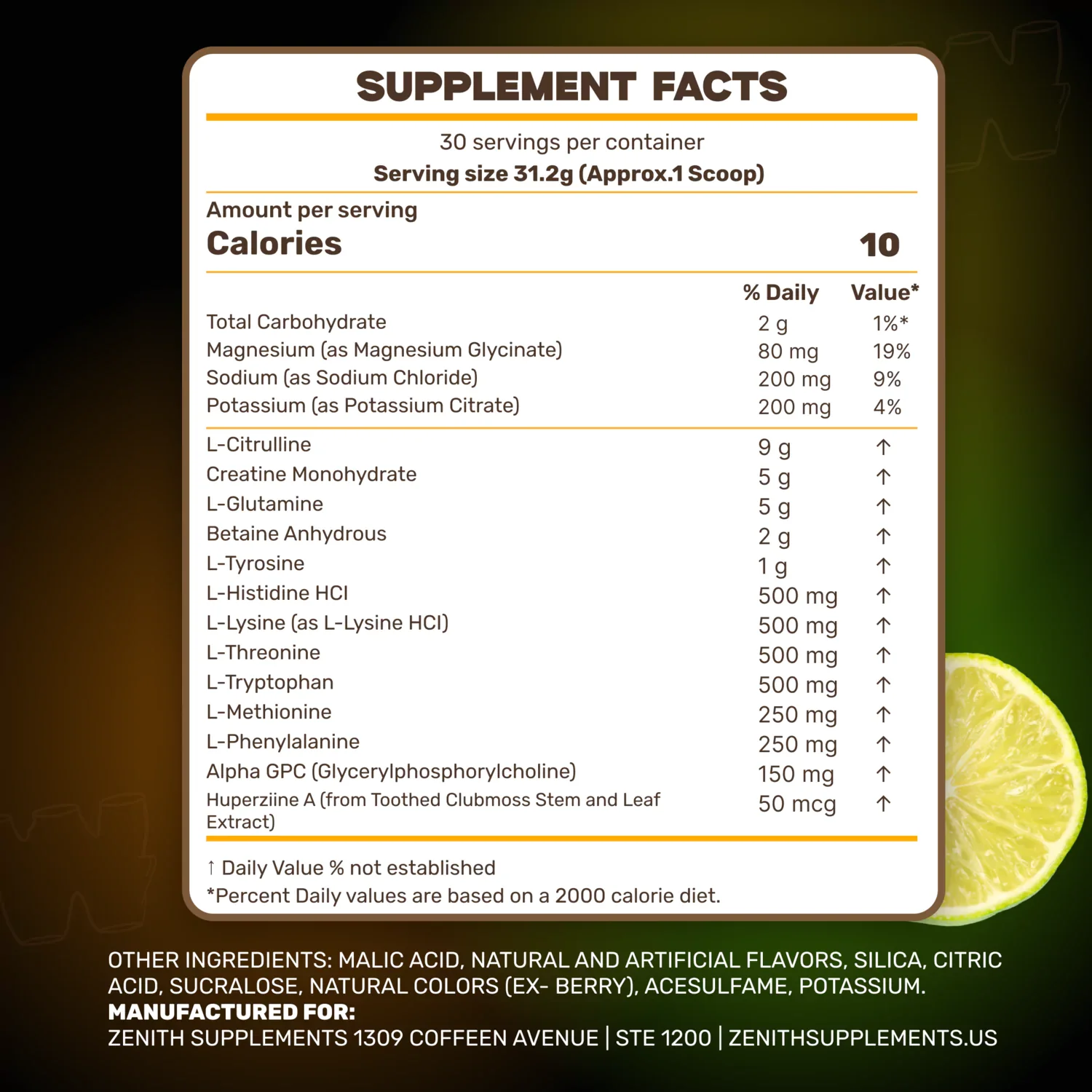
Let me tell you about living between textbooks and training camps – as a pro boxer studying physics while serving in the military, I know what it means to need peak performance in both body and mind. I could have gotten Morning Would back then..
This firefighter-created formula doesn’t just wake you up – it provides the nootropics to tackle complex calculations, amino acids to maintain fighting strength, and electrolytes to keep you sharp through marathon days. I drank a lot of coffee, but when you’re solving differential equations between sparring sessions and PT, you need more than caffeine.
You need something that supports both mental acuity and physical performance. Morning Would is built for those who refuse to compromise on either
Whether you’re challenging your mind, body, or both, this is a can’t-miss supplement.
4) Learn how to read math
3 simple steps will help you read math and understand it better.
Step 1: The symbols and their meaning
You have to know that “¾” means “divide 3 into 4 equal parts. You have to know the difference between “ -3 + 0” and “3 - 0”. This might seem obvious, but I’ve found that many people lack mathematical aptitude due to not knowing basic stuff like this.
Make sure you know the symbols. You should not have to think about what it means to see |-4|. You may not know the answer, but you have to make sure that you at least know what it’s asking you.
Step 2: Synonyms of the symbols
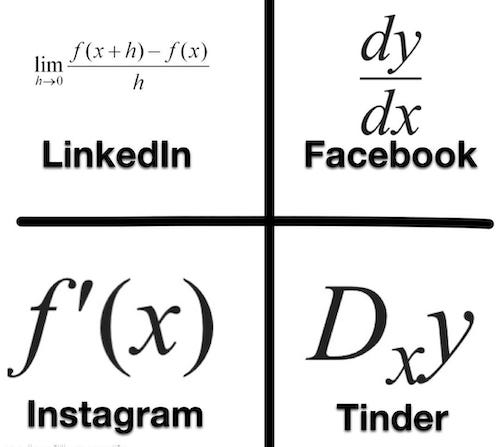
The essence of math is how one thing is always exchangeable for another. In this way, we can make problems easier to work with.
“5/7” is the same thing is “5 *(1/7)”. Depending on your problem, one form may make more sense to use than another. This doesn’t just work for the numbers as well. You can swipe mine here if you don’t have a problem-solving process.
Learn different ways to express the same idea. For example:
- Adding a negative number is the same thing as subtracting its positive equivalent.
- Multiplication is the same thing as adding the same amount as many times you’re multiplying it.
- Dividing a fraction by a number is the same as multiplying by that number’s inverse.
These are just little examples of learning how to look at math as an interchange of ideas.
Some versions of ideas are easier to work with than others. Sometimes, we just need a different perspective to help us realize that we understand what’s going on.
Step 3: How the symbols work together
I could have simply titled this “The Order of Operations” section. That would cover most of what this section says and sort out most of the issues you have when it comes to learning math.
In case you forgot, the order of operations is as follows:
- Parenthesis
- Exponents
- Multiplication
- Division
- Addition
- Subtraction
We usually learn this with the mnemonic “Please Excuse My Dear Aunt Sally”. If you grasp nothing else in your math career, I recommend you learn this and its implications.
5) Think in pictures to solve problems
A big breakthrough in learning math was realizing that everything could be represented with a simple picture. The entire branch of geometry (and, to a lesser extent, trigonometry) relies on visual representation to teach its concept.
Taking a piece of paper to sketch can give you new ideas on old topics.
A few key visual representations are extremely helpful to know because they’re so common. You should familiarize yourself with them to improve your math skills.
A) The Number Line
This seems simple, but if you understand the number line, you have a visual model for every arithmetic operation possible. You’ll understand why multiplying two negatives gives you a positive, why you can’t take the square root of a negative number, and why we need imaginary numbers.
B) The Cartesian Plane
The real benefit of the Cartesian Plane is that it trains you to see relationships between things.
Specifically, how one quantity changes based on how another one changes. Algebra gives a lot of people fits because the addition of letters to the number problems is confusing.
All the letters represent variables or something that does not have a set value. The equation that the letters appear in merely shows the relationship between the two (or more) changing quantities.
The cartesian plane is just dots and lines, but it demonstrates a real-world application of math. Everything depends on something else, and the cartesian plane allows us to see that relationship with all the distracting noise stripped away.
C) Area, Volume, and The Fun Behind Shapes
The visual representation of any number squared is a square. The visual representation of any number cubed is a cube. That is either painfully obvious, or you just had your mind blown.
The real fun begins when you see it applied to other shapes.
There are some beautiful relationships between the 2 and 3-dimensional versions of shapes. The idea isn’t to memorize the exact relationships but to see that nearly every math idea has a real physical component that can help you grasp the underlying abstract concepts.
This makes learning math purposeful, and I always felt like understanding the physical ideas behind the numbers made it more fun and interesting. For more, read how to learn basic physic ideas.
Much of math becomes easier to study if you figure out the visual representations of an idea. Every topic you learn can be represented on the number line, the cartesian plane, or in the form of a shape.
6) Use technology to help your problem solving
With today’s technology, you can go extremely far without a teacher. Some tools will solve the problem for you when it comes to solving math problems. Unlike a simple calculator, these tools also walk you through each step.
These are fantastic for figuring out where you went wrong while also showing you how to solve the problem correctly.
I spent an entire year working on math problems from various books I downloaded, and nothing helped my math skills improve faster than running my work through one of these programs for feedback.
The three I recommend are:
Regardless of which tool you select, remember what the purpose of using these types of problem solvers is:
You want to push yourself as hard as possible to solve the problem. You should check to see that your answer is correct only after you’ve given a decent effort. These tools are meant to assist your learning, not solve your problems. Unfortunately, many students learn lessons like this the hard way.
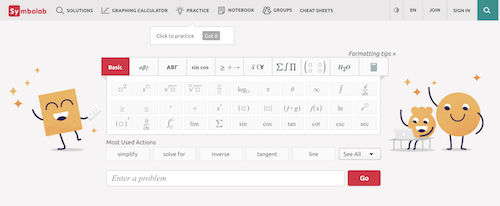
Checking the answer without pushing yourself to the limit of your knowledge and ability is no better than asking someone for the answer. If you use it this way, you never actually improve your problem-solving capabilities.
7) Be patient and work to get the concepts
The goal isn’t to be a human calculator or a math genius. It’s certainly not to memorize a bunch of different math problems.
Sadly, school trains you this way because they depend on funding, and it’s a lot easier to teach you to pass a test than learn.
The goal is to understand the concept. This is why you need to:
- Be patient
- Find great supplemental resources that provide simple explanations of complex ideas
- Take detailed notes
- Be willing to challenge your thought process
When I was working on my physics degree, I spent a lot of time on the site www.betterexplained.com. I even reached out to the site’s writer to thank him for all of his explanations. Another favorite site of mine was Paul’s Online Math Notes.
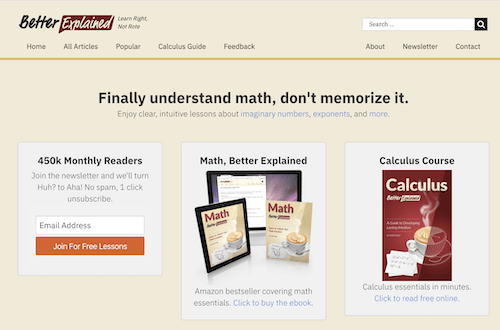
Both of these sites did a fantastic job explaining any new concepts I had trouble with and illuminating old mathematical concepts I never quite understood. They also both have unique approaches, which is extremely helpful for learning math.
In addition to the notes from their website, I also took a lot of notes and asked myself many questions. I forced myself to dig deep and truly grasp the material by asking myself questions.
There is nothing that facilitates learning more than asking the right questions.
The visual-thinking and fundamentals advice above is built around the idea that learning happens when you put in effort and discover the solution yourself, instead of simply being handed the answer.
That is the loop Brilliant is built around. Brilliant is a visual, interactive online tutor for students age 10 and older. Every lesson in fractions, algebra, geometry, trigonometry, and calculus features visual problems that the learner can tap, drag, and adjust. When students get hands-on, it becomes much easier for concepts to click into place and for difficult problems to finally make sense.
The hardest part for most learners is when they get stuck on a problem, where a video or an answer key stops helping. Brilliant’s online math tutor, Koji, can see what’s on a student’s screen and respond by asking a guiding question, breaking the problem into steps, drawing or highlighting on the screen, or reframing the problem in a different way.
Rather than handing over the answer, Koji acts like a supportive expert sitting right next to the student, ensuring they actually understand negatives or fractions or whatever concept they’re stuck on.
Over a few weeks of short daily sessions, that is how the fundamentals in this kind of plan actually take hold: the kid solves, gets something wrong, and works out why (sometimes with a helpful nudge from a tutor) instead of memorizing another rule.
Frequently asked questions about getting better at math
How can I get better at math fast?
To get better at math quickly, focus on mastering fundamentals, practicing daily, and understanding concepts instead of memorizing steps. Consistency matters more than speed.
Can I get better at math if I’m bad at it?
Yes. Most people who struggle with math simply have gaps in their foundation. With the right practice and approach, improvement is almost guaranteed.
What is the best way to learn math?
The best way to learn math is through active problem-solving, visual understanding, and consistent practice—not passive reading or memorization.
Why am I not improving in math?
You’re likely not improving because you’re memorizing instead of understanding, skipping basics, or not practicing enough challenging problems.
How do I improve my math skills?
Improve your math skills by practicing regularly, reviewing mistakes, strengthening fundamentals, and using multiple explanations for difficult concepts.
How do I get smarter at math?
You get “smarter” at math by building pattern recognition through repetition and understanding—not by increasing intelligence.
How long does it take to get good at math?
You can improve noticeably in weeks, but becoming strong at math typically takes months of consistent effort.
Is math a talent or a skill?
Math is primarily a skill. While some people may learn faster, mastery comes from practice, repetition, and understanding.
Why do I struggle with math?
Most people struggle with math because they lack a strong foundation or were taught to memorize instead of understand.
Can I teach myself math?
Yes. With modern resources like videos, textbooks, and problem solvers, you can teach yourself math effectively with discipline and practice.
A summary of the 7 tips to get better at math
- Believe that you can learn
- Take your education into your own hands
- Master the fundamentals of arithmetic
- Learn to read math
- Think in pictures
- Use technology to help you learn
- Take time to understand the concepts
If you work on solving problems and avoid memorizing everything but the basics, you will go far in whatever math courses you have to take. At the very least, you’ll be able to keep up with the students in any mathematics class.
The major lesson I learned from my journey is that you can learn anything given enough time.
This is the general strategy I used to go from a failing math student to getting a degree in physics. I believe that you can be a great math student with similar improvement if you follow these step-by-step instructions.
Learn the method I used to earn a physics degree, learn Spanish, and win a national boxing title
- I was a terrible math student in high school who wrote off mathematics. I eventually overcame my difficulties and went on to earn a B.A. Physics with a minor in math
- I pieced together the best works on the internet to teach myself Spanish as an adult
- *I didn’t start boxing until the very old age of 22, yet I went on to win a national championship, get a high-paying amateur sponsorship, and get signed by Roc Nation Sports as a profession.
I’ve used this method to progress in mentally and physically demanding domains.
While the specifics may differ, I believe that the general methods for learning are the same in all domains.
This free e-book breaks down the most important techniques I’ve used for learning.

Written by
Ed Latimore
Ed Latimore is a best-selling author, professional heavyweight boxer, and physicist. He writes about self-improvement, sobriety, fighting, and the lessons he learned growing up in the projects of Pittsburgh.
Follow @EdLatimore