Why Every Man Should Learn How To Fight

Should Every Man Know How To Fight?
Yes—but probably not for the reasons people think.
Learning how to fight is not about becoming violent, aggressive, or looking for conflict.
It’s about developing:
- confidence
- self-control
- courage
- discipline
- emotional regulation
- and the ability to remain calm under pressure
Men who know how to fight are often less eager to prove themselves because they no longer need constant validation.
The goal isn’t violence.
The goal is competence and restraint.
When I tell people that every man—and honestly, every person—should learn how to fight, the pushback is always the same.
“Come on, man. We’re adults. You’re almost 40. What are you talking about? We’re civilized. People have guns.”
Yeah. I know.
Most people aren’t living in environments where they need to throw hands. And if they are living in that environment, they probably learned the hard way already. This message isn’t for them.
This is for everyone else: the people in mostly civilized society who think they’re above physical violence—like it’s some ancient problem that got solved by modern life. Like it can’t erupt the moment things get nasty and nobody feels like talking anymore.
I’m not saying you need to be ready to “throw down” at any moment. That’s not the reason you learn how to fight.
You learn how to fight so you know that you could.That’s the whole point.
Not the fantasy of knocking out some stranger in the street, but the comfort that comes from being capable. The discipline it takes to learn a fighting system. The physical shape you have to maintain. The way it forces you to manage fear and adrenaline. The way it changes how you carry yourself.
Those benefits will do more for your life than any hypothetical scenario where you “have to” fight.
Why fighting matters even if you never fight
I saw a video once—looked like it was somewhere in Europe, because nobody pulled a gun—where a crazy guy walked up on a family. The father wasn’t comfortable escalating. He backed off, tried to avoid it, and the guy got bolder. I think he even smacked the kid. Then the father just grabbed his child and walked away.
I’m not saying he should’ve started a fight.
I’m saying that if he had been comfortable in his ability to defend himself, that situation might not have unfolded the same way. The perpetrator might not have approached as aggressively—or at all.
Because predators don’t just pick victims randomly.
A lot of them are scanning for weakness. They’re looking for people who look distracted, unsure, unconfident—people who don’t seem capable of resisting.
When you know how to fight, you move differently. You stand differently. You look up more. You take up space in a way that signals you’re not lost, not confused, not afraid.
There was a set of interviews—maybe not even a formal “study,” but close enough—where they spoke to convicted criminals who had mugged or victimized people. They showed them videos of pedestrians walking down the street and asked them to identify who looked like an easy mark.
They could do it fast. Almost instantly.
If criminals can read the game that well—and if they’re willing to act on it—then the value of knowing how to fight isn’t just “defending yourself.”
It’s preventing the situation from ever happening.
Deterrence is the real superpower.
“But I’ll just carry a weapon.”
A lot of people think the shortcut is carrying a gun.
And listen: I’m not anti-gun. But relying on a weapon to replace competence is a dangerous fantasy.
For one, in the U.S., in most situations that aren’t a clear home invasion, the moment you pull that firearm and fire a shot, you’re responsible for where that bullet goes. And most people don’t train enough to use a gun under stress without creating a whole second disaster.
They don’t go to the range like they should. They don’t understand how their hands shake when adrenaline dumps. They don’t understand how hard it is to hit anything when your heart is in your throat and you’re trying not to die.
So now you’re not just dealing with “a situation.”
You’re dealing with law enforcement, lawyers, court, civil liability, and the permanent consequences of a decision you made in three seconds while panicking.
That’s why I tell people not to treat a weapon like a substitute for learning how to fight—or learning how to stay calm.
An ounce of prevention is worth a pound of cure. And a little capability can prevent the kind of moment where you’re forced to make an irreversible choice.
Strength comes before kindness
I argue about this with my wife sometimes. We go back and forth about what the most important thing is for her son to be.
She wants him to be kind. Compassionate. Sympathetic. Able to connect with people.
And she’s right. That matters. Especially when he gets into school and starts dealing with other kids, bad influences, bullying—whether he’s the target or whether he’s watching it happen to someone else.
But I tell her: before he’s any of that, I want him to be strong and capable.
Because kindness without strength isn’t virtue. It’s vulnerability.
When you can defend what you believe, when you can stand up to someone, when people know you’re not the one to try—and that anyone in your circle isn’t safe to mess with either—that alone deters a lot of nonsense.
Not because you’re looking for trouble, but because trouble prefers easy work.
The “beware of dog” principle
It’s like those signs people put in front of their house.
“Protected by [security company].”
“Beware of dog.”
They might not even have a security system. The dog might be some lazy poodle.
But if you’re a thief looking for the easiest target, you’re not going to gamble on the house that might come with resistance. You’re going to pick the house that looks like nobody’s home, nobody’s watching, and nobody will fight back.
The sign works because it changes the risk calculation.
That’s what competence does.
When someone believes resistance is possible, they’re more likely to behave. People become polite when they can’t guarantee dominance.
There’s that saying, “An armed society is a polite one.” Maybe. But I think it goes deeper than weapons. It’s about the way you carry yourself and the message it sends to the world.
The world tests who it can
And when I say “the world,” I don’t just mean people.
I mean circumstances.
This is where things get a little more esoteric—call it karma, call it energy, call it whatever you want. The scientist in me wants to reject anything I can’t measure cleanly. But I’ve seen too much to pretend it’s all nonsense.
If you decide you won’t be beat down—if you carry yourself like someone who fights back—the world seems less eager to test you.
And if it does test you anyway, you’re not fragile. You know what pressure feels like. You know you can take pain and still think. You know fear can exist in your chest without controlling your behavior.
That’s what fighting teaches. Train smart To learn the best path into boxing, this is the article you want to readWhat you should train
If you’re asking what to learn, I break it down into two categories:
Striking arts: boxing, kickboxing/Muay Thai, MMA.
Grappling arts: wrestling, Brazilian jiu-jitsu, judo.
And then the “in-between” stuff like Krav Maga.
When I started boxing, it wasn’t for self-defense. I don’t pick fights. I’m a bigger guy. I grew up in public housing projects, so I never had that “I don’t belong here” energy even in places where you should be cautious.
But boxing gave me something more important than the ability to punch.
It taught me how to turn down the noise and stay focused in a scary situation.
Every fighter is scared. I don’t care what they claim. The difference is that you learn to perform while scared. You learn to manage adrenaline. You learn you’re not as fragile as your comfort-based life has made you believe.
Striking sports are especially good at this because there’s no clean way out. You’re going to take some damage. You’re going to feel pain. And you’re going to keep going anyway.
That teaches you a lot about yourself.
I’m not knocking grappling—my grappling brothers, I love you. And grappling is great for confidence. Confidence alone is a deterrent.
But when we’re talking specifically about learning to stay calm under pressure and control that spike of adrenaline, I think striking sports teach that lesson fast and brutally.
Weightlifting can make you look capable, but it doesn’t teach you how to stay composed when things get chaotic. The training for fighting does.
Fighting makes you less violent
Here’s a paradox that people don’t expect:
Learning how to fight tends to make you less likely to fight.
Once you know what you can do to a person—once you know what one clean punch can cause—you become more careful.
Not just because you’re kinder, but because you understand consequences.
If I throw a punch and somebody falls wrong and hits their head, that’s not “a fight.” That can become a death. Now you’re dealing with a nightmare that doesn’t end.
People love saying, “Better to be judged by 12 than carried by 6.”
Maybe.
But I’d rather not deal with either.
And ironically, looking like I can fight tends to keep me away from the situations where either of those outcomes is even on the table.
The real reason you should learn how to fight
So here’s the bow on all of this:
You need to learn how to fight so you know you’re capable—and so you actually are capable.
Because there’s nothing worse than a paper tiger when the fire comes out.
Capability changes your posture. Your eyes. Your voice. Your choices. It changes what you tolerate and what you don’t. It changes the kind of people who approach you—and the kind of situations that find you.
And that prevents a lot of bad things from happening in the first place.
And if the universe, or the people in it, are persistent—if deterrence doesn’t work—then you have the last resort, too.
Take it from me: a guy from the hood who’s seen dangerous environments outside the ring as well as inside it.
Nothing is worse for your well-being than walking around looking like a soft target.
Frequently asked questions about men should learn how to fight
Should every man know how to fight?
Many people believe every man should learn how to fight because combat training teaches confidence, discipline, emotional control, and self-defense.
Why do men like fighting?
Many men enjoy the challenge, competition, physical testing, and emotional intensity of combat sports rather than violence itself.
Does learning how to fight build confidence?
Yes. Competence often reduces fear and anxiety. Knowing you can defend yourself usually creates calmer, more confident behavior.
Does fighting make you a man?
No. Violence alone does not create masculinity. But learning controlled aggression, discipline, courage, and restraint can help many men mature psychologically.
Why is fighting important for men?
Combat training can teach emotional control, resilience, discipline, courage, humility, and self-awareness under pressure.
What is the best martial art for beginners?
The best martial art depends on goals. Boxing develops striking and conditioning, Brazilian jiu-jitsu teaches grappling and composure, while wrestling and MMA provide broader combat experience.
Does knowing how to fight make people less aggressive?
Often yes. People who understand violence tend to respect its consequences and feel less need to prove themselves unnecessarily.
Why do combat sports change people?
Combat sports expose fear, ego, discipline, and emotional reactions under pressure, forcing people to develop resilience and self-control.
Written by
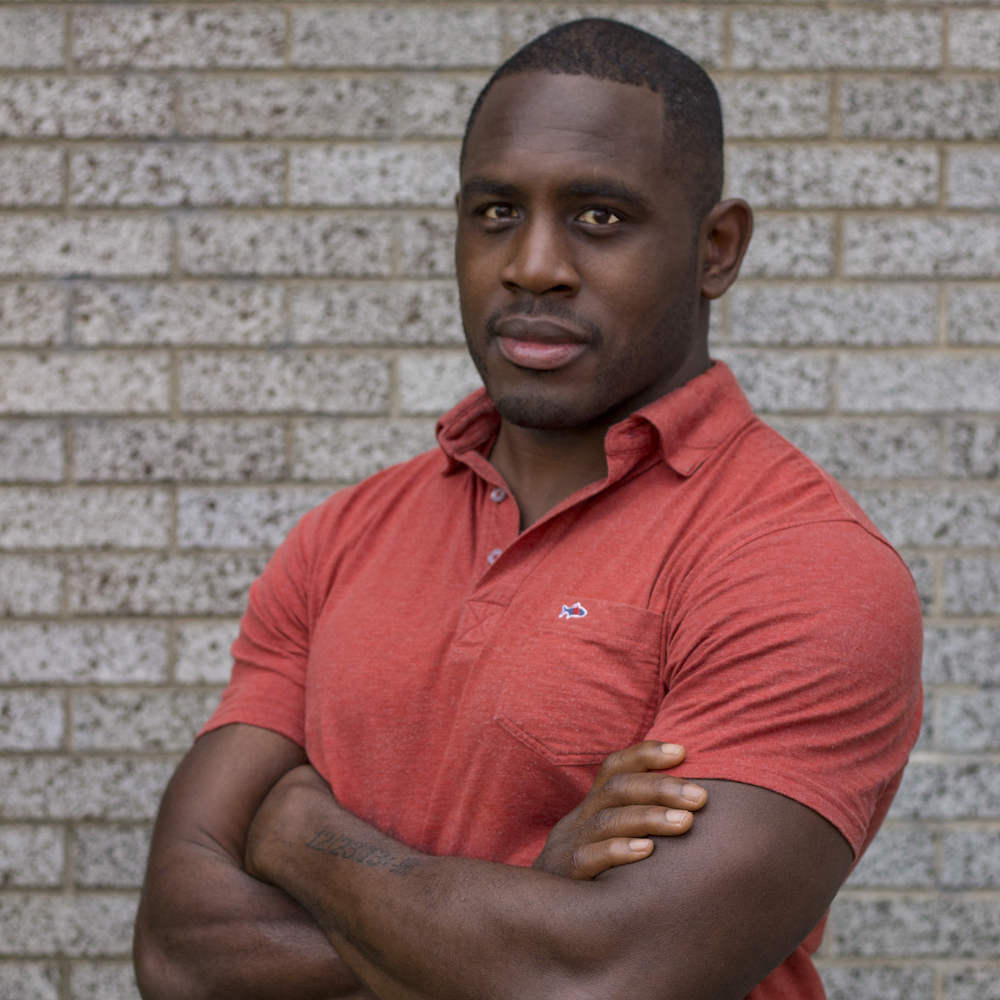
Ed Latimore
Ed Latimore is a best-selling author, professional heavyweight boxer, and physicist. He writes about self-improvement, sobriety, fighting, and the lessons he learned growing up in the projects of Pittsburgh.
Follow @EdLatimore