No Rite of Passage is Why Modern Men Are Weak

Growing Up in the Projects Revealed America’s Masculinity Crisis Early
Growing up in the projects gave me a preview of the future degeneracy of American culture and, more specifically, the men, but I just didn’t know it. What I saw in the projects back then wasn’t just poverty — it was a preview of what’s happening to the whole country now.
Let me explain what I mean by that.
Now I’m not talking about the poverty, violence, or the drugs. All that stuff is just a symptom and, as I’ll explain later, the early signs of it are already here—but if we don’t do something to treat the disease, rather than just manage its symptoms, it’s going to get a lot worse.
That disease—the real disease I watched infect and destroy the ghetto—the one that the nightly news and police reports are made out of—is a complete lack of masculinity because there are so few fathers at home. In fact, in the housing project where I grew up, I didn’t know a single family where both biological parents lived together.
I’ve talked about the effect of not having a father before, but I mostly focused on the delayed and deformed neurological development children suffer without their fathers, and how it contributes to adverse life outcomes for both women and men. If you haven’t that video, I’ve left a link in the comments section below.
So we’re on the same page, the basic idea of that video is this: assuming your father isn’t abusive, no part of life gets better if you grow up without him. Boys without guidance grow up to be men with many problems.
It’s one of the biggest — and you’ll see it everywhere once you notice it.
But let’s talk about one problem in particular and how it’s manifested in all of society, turning many men into passive agents who are overweight, undermuscled, out of work, addicted to porn, and have no desire to start a family.
I know this is a heavy claim, but all these problems stem from a single cause. There are no rites of passage for men anymore.
Rites of Passage: The Difference Between Trauma and Growth
For you to understand how life in the projects helped me see this connection, let’s slow this down and define exactly what a rite of passage is.
A rite of passage marks the end of innocence — that period before you’ve learned how much harm the world can do, and how much you can do back if you’re not careful.
We think of children as innocent. We specifically refer to events that expose them to the harsh realities of the adult world too early as “robbing them of their innocence.”
If children are exposed to adult intentions and outcomes that they can’t properly process and cope with, it has devastating outcomes that repeat throughout their lives.
This is as dangerous as trying to carry a weight that’s too heavy for you. Except it’s worse.
At least when you try to carry more than you can handle, you know it’s coming, and it’s usually you who tries to lift a weight that’s way above your strength level and abilities.
You’ll hurt yourself and be pissed that you did it, but it’s your fault, it wasn’t forced on you, and most importantly, there’s a good chance you’ll recover if you take it easy and, if you so choose, you can get stronger and learn the proper technique for lifting so you don’t hurt yourself again.
When a child is abused or exposed to something too much for their mind and emotions to handle, they have no idea what they’re getting into. No child chooses to be a victim of abuse, by definition.
And to be clear. It doesn’t matter what a person’s age is when they experience any type of abuse or trauma. It’s always a terrible, unpleasant experience.
But when it happens before you have a certain level of emotional maturity or mental capacity, it’s permanently debilitating. And this is what happens when a person is put through the harshness of life before they are old enough to handle it.
Obviously, when this happens, it’s bad, but something just as terrible happens when an adult’s mind, body, and soul are still treated as a kid.
Humans are anti-fragile creatures. This means that we only get better when we’re broken down. Of course, we can’t be broken down before we attain a certain level of strength, and our minds and psyche are just like our bodies in this way.
In the same way you lift weights —where the muscle breaks down and you get physically stronger —your thoughts and emotions work the same way. If you don’t put your psyche under pressure, it will never grow strong enough to handle the burdens of adult life.
An adult losing their innocence too late is just as dangerous as a child losing theirs too early.
The latter seems worse because it’s beyond their control and we see the effects immediately, but a child’s mind in an adult’s body can be just as destructive—if not more. You’ll see how exactly in just a moment, but this is where a rite of passage comes in.
Why Rites of Passage Must Be Timed — and Why Men Are Missing Them
A rite of passage is a singular act that, when the time is right, exposes a childish mind to the rigorous expectations of adulthood. If it’s done too early, it’ll traumatize them. If it’s too late, they will be too comfortable to confront the monster. I believe the latter, at this point, is a much bigger problem—especially amongst men.
Now, before anyone jumps down my throat, let me make something clear: women need a rite of passage, too. However, I’m focusing on men in this video for three reasons:
- Society is not as harsh on an immature woman as on an immature man. If you doubt this, look at the number of men in prison versus women. Or the number of men in homeless shelters or the number of men who commit suicide. The world is challenging for women, but it’s a different type of challenge.
- Because of how society has developed, men have been deprived of the rites of passage we used to go through. A lot of this is sociocultural, but as you’ll see, it’s also technological.
- Lastly, I’m a man. I can’t speak to what women go through or what they should or shouldn’t do for development. I don’t even have a daughter. In other words, I’m completely ignorant of the developmental plight of a woman.
As a man, you have to expose yourself to pain willingly because life is going to force you to experience it. When you’re a child, you can run to your parents, and they will make it because pain is purifying.
Pain is purifying if it’s sustained in the pursuit of something that will improve your life. It’s destructive if it’s the pursuit of comfort.
That’s the line right there — purifying pain versus destructive comfort
The best rites of passage are those that force you to confront your fear of being harmed, but you can’t escape from them without facing it and moving past it.
This is why I always say that boxing and sobriety were both my rites of passage, because both forced me to face pain and embarrassment head-on and make it through to be better. I made the choice to box at 22, and fortunately, I got sober at 28, but why did it take so long? What took me so long to become a man?
I didn’t have my father in my life. Furthermore, I didn’t have any male role models until I turned 28 and started boxing. Shoutout to Tom Yankello of World Class Boxing. I’ve put a link to this channel in the description.
Let me break this down clearly and cleanly for you, using what we know from neuroscience and child development theories, and how that ties in to my personal observations. This is where science catches up to common sense
Purifying Pain vs. Destructive Comfort
I once heard a speaker say that mothers have a nurturing instinct and fathers have a challenging instinct. To illustrate this, he used an example of his own baby daughter and how she wanted a toy that was out of reach. His wife wanted to grab the toy to immediately ease the baby’s discomfort, while he encouraged her to pick it up.
Now, that was the extent of his argument, so I was naturally skeptical, but it turns out there’s some pretty solid science to this, and it relates to this entire lack of male models and rite of passage thing and how it leads to extended adolescence and people who think “adulting” is hard. I’ve included links and citations in the description.
When researchers use hyperscanning to study children’s brains using electroencephalography or functional near-infrared spectroscopy, they find that a child’s brain shows different synchrony patterns depending on whether they’re with mom or dad.
One 2024 study found stronger prefrontal cortex synchrony during mother–child interactions (important for regulation, attention, and learning) than during father–child interactions. Among fathers, synchrony was more evident in regions linked to playfulness and novelty engagement.
Studies show that infants process their mother’s voice, touch, and face with stronger activation in limbic regions (such as the amygdala and hippocampus), which supports comfort, attachment, and security. Father interactions often elicit more activation in reward and activity systems. Children tend to become more excited, energetic, or playful with their fathers
Downstream from this, mothers’ interactions are often seen as more predictable, soothing, and nurturing, engaging a child’s regulatory circuits and helping them develop emotion regulation and stress-buffering.
The flipside of this is that fathers’ interactions are typically less predictable, more stimulating, and rough-and-tumble. This tends to engage the child’s sensorimotor and novelty-detection circuits. This contrasting combination helps children build both secure attachment (via mom’s consistent regulation) and resilience/adaptability (via dad’s stimulating unpredictability).
And both of these responses are necessary for a child to become a fully developed, functioning young adult, which increases the likelihood that they’ll become a fully developed, functioning adult.
While both parents engage the child’s whole social brain, mothers tend to activate circuits tied to emotional safety and regulation, and fathers tend to activate circuits tied to exploration, novelty, and reward. Neuroscientists often describe this as mothers “protecting the base” and fathers “pushing the frontier.”
Why Fathers and Masculine Guidance Are Not Optional
Even if the rite of passage isn’t a formal activity, like the Spartan Agoge, where boys were taken at age 8 and turned into soldiers, fathers—and by extension, masculine guidance—play a vital, nature-designed, God given role in turning helpless children into functioning adults.
This should all be coming together on how living in the projects gave me a front seat to what happens when this fatherly presence isn’t there, and how removing the downgrading of the role of men in society has led to a weaker generation that never grows up.
In case it’s not clear, let me spell it out: modern Western society now considers men and masculinity almost optional. I don’t believe this is intentional—technological advances and cultural shifts towards egalitarianism are the bigger drivers—but the black community saw what happened first hand
How Fatherlessness Was Engineered — and Why It Hit Black America First
Back in the 1920s and 1930s, despite the shadow of segregation and systemic racism, most Black families were still intact. Census records show that well over 80% of Black children lived with two parents, not far behind the white community. In fact, during the 1940 census, Black women were more likely to be married than white women of the same age.
This wasn’t because life was easy—quite the opposite. But despite hardship, the family structure held strong. Fathers were present, and the role of masculinity as a guiding and challenging force remained in place.
But by the mid-1960s, things began to unravel. The introduction of massive welfare expansion—most famously Aid to Families with Dependent Children (AFDC)—was designed to help the poor. Yet, in practice, it penalized marriage. If a man were in the home, benefits could be cut off. It doesn’t take a PhD in economics to realize what that means: fatherless households were indirectly incentivized. The community that had endured slavery, segregation, and poverty without losing its family bonds suddenly started to fracture.
Here’s where everything started to fall apart.
In 1960, about 75% of Black children were born to married parents. By the 1980s, that number had flipped—over half of Black children were being raised in single-parent homes. Today, the figure is closer to two-thirds. Meanwhile, white marriage rates also fell, but nowhere near as sharply. The problem wasn’t isolated to Black America anymore; it just hit us first.
What followed was predictable if you understand the neuroscience and child development I’ve been talking about. Remove the father, and you remove the challenging instinct—the rite-of-passage energy—that pushes kids out of innocence and into responsibility. Boys without that push grow into men who never leave adolescence. Instead of becoming resilient adults, they become overgrown children—seeking comfort, avoiding difficulty, and mistaking temporary pleasures for purpose.
You see it in the projects. You see it in suburbia now, too. Men in their 20s, 30s, even 40s, still living like teenagers—bodies of adults with the minds of children.
Addicted to porn, glued to video games, unwilling to commit, afraid of responsibility. And society calls it “extended adolescence” as if it’s some harmless trend. But I know what it really is: it’s the disease of fatherlessness scaled up to an entire generation.
This is what happens when you strip away rites of passage and dismiss masculinity as optional. You don’t get more equality. You don’t get stronger families. You get weak men—and weak men, as history shows us again and again, create hard times. And stats on Gen-Z are showing us, first hand, how the hard times are coming into focus.
The Crisis of Masculinity Is Already Here
Take this recent report from the New York Post: employers are now saying that young job seekers are showing up to interviews with their parents in tow.
Grown adults, legally old enough to vote, drink, and enlist in the military, can’t even sit through a job interview without mom or dad holding their hand.
And it doesn’t stop there. A cross-national study of Generation Z found that they have higher levels of anxiety and stress, and a weaker sense of resilience compared to older generations.
They are less confident in their ability to manage hardship and more prone to collapse under pressure. In other words, the very thing a rite of passage is meant to instill — the ability to suffer, adapt, and come out stronger — is missing.
I’m not blaming young people for this. They didn’t design the system they grew up in. They were raised in a culture that told fathers they weren’t necessary, that masculinity was toxic, and that hardship could be avoided instead of being confronted. So what you get is exactly what I saw in the projects decades ago, only now it’s gone mainstream: a generation of adults who never really became adults.
This is the social version of lifting weights without ever adding resistance. If you never face the strain, you never get stronger. Instead, you stay weak, dependent, and soft — and when life inevitably throws hardship at you, you collapse. That’s what I mean when I say we’re looking at a crisis of masculinity, a collapse of the rites of passage that once made boys into men.
So the question is, what do we do about it?. Let’s look at what every strong culture did — and what we can learn from them
Why Every Strong Culture Initiated Boys Into Manhood
Every culture that survived for more than a generation had some form of initiation. For the Spartans, it was the Agōgē, a brutal system that ripped boys away from comfort and molded them into warriors.
In Native American traditions, there were vision quests or solo survival periods. In Jewish tradition, the bar mitzvah symbolized the passage from boyhood to responsibility. These rituals weren’t about hazing or cruelty. They were about marking a line in the sand: childhood ends here, adulthood begins now.
We don’t have anything like that anymore.
That’s why I call boxing and sobriety my rites of passage. Both of them forced me into the fire. Boxing stripped away my excuses and made me confront physical pain, fear of embarrassment, and the reality that another man was trying to break me down. Sobriety made me face my demons every single day without an escape hatch. Both of those experiences broke me down so I could be rebuilt. That’s what a rite of passage is supposed to do.
We can recreate these passages today. They don’t have to look exactly like the Agōgē or a tribal initiation. They just have to force young men into the crucible. It could be the military, though fewer and fewer are signing up. It could be an apprenticeship, where a boy learns the value of sweat, skill, and serving others. It could be a combat sport, a faith-based rite, a sobriety challenge, or even something as simple as living without technology for a set period.
The form matters less than the function. The point is that comfort can no longer be the highest value. Pain must return to its rightful place as the purifying force that separates men from boys. Because without it, we don’t get strong men. We get a society of oversized children — soft, dependent, and unable to shoulder responsibility. And if history has taught us anything, it’s that weak men create hard times.
That’s why fathers — and by extension, masculine mentorship — are not optional. They’re essential. Fathers are the ones who say, “No, you can’t quit. No, you can’t hide. Pick up the weight, get back in the ring, try again until you get it right.” And when society sidelines that voice, everyone pays the price.
Let me leave you with this:
To sum it up: remove the rite of passage, remove masculinity, and you don’t just get weaker men — you get a weaker nation..
References and citations
Scientific / Academic Mentions
Brain-to-brain synchrony in parent-child dyads and the relationship with emotion regulation revealed by fNIRS-based hyperscanning https://pubmed.ncbi.nlm.nih.gov/29807152/
The adaptive human parental brain: implications for children’s social development https://pubmed.ncbi.nlm.nih.gov/25956962/
The Relationship between Father-Child Rough-and-Tumble Play and Children’s Working Memory https://pmc.ncbi.nlm.nih.gov/articles/PMC9315721/
Long-Term Effects of Father Involvement in Childhood on Their Son’s Physiological Stress Regulation System in Adulthood
https://pmc.ncbi.nlm.nih.gov/articles/PMC8923429/
📉 Data / Historical References
Historical Marriage Trends from 1890 – 2010: A Focus on Race Differences,” U.S. Census Bureau Working Paper 2012-12 (Elliott et al.).
https://www.census.gov/content/dam/Census/library/working-papers/2012/demo/SEHSD-WP2012-12.pdf
AFDC (Aid to Families with Dependent Children) welfare policy
🗞 Media References
New York Post article – Gen-Z job interview / parents story
https://nypost.com/2024/01/08/lifestyle/gen-z-jobseekers-are-bringing-parents-to-interviews-employers-say-unprepared/
Gen-Z Study
https://globalnews.ca/news/3755912/generation-z-study/
📚 Comparative / Cultural Mentions
**Spartan Agōgē (historical context)
**https://en.wikipedia.org/wiki/Agoge
Native American vision quest traditions https://www.britannica.com/topic/vision-quest
**Jewish Bar Mitzvah (traditional rite of passage)
**https://www.myjewishlearning.com/article/bar-and-bat-mitzvah-101/
Written by
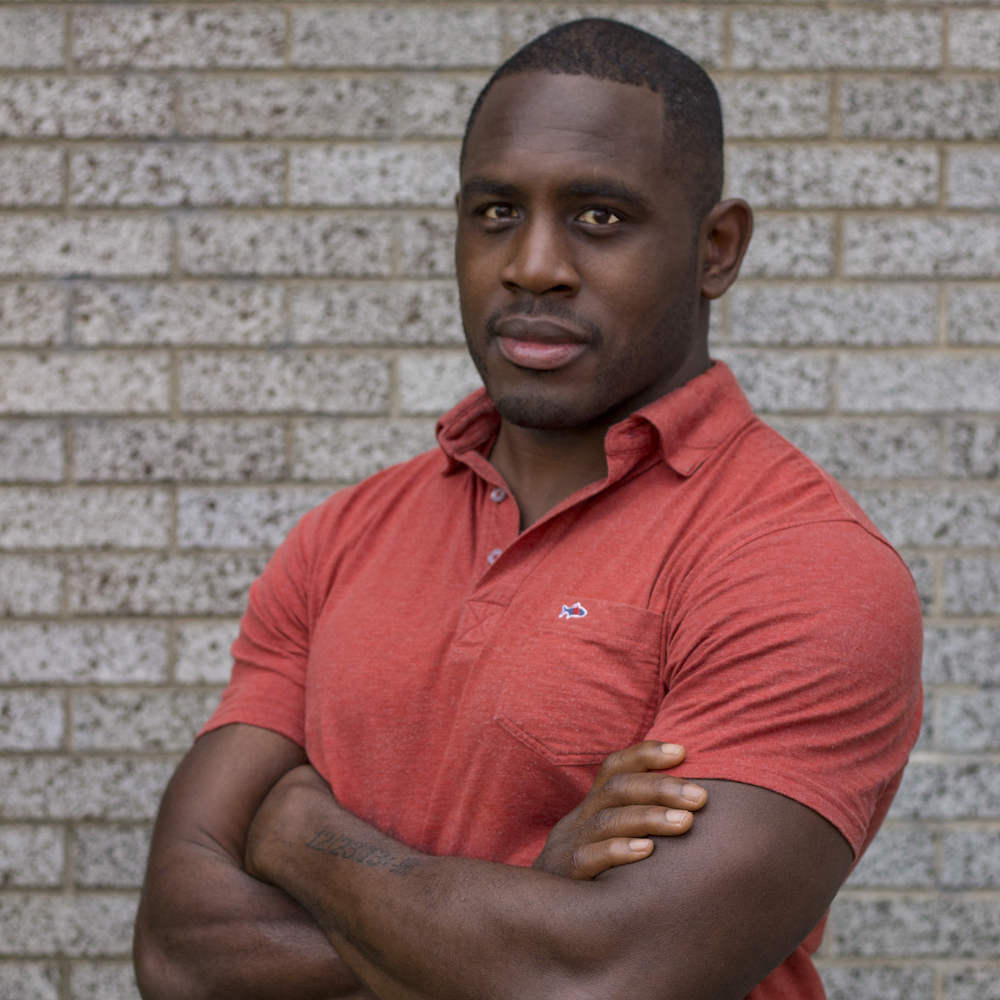
Ed Latimore
Ed Latimore is a best-selling author, professional heavyweight boxer, and physicist. He writes about self-improvement, sobriety, fighting, and the lessons he learned growing up in the projects of Pittsburgh.
Follow @EdLatimore