A Friend’s Murder Showed Me The Ugly Truth About The Feds

My friend Shane was murdered in broad daylight—16 bullets, on camera, license plate visible—and a year later, there were still no arrests. Why? Because the killers weren’t hiding. They didn’t have to. They were protected by the feds.
This essay tells the story of how Shane’s death exposed me to a much darker truth about law enforcement, federal informant programs, and who the system really protects. It’s not just about Shane. It’s about the reality that some people can kill—and never face consequences.
👇 Full references, case studies, and supporting articles below the article
In May 2022, my friend Shane was shot 16 times in broad daylight. It was caught on CCTV. They got the car make and model and the license plate. With that type of careless crime work, we figured it’d be an open-and-shut case.
But it’s nearly 4 years later, and no arrests have been made, and no justice has been served.
When Solving A Murder Should Have Been Simple
And when his brother started asking questions, what he discovered made me sick.
Because it turns out the people who killed him weren’t hiding.
They didn’t have to, because they were protected. Not by the streets—but by the feds.”
Most people think the streets are like the jungle—dog-eat-dog, survival of the thuggiest type of place, where whoever is willing risk their freedom is the only one who is free. But it’s not really like that a lot of times.
Sometimes, it’s more like a zoo, and in that zoo, the danger doesn’t come from other animals. Instead, it’s when the zookeepers decide to let the apex predators loose and unchecked because they’ve decided that it’s easier to control wild animals with wilder animals—even if that means that some innocent docile animals gotta get eaten too.
On May 5th, 2022, Shane Strayder was parked in a relatively safe part of town, doing nothing illegal, when a car pulled up next to him, fired 16 shots into his vehicle, and sped away. First responders pronounced him dead at the scene, but seeing as how the shooting happened between a school and the National Aviary, CCTV footage captured the entire thing, including the license plate of the murderers.
I didn’t know Shane well, but we had mutual friends, and I’d earned his respect after he watched an amateur boxing match between his brother Aaron, in which I won decisively. I still talk to his sister regularly. They’re good people.
They weren’t from the projects, but they all grew up in an equally dangerous part of town and faced a lot of the problems I talk about in other video essays on this channel from my life in the projects.
I also talk about my upbringing in depth in my new book, “Hard Lessons From The Hurt Business: Boxing and the Art of Life.” You can read the first chapter for free here.
But the Strayder family was a little like me in that none of them became products of their environments and instead went on to become hard-working, law-abiding citizens.
Shane was a city bus driver. His brother Aaron is a fireman and has invested so much time and energy in coaching his kids and neighborhood kids in football that both of his sons are top Division 1 players, and his sister works in a research lab in DC in biology. I mention all of this to say that while they were from the streets, they weren’t of the streets, and that’s important for the next part.
Two weeks after the murder of his brother, Aaron gave an interview to our local news station, where he said his brother was there to get a pair of shoes from his girlfriend, who worked as a custodian at Allegheny Traditional Academy.
He then went on to say, and this is a direct quote, “This could have been anybody. Anybody in that car at the time, outside of a school, down the street from the aviary, around the corner from the children’s museum, the business district. My initial reaction was anger, and why would this happen, who would do this to my brother? But when I found out that it’s possibly a mistaken identity, it crushed me. It crushed me.”
When the Police Know—but Can’t Act
Around this time, Aaron posted a lengthy Facebook message stating that the police knew who did it but were being prevented from making an arrest because it would jeopardize a federal investigation.
He made a few Instagram story posts with the same claims, and we started talking. I told him about the essay I wrote, which is the original motivation for this video (link in the description), and he responded, “I think that’s what’s going on in my brother’s case.”
Of course, the police didn’t explicitly tell him all this information. He’s a street dude with street connections, and from my understanding, he was able to find out just enough to know that his brother’s assailants almost certainly operate with protection because an agency with greater power needs them to keep doing what they do so they can get what they want.
Word around the ghetto campfire is that the shooters were involved in high-level drug distribution, and feds didn’t want to put them away because they needed them for their case.
Apparently, Shane was just in the wrong place at the wrong time, and people who have a literal get-out-of-jail-free card were the shooters. Because they were informants. And the agencies protecting them decided their intel was more important than Shane’s life.
At first, I thought it might be just another cold case. But the police had all the evidence. I know this because the CCTV footage was shown on the nightly news, so they likely had even more that wasn’t disclosed to the public. So I got curious and looked into how murder cases like this are typically handled.
In 2023, the clearance rate for murder by arrest in the United States was 57.8%, meaning that 57.8% of murders were cleared through the arrest of offenders or through special circumstances like the offender’s death during the arrest process.
I imagine that once you remove “in the game” killings, where there is likely to be a report of the murder but the person lived a life where snitching is a death sentence, and homeless homicides (which are growing at an alarming rate, with the 15 largest American cities reporting over 1000 unhoused homicide victims since 2010), then the clearance rate jumps even higher—especially when innocent victims with children are involved, like Shane was.
Still, 57.8% might not sound impressive to you, but to put that number into perspective, the crime with the next highest clearance rate is aggravated assault at 41.6%. Or, to put it another way, you’re more likely to get justice if you were killed than if you got your ass-kicked.
The high clearance rate of murder is largely due to advances in technology, including the fact that CCTV is everywhere—for less than $100, you can get a CCTV set up on your porch to try and deter people from snatching your Amazon packages.
That’s likely how the police have enough information to know who pulled the triggers. At this point, it’s not that the police don’t know who did it; it’s that they can’t do anything about it—and they aren’t telling his brother who did it, because, remember, he ain’t of the streets, but he’s from it and still has those connections.
When The Government Encourages Murder
I’ve warned people about the danger of losing their cool in my video essay “Real Tough Guys Don’t Fight—What they do instead might save your life.”
It can make a huge difference, sometimes even saving your life in situations where you might not even know the danger. After all, you never know if you’re dealing with someone who has a gun, doesn’t care about going to jail, is “Mobbed up” or in a street gang, or is protected from the law by the law
It’s not difficult to imagine encountering someone in the first three scenarios, especially with how easy it is to acquire firearms in the United States. We also know that many people are one bad day away from doing something irreversible and destructive that involves firearms and a random disregard for people.
And while you may not personally know any members of organized crime, it’s real, whether it’s something as loosely organized as the bloods and crips or structured like Hell’s Angels or the Mexican Mafia—and if you cross one of their members, it’s not so much they are protected from the law, as it is they will do whatever it takes to deal with disrespect because of the expectations and protection of the group.
Organized crime, by definition, is illegal, but its influence is so vast that many members enjoy de facto immunity. Even in cases dealing with low-level street gangs, the threat of intimidation can be surprisingly potent, causing witnesses to forget crucial details of an incident.
That’s why I always suggest being polite to everyone you encounter. You never know who doesn’t care about ending up behind bars or has the ability to keep themselves from ending up there. And while the latter shouldn’t be a possibility, it’s the reality.
I don’t know how “above water” this is, but it’s not unprecedented.
A few years ago, a story broke about this practice. In a 2003 LA Times article titled “Informants May Get a Pass For Murder,” Joseph O’Brien, a former FBI informant coordinator in New York City, said, “The bureau has to encourage these guys to be themselves and do what they do. If they stop just because they are working with the FBI, somebody’s going to question them. If anything, I’d want them to become more active.”
In other words, some people can kill you without facing legal consequences, and they know it. In fact, they may be emboldened to do so because they need to maintain cover and not have anyone think they’re a snitch.
If the name Derek Chauvin doesn’t ring a bell, he’s the officer who was found guilty of killing George Floyd. He was stabbed while serving his time by John Tuscark, who had previously worked as an FBI informant. Turscak was in prison after being found guilty of racketeering and conspiring to kill a gang rival. Before that, he worked as an FBI informant against the Mexican Mafia organization.
When being sentenced in 2001, Turscak admitted that he carried out crimes while working undercover as an informant to the FBI. “I didn’t commit those crimes for kicks. I did them because I had to if I wanted to stay alive. I told that to the [FBI] agents, and they just said, ‘Do what you have to do.’”
And while the practice of letting confidential informants get away with crime—even murder—is morally reprehensible, ethically dubious, and a complete betrayal of the trust we place in law enforcement to protect us, their actions make sense. It’s just unfortunate when people “not in the game” become collateral damage, but the alphabet boys don’t really care about that.
Maybe to them, it’s a case of the lesser of two evils, but that sits about as right with me as the CIA selling cocaine to fund a foreign war. And a lot of times, the government doesn’t even pick their confidential informants right.
A Flawed Process Leads To Dangerous Outcomes
I love true crime shows, especially 48 Hours. In one episode, I learned that Scott Lee Kimbal was a serial killer who tricked the FBI into thinking he had important information on crimes. Most of it was made up, but it protected him from prosecution and investigation into other crimes that would have kept him off the streets.
Kimbal isn’t the only serial killer the FBI enabled by labeling them confidential informants.
Kenyel Brown of Detroit was serving multiple drug and violent offenses. A Supreme Court ruling got that reduced to 21 years, but he only served 14 months after the ATF and the FBI got him released to be an informant. He violated parole multiple times with DUIs and drug possession, but each time, the agency got him out of jail.
Eventually, he went on an armed robbery spree that resulted in the deaths of six innocent people. This time, the agency did try to rein him in, but before that could happen, he offed himself, and news reports said that if this guy wasn’t allowed to be on the streets as an informant, he’d still be behind bars. And they’re exactly right.
And it’s not just informants or gang members with federal protection.
Sometimes, the person who can kill you and walk free wears a badge and cashes a government paycheck.
The Badge of Immunity
Between 2013 and 2022, over 1,200 people were killed by police officers each year in the United States. That’s more than 12,000 deaths in a decade. And yet, in that same time frame, fewer than 150 officers faced murder or manslaughter charges. That’s just over 1%.
Let me repeat that—99 out of 100 times, nothing happens.
And this isn’t always about a shootout or split-second decision. There are bodycam videos, surveillance footage, eyewitness accounts—and still, the vast majority of these officers never see the inside of a courtroom. Some departments have internal affairs divisions that bury reports. Some police unions are so powerful that they can reinstate officers with long records of misconduct, as if they were rehiring a barista at Starbucks.
When Derek Chauvin killed George Floyd, it was caught on camera and seen by the world. But he had 17 prior misconduct complaints on record—and he was still on patrol.
And he’s not alone.
Michael Rosfeld, the officer who fatally shot Antwon Rose II, had a disciplinary history of his own. Before he was hired by the East Pittsburgh Police Department, he was placed on administrative leave by the University of Pittsburgh Police for mishandling an arrest—an incident that involved the son of a university official.
He resigned before the internal investigation could conclude. The university failed to document this properly, so when East Pittsburgh hired him, they had no idea what kind of officer they were bringing on.
Just three hours after being sworn in, Rosfeld pulled the trigger—and Antwon Rose, a 17-year-old unarmed teen, was dead. Despite clear video evidence and public outcry, Rosfeld was acquitted of all charges after less than four hours of jury deliberation. From street informants to sworn officers, the badge—real or metaphorical—becomes a shield. Not just from bullets, but from consequences.
Not Every Cop Is a Bad Guy, But That’s Not The Point
I’m not saying every cop is dirty. I’ve had my run-ins. I’ve broken the law. And some officers treated me with respect—even when I didn’t deserve it. But let’s be real—when you have the power to take a life and walk away untouched, that power needs checks. And right now, we don’t have enough of them.
I think “defund the police” is a stupid idea, and that being a cop is a difficult and dangerous job that demands respect.
But I also believe that if you have that much power, then it must be wielded responsibly, and for that to happen, what I’m describing in this video shouldn’t happen—but when it does, the punishment should be swift and severe.
When a law enforcement officer breaks the law, whether actively or by turning a blind eye, the damage is far greater than when a civilian messes up.
But right now, the truth is, if you’re wearing the uniform, carrying the badge, and your department is behind you, you can get away with just about anything. This is the major reason I tell young black men to be polite to the cops and, if you feel like your rights were violated, fight them in court. Because if you decide you’re gonna fight that battle at a traffic stop, you’re either gonna lose your life or your freedom, and they’ll lose nothing.
And that makes it hard to know who the real threats are. It’s not just the guy with a rap sheet. It’s the one with a clean uniform and a dirty record. The one who knows the system—because he is the system.
No matter how badass you think you are, there is not only someone worse, but there are people who are bad and will never have to face the consequences for their evil. As dangerous as informants can be, there’s another class of people, again tied to the government, who can act recklessly, take lives, and even do worse—and they know it.
Shane wasn’t in the game. He wasn’t a snitch. He wasn’t running from anything. But he died at the hands of people the government was protecting. That’s when I learned the ugly truth: The streets are dangerous. But the feds? Sometimes they’re worse.
To learn more about the drug trade, from someone who had a front row seat to all the wild violence and depravity that it brought with it, check out this video essay where I talk about my experiences growing up next to drug dealers and drug abusers.
🔗 Referenced Sources
📄 Federal Informant Protection & Abuse
Mob Informant Kept on Payroll Despite Crimes – LA Times (2001) https://www.latimes.com/archives/la-xpm-2001-nov-27-me-8712-story.html
Informants May Get a Pass for Murder – LA Times (2003) https://www.latimes.com/archives/la-xpm-2003-jan-12-na-informants12-story.html
🔫 Shane Strayder’s Murder (Pittsburgh, 2022)
🕵️ Kenyel Brown – Informant Turned Serial Killer
⚖️ Police Killings, Misconduct & Systemic Protection
Police Killings Per Year – Mapping Police Violence
https://mappingpoliceviolence.org
Officer Prosecutions (BGSU study) – Police Integrity Lost PDF https://www.bgsu.edu/content/dam/BGSU/health-and-human-services/document/Criminal-Justice-Program/policeintegritylostresearch/-9-On-Duty-Shootings-Police-Officers-Charged-with-Murder-or-Manslaughter.pdf
Charges & Convictions Overview – Police Violence Report https://policeviolencereport.org
Crime Clearance Rates (2023) – Statista https://www.statista.com/statistics/194213/crime-clearance-rate-by-type-in-the-us/
2023 Police Killing Coverage – Axios https://www.axios.com/2024/08/09/police-killings-neighborhoods-mapping-black
Wikipedia Summary –
https://en.wikipedia.org/wiki/Police_use_of_deadly_force_in_the_United_States
🚨 Derek Chauvin’s Disciplinary Record
👮 Michael Rosfeld & Antwon Rose II
Essence
https://www.essence.com/news/antwon-roses-family-sues-university-of-pittsburgh/
Stats on the homeless homicide
https://jacobin.com/2022/05/homeless-homicides-data-surge-victims-suspects
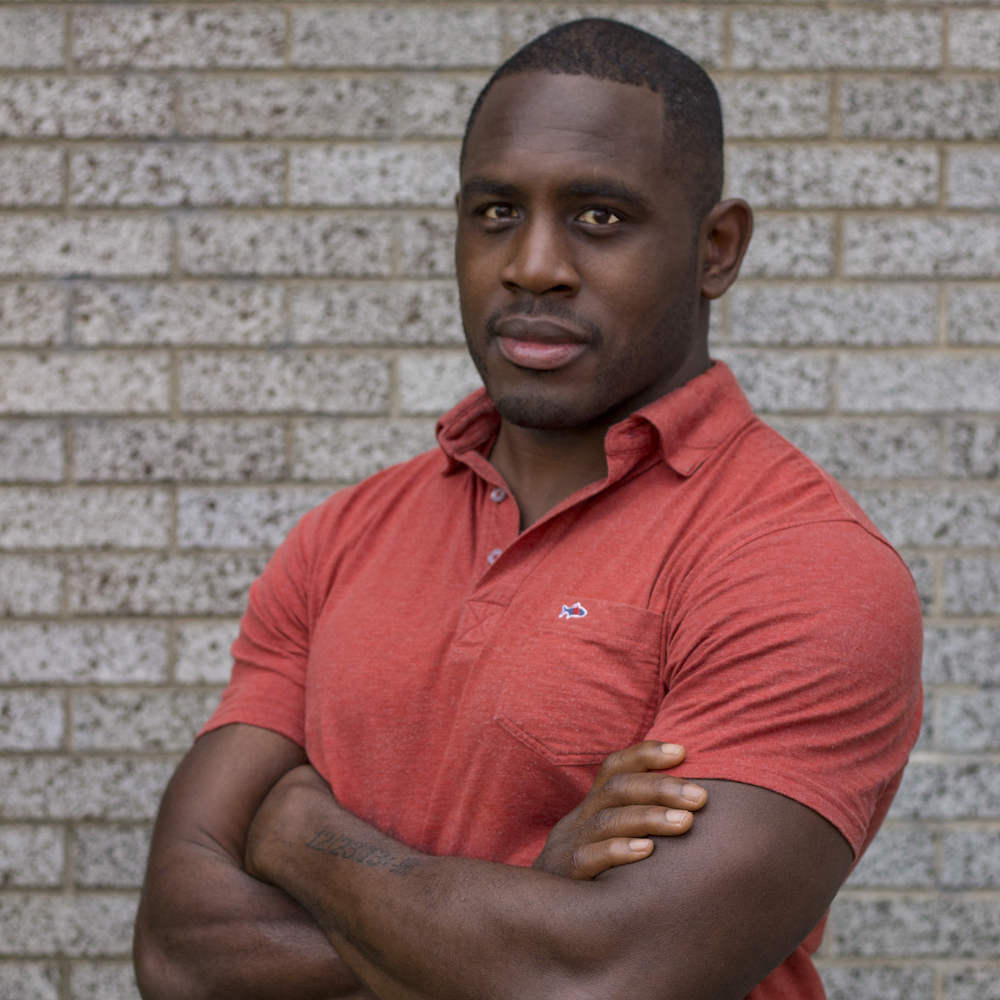
Written by
Ed Latimore
Ed Latimore is a best-selling author, professional heavyweight boxer, and physicist. He writes about self-improvement, sobriety, fighting, and the lessons he learned growing up in the projects of Pittsburgh.
Follow @EdLatimore