How To Stop Being Poor: 5 Financial Habits I Had To Unlearn Growing Up Broke

I spent most of my life poor and bad with money because I grew up in poverty.
Growing up in poverty is tough.
I lived on food stamps and government health care. I didn’t even know people were poor until I got to high school.
Everyone talks about surviving in an environment with crime and violence, but they often fail to mention something that makes a tremendous difference in your quality of life.
When you grow up in poverty, there are–by definition–no examples of healthy financial habits. Because of where I grew up, I absorbed the same financial habits as everyone around me. Unless I took some drastic steps to learn about money, I was doomed to remain in this environment.
I’m from the ghetto and in the ghetto, everyone is broke.
This post is going to teach the worst financial habits I learned growing up and how I broke them.
I was born poor. I spent my entire childhood and a large portion of my adulthood poor. But I worked hard and learned how to improve my financial habits.
I had almost every problem on this list. I was broke but I learned why. Then I fixed them as well.
How To Stop Being Poor
People hate hearing this because they assume “stop being poor” means “work harder.”
That’s not what I’m saying.
Money problems are often behavior problems before they become income problems.
If you want to stop being poor, you usually have to:
- learn to think beyond immediate gratification
- stop financing things you haven’t earned
- become willing to suffer for long-term rewards
- learn skills people value
- become coachable
- improve how you communicate
- stay humble enough to keep learning
None of this fixes your life overnight.
But poverty often survives because of habits long before it survives because of income.
1) The future is a foreign concept to you
If there’s an 80/20 reason why you’re broke, it’s because you can’t conceive this thing called “the future.” The inability to save money or purchase things of value all stem from this basic problem.
Poor people stay poor because they can’t imagine a result that is not instantaneously gratifying. The better you are at considering the future, the better you are at planning for it.
The inability to plan for the future is such a strong predictor of your likelihood to remain poor that it’s been shown that languages which make the speaker separate from the idea of the future make the speakers more likely to be in debt, overweight, and smoke.
From a Ted Talk by economist Keith Chen:
While “futured languages,” like English, distinguish between the past, present and future, “futureless languages” like Chinese use the same phrasing to describe the events of yesterday, today and tomorrow. Using vast inventories of data and meticulous analysis, Chen found that huge economic differences accompany this linguistic discrepancy. Futureless language speakers are 30 percent more likely to report having saved in any given year than futured language speakers. (This amounts to 25 percent more savings by retirement if income is held constant.) Chen’s explanation: When we speak about the future as more distinct from the present, it feels more distant — and we’re less motivated to save money now in favor of monetary comfort years down the line.
There is no direct fix for this because time is such an abstract concept. The best you can do is treat the symptoms of the disease. Like most treatments, this will provide an improved standard of living.
Why Poor People Struggle To Think About The Future
One thing I noticed growing up is that poor people don’t usually ignore the future because they’re stupid.
They ignore it because survival shrinks your time horizon.
If you grow up worrying about rent, violence, food, transportation, or chaos, your brain learns to prioritize immediate problems.
You stop asking:
“What helps me five years from now?”
And start asking:
“What gets me through this week?”
That mindset keeps you alive in bad environments.
But it becomes a problem later.
Because building wealth requires making decisions where the reward is delayed.
You suffer now.
You benefit later.
That’s hard if your whole life taught you that later never comes.
2) You think you deserve better
Poor people love to tell you about how they “deserve” better.
Instead of working for it, they’d rather finance it or pay for it with credit. Of course, every creditor knows this and extends lines of credit to people who shouldn’t have it.
I watched my cousin get a car he couldn’t afford on 2 separate occasions because of these “Everyone is approved” type places.
I’m not saying it’s the car dealer’s fault for loaning to people who can’t afford it–it is just business, after all. I’m saying that the world does nothing to disincentivize stupidity, and a lot of people stay poor because of their stupidity.
Of course, he defaulted on the loan and got the car repossessed both times.
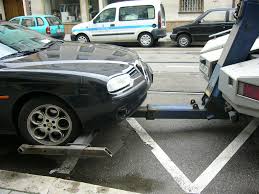
There’s nothing wrong with believing you deserve nice things. The problem is when you refuse to do the work to get them and take shortcuts instead.
This keeps you poor because not only does this never work, you don’t learn any skills to actually earn nice things. You’ll just sulk, get jealous, live beyond your means or worse, commit a crime to acquire what you think you deserve.
3) You think you know it all
This is the biggest reason I stopped giving useful advice to my family. In case you missed it, I’ll tell you a little about myself. I was:
- Born in the projects
- (Effectively) raised by a single parent
- Became an alcoholic, but…
- Got it all together to earn a physics degree
- Wrote a book
- Learned to make money online
- Boxed professionally at a high level.
I haven’t slept in a public housing project in 17 years.
I made it out. I know what it takes. I know this shit ain’t easy and I’m actually in a position to help. However, do you know how often someone from my family has not only reached out for my help (of a non-monetary nature) AND taken it? None.
Do you know how often I’ve heard the response “I know” when I try to give unsolicited advice that a person REALLY needs to hear? Every. Single. Time.
For my sanity and the preservation of these familial relationships, I have learned to simply stop trying to help.
I’m the only member of my family to graduate from college and truly free myself from the tentacles of poverty (government assistance, living on credit, and lack of work skills) but no one ever takes advantage of the incredible resource that I am to them.
Why Humility Is One Of The Fastest Ways To Stop Being Poor
I noticed something strange after I escaped poverty.
The people who changed their lives fastest weren’t always smarter.
They weren’t more talented.
They weren’t more connected.
They were more teachable.
They asked questions.
They admitted they didn’t know things.
They listened.
Poor people often develop a strange kind of defensiveness.
You get used to protecting your pride because pride may be the only thing you own.
But pride becomes expensive.
The moment you think you already know everything, you stop learning from people who can help you.
And the moment you stop learning, your life becomes smaller.
Humility isn’t weakness.
Humility is leverage.
4) Ironically, you want to avoid suffering
Broke people always do just enough to be broke.
I don’t mean this in a purely mathematical sense like working just enough hours during the week to pay their bills. No, what I mean is that broke people stay broke because they want everything easy.
If it’s not easy, they won’t do it.
Difficult things are inherently unpleasant. Completing them is the only way to make a better life for yourself.
You’re going to suffer, regardless of which path you take. I think about a friend of mine who claimed he wanted to enlist in the military to get his life together (in a similar fashion to me).
He didn’t do it, so as a result, his life is very difficult because he has no skills and no work ethic.
Comparatively, I really hated basic training. It wasn’t so much the physical training, but rather it was the restrictive, hot, monotonous environment.
I wanted to be anywhere else but there. But I knew (or I felt) that this was better for me in the long run.
Because I endured 10 weeks of basic training, my life changed and it set me up for where I am now. I suffered through my boxing training and physics classes because I figured it would give me more options.
I suffered then to set myself up for now.
Avoiding discomfort now always causes you to suffer later. Poor people never get this.
5) You can’t communicate at a basic level for 5 minutes
Communication is key. It allows you to interact with a majority of the world.
This communication is not about speaking in the same style as the majority. That helps, but it’s not particularly important.
What makes a difference is your ability to control your temper and nonverbal cues. If people have said that you look annoyed, you roll your eyes, or you raise your voice when dealing with normal people, you’re probably poor.
If you can’t take constructive criticism without losing your temper, there is no way you’ll ever become better than what you currently are.
You’ll likely stay that way because you tell them you don’t when people tell you that you do that. Because you know it all, deserve to be talked to like you’re special, and it would be uncomfortable to change and become an effective communicator
Why Most People Stay Poor
Most people stay poor for the same reason people stay unhealthy.
They don’t fail because they lack information.
They fail because changing your life usually requires changing your identity.
It means admitting some habits aren’t working.
It means suffering today to improve tomorrow.
It means giving up excuses that protected your ego.
And that’s uncomfortable.
People say they want a different life.
What they often want is a different outcome without becoming a different person.
That almost never works.
The easiest way to stop being poor
I tell this to everyone who will listen. I tried telling this to my family. Now I’ll tell it to you. The simple 5 step plan to stop being poor:
- Make a plan
- Stick to it no matter what
- Listen to advice on how to better execute your plan
- Suffer for what you want
- Stay humble and ready to learn from everyone
That’s the easiest way not to be poor. The rest is up to you.
Frequently asked questions about how to stop being poor
How do I stop being poor?
Stopping poverty usually starts with changing habits before changing income. Long-term planning, learning valuable skills, controlling spending, becoming coachable, and accepting short-term discomfort often matter as much as making more money.
Why do people stay poor?
People often stay poor because of habits, environment, limited examples, poor long-term planning, emotional decision-making, and learned behaviors absorbed while growing up.
How can someone avoid poverty?
Avoiding poverty often means developing skills people value, controlling spending, planning long-term, avoiding debt traps, and learning from people who have already built stable lives.
Why is it hard to stop being poor?
Poverty changes your thinking. When you’re constantly solving immediate problems, it becomes difficult to focus on delayed rewards and long-term planning.
Can growing up poor affect financial habits?
Yes. Growing up poor often shapes beliefs around money, spending, scarcity, risk, and future planning. Many financial habits are learned long before people realize they have them.
Why do poor people struggle to save money?
Many people raised in poverty develop shorter time horizons because immediate needs dominate attention. Saving money requires sacrificing present comfort for future benefit.
Does mindset matter for escaping poverty?
Mindset alone is not enough, but mindset strongly affects behavior. Habits like humility, long-term thinking, delayed gratification, and willingness to learn often create opportunities that otherwise get missed.
Is being poor caused only by laziness?
No. Poverty is influenced by environment, opportunity, family structure, education, skills, trauma, habits, and economics. But personal behavior still matters and can improve outcomes.
Written by
Ed Latimore
Ed Latimore is a best-selling author, professional heavyweight boxer, and physicist. He writes about self-improvement, sobriety, fighting, and the lessons he learned growing up in the projects of Pittsburgh.
Follow @EdLatimore