Growing Up In The Projects Taught Me What Red Flags REALLY Are

Growing up in the projects, I didn’t see a single healthy, stable relationship. When I started dating, intellectually, I knew what a toxic person looked like. But emotionally, it didn’t matter.
From the moment you’re born in a broken environment, you’re being conditioned — and that conditioning is powerful enough to make you chase the very things you know will destroy you.
You attract what you are
I’ve never hit a woman, but the only time I came close was with a woman I dated and argued with so much that the noise from our fights actually got me kicked out of my apartment. This was the same woman who cheated on me and got pregnant by a dude at work, but the chaos she brought into my life felt so familiar that I kept interacting with her.
I wasn’t so messed up that I took her seriously after that, but in many ways, that was even worse.
If I dated her exclusively and seriously, my pride and self-respect would’ve been in the toilet—but at least I could’ve told myself I was “stepping up,” being a “real man” by playing step-daddy.
If I had cut her off completely, my sanity would’ve been intact, but I would have driven myself crazy thinking about her, the nice things she did sometimes, and the sex.
She was a damn beautiful Brazilian and built right—and I was broke. She let me use her car, and when you don’t have much going for you, that kind of comfort feels like control..
My mom ended up moving her into her house and treated her like a grandchild, even going so far as to try to get us all to take family photos.
I didn’t participate, but my mom got the photos done and hung them up around her house like it was family—until the girl started bringing different dudes through and leaving her kid with my mom while still being disrespectful as all hell.
One day, my mom finally had it, and she kicked her out.
I tell this story, not just to show what happens when you ignore red flags, but to show how your childhood trains you to seek out chaos and find comfort in dysfunction.
My hope is that by the end of this essay, you’ll be able to spot red flags, understand why you fell for them in the first place, and stop repeating the same disasters.
Or at least know when to hit pause and get some therapy before you try again.
What I didn’t realize at the time was that nothing about that situation was random.
It was programming.
The same patterns I learned growing up were now running my relationships like software I didn’t know I’d installed.
The biggest red flag is staring you in the mirror
There’s a saying that goes, “If you run into one asshole, they might be the problem. If you run into ten assholes, then you might be the problem”.
The biggest red flag isn’t out there — it’s in here.It’s the one you don’t want to look at because it means you’ve got to admit that you’ve been carrying something broken into every relationship you’ve ever been in.
That red flag is your attachment style, and underneath that, your Adverse Childhood Experiences score, or your ACEs score.
When I discuss this with people, I find that most people have at least heard of attachment styles, but most people don’t know much about the Adverse Childhood Experiences.
So I’ll dig into adverse childhood experiences right after I give a brief overview of attachment styles.
I put them in that order because, generally speaking, your attachment style is the symptom and your ACE score is the cause. Most people with an anxious or avoidant attachment style didn’t just wake up that way.
You love the way you were loved
If you grew up in a house where love was unpredictable — sometimes warm, sometimes cold — your brain wired itself to chase closeness while preparing for rejection. That’s the anxious attachment loop.
If you learned early that vulnerability gets you hurt, you shut down in response, and now you pride yourself on not needing anyone — that’s avoidant attachment.
You don’t become hyper-clingy, distant, or emotionally unavailable by accident.
Humans are social animals who not only seek to bond, but are more comfortable when relationships—romantic, platonic, familial, or even business—are stable. So if you have an anxious or avoidant attachment style, you likely evolved that way to survive.
And what did you have to survive? Probably any number of adverse childhood experiences.
Adverse Childhood Experiences are the kinds of events that no kid should have to go through, but many of us do, and the effects of them extend well past childhood.
Things like physical or emotional abuse, neglect, growing up around addiction, domestic violence, or even just living in a home where you never felt safe. Each one of those experiences leaves a mark—not just psychologically, but biologically.
There are 10 experiences, exactly, and if you want to take the test to see where you score, I left a link in the sources at the end of the essay.
Even if you think you had the perfect childhood, I highly recommend you take it—especially if you keep dating “narcissists” or “BPD chicks.”
You might be surprised how messed up you are.
This isn’t a contest, but I scored a 7 out of 10, and that explains everything from my alcoholism to my relationships with women when I was younger.
Research shows that a high ACE score changes how your brain handles stress, trust, and attachment by rewiring your nervous system for survival instead of safety.
When you grow up in chaos—whether it’s abuse, neglect, addiction, or instability—your brain’s stress system, known as the hypothalamic–pituitary–adrenal (HPA) axis, stays on constant high alert, training your body to anticipate danger and adapt to instability rather than relax in safety.
That constant flood of stress hormones like cortisol trains the amygdala, the part of your brain that detects danger, to stay hyperactive. At the same time, it weakens the prefrontal cortex, which helps you regulate emotions and make rational decisions, and shrinks the hippocampus, which helps you separate real threats from memories of old ones.
This chronic stress literally reshapes the brain’s structure and wiring, keeping your nervous system primed for threat long after the threat is gone.
These brain changes are why calm can feel unsafe to someone who’s lived through instability. The same chemicals that make most people feel comfort in connection—especially oxytocin, the bonding hormone—don’t release properly in people with high ACE scores.
There are other things that can downregulate oxytocin release that play a significant role in one of the major red flags I’ll cover later in the essay, but I want to make it clear how big a deal early trauma is on your ability to form a relationship.
Early trauma blunts oxytocin and increases cortisol, meaning closeness triggers anxiety instead of peace. So love doesn’t register as calm—it registers as tension. You end up craving connection but also fearing it, chasing the emotional highs and lows that your body recognizes as “normal.”
I’ve said before on Twitter/X that “Men aren’t trash, women aren’t trash, you’re just a low-quality human and birds of a feather stick together.”
That’s mostly being cheeky for engagement, but the truth is that for many people, that’s not weakness or bad taste in partners—it’s conditioning from a brain that learned, early on, that safety was never guaranteed.
And this is where it starts to bleed into your relationship choices.
Because when your nervous system is wired to equate tension with connection, you don’t just relive your childhood—you recreate it.
You start calling chaos “chemistry,” you confuse anxiety for attraction, and you overlook red flags because they feel familiar. It’s not that you can’t spot the danger—it’s that part of you still believes danger is love.
But here’s where it gets tricky: Having adverse childhood experiences doesn’t automatically mean you’ll end up anxious or avoidant. Some people go through hell and still find secure love later in life — but only if they recognize that their definition of “normal” might be warped.
The point is, your attachment style is the filter that decides what kind of love feels comfortable. And if your filter was built in chaos, peace will feel weird. You’ll call healthy people “boring,” and you’ll mistake instability for passion.
Before you start memorizing red flags in other people, learn to recognize the ones in yourself. Because once you understand how your own attachment style and childhood experiences shape your attraction, you stop chasing the same disaster over and over and start recognizing what healthy actually looks like.
Yes, people have to pick better, but a lot of picking better is recognizing how messed up you are and then committing to working on yourself.
False green flags are worse than real red flags
Now, if you’re new here or just don’t know, I’m in a nice, stable 13-year relationship and growing a family. But I didn’t meet my wife until I was 28, getting sober, and working on cleaning my life up.
But before that, I wasn’t even a player so much as I was legitimately trying to fill a void. Of course, I didn’t realize it until then, but one day I started dating with real intention, no longer entertaining women just because they were pretty or easy to get into bed with, or because they came with a familiar chaos.
With all the red pill dating content on the internet, it’s easy for guys to think they know what red flags look like.
I know that because I was one of those guys.
With that said, the efficacy of the screening protocol is, at best, questionable; at worst, it creates false positives that can leave you lonely or false negatives that can ruin your life.
For example, if you interact with enough women, you’ll learn that tattoos don’t mean anything.
A girl having a good relationship with her father is nice if you guys become a couple and want to visit on the holidays, but it doesn’t mean the guy was a great teacher or that she didn’t have any positive masculine influences elsewhere.
And as much as guys want to believe that a woman’s body count means something, they never stop to ask themselves, “Well, how will even know that?”
Maybe you ask and get an honest answer, and business continues as usual. But most times, if she answers—and that’s a big if—she lies to you because she likes you and knows the implication of the question, or it’s the last question you get to ask her.
And that’s assuming you’re brave enough to ask anyway.
A lot of the classic red flags are red herrings. Now that I’m 40 and able to look at how some girls turned out, I can see what were actually red flags and what were just things that didn’t work for me.
Before I get into the real red flags, I want to tell you the 2 main reasons why guys get involved with a girl despite seeing some of the more obvious red flags.
You’re nothing special—but you want to be
One of the earliest pieces of dating advice I got was from a good friend of mine, the first time I went to college, before I drank and partied myself to expulsion.
There was this girl who was desperately trying to sleep with him, and he kept brushing her off. The girl wasn’t bad looking, but he kept turning her down.
One day, I asked him why he wouldn’t do anything with her, and he said, “I’m not anything special. If she’s trying this hard to give it up to me, then I wonder how many other dudes are in line.”
Now, we can argue another day if that’s a self-esteem issue. For the record, Jay did extremely well with the ladies.
I actually talk about Jay in my book Hard Lessons From The Hurt Business: Boxing And The Art of Life. This is the guy who gave me a ride home from Rochester, NY, to Pittsburgh after I fail out of college when I was 19.
Grab the book in all formats here at this link.
I met Jay when I was 19, and I’m 40 now. In those 21 years since then, I’ve met one other guy who has been able to turn down an attractive woman because she was coming on way stronger than seemed reasonable (there’s a hint for one of the red flags) or because he knew she wasn’t discerning with the guys she’d gotten with.
The first reason dudes keep moving forward with girls who have obvious red flags is that they look at a lot of the behavior as something that feeds their ego. A guy immediately thinks there’s something special about him, and that’s why she’s bringing the heat.
Now, some of this also comes down to naivete. When you view the world through rose colored glasses, all the red flags look normal.
The only way to become street smart is to fall for some bs. If you haven’t been hurt or watched people get hurt, you’re not gonna be able to recognize the signs of a dangerous person. That doesn’t just apply to physical danger, but also to emotional and mental danger.
Naivete aside, I don’t blame dudes for seeing typical red-flag behavior as desirable, because the average man rarely, if ever, gets a girl pursuing him or making the first move. When it happens, it feels like they won the lottery.
And any ladies reading this, I’m sure some of you have made bold moves on men, but what most of you consider a “bold move” is just putting yourself in a man’s vicinity so he can make a move.
When you combine that with the depressing stats like 24% of men between the ages of 22 and 34 not having sex within the past year and 63% of men being single, it’s not even so much that men lack discernment.
It’s just that—and I use this word in a completely non-judgemental way—desperation trumps any discretion they might have.
Sex and feeling desired are incredibly powerful drives. Especially in men.
It’s as powerful as thirst, and when you’re thirsty, you’ll drink anything to survive.
You are the common denominator in every problem you have
The second reason guys end up pushing forward despite some very obvious red flags—red flags I swear I’m getting to, but I just have to lay the foundation—is because they’re messed up themselves. They’ve experienced a lot of adverse childhood events.
I’ve talked extensively about the effects of being raised in a broken home, and because of my personal experience, that’s focused on being raised by a single mom, abuse, and drugs/alcohol.
But if you live in a home with domestic violence, you also end up in a situation where you’ll either be easy to manipulate, emoitonally insecure, or you’ll think certain behaviors—those red flags were going to get to—are just normal.
Now, both of these points apply to women as well as men, but I’m a man. I speak to the male experience, and based on the stats, most of my audience are men.
With that said, I think both men and women will find a lot of value in this list of red flags, as it’s not your typical one.
Yeah, there might be something in here you’ve heard before, but what I hope to do here is deliver it to you in such a way that a light bulb goes off and you stop getting seduced by darkness.
It’s hard to know what you don’t know
Now that I’ve turned the mirror back around on you, let’s get to what many of you were hoping for: red flags you can spot in other people.
I touched on it earlier, but as a quick recap—and I know a lot of you are going to disagree, but since you made it this far, hear me out—most of what you see on popular red flag lists by dating coaches is either flat out wrong, imprecise enough to be useless, or impossible to know for sure.
You can’t know a girl’s body count.
Even if someone had a rocky relationship with their parents, it doesn’t mean the parents didn’t do a great job raising them OR that they had other influences (positive or negative), and I’ve got enough experience now to know that MOST tattoos mean nothing.
Past behavior is the best predictor of future behavior
The biggest and most obvious red flag is someone who has cheated before—especially if they cheated on a relationship with you. I’m also going to throw someone into this who’s leaving a serious relationship, specifically so they can take things to the next level with you.
While not technically cheating, if someone leaves a current serious relationship JUST so they can be with you “guilt-free,” that’s a red flag.
That girl I mentioned earlier, who got pregnant by the guy at work, and my mom moved and acted like the kid was her grandchild, even though we knew from a DNA test it wasn’t—I started messing with her while she was with another guy.
And the worst part is that I knew it and knew the guy. I’m not proud of myself for that, but it’s how I learned some awful lessons that I’m now sharing with you.
The reason why cheating or leaving a serious relationship is such a big red flag is that it’s the clearest sign they aren’t going ot be loyal or faithful to you.
And for anyone who thinks, “Well, I’ll just sleep with her on the side if she’s in a relationship,” it’s one of the easiest ways to lose your life. I made a video about how bad being the side piece can be, which I linked in the references and sources at the end of this essay.
Celibacy is not the same as virginity
The next major red flag is anyone claiming to be celibate.
Celibacy is not the same thing as being a virgin. When someone says they’re currently celibate, my first thought is “Wow, how much banging were you doing that you had to take a break?”
This isn’t about judging someone based on their level of sexual activity. That is a false red flag if, for no other reason, than someone who is sleeping around AND wants to be in a relationship isn’t going to let you know they have double or triple-digit bodies.
Even though I’m telling you that, by itself, the whole body count thing is a false flag, that doesn’t mean most people don’t think it means something, so they aren’t going to let you know how they approach sex either way. Their actions will do the talking.
So if a person feels the need to advertise their celibacy or how many dates they wait before having sex—to you, as you’re showing romantic interest—then it means they have had a lot of bad experiences but haven’t made the connection that the people they continue to pick because of attachment styles are the reason they have trouble.
It also means they are—I don’t like the phrase “ran through” because it sounds so vulgar–“burnt out.” I mean this literally and figuratively, as it’s a lot closer to what happens after too many emotional investments.
Casual sex has its own set of problems, but a way more destructive activity is intense relationship hopping, where you quickly and frequently form emotional and sexual attachments with people only to break them off every few months for whatever reason.
When someone keeps jumping into intense relationships and breaking them off, they’re not just wearing themselves out emotionally — they’re burning out their brain’s bonding and reward systems.
Every time you get close to someone, especially through sex, your brain releases oxytocin and dopamine — chemicals that create trust, pleasure, and attachment. But when that cycle of bonding and separation repeats too often, the brain adapts. Oxytocin receptors become less sensitive, and dopamine release during new connections drops.
You stop getting the same emotional “high” from closeness, and the crash after a breakup hits even harder. Over time, that trains your nervous system to crave the excitement of novelty instead of the stability of real intimacy.
That’s why I don’t say people like that are “ran through” — they’re burnt out.
Their bonding circuitry is desensitized. They’ve built a tolerance to attachment itself, so healthy love doesn’t register as exciting. It just feels flat.
So, like an addict trying to recover from being hyperstimulated on drugs because of all of the pain their problem has brought them, they quit.
Because past behavior is the best predictor of future behavior, you can be pretty sure that whatever behaviors they had that made them quit will manifest in any relationship you have with them and make your life worse.
Don’t date crackheads
Speaking of sobriety, let’s get one of the more common ones out of the way.
Do not enter into a romantic relationship with anyone who uses hard drugs. And when I say hard drugs, I mean anything that you have to cook, cut, stretch, or compress to use it. Pill poppers count too, so if you’re popping xannies, vics, oxys, percs for anything other than legitimate medical conditions, that’s a hard drug user in my book.
Aside from these drugs having a high potential for addiction, all the behavior that comes with addiction to these drugs WILL ruin your life.
You’re either gonna wake up to all your stuff sold, people will be visiting your house at all hours of the night, the person you’re with will be leaving at all hours of the night, or you’re gonna end up as collateral damage when they can’t pay a drug debt, or you get pulled over and they have something on them.
I also put excessive drinkers and weed smokers in this category. Do not date addicts.
As someone who spent their 20s in a constant alcoholic haze that was occasionally mixed in with weed and pills, I can tell you that I was a mess, and no one should have been with me.
I’m lucky I didn’t get some poor girl killed when I decided to get behind the wheel so drunk that I couldn’t remember where I parked my car.
It’s bad news.
The hens come home to roost—or they don’t
To bring it full circle to the effects of your childhood experiences and red flags, I want to tell you what my mother said to me a few years after she moved that woman and her child in, but before they had the fight, and she kicked her out.
She had the gall to ask me if the reason I wasn’t coming around anymore was because of that girl living there.
Of course it was! That’s how oblivious my mother was to this situation, but what could I expect from someone who messed me up so badly that I missed all of the red flags in this woman and in myself that made me pick her.
Now, ending up with the wrong woman because you missed the red flags can ruin your life, but there are two other big mistakes that men make that make it impossible for them to ever get ahead in life.
Watch this video right here if you want to learn the other two things men have to stop doing if they want to make sure they don’t end up behind bars, behind in their bills, or behind in child support.
As always, the rest is up to you, and I’ll see you in the next essay.
Sources
24% of men not having sex
63% of men under 30 being single
Different styles of attachment
https://traumatherapistnetwork.com/attachment-styles-trauma-relationships/
The research behind the adverse childhood study
https://pinetreeinstitute.org/aces/
Adverse Childhood Experiences Test
https://pinetreeinstitute.org/aces-test/
The effects of childhood maltreatment on brain structure, function and connectivity.
https://pubmed.ncbi.nlm.nih.gov/27640984/
The association between oxytocin and trauma in humans
https://pmc.ncbi.nlm.nih.gov/articles/PMC5838009/
Attachment, trauma, and the neurobiology of love.
https://pmc.ncbi.nlm.nih.gov/articles/PMC6920243/
Neuroendocrine perspectives on social attachment and love
https://pubmed.ncbi.nlm.nih.gov/9924738/
The neurobiology of attachment.
https://pubmed.ncbi.nlm.nih.gov/11252992/
Related Videos
Being A Side Piece Ruined His Life
https://youtu.be/InZu1Fk5-MI?si=iPzNIpy-iF85WuOW
Living in the projects taught me the real reason poor people stay poor
https://youtu.be/EpryTVrglzA?si=VHdhnunESiZqJG9h
I was in the Red Pill. Now it makes me sick
https://youtu.be/AOcBaj3cQPA?si=kQNpjGqSwGURz1zJ
How the Red Pill brain washes men
https://youtu.be/1OBcGwFyXBY?si=26i12my_TC6-Hq76
Why being street smart isn’t worth it
https://youtu.be/CqbUhVx3H0M?si=FjiFAuL7jW-A8qQf
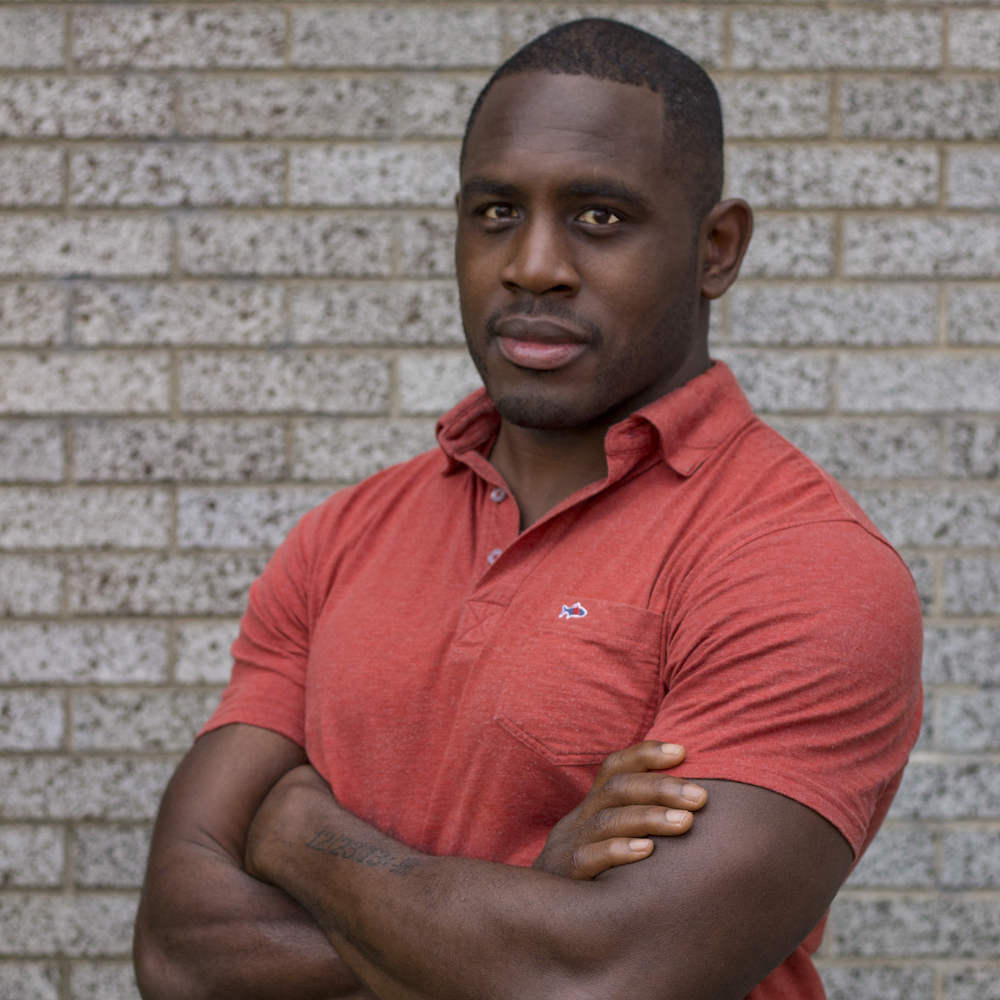
Written by
Ed Latimore
Ed Latimore is a best-selling author, professional heavyweight boxer, and physicist. He writes about self-improvement, sobriety, fighting, and the lessons he learned growing up in the projects of Pittsburgh.
Follow @EdLatimore