Elite Research Peptides Review: My Elite Research USA Experience

Elite Research Peptides Review: My Elite Research USA Experience
If you searched for “Elite Research Peptides,” the company you’re probably looking for is Elite Research USA. Elite Research USA is an online supplier of research peptides operating at EliteResearchUSA.com.
Because several peptide companies use similar names, this review covers Elite Research USA specifically.

Because there are so many places to buy peptides, you probably have a ton of options. In this review, I’m going to talk about my experiences getting my peptides from Elite Research USA.
I chose to get peptides, as well as a few related products I’ll discuss, from them because many accounts I follow and trust on X have shared positive experiences with them. I also know two people personally who use their products and, again, they have had no complaints.
Here’s a short list of what you can expect from this review of Elite Research USA:
- I’m not reviewing my experience with any specific peptides. However, I will briefly describe what they are and what the expected benefits are of using them.
- I’m going to explain what peptides are and how they work. If you’re reading this article (I hope), you are past the point of needing that information.
- I will not be giving health advice or peptide recommendations beyond general benefits and my personal experiences, where applicable. I’m not a doctor; I’m the wrong kind of scientist to be speaking authoritatively on biochemistry. Even if I was a doctor, I’m not your doctor. Even if I was a biochemist, I don’t work in labs. Do your own research on any peptides because, remember: I’m a guy who got hit in the head for a living for the better part of 2 decades.
- Beyond price, I’m not going to compare other peptide suppliers or companies. I know that’s all the rage in review articles, but there is a practical reason I’m not doing it. I’ve only used one other company, one time. This is my experience with Elite Research USA.
- This review is not explicitly an attempt to sell you. Of course, if you find this review helpful, I’d be elated if you purchased through my link and/or used my discount code, but the purpose of this review is to arm you with a checklist of what to look for when evaluating companies in this space.
Now that we have all of that out of the way, I also want to be transparent and make it clear that I am an affiliate of Elite Research USA. I’ve had nothing but good experiences with them and their products.
All of this means I may earn a commission if you purchase through one of my links or use my coupon code.
Now let’s get into the company based on its products, ordering process, testing documentation, prices, and available independent evidence. That disclosure is clear without sacrificing the authority of the review.
Elite Research USA review: Summary
- Elite Research USA is a real U.S.-based company that fulfills orders and ships within the United States.
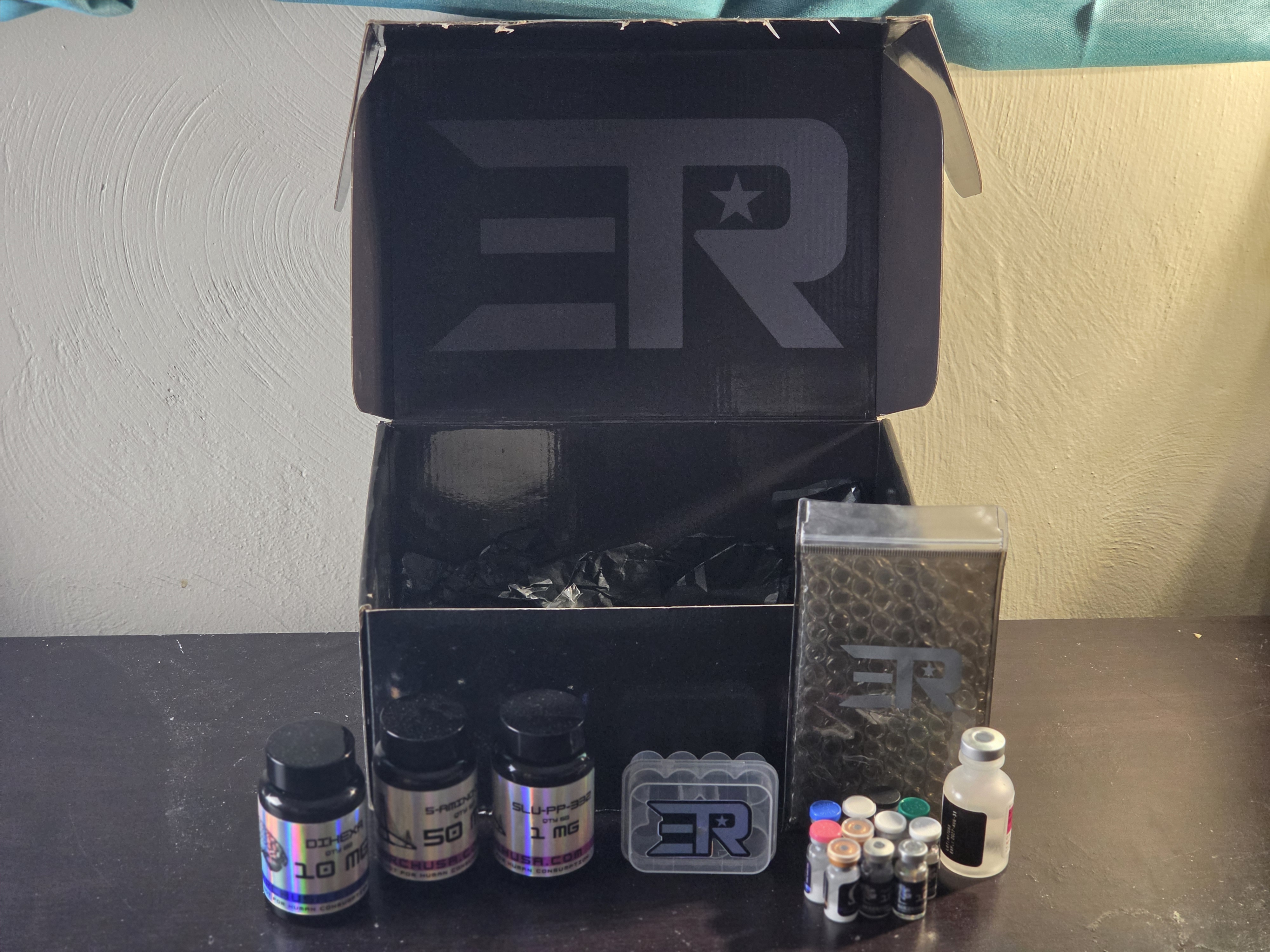
- My orders have been fulfilled quickly with two-day shipping. I’ve been extremely satisfied with the whole experience, from ordering and delivery to the packaging, branding, and presentation.
- Its biggest strength is the combination of a broad product selection, competitive prices, fast fulfillment, and up-to-date Certificates of Analysis (COAs) presented with its products. Those reports provide results to examine, although each COA applies only to the specific lot tested. I would still check that the report matches the lot you receive.
- My biggest complaint is the website navigation. Categories such as “bioregulators” and “ancillaries” make sense if you already know what you’re looking for, but they could be clearer for newer visitors.
- My Elite Research coupon code ED10 takes 10% off your order and stacks with Elite Research USA’s multi-item discounts: another 5% for three items, 10% for five or more, or 15% for ten or more in a single order. This means that if you order 10 items, you get a 23.5% discount, which is much better pricing than anywhere else you could purchase peptides. I may earn a commission if you use my code or affiliate link.
Why people call it Elite Research USA “Elite Research Peptides”
If you searched for “Elite Research Peptides” and landed on this review, check the website address before reading further.
The company I’m reviewing is Elite Research USA, at eliteresearchusa.com. People may use “Elite Research Peptides” as a search variation when looking for its products, but that is not the company name I’m using in this article.
Elite Research Peptides operates in a different domain and currently appears to be non-operational.
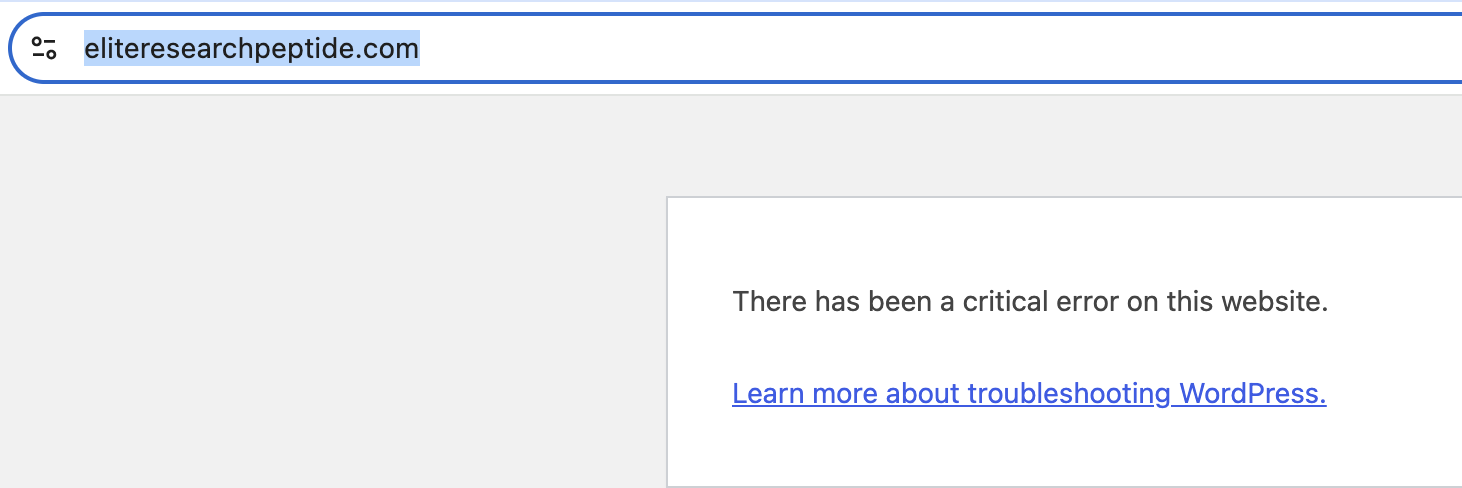
My comments about ordering, shipping, certificates of analysis, pricing, and the ED10 coupon code refer to Elite Research USA at https://eliteresearchusa.com. They should not be applied to any other site.
How I evaluated Elite Research USA
While I haven’t ordered from many online peptide vendors, I have quite a bit of experience ordering from online pharmacies. I evaluated Elite Research USA using the same questions I would ask them, along with a few others, given the “gray market” space peptides currently occupy.
I based everything on my own ordering experience with them, but I also looked at a few other things.
- Company transparency. I looked for clear product information, accessible testing reports, and specific claims that customers can check for themselves.
- Ordering and shipping. I considered how easy it was to place an order, how the company communicated after purchase, how quickly the order arrived, and the condition of the products on arrival.
- Batch-specific documentation. I checked whether a Certificate of Analysis (COA) identifies a particular lot and whether that lot number can be matched to the product being sold or received. A report for a different batch is less useful, even if the product name is the same.
- Purity and identity testing. I looked for results that address two separate questions: Is the tested substance the peptide on the label? And how pure is the tested sample? A high purity percentage alone does not confirm identity.
- Quantity, sterility, and endotoxin testing. I checked whether reports measure the amount of peptide in the vial, whether they include an endotoxin result, and whether sterility was tested. These are separate findings: purity does not establish labeled quantity, and an endotoxin pass does not establish sterility.
- Pricing and value. I considered the products’ costs in light of their labeled quantities, available testing, and my experience with the order. A low price means less if the documentation is weak; a higher price needs to be justified by what the buyer can verify.
This approach helped me distinguish what I experienced as a customer, what a laboratory reported about a sampled lot, and what remains unknown about any individual vial.
Elite Research USA has a truly slick brand, but I wanted to make sure that the branding didn’t come at the expense of what actually matters.
Does Elite Research USA provide legitimate third-party testing?
Elite Research USA publicly provides third-party Certificates of Analysis (COAs).
A COA is a laboratory report showing what was tested and what the laboratory found. That gives customers something more useful than a vendor’s claim that its peptides are “high purity.”
This is important for two reasons:
First, “third-party tested” does not mean every quality question has been answered. The COA tells me what I want to know. Did the laboratory check the peptide’s identity, measure its purity and quantity, test for endotoxins, and identify the specific lot that was sampled?
Second, and this is way more important, it’s that many third-party testers are middlemen who are not actually testing the products and instead refer them to someone else.
For example, one of the more popular third-party testers in the space, Finnrick, acts as an analytical broker, aggregating data and routing vials to partner facilities rather than owning the machinery.
In contrast, actual physical laboratories such as Freedom Diagnostics or Synthesyx perform hands-on high-performance liquid chromatography (HPLC) and liquid chromatography-mass spectrometry (LC-MS) analysis in-house. Without looking at the actual COA, a customer cannot know if their data comes straight from the chemists running the machines or through a multi-step chain of custody that leaves room for mislabeled vials and data discrepancies.
When I started using Elite Research USA peptides, all of their COAs were issued by Freedom Diagnostics. However, they seem to be switching over to using another company, Synthesyx. Both laboratories are separate from the seller and not a data aggregate, ranking system, or de facto marketing platform.
Freedom Diagnostics lists a lot number, test dates, results, and a search code. Those details make the report more useful than an undated purity percentage on a product page. Synthesyx does the same.
All of the information you see on the COAs on Elite Research USA’s site for each product can be verified using Freedom Diagnostics’ public certificate lookup. Synthesyx does the same, and they even include a QR code on the COA for you to quickly scan and verify.
You can enter the search code or accession number printed on a report and compare the laboratory’s record with the copy posted by Elite Research USA. A lookup code provides a way to authenticate a report; seeing one on an image does not, by itself, mean the report has been verified.
How to read and interpret a COA
A Certificate of Analysis (COA) reports what a laboratory found in the samples it tested. These two BPC-157 certificates cover different products and lots: Freedom Diagnostics tested a 10 mg product, while Synthesyx tested a 50 mg product.
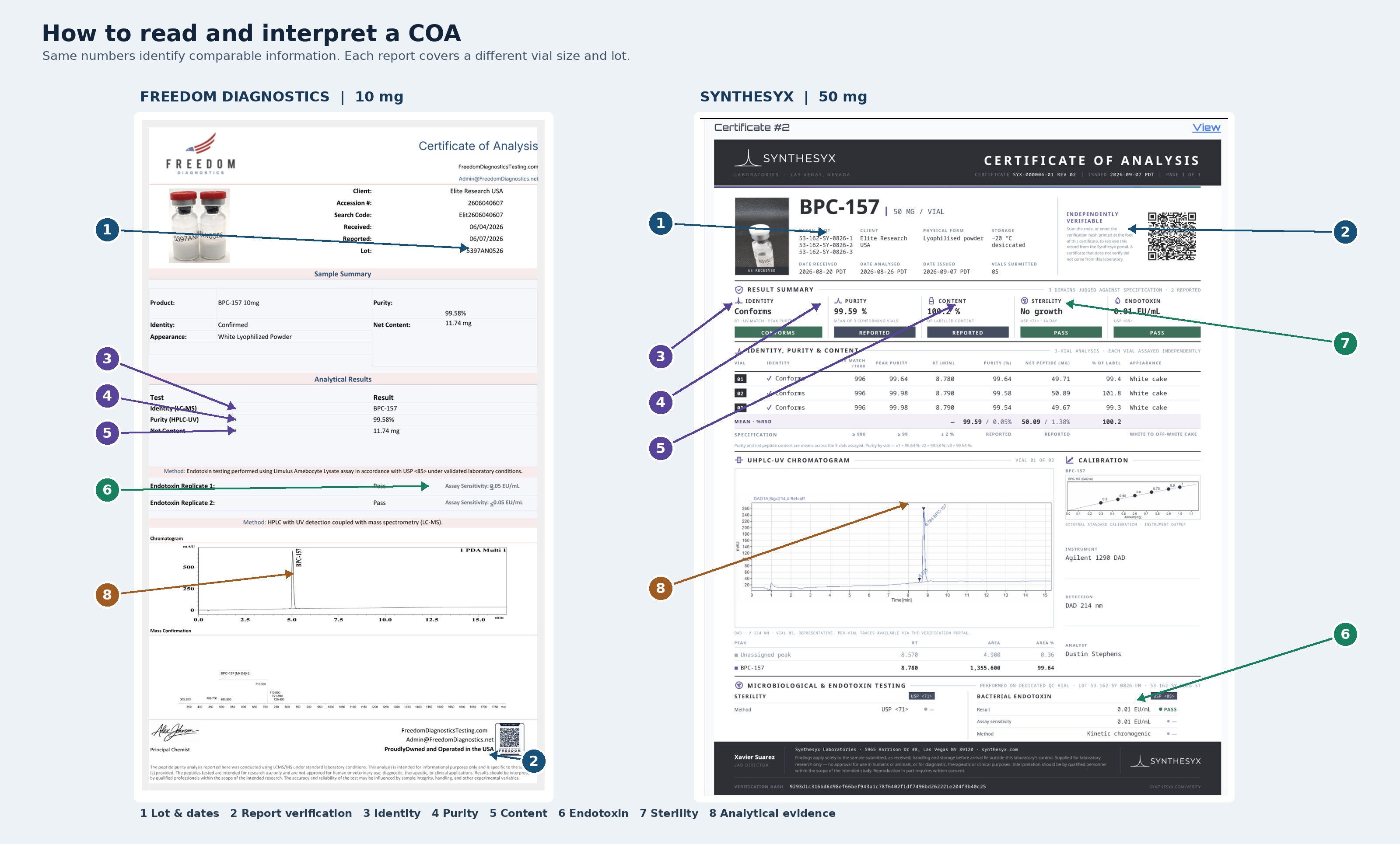
- Lot and dates. The lot identifies the batch associated with the test. Compare it with the lot on the vial you receive; also check when the sample was received, tested, and reported.
- Report verification. A search code, QR code, or verification hash can help you confirm that the displayed certificate matches the laboratory’s record. Verifying the document does not establish that every vial sold came from the tested lot.
- Identity. This asks whether the tested material matches the named peptide. Freedom reports BPC-157 identity confirmation by LC-MS. Synthesyx reports identity conformity based on retention time and ultraviolet. UV matching on the page shown.
- Purity. This estimates the fraction of the material detected by the specified chromatography method that is attributable to the target peptide. Freedom reports 99.58%; Synthesyx reports an average of 99.59% across three vials. Purity is separate from the amount of peptide in a vial.
- Net peptide content. This is the measured quantity, compared with the amount on the label. Freedom reports 11.74 mg for its 10 mg product. Synthesyx reports an average of 50.09 mg, or 100.2% of the label claim, across three 50 mg vials.
- Endotoxin. Endotoxins are bacterial components, so this test addresses a different question from purity. Freedom reports two “Pass” results but no measured concentration. Synthesyx reports 0.01 EU/mL.
- Sterility. Synthesyx reports “No growth” after 14 days from dedicated quality-control vials. The Freedom certificate shown does not include a sterility result, so readers should not assume that test was performed.
- Analytical evidence. The chromatograms and other instrument output support the reported findings. A prominent peak alone cannot tell a reader everything about identity, quantity, or contamination; read it alongside the named methods and results.
There are two common test results displayed on a COA, and they answer two different questions:
- LC-MS identity testing helps determine whether the compound tested matches the peptide listed on the label.
- HPLC purity testing measures the proportion of the detected material attributable to the principal peptide peak, rather than to other detectable components.
It’s important to note that neither result tells you how much peptide is in the vial.
Purity is a percentage; net content is a quantity, usually reported in milligrams. A peptide can test at high purity while containing less than the labeled amount. That is why I look for a measured content result alongside identity and purity.
Endotoxins and sterility
Some reports include an endotoxin test.
Endotoxins are bacterial components that can remain even when live bacteria are absent.
While an endotoxin result is valuable, passing an endotoxin test does not establish sterility.
Sterility testing asks whether viable microorganisms are present and is a separate test. If a COA does not report sterility testing, I would not describe the product as sterile based solely on its identity, purity, or endotoxin results.
Finally, a COA applies to the lot it identifies. Before treating a posted report as evidence for a particular purchase, check whether its lot number matches the product currently being sold or the vial you received.
The next part probably goes without saying, but a report from last year cannot be used to verify a different batch made this year.
Elite Research USA publishes detailed, lot-specific third-party reports for all its products and offerings, available right on the product page. The reports let you examine actual test results and—where a lookup code is provided—verify they aren’t fake, manufactured, or out of date.
Elite Research USA’s peptide, bioregulator, and research compound product catalog
Elite Research USA sells more than just peptides.
They also carry branded peptide blends, other research compounds, topical formulas, and supplies. Rather than breaking them up by the categories listed on the site—which I think is under-optimized and a point against Elite Research USA—I’ll break them down by their function.
I haven’t tried all of these, and I don’t know anyone who has. This is just a reference to show what’s available at Elite Research USA
Peptides for fat loss and exercise mimetics
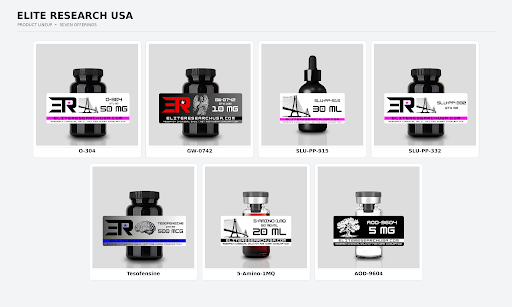
Elite Research USA’s fat loss peptides category includes AOD-9604 alongside research compounds studied for appetite, metabolism, and exercise-related effects.
Options such as tesofensine, 5-amino-1MQ, and the SLU-PP exercise mimetics act through different pathways, so the evidence for each deserves a closer look.
This is one of the largest parts of the catalog because fat loss is one of the major reasons people start looking into peptides. Elite Research carries:
- AOD-9604. AOD-9604 is a fat-loss research peptide derived from a fragment of human growth hormone. Researchers have studied its effects on fat breakdown and body weight.
- 5-amino-1MQ. 5-Amino-1MQ is a fat-loss research compound that inhibits NNMT, an enzyme involved in cellular metabolism.
- Tesofensine. Research on tesofensine for weight loss examines how changes in brain neurotransmitter signaling may affect food intake and body weight. A phase II trial reported greater weight loss with tesofensine and diet than with placebo and diet.
- SLU-PP-332. SLU-PP-332 is an exercise-mimetic research compound studied for endurance, fat metabolism, and metabolic health. It activates estrogen-related receptors involved in the body’s response to aerobic exercise.
- SLU-PP-915. SLU-PP-915 is an exercise-mimetic research compound studied for aerobic endurance and muscle energy metabolism. In mouse experiments, it increased exercise capacity, including after oral administration.
- GW-0742. GW-0742 is a PPAR-delta research compound studied for endurance and fat metabolism.
- O-304. O-304 metabolic research spans glucose homeostasis, microvascular perfusion, and exercise-related effects. Human research has examined glucose outcomes, while reported endurance effects come from mouse studies
GLP-1 agonists and other fat loss compounds
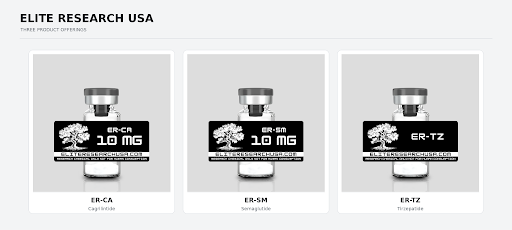
Elite Research USA’s GLP-1 agonists and other fat loss compounds include semaglutide, tirzepatide, and cagrilintide.
Researchers study all three for appetite regulation and weight loss, but they act through different hormone pathways: semaglutide targets GLP-1, tirzepatide targets GLP-1 and GIP, and cagrilintide acts through the amylin pathway.
- Semaglutide. Semaglutide is a GLP-1 peptide studied for appetite control, weight loss, and blood sugar regulation. It mimics a hormone involved in hunger and glucose signaling.
- Tirzapeptide. Tirzepatide is a GIP and GLP-1 peptide studied for weight loss, appetite regulation, and blood sugar control. It activates two hormone receptors involved in metabolic signaling.
- Cagrilintide. Cagrilintide is an amylin-based peptide being studied for appetite control and weight loss. It acts via a different hormonal pathway than GLP-1 peptides such as semaglutide.
There are also combination products that stack the individual metabolic properties of the peptides and compounds to get a greater effect. Many of these unique offerings are only available at Elite Research USA. Included among them are:
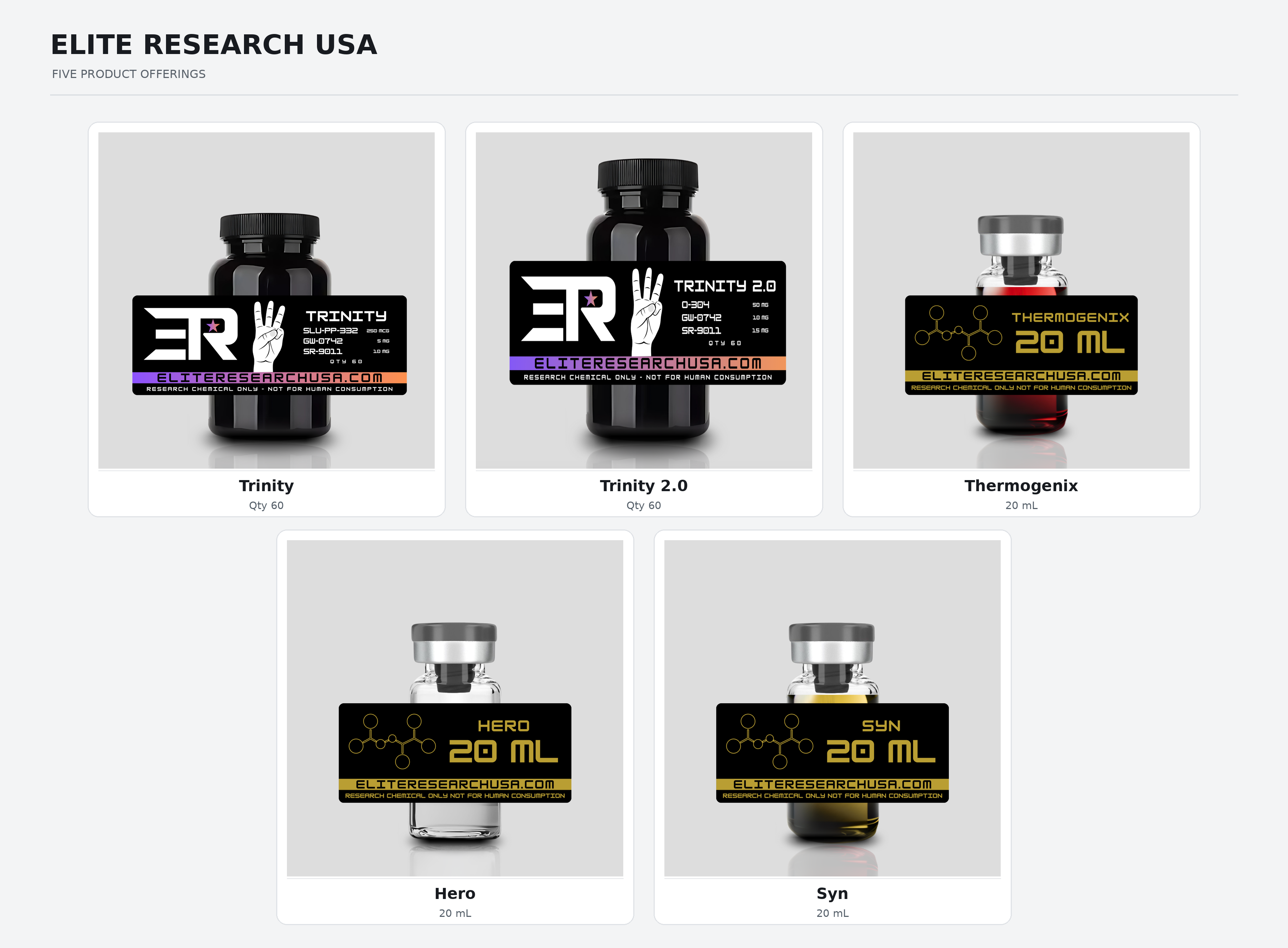
- Trinity. Trinity is an endurance and metabolic research blend combining SLU-PP-332, GW-0742, and SR-9011. It combines an ERR agonist, a PPAR-delta agonist, and a REV-ERB research compound to investigate three pathways associated with energy use and aerobic performance.
- Trinity 2. Combines O-304, GW-0742, and SR-9011. Trinity 2.0 explores metabolic flexibility from three angles: cellular energy sensing, fatty-acid use, and biological-clock signaling. Its ingredient profile makes it relevant to research on insulin resistance and aerobic performance.
- Thermogenix. Thermogenix is a fat-metabolism research blend combining 5-Amino-1MQ with albuterol, ATP, L-carnitine, L-arginine, and L-ornithine. The formula spans NNMT inhibition, adrenergic signaling, and cellular energy pathways.
- Hero. Hero is an amino-acid research blend for nitric oxide and exercise metabolism. L-citrulline and L-arginine relate to nitric-oxide production, while ornithine, lysine, and glycine add pathways of interest in training and recovery research.
- Syn. Syn combines a stimulant with an exercise-focused amino-acid formula. It is relevant to questions about alertness, circulation, and training metabolism,
Growth hormone and pituitary-related peptides
While people also use these types of peptides to lose body fat and recomposition, products in this category have a broader effect on your pituitary gland and its ability to. Elite Research USA carries:
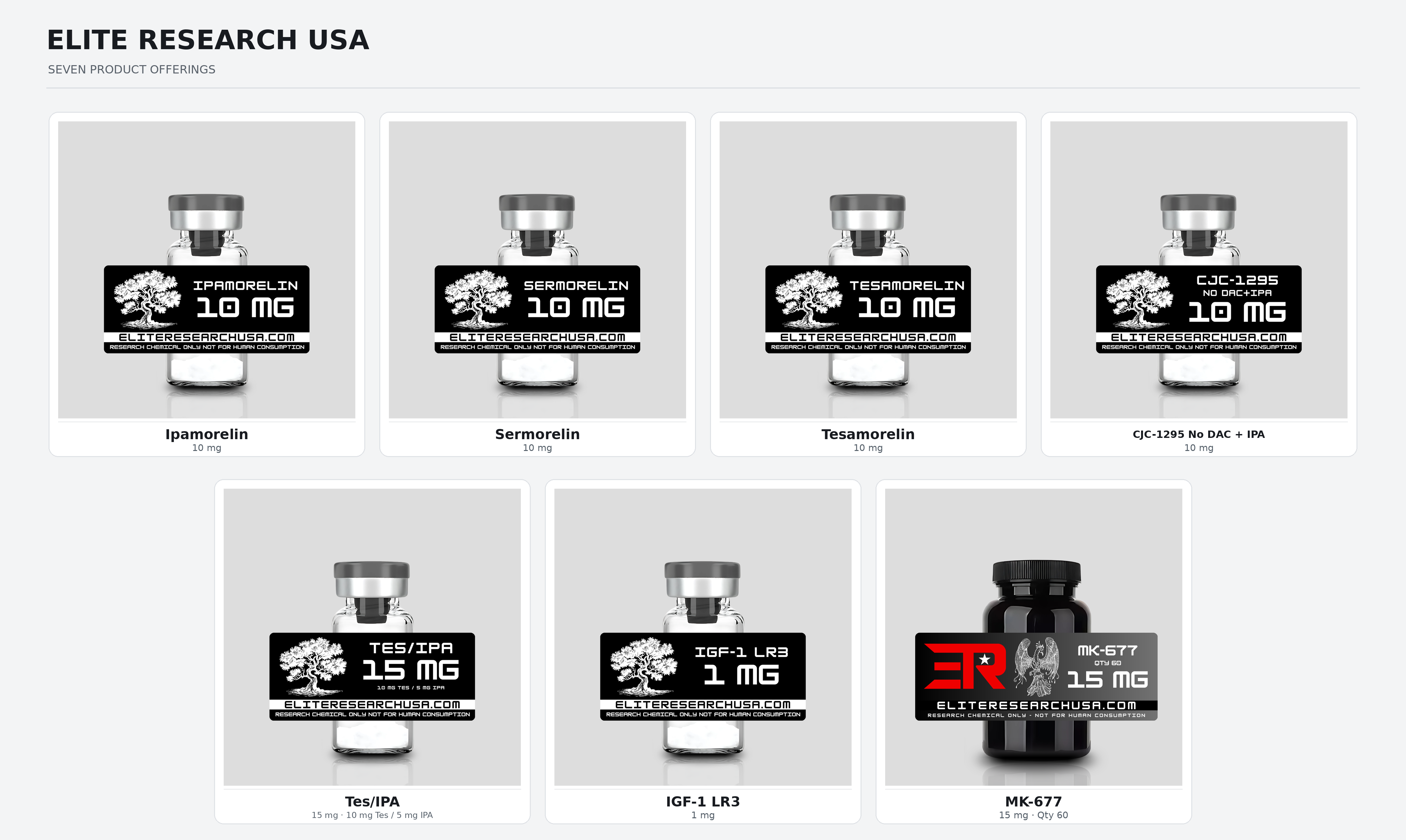
- Ipamorelin. Ipamorelin is a growth hormone secretagogue peptide studied for its ability to stimulate growth hormone release. It draws interest in research on body composition, muscle recovery, and the body’s natural growth hormone signaling.
- Sermorelin. Sermorelin is a growth hormone–releasing hormone peptide that stimulates the pituitary gland to release growth hormone. It is often researched in connection with age-related changes in growth hormone signaling.
- Tesamorelin. Tesamorelin peptide research connects growth hormone signaling with changes in abdominal fat. It is relevant to searches about visceral fat.
- CJC-1295 without DAC plus ipamorelin. CJC-1295 without DAC plus ipamorelin is a growth hormone peptide blend pairing a growth hormone–releasing hormone analog with a growth hormone secretagogue. The combination is studied for how two signaling pathways affect GH release.
- Tesamorelin + Ipamorelin combination. Tesamorelin plus ipamorelin is a dual-pathway growth hormone peptide blend. Tesamorelin acts through growth hormone–releasing hormone signaling, while ipamorelin acts as a growth hormone secretagogue.
- IGF-1 LR3. IGF-1 LR3 is a modified insulin growth factor 1 (IGF-1) research peptide studied for growth-factor signaling and cell growth. It is often discussed in connection with muscle growth and tissue repair
- MK-677. MK-677, also called ibutamoren, is an oral growth hormone secretagogue studied for its effects on GH, IGF-1, appetite, and lean body mass. It is a small molecule, not a peptide.
Cellular energy and mitochondrial peptides
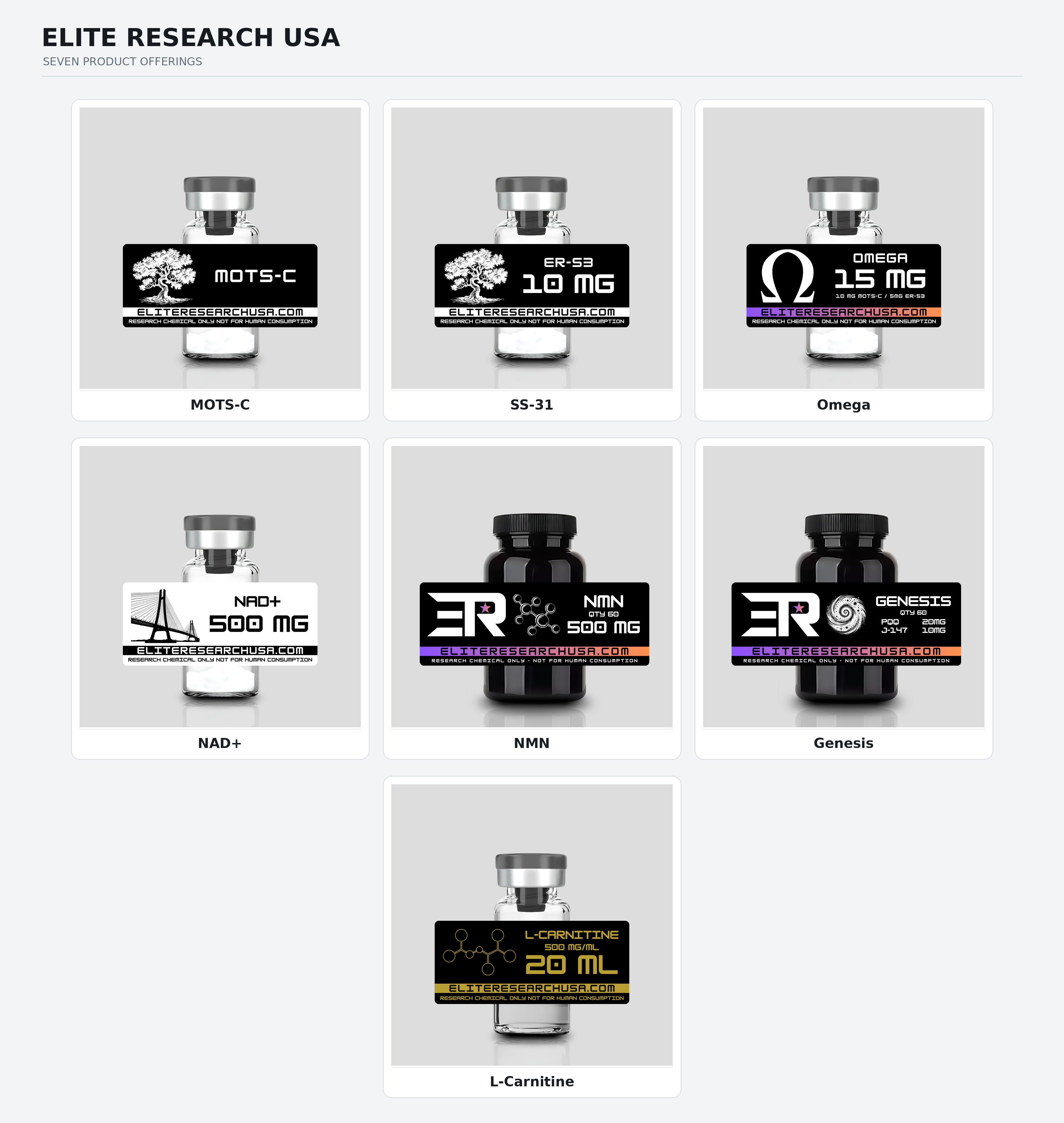
Peptides in this category focus on cellular energy, exercise performance, and healthy aging. Some of these peptides have literally been described as “exercise in a bottle.” Again, we see a theme of fitness and fat loss with peptides.
Growth hormone and pituitary-related peptides draw interest for their potential effects on body composition, but they work through different pathways.
Elite Research USA carries peptides that stimulate growth hormone release, along with IGF-1 LR3, which acts on growth-factor signaling, and MK-677, an oral growth hormone secretagogue that is not a peptide.
- MOTS-c. MOTS-c is a mitochondrial-derived peptide studied for exercise metabolism, glucose regulation, and cellular energy signaling. Read my write-up on MOTS-c here.
- SS-31. SS-31, also called elamipretide, is a mitochondria-targeting peptide studied for mitochondrial function and muscle performance. It binds to cardiolipin in the inner mitochondrial membrane.
- Omega. Omega combines MOTS-c and SS-31 in a formula relevant to research on muscle metabolism, mitochondrial health, and physical performance
- NAD+. NAD+ is a coenzyme essential to cellular energy metabolism. It helps cells process nutrients and supports enzyme systems involved in DNA repair, making it a central topic in healthy-aging research.
- NMN. NMN, or nicotinamide mononucleotide, is a precursor the body uses to make NAD+.
- Genesis. Genesis is a mitochondrial and cognitive research blend combining PQQ and J-147. PQQ has been studied for mitochondrial biogenesis, while J-147 has been investigated for neuroprotection and memory in preclinical models.
- L-Carnitine. L-carnitine helps transport long-chain fatty acids into mitochondria, where they can be used for energy. That role makes it relevant to searches about fat metabolism and exercise performance.
Peptides for healing
Healing and repair is probably the second most popular reason people start looking into peptides.
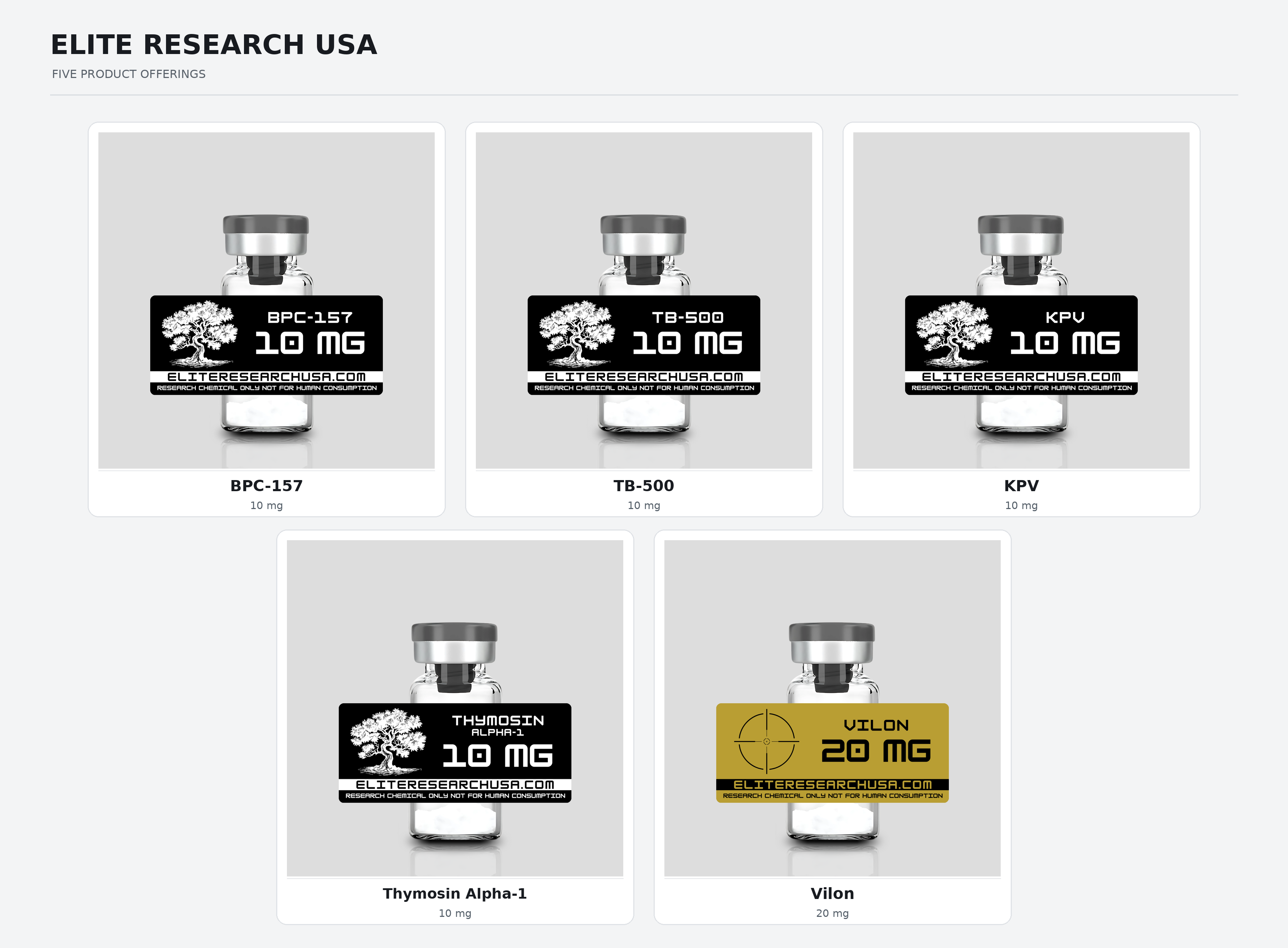
Elite Research USA carries peptides for healing and tissue repair such as BPC-157 and TB-500, alongside KPV, thymosin alpha-1, and Vilon, which researchers have studied for inflammation, immune activity, and related processes.
- BPC-157. BPC-157 is a tissue-repair research peptide studied for tendon, muscle, and gastrointestinal healing. Animal studies have made it a frequent topic in searches about sports injury recovery.
- TB-500. TB-500 is a thymosin beta-4–related research peptide associated with studies of cell movement and tissue repair. It is commonly searched in connection with tendon and muscle injury recovery.
- KPV. KPV is an anti-inflammatory research peptide studied for intestinal inflammation and gut health. Preclinical studies have examined its effects in mouse models of colitis.
- Thymosin Alpha-1. Thymosin alpha-1 is an immune-modulating peptide studied for its effects on immune-cell activity and the response to infection. Unlike many research peptides, it has been evaluated in human clinical trials.
- Vilon. Vilon is a two-amino-acid bioregulator peptide studied for immune-cell signaling and age-related cellular changes.
Elite Research healing peptide blends
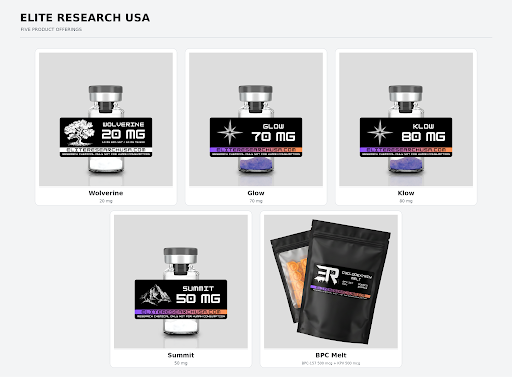
Elite Research healing peptide blends combine compounds studied for tissue repair, inflammation, skin, and connective-tissue biology.
Wolverine pairs BPC-157 with TB-500, while Glow, Klow, Summit, and BPC-KPV Melt add ingredients aimed at different research questions, from cartilage and collagen signaling to gut inflammation.
- Wolverine. Wolverine is a BPC-157 and TB-500 peptide blend focused on tendon, muscle, and connective-tissue repair research. It contains 10 mg of each peptide.
- Glow. Glow is a GHK-Cu, TB-500, and BPC-157 peptide blend centered on skin repair and connective-tissue research. Its copper peptide adds a collagen and skin-remodeling angle to two peptides commonly discussed for tissue recovery.
- Klow. Klow is a four-peptide blend for skin, inflammation, and tissue-repair research. GHK-Cu and thymosin beta-4 bring skin and wound-healing pathways, while KPV and BPC-157 add inflammation and repair research.
- Summit. Summit is a joint and connective-tissue research blend combining 20 mg Cartalax with 10 mg each of TB-500/TB-4, BPC-157, and KPV. Its ingredients span cartilage biology, tissue repair, and inflammatory signaling.
- BPC-KPV melt. BPC-KPV Melt combines 500 mcg BPC-157 and 500 mcg KPV in a formula containing 5 mg HP cyclodextrin. The peptide pairing is relevant to research on gut inflammation and tissue repair.
Peptides for hair growth
This section legitimately surprised me because I hadn’t heard of peptides being used in cosmetics. But it turns out this is quite a growing industry in the peptide market.
This is fantastic because I’ve long been battling hair loss, doing everything from getting a hair transplant to using topical minoxidil+finasteride and dermarolling.
Elite Research allows you to improve your appearance through the following offerings:
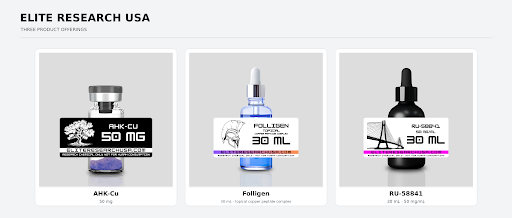
- AHK-Cu. AHK-Cu is a copper peptide studied for hair growth and thinning hair. Laboratory research found that it stimulated the growth of isolated human hair follicles and activity in hair-follicle cells.
- Folligen. Folligen is a topical copper peptide complex for thinning-hair research. Its formula combines GHK-Cu and AHK-Cu with niacinamide, panthenol, hyaluronic acid, hydrolyzed keratin, and botanical extracts for a broader scalp and hair-care approach.
- RU-58841. RU-58841 is a topical antiandrogen research compound studied for androgenetic alopecia, also called male pattern hair loss. It acts at the androgen receptor rather than serving as a hair-growth peptide.
Peptides for skincare
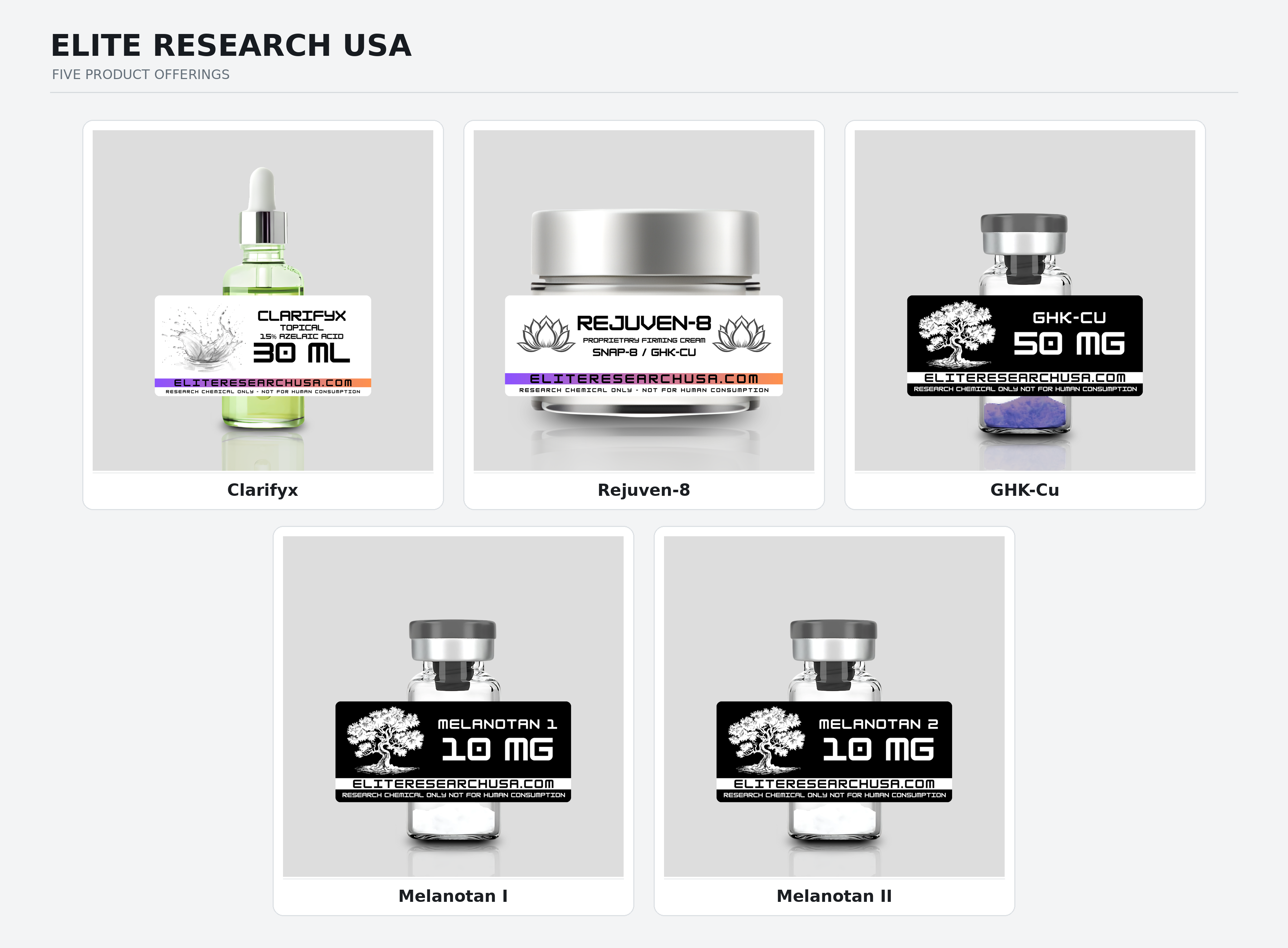
Elite Research USA’s peptides for skincare include GHK-Cu and Rejuven-8, which are associated with research on skin repair, collagen, and visible signs of aging.
The category also includes Clarifyx, an azelaic acid formula for acne-prone skin, and the pigmentation peptides Melanotan 1 and 2.
- Clarifyx. Clarifyx is a topical 15% azelaic acid formula aimed at research on acne-prone skin, redness, and uneven tone. Its label also lists panthenol, sodium hyaluronate, allantoin, aloe, and botanical extracts.
- Rejuven-8. Rejuven-8 is a peptide face cream for fine lines, firmness, and hydration. It combines GHK-Cu and SNAP-8 with niacinamide, hyaluronic acid, glycerin, shea butter, and vitamin E.
- GHK-Cu. GHK-Cu is a copper peptide studied for skin repair, collagen-related activity, and wound healing. It is a common ingredient in research and cosmetics focused on aging skin.
- Melanotan 1. Melanotan 1, also known as afamelanotide, is a pigmentation peptide that stimulates melanin production. It is studied in connection with skin color and sensitivity to light.
- Melanotan 2. Melanotan 2 is a synthetic pigmentation peptide studied for its effects on melanin production. People commonly search for it in connection with tanning and changes in skin color.
Nootropic peptides
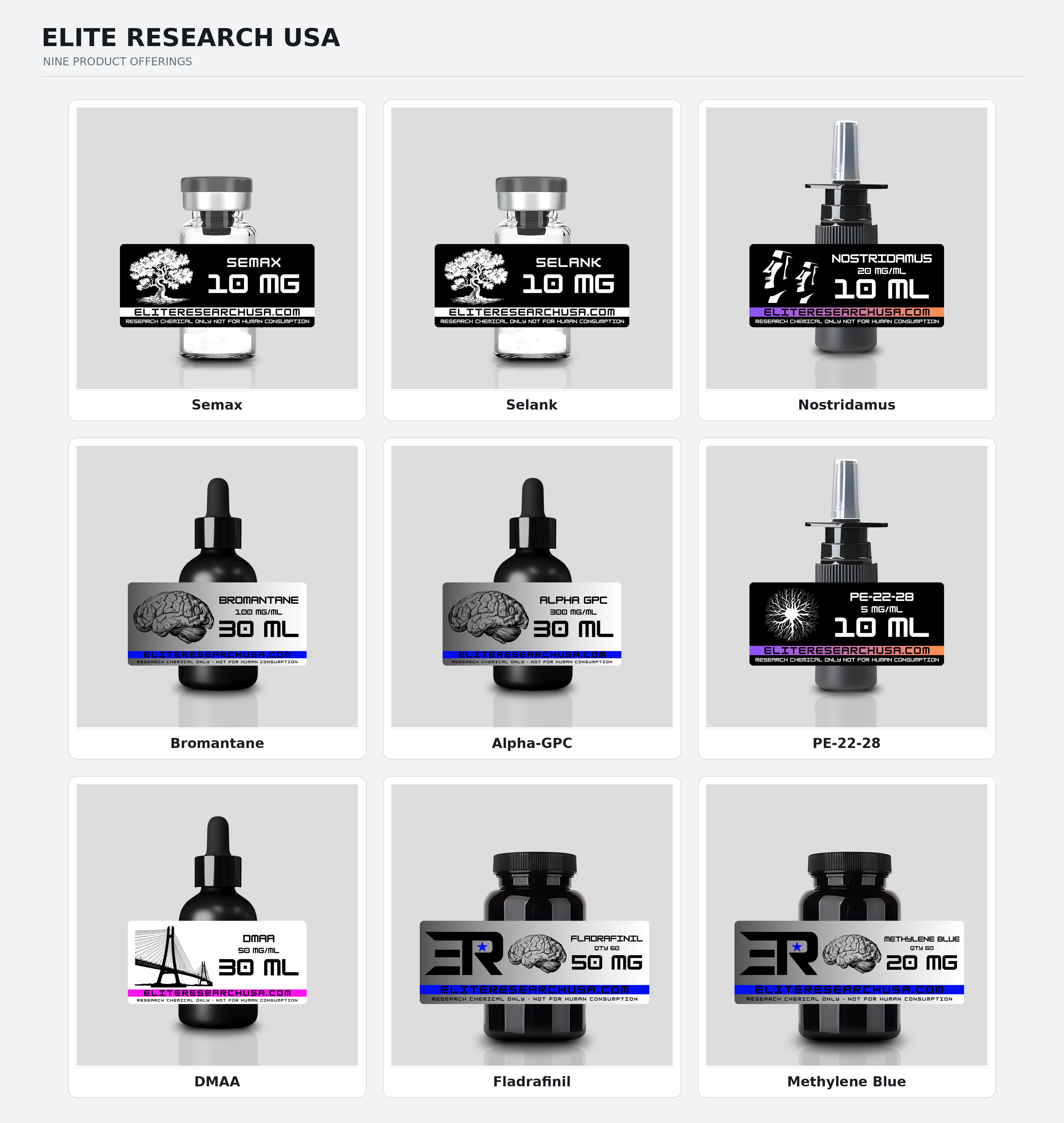
Elite Research USA’s nootropic peptides include Semax, Selank, Nostridamus, and PE-22-28, which are studied for cognition, stress response, or mood-related signaling. The broader nootropics category also includes non-peptide compounds such as Alpha-GPC, bromantane, and methylene blue.
- Semax. Semax is a cognitive research peptide studied for memory, learning, and brain-derived neurotrophic factor (BDNF) signaling.
- Selank. Selank is an anxiety and stress research peptide studied for its possible calming effects without the same mechanism as a conventional sedative.
- Nostridamus. Nostridamus combines Semax and Selank in a peptide blend focused on mental clarity and stress-response research. Semax is studied for cognition-related signaling; Selank is studied for anxiety-related effects.
- Bromantane. Bromantane is a research compound investigated for fatigue, motivation, and physical and mental performance. Its research includes effects on dopamine-related signaling.
- Alpha-GPC. Alpha-GPC is a choline source studied for attention, memory, and cognitive performance. Choline is a building block for acetylcholine, a neurotransmitter involved in learning.
- PE-22-28. PE-22-28 is a spadin-derived research peptide studied for its activity at the TREK-1 potassium channel, a target of interest in depression research.
- DMAA. DMAA, or 1,3-dimethylamylamine, is a stimulant compound commonly searched in connection with pre-workout energy and alertness. It is not a peptide.
- Fladrafinil. Fladrafinil is a wakefulness-focused research compound sought in connection with alertness, fatigue, and sustained focus. It is related chemically to adrafinil and is not a peptide.
- Methylene Blue. Methylene blue is a redox-active compound studied for cellular energy and brain function. A small randomized human study examined its effects during attention and memory tasks.
Sleep Peptides

Elite Research USA’s sleep peptides category includes DSIP, which researchers have studied for possible effects on sleep regulation.
The broader lineup also includes melatonin and relaxation blends such as Dreamz and Primal Peace, while Epitalon and Pinealon are primarily studied for cellular aging and neuronal health rather than sleep itself.
- DSIP, DSIP sleep peptide research: Delta sleep-inducing peptide is studied for its possible role in sleep regulation and nighttime brain activity.
- Dreamz. Dreamz sleep and relaxation blend: GABA, L-histidine, L-theanine, taurine, and melatonin bring together ingredients of interest for evening relaxation, sleep quality, and circadian rhythm research.
- Epitalon. Epitalon longevity peptide research: Also called Epithalon, this short peptide is investigated for telomeres, telomerase, and cellular aging. Researchers interested in telomere biology and age-related cellular changes study Epitalon’s activity in laboratory cell cultures
- Epitalon Plus. Epitalon Plus enteric-coated peptide: This oral Epitalon format is designed for research on peptide delivery alongside Epitalon’s investigated role in telomere and cellular-aging biology.
- Pinealon. Pinealon brain health peptide research: Pinealon is a tripeptide studied for oxidative stress and cell survival in neuronal research models.
- Pinealon Plus. Pinealon Plus enteric-coated peptide: This Pinealon format is intended for research into oral peptide delivery and the tripeptide’s studied responses to neuronal oxidative stress.
- Melatonin. A familiar subject of research on sleep onset, travel across time zones, and the sleep–wake cycle. Melatonin is a hormone, not a peptide
- Primal Peace. This blend brings together L-theanine’s studied relationship with stress-related symptoms and sleep quality, apigenin, and aniracetam for investigation into a calmer mental state.
Sex Peptides
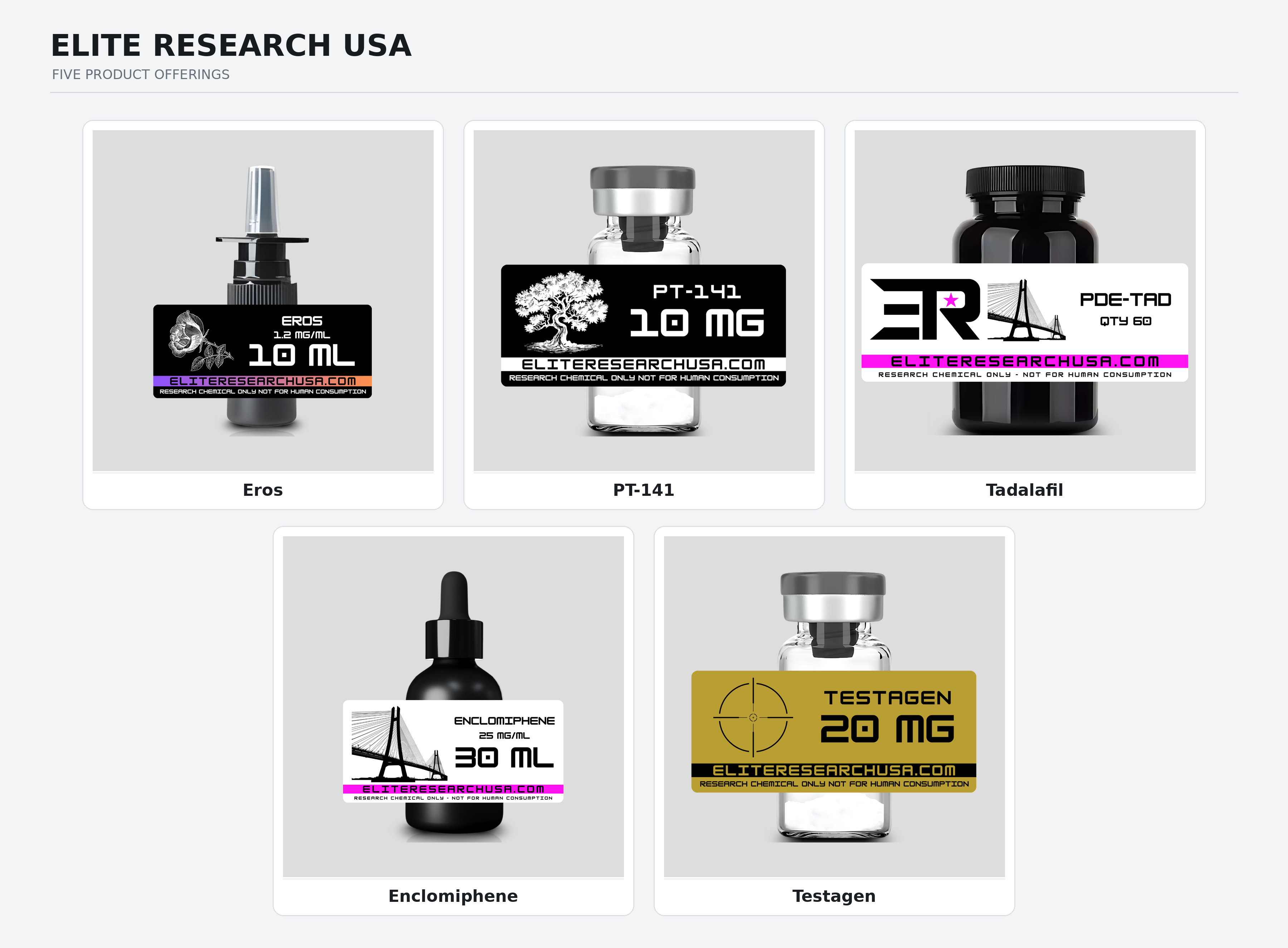
Elite Research USA’s sex peptides category includes PT-141 and Eros, a nasal spray that combines PT-141 with oxytocin.
The broader lineup also includes tadalafil, enclomiphene, and Testagen, which researchers study for distinct questions involving erectile response, hormone signaling, and cellular activity.
- Eros. Eros combines oxytocin with PT-141 in a nasal spray.
- PT-141. Also called bremelanotide, PT-141 acts on melanocortin pathways involved in sexual desire.
- Tadalafil. Tadalafil is a PDE5 inhibitor studied for improving erectile response through its effects on blood flow.
- Enclomiphine. Enclomiphene is a selective estrogen receptor modulator studied in men with secondary hypogonadism. Trials found increases in testosterone alongside luteinizing hormone and follicle-stimulating hormone;
- Testagen. Testagen, also known as KEDG, is a short peptide examined in early laboratory work on peptide interactions with cells and DNA.
How Elite Research USA’s Pricing Compares to Other Peptide Vendors
I compared two popular peptides—BPC-157 and MOTS-c—using the same labeled vial size within each comparison. Since each peptide vendor has different offerings, I chose two of the more popular peptides to compare prices.
All prices below are for one vial, before shipping or bulk discounts. I also used pricing with my Elite Research USA discount code of ED10.
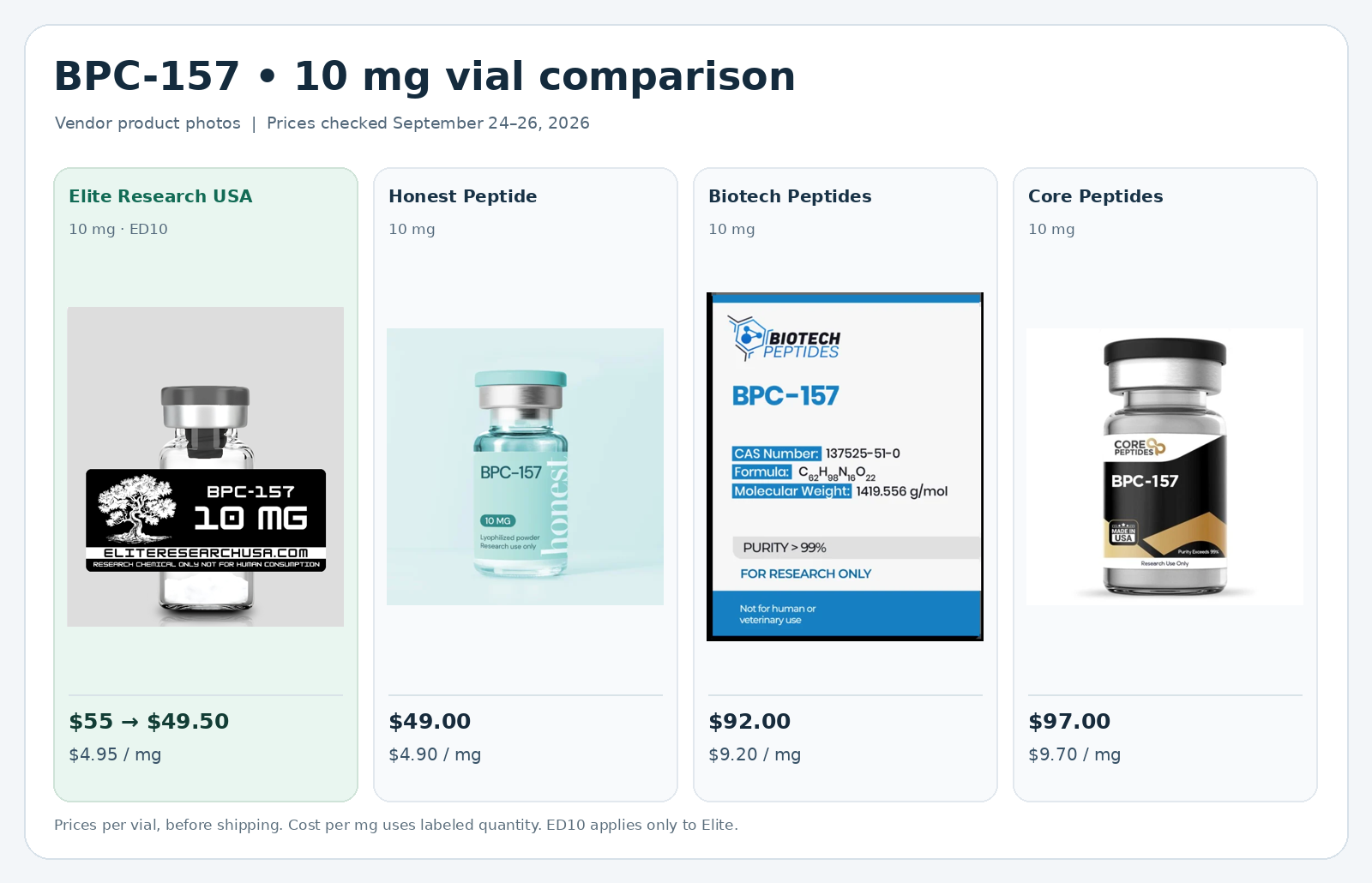
Competitor prices were checked on September 24, 2026; I used Elite Research USA’s prices of $55 for BPC-157, $48 for 10 mg MOTS-c, and $135 for 50 mg MOTS-c.
BPC-157: 10 mg vials
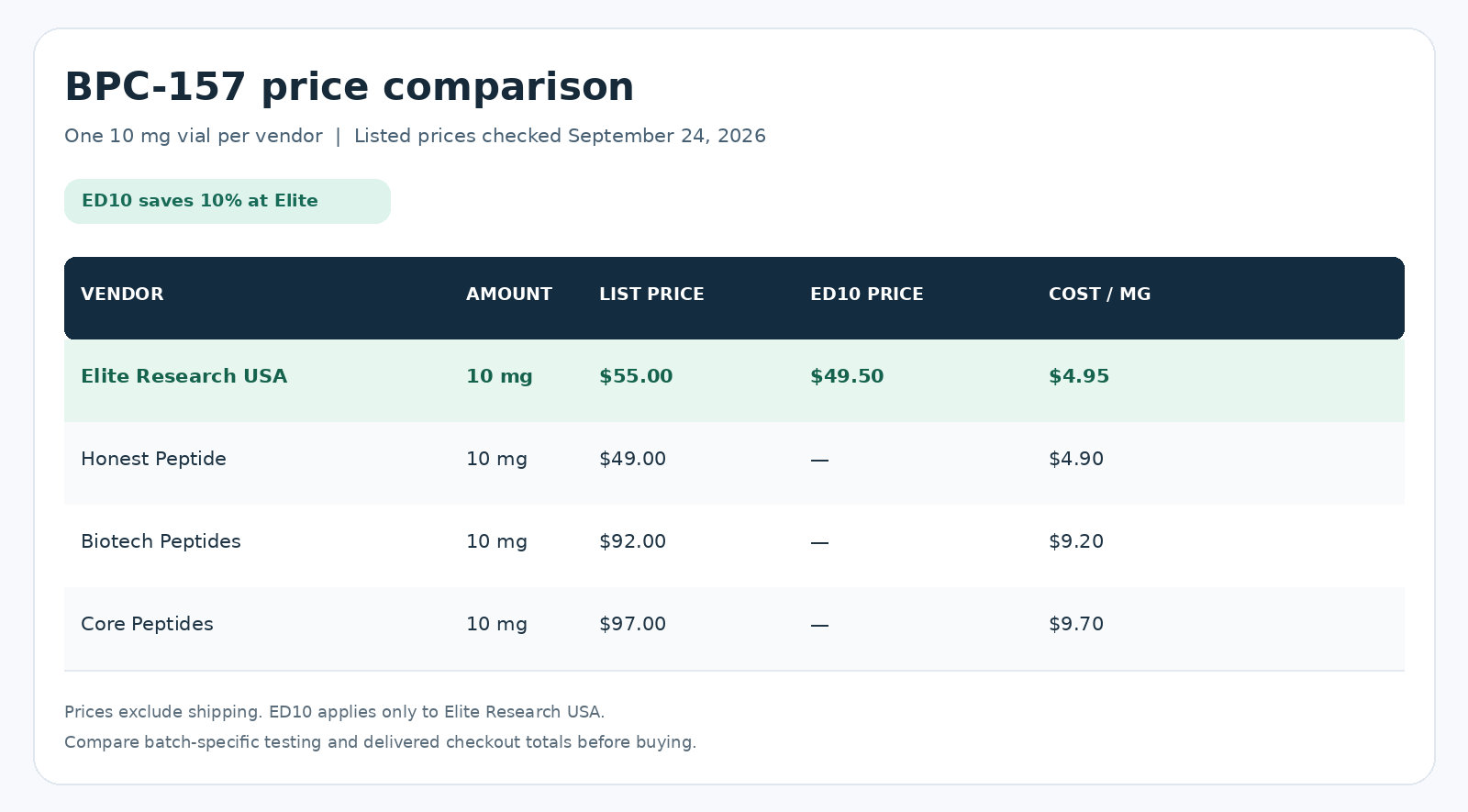
Elite’s 10 mg BPC-157 vial costs $49.50 with ED10, or $4.95 per labeled milligram.
That is 50 cents more than Honest Peptide’s listed $49 vial, but a good bit below Biotech Peptides’ $92 vial and Core Peptides’ $97 vial.
MOTS-c: 10 mg and 50 mg vials
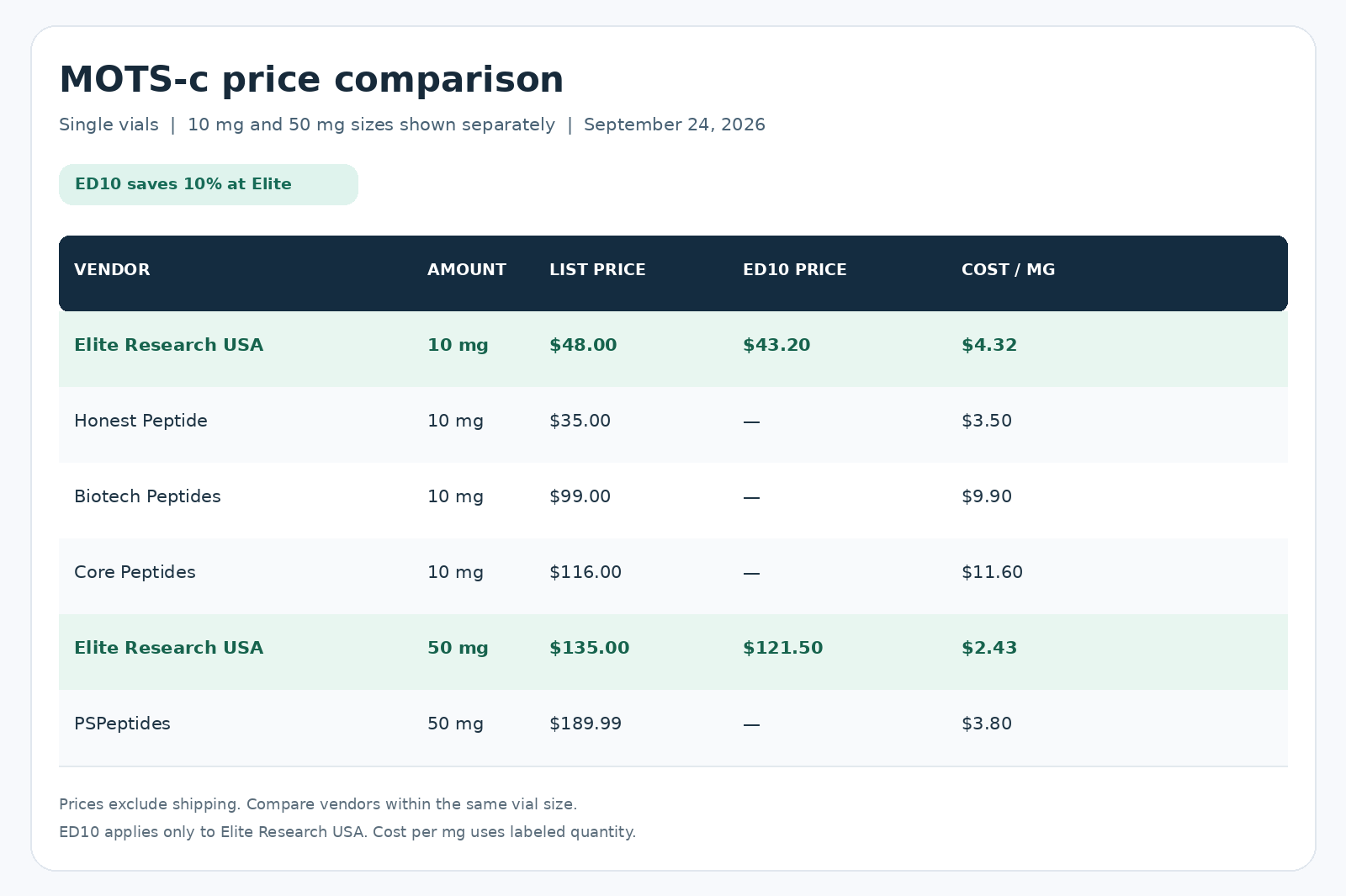
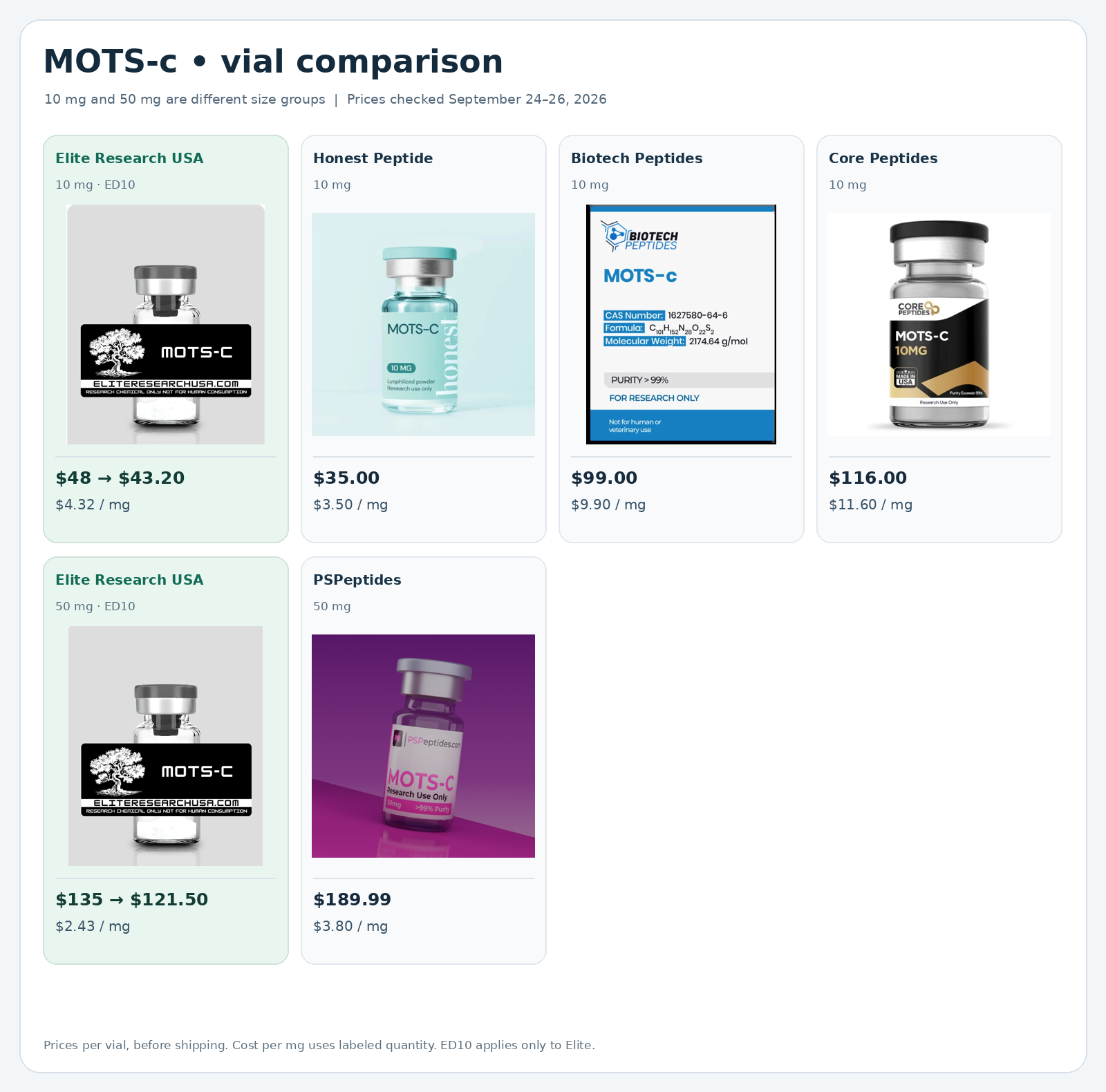
At 10 mg, Elite costs $43.20 with ED10. Honest Peptide lists a lower product price of $35, while again Biotech Peptides lists $99 and Core Peptides lists $116. Compare their checkout totals before drawing a conclusion about a single-vial order.
Elite’s 50 mg MOTS-c vial makes a stronger price comparison. ED10 lowers it from $135 to $121.50, or $2.43 per labeled milligram.
Five of Elite’s 10 mg vials would cost $216 after ED10, so the single 50 mg vial saves $94.50 for the same labeled quantity.
PSPeptides lists a 50 mg vial at $189.99, or about $3.80 per mg, and advertises free domestic shipping. Elite’s discounted product price is $68.49 lower, before accounting for any Elite shipping charge.
My ED10 affiliate link takes 10% off Elite Research USA products, with no minimum purchase, and stacks with sales. On these prices, Elite is competitive for a single 10 mg vial and particularly compelling for 50 mg MOTS-c.
Elite Research USA discount code
My Elite Research USA discount code is ED10.
It takes 10% off every product, has no minimum purchase requirement, and stacks with sale and bulk discounts. The code is ongoing, so you can use it whenever you order.
If you’re searching for an Elite Research Peptides discount code or a peptide discount code for Elite Research USA, use ED10 at checkout. You can also shop through my Elite Research USA affiliate link.
What I like about Elite Research USA
The first thing I noticed as a customer was how quickly my order arrived.
Elite Research USA offers two-day shipping, and the packaging made a good impression when it showed up. The branding is polished, and the products were presented with care. Seriously, everything came in a cool book and great packaging.
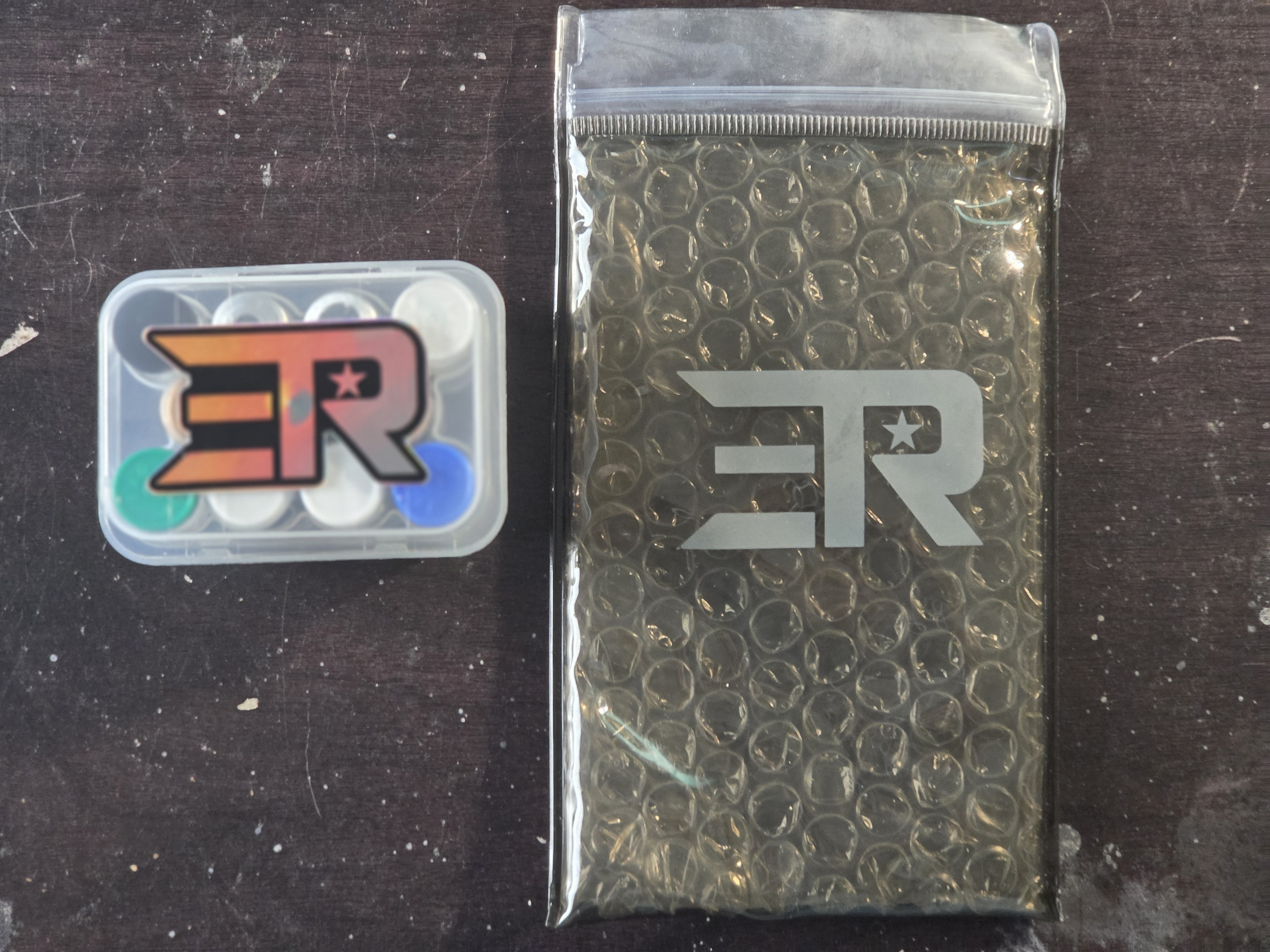
The postal service has to be extremely—almost intentionally, I’d say—careless to break products.
I also like that the people behind the company are public and use the products themselves.
That gives me a better sense of who I’m dealing with. More importantly, Elite Research USA regularly updates its third-party Certificates of Analysis (COAs).
As I explained earlier, a COA only tells you about the lot that was tested, so I still check the lot number and the specific tests reported. Making those documents available is a significant advantage for the company.
Their selection is another strength. They carry individual compounds across several research categories, as well as branded blends and topical products. I haven’t tried everything in the catalog, but there’s enough variety to find several products I’m interested in from one supplier.
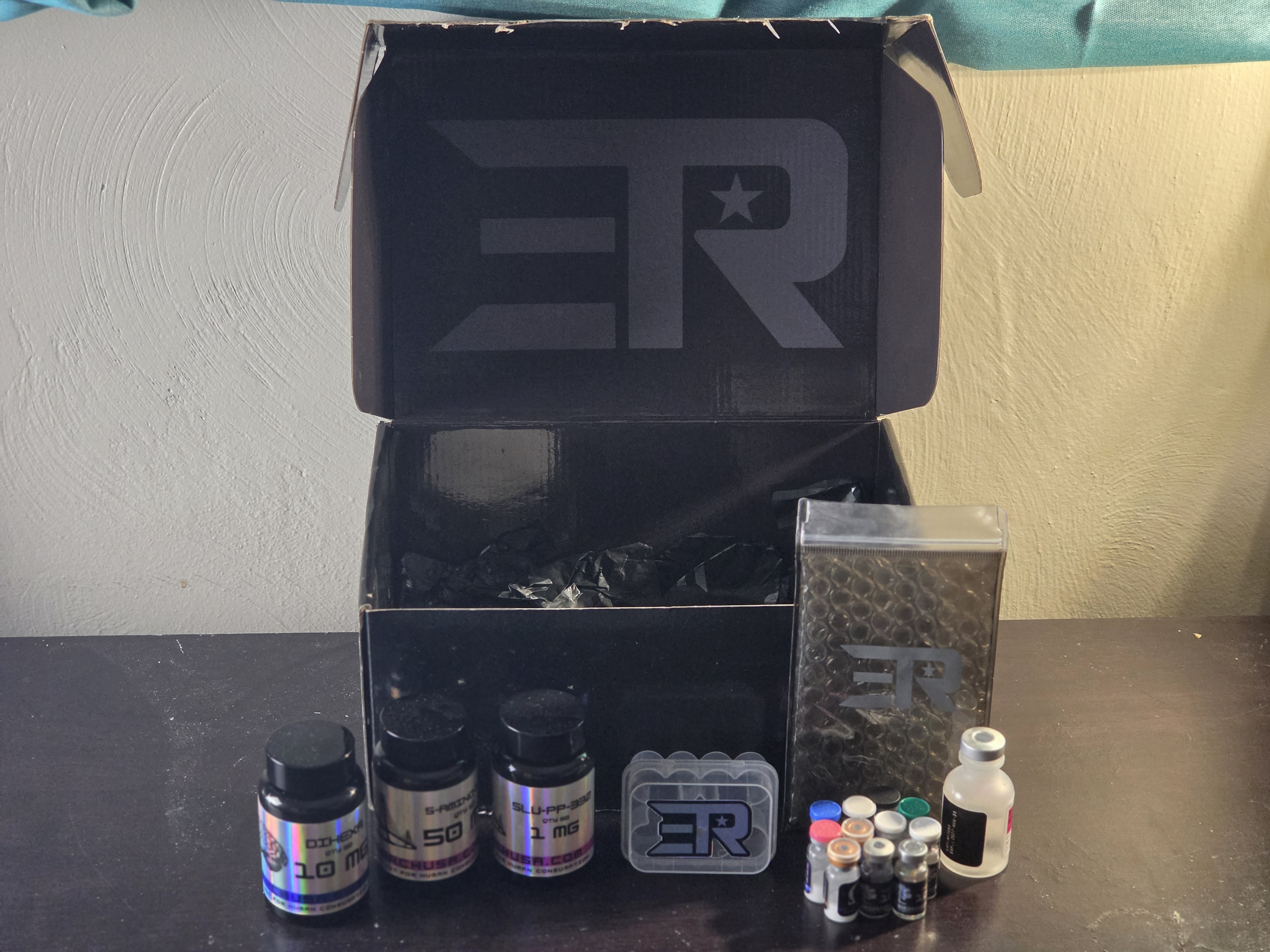
The pricing gets better when you buy multiple products. Their quantity discount starts at 5% when you buy 3 products and increases on a sliding scale to 15% when you buy 10 or more. That discount stacks with the 10% discount from my affiliate link, which makes a larger order substantially cheaper.
Customer support has been responsive in the instance I’ve seen firsthand as an affiliate.
Someone who purchased through my link ran into an issue, and the company resolved it promptly. That’s one customer’s experience; I haven’t seen any other complaints.
Speaking of complaints, this review wouldn’t be fair without a list of things I dislike.
What I don’t like about Elite Research USA
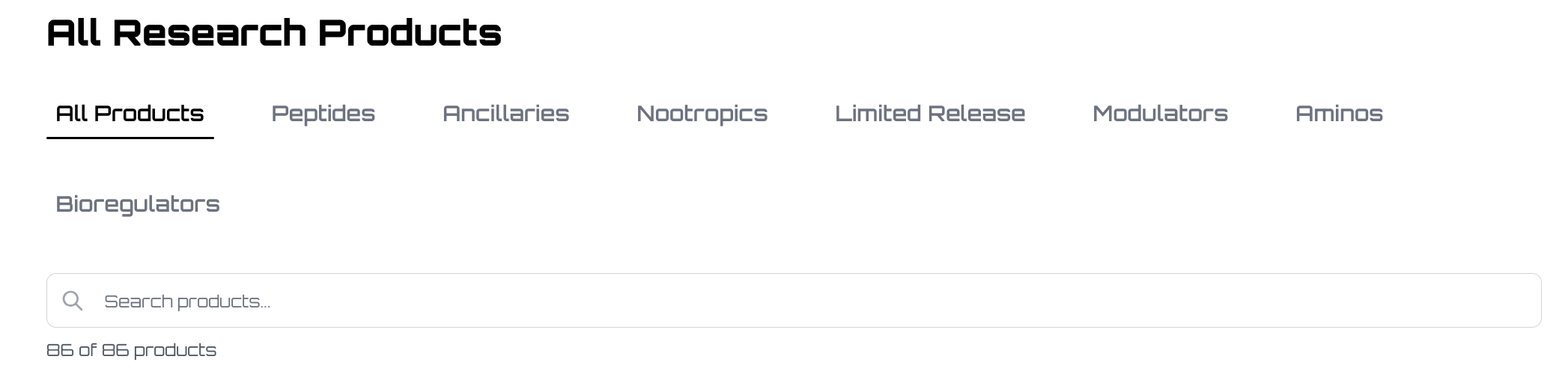
My main complaint is the website’s organization.
Its navigation groups products under labels such as “peptides,” “bioregulators,” “nootropics,” “ancillaries,” and “aminos.”
Those categories may make sense to experienced buyers, but I think the catalog would be easier to browse with additional groupings based on research interest—for example, body composition, sleep, or focus. That would help someone understand where to start looking without having to know the technical category of every compound.
There’s also a bit of friction that new visitors may not expect. Elite Research USA requires an account to view certain products, particularly ones the company treats as more sensitive.
Visitors who arrive without an affiliate link may also encounter a sign-in requirement. Creating an account is straightforward—you provide an email address and set a password—but I can see why someone comparing vendors might find the extra step annoying.
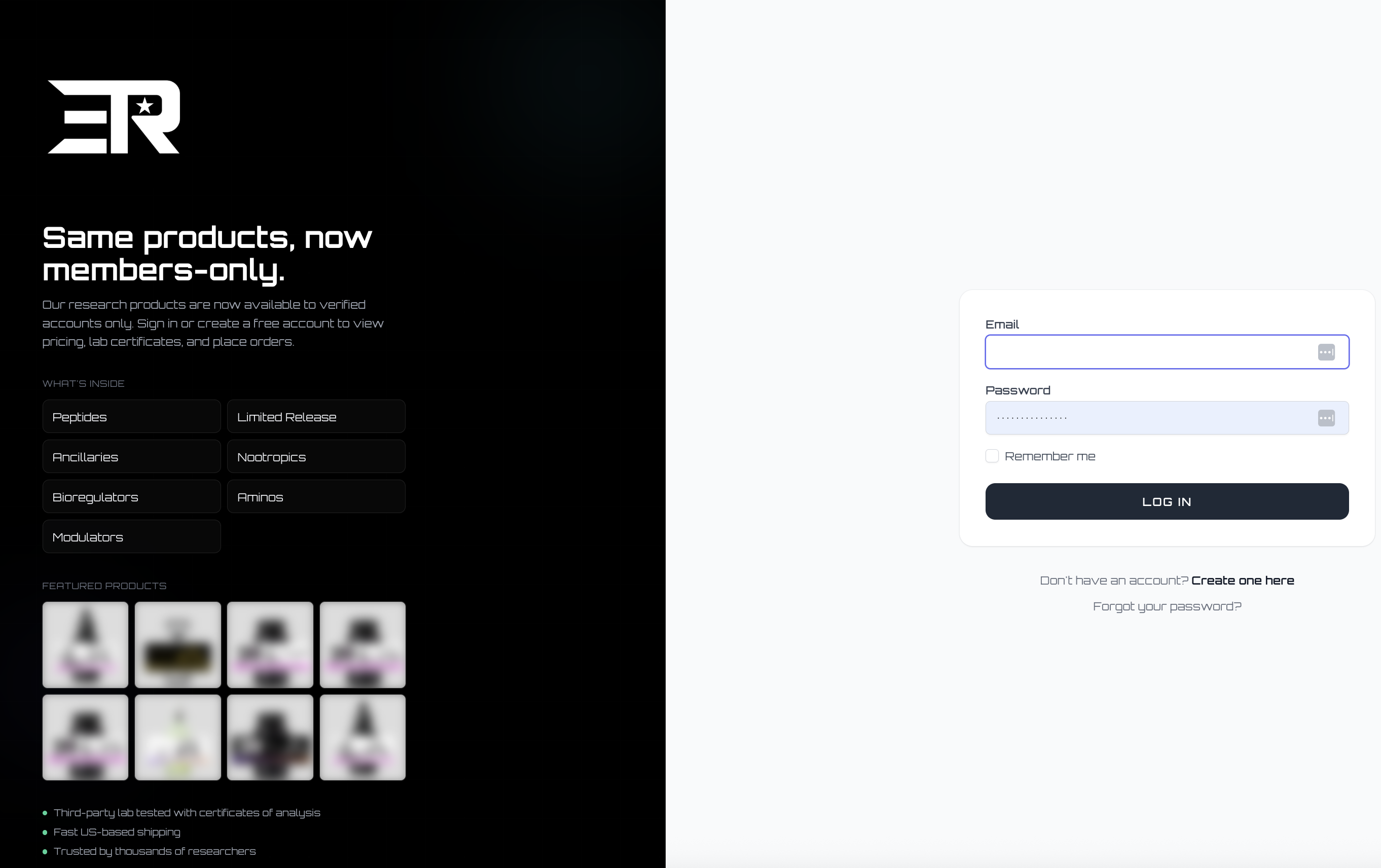
For your first purchase, you’ll have to verify your email address. It’s a necessary security process, but it does feel like more friction. With that said, you only have to do it once, so that’s not that big a deal, but I thought I’d point it out.

With that said, the fast delivery, responsive support, broad selection, and regularly updated COAs outweigh those website frustrations. The navigation could be clearer, especially as more people unfamiliar with peptide terminology discover the company.
Who should buy peptides from Elite Research USA?
- If you already have a base working knowledge of peptides, this is your place. The site doesn’t waste time with educational articles for SEO purposes. You know what you want, and they provide it to you.
- If you know how to do your own research, evaluate analytical documents, and are willing to check the current certificate of analysis for the exact product and lot they intend to order. This is a must for anyone purchasing peptides, as there are plenty of shady dealers in this space with plenty more popping up every day. I’m happy to say that Elite Research USA is definitely not one of those vendors.
- If you want a broad selection of products, publicly available COAs, responsive American, English-speaking customer support, and fast U.S. shipping.
- If you want top quality at an excellent price that hasn’t been padded.
Who should not buy peptides from Elite Research USA
- If you’re looking for FDA-approved medication. Peptides and the FDA have a bit of a situationship that doesn’t look like it’s going to be resolved any time soon.
- You don’t take responsibility for your own health or research what you’re putting into your body.
- You don’t live in the United States. They currently do not ship anywhere outside of the United States.
If this article was helpful, I’d love if you purchased from my affiliate link or use my discount code ED10. I get a small commission at no extra charge to you, plus you get a 10% discount on your order.