Is Rejuven-8 the Best Face Cream for Men? My Results and an Ingredient-by-Ingredient Review

Is Rejuven-8 the Best Face Cream for Men? My Results and an Ingredient-by-Ingredient Review
Most men do not want a complicated skincare routine. We want one product that is easy to use, does several jobs at once, and makes a visible difference.
I personally think I look good for my age. I work out, sleep well, I never smoked, and I haven’t drank alcohol in 13 years.
On top of that, I’m black, so my skin doesn’t easily show damage from the sun. But that still doesn’t mean I can’t preserve what I have and—if possible—make it look even better.
That is why I started using Elite Research’s Rejuven-8—and why I think it deserves consideration as one of the best face creams for men who want healthier, younger-looking skin without turning the bathroom counter into a laboratory.
When I found Rejuven-8, I honestly wasn’t looking for a face product. I, like most men, don’t obsess over my skin. However, I recently started using VanMan’s Beef Tallow for my skin along with his zinc-based sunscreen.
But I started looking through Elite Research Peptides, and I noticed Rejuven-8, the ingredients, and the purpose of it, so I figured why the heck not. Let’s try it for a little while to see if it can add to my skin care routine.
Rejuven-8 combines familiar skin care ingredients such as glycerin, hyaluronic acid, niacinamide, shea butter, vitamin C, and vitamin E with three other peptides: GHK-Cu, Argireline, and SNAP-8. This combination creates a synergistic effect of
- Improving hydration
- Reinforcing and rebuilding the skin barrier
- Brightening and evening out your skin tone
- Softening or reducing the appearance of fine lines
I’ve seen great results from using it daily, and I’m going to order another tub ASAP.

My skin looks smoother, healthier, and I don’t have to deal with that dry, ashy look that many older men—especially black men—have to deal. And the best part is that a very small amount goes a long way and covers my entire face.
That’s the short version.
The rest of this review explains what each ingredient does, where the evidence is strong, where the online claims are a little overoptimistic and warrant caution, and whether Rejuven-8 makes sense for your skin type.
My verdict: Rejuven-8 is a compelling multi-purpose face moisturizer for men, particularly if dryness, dullness, uneven skin texture, or visible signs of aging are your main concerns. Its strongest selling point is not any single miracle ingredient. It is the way the formula combines humectants, emollients, antioxidants, barrier-support ingredients, and cosmetic peptides into a single face cream.
Disclosure: That is my affiliate link. I receive a small commission if you purchase through it, at no additional cost to you.
Rejuven-8 at a glance
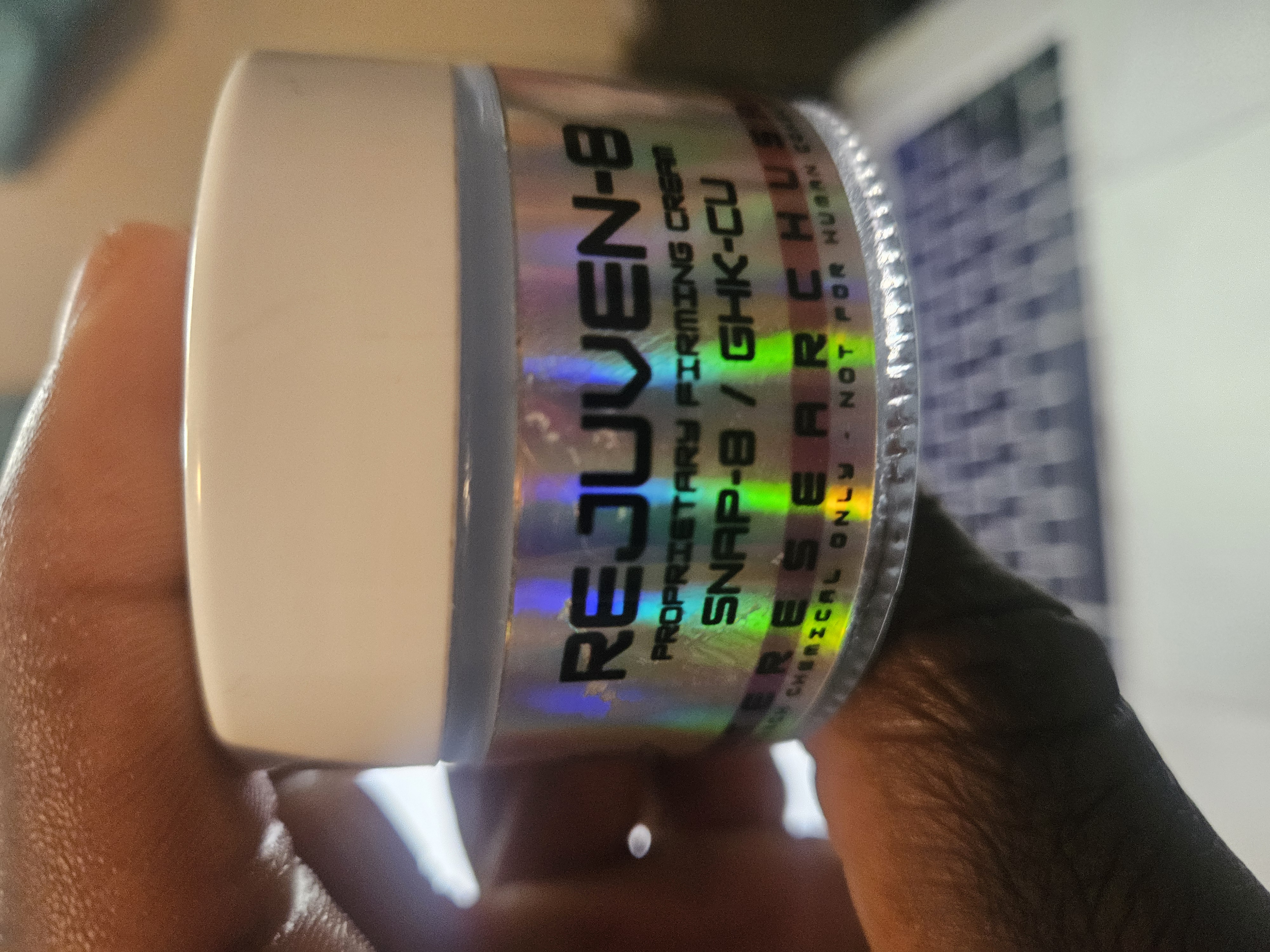 Best suited for: Men looking for an anti-aging face moisturizer that addresses dryness, dullness, uneven tone, loss of firmness, and expression lines.
What I like:
- It combines hydration, barrier support, antioxidant protection, and peptides into a single product. I still use my tallow balm because I live in a climate with rough winters, but many guys won’t need to add a thing.
- Glycerin and hyaluronic acid help hydrate and visibly plump dry skin.
- Niacinamide, shea butter, soybean oil, and vitamin E help support moisture retention. As long as I’m using this daily, my face doesn’t get that dry, parch, crackhead look.
- Vitamin C, vitamin E, niacinamide, and meadowsweet provide brightening and antioxidant support. And it actually works. I’m not obsessed with lightening my skin or anything like that, but it definitely adds a youthful glow.
- GHK-Cu, Argireline, and SNAP-8 target firmness and the appearance of fine lines from different angles. My skin is tighter and the small amount of wrinkles I had around my eyes are gone.
- A small amount spreads across the face, so the jar should last longer than the size suggests.
What to know before buying:
- Rejuven-8 does not replace sunscreen. My wife thought I should add that, seeing as how I don’t ever use sunscreen.
- It is not a retinol product, so men specifically looking for the best-studied topical treatment for photoaging may still want a separate retinoid. Retinal is another popular skin care ingredient. If you’re specifically looking for that, this isn’t for you.
- The evidence is stronger for ingredients such as glycerin, hyaluronic acid, niacinamide, and vitamin C than for some newer cosmetic peptides. The absence of evidence does not mean the evidence of absence. But some ingredients are easier—from a scientific research perspective—to defend than others.
- Elite Research should publish clearer usage directions, ingredient concentrations, and labeling details. While it’s not exactly a “trust me bro” situation, the exact concentrations are not published. I suspect this is more related to proprietary use than anything shady. After all, it still does work.
- I have not seen sufficient manufacturer documentation to substantiate that the formula is vegan, paraben-free, or non-comedogenic. If any of these things are important to you, you’ll have to contact the manufacturer. However, there is no fragrance, so that’s one less thing you have to worry about.
What makes a good men’s face cream?
Ignore any fancy packaging, masculine cedarwood scents, and elaborate marketing designed to appeal to a caricature of a man.
The best moisturizer for men only depends on what the product does and whether those functions match your skin type and goals.
A useful men’s face cream should accomplish at least three things:
- Add water to the skin. Humectants such as glycerin and hyaluronic acid attract and hold water in the outer layer.
- Keep that water from escaping. Emollients and occlusives soften the surface and reduce moisture loss.
- Address your specific concerns. Depending on the formula, that could mean supporting the skin barrier, controlling excess oil, improving dark spots, or reducing the appearance of fine lines.
This is where Rejuven-8 is a big winner, especially for older guys.
It’s not just a basic face moisturizer.
It contains multiple ingredients designed to address the most common reasons men go shopping for anti-aging face cream.
Is Rejuven-8 right for your skin type?
Different skin types need different things. No product is automatically the best face cream for every man, but a good formulation can hit multiple points.
Dry skin
Rejuven-8 makes the strongest case for men with normal-to-dry skin.
Glycerin and hyaluronic acid increase hydration, while shea butter, soybean oil, niacinamide, and vitamin E help the skin retain moisture.
That combination attacks dry skin from both sides: it helps add water and slows down its escape.
Dehydration will make your face look rougher, duller, more lined, and older than your biological age.
Even having darker skin doesn’t protect you from the ugliness of ashy skin. With dark skin, dryness can still generate that unsightly ashy appearance that’s kept Vaseline in business for decades.
Oily skin
Even if you’re a man with oily skin, you still need a face moisturizer.
Excess oil does not necessarily mean the skin contains enough water, and harsh cleansing can leave oily skin dehydrated and irritated.
However, Rejuven-8 includes emollients like shea butter and soybean oil.
If you have very oily skin, start with a small amount and watch how your skin responds.
A lighter gel cream containing ingredients such as hyaluronic acid or squalane may feel better for some men, even though squalane is itself an emollient rather than a water-based hydrator.
Sensitive skin
Several ingredients in Rejuven-8 are commonly used in products for sensitive skin, but the sum of the formula is greater than any individual ingredient.
Even vitamin C, vitamin E, niacinamide, or botanical extracts can irritate a minority of users.
If you have sensitive skin, patch-test the finished product before applying it to your entire face.
Acne-prone skin
Guys with acne-prone skin tend to think every face cream will clog their pores. While this is not necessarily true, it doesn’t mean the opposite, either.
Rejuven-8 is not an acne treatment.
Most acne face creams contain salicylic acid, which is commonly used to help clear clogged pores. If you’re looking for something to deal with acne, Rejuven-8 doesn’t seem like it would hurt, but you’ll probably need a separate product.
How Rejuven-8 approaches anti-aging skincare
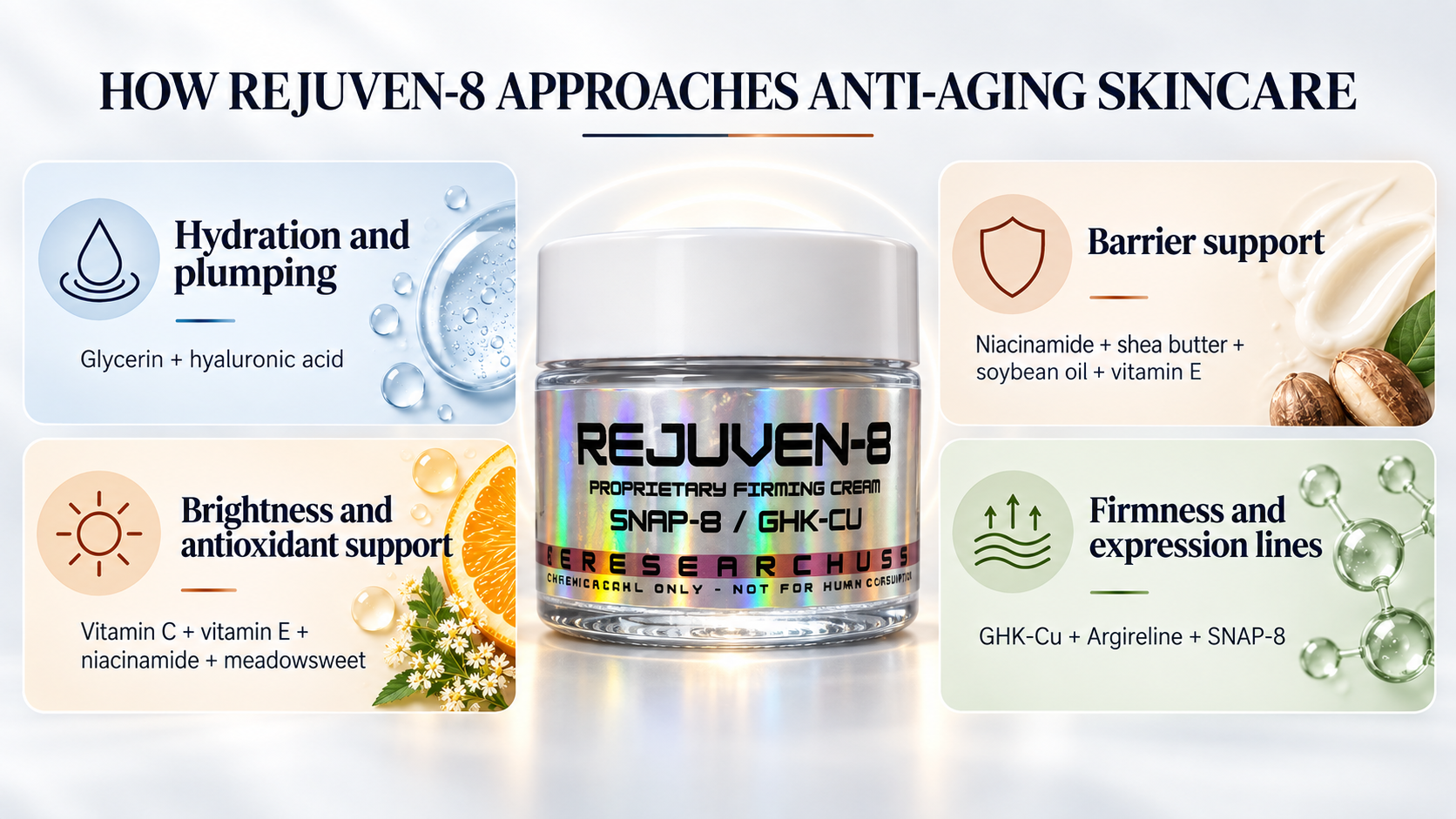 Skin aging is not a single process, so a useful anti-aging product should not rely on a single ingredient or mechanism.
Rejuven-8 addresses four major cosmetic goals:
- Hydration and plumping: glycerin and hyaluronic acid.
- Barrier support and moisture retention: niacinamide, shea butter, soybean oil, and vitamin E.
- Brightness and environmental support: vitamin C, vitamin E, niacinamide, and meadowsweet extract.
- Firmness and expression lines: GHK-Cu, Argireline, and SNAP-8 peptides.
The cream can’t literally reverse biological aging, but it can reduce or—in some cases—eliminate the visible signs of aging by addressing the visible features that make skin look older: dryness, rough texture, dullness, uneven pigmentation, reduced elasticity, and fine lines.
Rejuven-8 ingredients and what they do
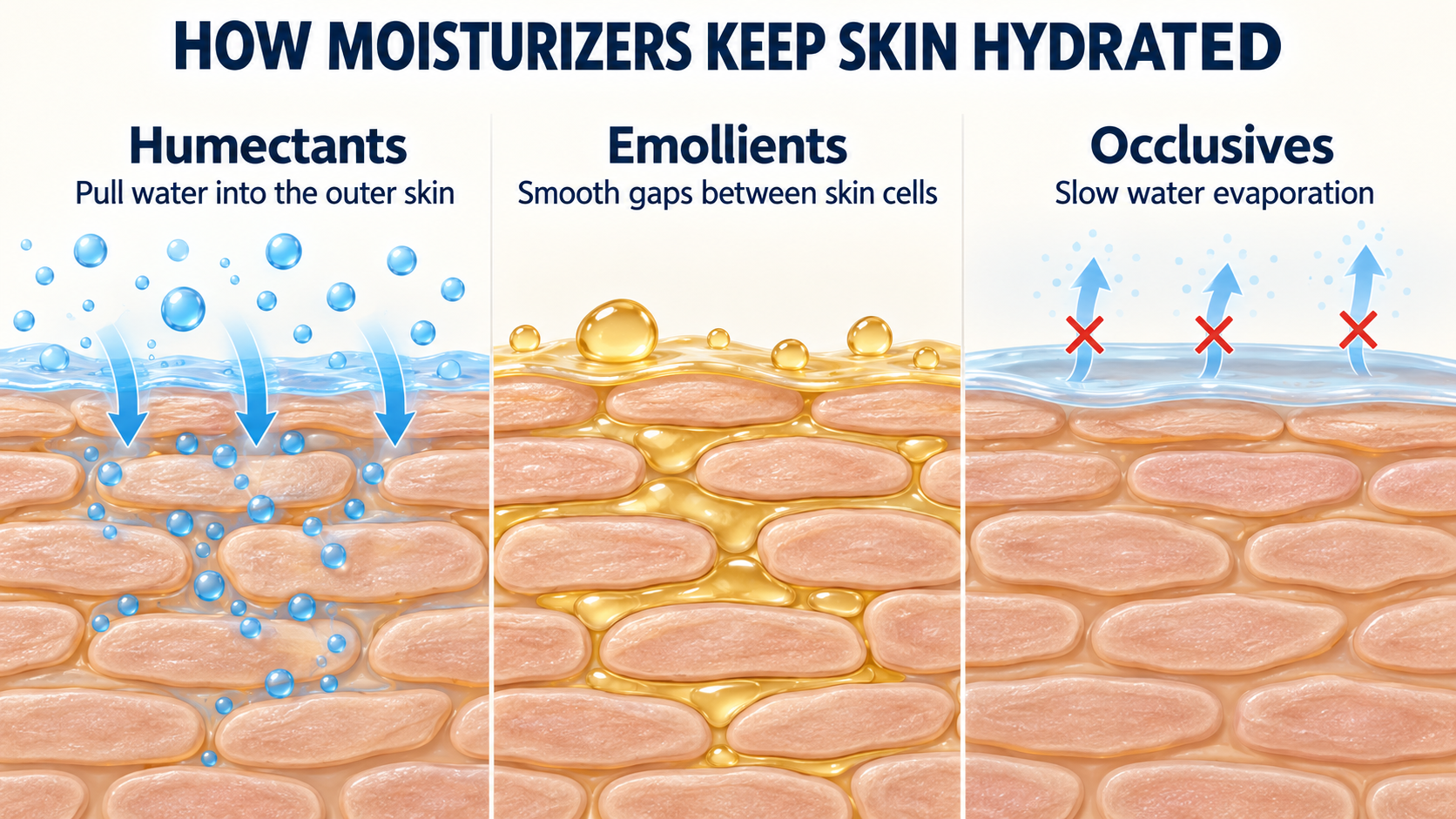
Before getting into the individual ingredients, it helps to understand three categories:
- Humectants attract and hold water in the outer skin.
- Emollients fill the small spaces between rough skin cells, creating a softer and smoother surface.
- Occlusives form a layer that slows water evaporation.
The best face moisturizers usually combine more than one of these functions. Rejuven-8 does that and then adds antioxidants and signaling peptides.
Glycerin: dependable hydration
Glycerin is one of the most established humectants in skincare.
It draws water into the stratum corneum—the outermost portion of the epidermis—helping the skin look smoother, softer, and more flexible.
Research has found that glycerol can improve hydration and help damaged skin recover its barrier function, as measured by transepidermal water loss.
A separate clinical study found that a formula combining glycerin, hyaluronic acid, and Centella asiatica provided long-lasting hydration and improved barrier function with daily use.
Hyaluronic acid: water retention and visible plumping
Hyaluronic acid is a naturally occurring glycosaminoglycan found throughout the body.
Despite the word “acid,” it is not an exfoliating ingredient like glycolic or salicylic acid. Its primary cosmetic role is binding water.
When applied topically, hyaluronic acid works as a humectant and reinforces glycerin’s hydrating effect.
Clinical studies of topical formulations have reported improvements in measured hydration, elasticity, wrinkle volume, and overall skin appearance.
This makes hyaluronic acid particularly useful when dryness makes fine lines appear more pronounced. It won’t permanently erase wrinkles, but well-hydrated skin generally looks fuller and smoother than dehydrated skin.
Niacinamide: strengthening the skin barrier
Niacinamide, also known as nicotinamide, is a water-soluble form of vitamin B3. It can enhance brightness and reduce signs of aging, but its most important role here is to help the skin barrier function properly.
The stratum corneum is often compared to a brick wall. Corneocytes are the bricks, while ceramides, cholesterol, and fatty acids form the mortar around them. When that lipid structure is compromised, water escapes more easily, and irritants can enter more readily.
Niacinamide helps stimulate the production of ceramides and other barrier lipids. Research has also found that it can reduce transepidermal water loss and increase hydration.
Here, it helps to think of the skin like a bucket: glycerin and hyaluronic acid help fill it with water; niacinamide helps seal the leaks.
Clinical research has also associated topical niacinamide with improvements in fine lines, wrinkles, red blotchiness, texture, and hyperpigmented spots.
It appears to improve dark spots partly by limiting the transfer of pigment-containing melanosomes into surrounding skin cells.
Shea butter: softening and sealing
Shea butter is an emollient plant fat extracted from the African shea tree, Vitellaria paradoxa. It fills the small spaces between rough or flaking cells, helping create a softer surface. It also has a mildly occlusive effect, slowing the evaporation of water from the skin.
Where glycerin and hyaluronic acid help attract water, shea butter helps keep some of that moisture from escaping.
That is especially useful for dry skin or in cold weather, when low humidity can make a compromised skin barrier more apparent.
Soybean oil: surface lipids and moisture retention
Soybean oil functions primarily as an emollient. It contains fatty acids, particularly linoleic acid, along with oleic, palmitic, and alpha-linolenic acids.
Linoleic acid is relevant because the skin uses it in specialized ceramides within the lipid matrix of the stratum corneum. In a finished face cream, soybean oil’s most immediate benefit is probably its ability to soften the surface and support moisture retention.
Soy-derived extracts and formulations have shown promising effects on hydration, pigmentation, and signs of photoaging, but these findings should not be attributed solely to ordinary soybean oil.
Vitamin E: lipid and antioxidant support
Vitamin E is a group of fat-soluble compounds, with alpha-tocopherol being the form most commonly discussed in skincare.
It contributes to the conditioned feel of a face moisturizer and helps protect lipids from oxidative damage.
Ultraviolet radiation, pollution, and normal metabolism generate reactive molecules that can damage cells and barrier lipids. Vitamin E can neutralize some of these molecules before the damage propagates.
Controlled human evidence for dramatic effects from topical vitamin E alone remains limited. Also, a small minority of users experience itching, irritation, or allergic contact dermatitis.
Vitamin C: brighter, more even-looking skin
Vitamin C is one of the best-known antioxidants in skincare. It can help improve the appearance of dullness and uneven pigmentation while also supporting the biochemical processes involved in collagen production.
Melanin is produced through reactions involving an enzyme called tyrosinase. Vitamin C can interfere with parts of this process, potentially helping reduce the appearance of excess pigmentation and dark spots over time. It does not bleach the skin or remove a person’s natural pigment.
Clinical research suggests that topical vitamin C can improve uneven pigmentation and visible photoaging, although effectiveness depends heavily on concentration, stability, delivery, and the rest of the formula.
Meadowsweet extract: botanical antioxidant support
Meadowsweet, or Filipendula ulmaria, contains polyphenols, flavonoids, tannins, and naturally occurring salicylate-related compounds.
Research consistently confirms meadowsweet antioxidant properties. When antioxidants are used on the skin, like vitamin C or niacinamide, the effects are brightness, buffering against environmental stress, and the ability to even out skin tone.
With that said, the evidence for meadowseed is less robust than it is for vitamin C or niacinamide, so it should be treated as a supporting player rather than the reason to buy Rejuven-8.
GHK-Cu: the copper peptide
GHK-Cu has been making big waves in both the skincare and biohacking communities—and with good reason.
It sits at the rare intersection of vanity and longevity. People are interested in it not only because it may make skin look younger, but because it appears to influence some of the biological repair processes that decline with age.
Skincare enthusiasts know it as the copper peptide that may improve firmness and reduce visible signs of aging. Biohackers are drawn to its broader potential role in tissue repair and regeneration. The claims vary depending on how it is used, but the underlying molecule is the same.
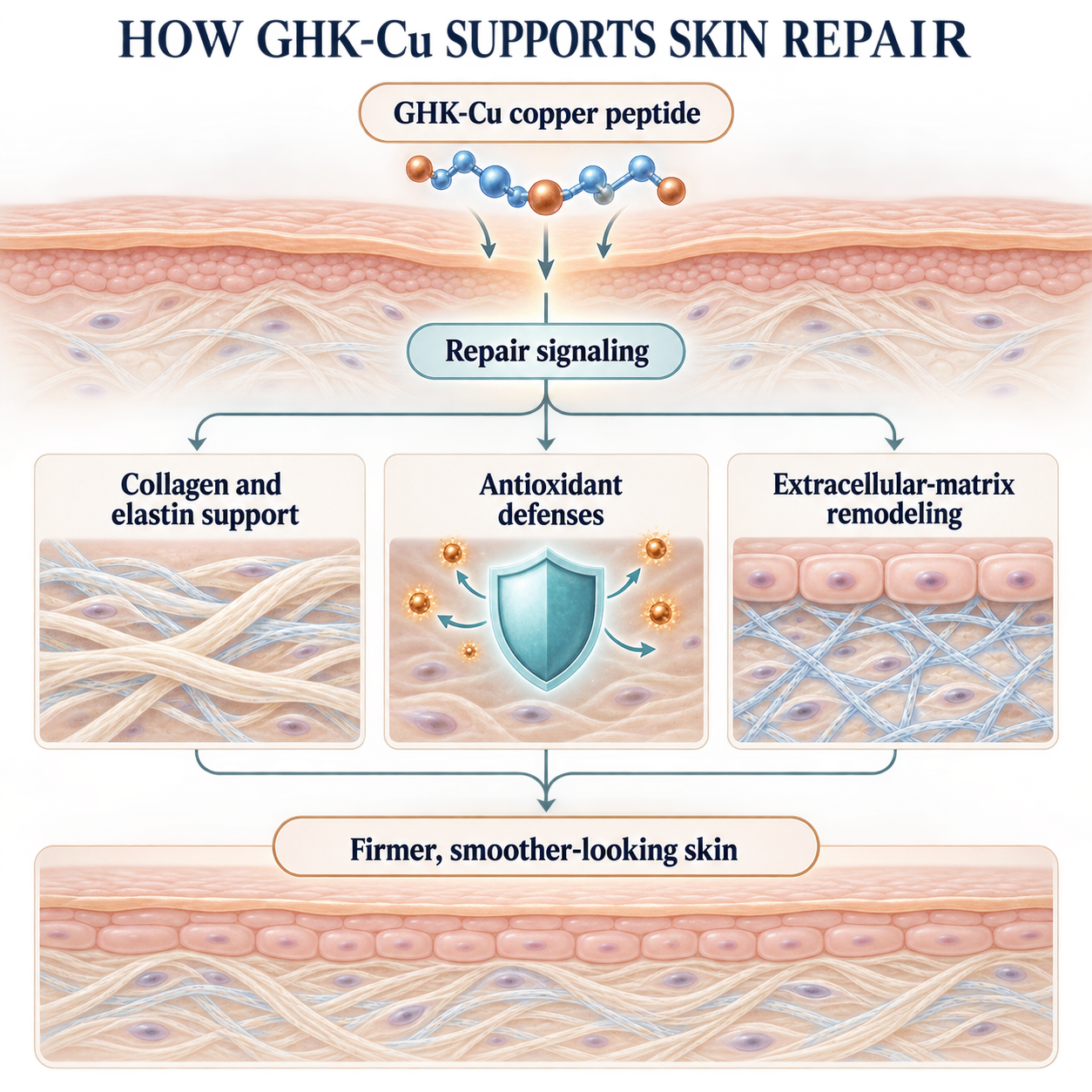
GHK-Cu is a naturally occurring tripeptide bound to copper. In topical skincare, it functions as a repair-signaling peptide intended to support firmer, smoother, healthier-looking skin.
Unlike humectants and emollients, which primarily hydrate and soften the skin’s surface, GHK-Cu is intended to influence the repair processes underneath it. Instead of merely making skin look better temporarily, it signals cells involved in maintaining and rebuilding the skin’s structural framework.
GHK-Cu has been studied for its potential effects on collagen, elastin, glycosaminoglycans, tissue repair, antioxidant defenses, and extracellular-matrix remodeling. A review described human studies in which GHK-Cu creams improved skin density, laxity, clarity, fine lines, and wrinkle depth.
Argireline: targeting expression lines
Argireline is the trade name for acetyl hexapeptide-8. It is used to soften the appearance of dynamic wrinkles caused by repeated facial movement.
It is sometimes marketed as “Botox in a bottle” because it is proposed to interfere with part of the signaling pathway involved in muscle contraction. That comparison is useful for explaining the idea, but it overstates the practical effect.
Botox is injected into muscle tissue. Argireline is applied to the skin and must penetrate far enough to reach a biologically relevant site. Its effect is therefore much milder.
Clinical studies nevertheless suggest that Argireline-containing products may reduce wrinkle depth or improve the appearance of lines in some users.
It’s a solid addition to an anti-aging moisturizer cream, but not a topical equivalent to an injectable neurotoxin.
SNAP-8: another expression-line peptide
SNAP-8 is the trade name for acetyl octapeptide-3.
Like Argireline, it is designed to target expression lines by interfering with a step in the neurotransmitter release process involved in facial contraction.
The idea is the same: a topical peptide must survive the formulation, cross the stratum corneum, and reach the appropriate biological target. As a result, tts real-world effect will be considerably milder than Botox.
Still, there is a lot of value in this ingredient—especially when paired with Argireline.
This combination means that Rejuven-8 should have a substantial effect on forehead wrinkles caused by repetitive movement, which contributes to forehead lines and crow’s feet.
Get Rejuven-8 from Elite Research and use code ED10 for 10% off (automatically applied).How Rejuven-8 compares with other face creams for men
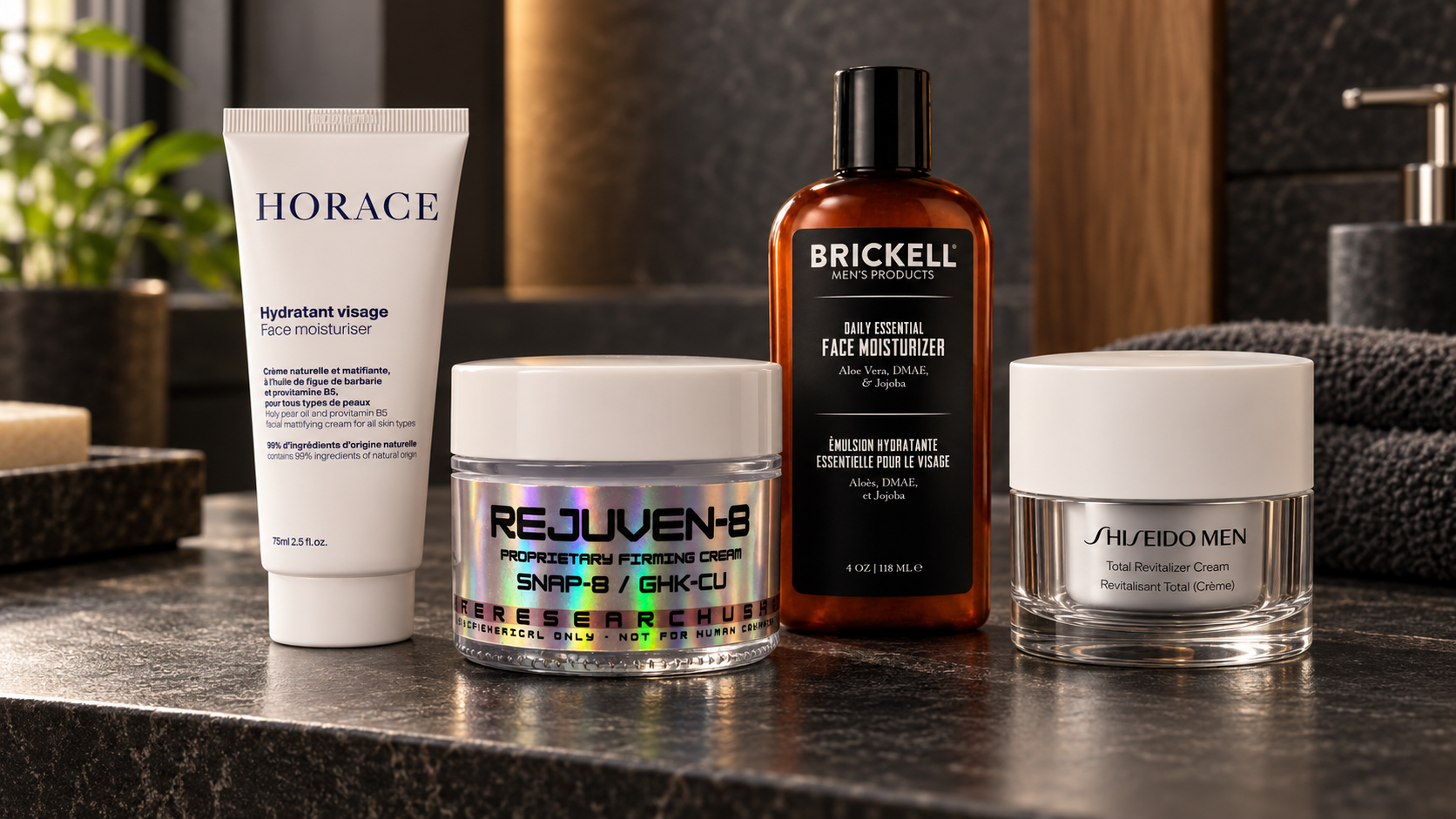
The best face cream for men depends on what you expect it to do.
Some formulas are designed to just deal with dry skin. Others focus on controlling oil, providing a matte finish, or delivering a luxury skincare experience.
Rejuven-8 is built for a more ambitious purpose: combining daily moisturization with multiple anti-aging mechanisms. Here’s how it stacks up against some other top men’s face creams on the market.
Horace Mattifying Face Moisturizer. The best fit for men with oily or combination skin who want lightweight hydration without shine. Its formula includes glycerin, shea butter, panthenol, and plant oils, but it does not contain a anti-wrinkle peptides. The price reflects this, as it’s significantly more affordable than Rejuven-8.
Brickell Daily Essential Face Moisturizer. Offers a strong everyday formula built around aloe, glycerin, hyaluronic acid, jojoba oil, niacinamide, and botanical antioxidants. It also contains DMAE for firming support. However, it still lacks the copper peptide and expression-line peptides that make Rejuven-8 a top pick.
Shiseido Men Total Revitalizer Cream. This one positioned and priced as a premium anti-aging men’s skin cream. It provides lasting hydration and contains niacinamide, vitamin E, rice germ oil, botanical extracts, and Dipeptide-15. However, it costs $84 for 50 milliliters and contains both alcohol and fragrance.
Rejuven-8’s greatest has everything these brands have and more.
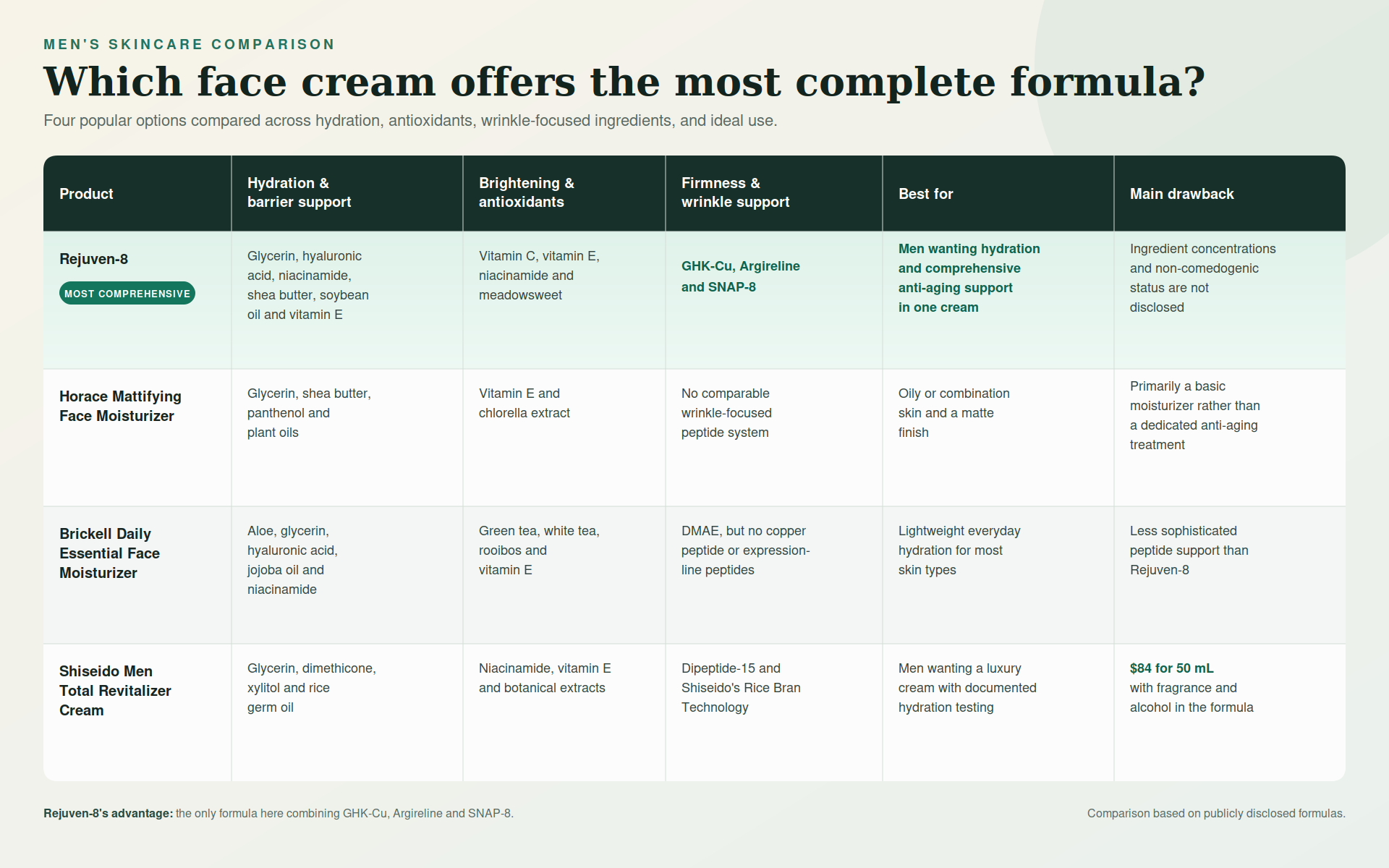
Rejuven-8 has the peptide combination of GHK-Cu, Argireline, and SNAP-8. GHK-Cu supports firmness and skin renewal, while Argireline and SNAP-8 are formulated to soften the appearance of expression lines. None of the competing creams combines all three of these peptides.
Horace may be the better purchase for someone who simply wants an inexpensive mattifying moisturizer. Brickell is a capable lightweight daily face cream, while Shiseido offers luxury presentation and manufacturer-backed testing.
But for men who want hydration, barrier support, brighter-looking skin, and a serious peptide-based anti-aging formula in one product, Rejuven-8 offers the most comprehensive ingredient strategy of the four.
Rejuven-8 versus serums, retinol, and a complete skincare routine
A cream and a serum are not automatically competitors.
Serums are usually lighter products designed to deliver concentrated active ingredients, while face creams often emphasize moisturization and sealing.
Rejuven-8 attempts to do both jobs by placing multiple actives inside a moisturizing base. That simplicity is commercially attractive: instead of layering several serums under a face moisturizer, many men will prefer one product they can apply consistently.
Still, Rejuven-8 is not a complete skincare routine on its own. A simple routine could look like this:
- Wash with a gentle facial cleanser.
- Apply any prescribed or selected treatment product for a specific concern.
- Apply Rejuven-8 as your face moisturizer.
- Use a broad-spectrum sunscreen during the day.
If you use retinol or another retinoid at night, introduce products gradually to reduce irritation.
Do not pile retinol, salicylic acid, exfoliating acids, and several new serums into your routine simultaneously. You will not know which product is helping—or which one is irritating your skin.
How to use Rejuven-8
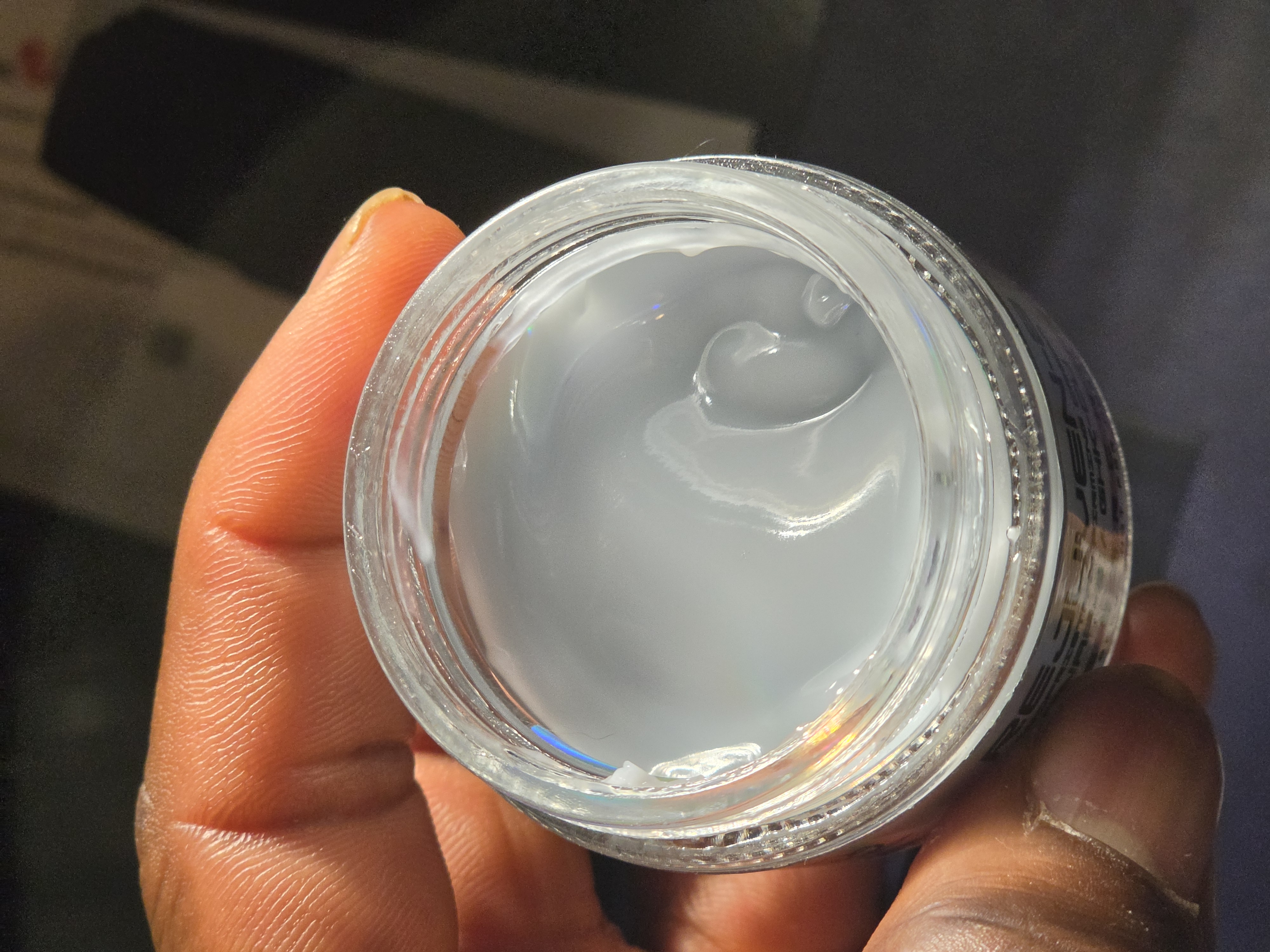
I apply Rejuven-8 daily. You only need enough to lightly cover the tips of your fingers before spreading a thin layer across your face.
For best results:
- Apply it to clean skin.
- Use a smaller amount first, especially if you have oily or sensitive skin.
- Spread it evenly rather than leaving a thick layer.
- Apply sunscreen afterward in the morning.
- Give the product consistent use before judging anti-aging benefits. Hydration can change quickly; changes in texture, tone, or fine lines generally take longer.
Patch-testing is sensible whenever you introduce a new skincare product, particularly if you already know that you react to vitamin E, vitamin C, niacinamide, plant oils, or botanical extracts.
I’m not saying that I did that, but if you’re on the more cautious side of things, it’s not a bad idea.
Is Rejuven-8 worth it?
I think Rejuven-8 is worth considering if you want one product that combines a face moisturizer with several categories of anti-aging ingredients.
Its most credible immediate benefits come from hydration and barrier support.
Glycerin, hyaluronic acid, niacinamide, shea butter, soybean oil, and vitamin E give the formula a solid moisturizing foundation. Vitamin C, niacinamide, and antioxidants support brighter and more even-looking skin. GHK-Cu, Argireline, and SNAP-8 provide an additional peptide-based angle for firmness and expression lines.
I would not call any face cream a miracle, and I would not pretend every ingredient has equal evidence. But the overall formula makes sense, and my personal results have been excellent.
If your priority is a minimal routine, dry or dull skin, and multiple visible signs of aging, Rejuven-8 has a strong claim to being one of the best face creams for men in its category.
Get Rejuven-8 from Elite Research and use code ED10 for 10% off (automatically applied).Purchasing through that link supports my work at no extra cost to you.
Frequently asked questions about Rejuvan-8 Men’s Face Cream
What is the best face cream for men with dry skin?
Look for a product that combines humectants with emollients or occlusives. Rejuven-8 contains glycerin and hyaluronic acid for hydration, plus shea butter, soybean oil, niacinamide, and vitamin E to soften the surface and support moisture retention.
Can men use the same face moisturizers as women?
Yes. Ingredient function matters more than the gender printed on the package. The best moisturizer for men is the product that suits the user’s skin type, concerns, budget, and willingness to apply it consistently.
Does Rejuven-8 contain retinol?
Retinol is not among the featured ingredients evaluated in this review. Rejuven-8 instead uses antioxidants, niacinamide, GHK-Cu, Argireline, and SNAP-8 as its primary anti-aging actives.
Is Rejuven-8 suitable for sensitive skin?
That depends on the individual and the complete formula. Patch-test it first, and ask Elite Research to confirm current labeling details if you need a fragrance-free, paraben-free, or otherwise restricted formulation.
Will Rejuven-8 clog pores?
I have not seen adequate documentation allowing me to describe Rejuven-8 as non-comedogenic. Men with acne-prone or very oily skin should introduce it gradually and monitor their response.
How long does Rejuven-8 take to work?
Hydrating benefits may become noticeable relatively quickly. Changes involving tone, texture, collagen, or the appearance of fine lines generally require consistent use over weeks or months. Results will vary with age, baseline skin condition, sun exposure, and the rest of your routine.
References
- Fluhr JW, Darlenski R, Surber C. Glycerol and the skin: holistic approach to its origin and functions. Br J Dermatol. 2008;159(1):23-34.
- Gloor M, Gehring W. Effect of glycerol on the skin barrier in vivo. Acta Derm Venereol. 1996;76(1):6-9.
- Pavicic T, Gauglitz GG, Lersch P, et al. Efficacy of a topical serum containing hyaluronic acid, glycerin, and Centella asiatica extract on skin hydration and barrier function. J Clin Aesthet Dermatol. 2017;10(8):E1-E9.
- Pavicic T, Stamenkovic P, Halfter K, et al. Efficacy of cream-based novel formulations of hyaluronic acid of different molecular weights in anti-wrinkle treatment. J Drugs Dermatol. 2011;10(9):990-1000.
- Gold MH, Biron JA. Clinical evaluation of a topical serum containing multiple forms of hyaluronic acid for skin hydration and wrinkle reduction. J Clin Aesthet Dermatol. 2021;14(8):E61-E68.
- Tanno O, Ota Y, Kitamura N, Katsube T, Inoue S. Nicotinamide increases biosynthesis of ceramides and other stratum corneum lipids. Br J Dermatol. 2000;143(3):524-531.
- Soma Y, Kashima M. Effects of topical nicotinamide on atopic dry skin and transepidermal water loss. Int J Dermatol. 2005;44(3):197-202.
- Gehring W. Nicotinamide-containing moisturizers improve the barrier function of dry skin. J Cosmet Dermatol. 2012;11(2):135-141.
- Bissett DL, Oblong JE, Berge CA. Topical niacinamide improves aging facial skin appearance. Dermatol Surg. 2005;31(7 Pt 2):860-865.
- Hakozaki T, Minwalla L, Zhuang J, et al. The effect of niacinamide on reducing cutaneous pigmentation and melanosome transfer. Br J Dermatol. 2002;147(1):20-31.
- Lin TK, Zhong L, Santiago JL. Anti-inflammatory and skin barrier repair effects of topical plant oils. Int J Mol Sci. 2018;19(1):70.
- Danby SG, Brown K, Wigley AM, et al. The effect of shea butter extract cream in atopic dermatitis. Clin Cosmet Investig Dermatol. 2015;8:351-358.
- Zielińska A, Nowak I. Plant oils and skin barrier function: current evidence. Molecules. 2024.
- Keen MA, Hassan I. Vitamin E in dermatology. Indian Dermatol Online J. 2016;7(4):311-315.
- Thiele JJ, Ekanayake-Mudiyanselage S. Vitamin E in human skin: organ-specific physiology and considerations for topical use. Mol Aspects Med. 2007;28(5-6):646-667.
- Burke KE. Interaction of vitamins C and E as better photoprotection. J Cosmet Dermatol. 2007;6(1):52-56.
- Pullar JM, Carr AC, Vissers MCM. The roles of vitamin C in skin health. Nutrients. 2017;9(8):866.
- Darr D, Dunston S, Faust H, Pinnell S. Effectiveness of topical vitamin C in photoaged skin: a randomized controlled trial. Dermatol Surg. 2003;29(4):418-425.
- Traikovich SS. Use of topical ascorbic acid and its effects on photodamaged skin. Arch Otolaryngol Head Neck Surg. 1999;125(10):1091-1098.
- Al-Niaimi F, Chiang NYZ. Topical vitamin C and the skin: mechanisms of action and clinical applications. J Clin Aesthet Dermatol. 2017;10(7):14-17.
- Farris PK. Topical vitamin C: a useful agent for treating photoaging and melasma. Dermatol Surg. 2005;31(7 Pt 2):814-818.
- Janda K, Jakubczyk K, et al. Biological activity and antioxidant properties of Filipendula ulmaria (Meadowsweet): a review. Molecules. 2023.
- Kędzia B, Hołderna-Kędzia E. Pharmacological properties of Filipendula ulmaria. Herba Polonica. 2022.
- Pickart L, Margolina A. Regenerative and protective actions of the GHK-Cu peptide in the skin. BioMed Research International. 2018;2018:6481081.
- Campbell P, et al. Copper peptides and skin rejuvenation: current evidence. Clin Cosmet Investig Dermatol. 2022.
- Wang X, et al. Acetyl hexapeptide-8 for peri-orbital wrinkles: a randomized placebo-controlled trial. J Cosmet Dermatol. 2013.
- Vashi NA, et al. Acetyl hexapeptide-8 as a topical alternative to botulinum toxin: review of the literature. J Drugs Dermatol. 2025.
- Hexsel D, et al. Clinical evaluation of an acetyl hexapeptide-8 serum for facial wrinkles. J Clin Aesthet Dermatol. 2023.
- Kerscher M, et al. Cosmetic peptides for skin rejuvenation: mechanisms and clinical evidence. Cosmetics. 2024;11(4):118.