My Incogni Review: Does It Work? My Results, Pricing, and Verdict

My Incogni Review: Does It Work? My Results, Pricing, and Verdict
If you spend any time on YouTube, you’ve likely seen sponsored ad reads for Incogni. I’ve seen a few of them myself, and the advertisements always do a good job of explaining that Incogni removes your data from data brokers and protects your privacy.
But when I watch those ad reads, a few questions always come to mind. I assume that other skeptical consumers are thinking the same thing. For example:
- How does Incogni work?
- If Incogni can see where my data is, how do I know they aren’t selling it too?
- How much does it cost without an influencer discount?
- Will Incogni stop those annoying spam phone calls?
- Does Incogni protect me from identity fraud or find my information on the dark web?
Since none of the sponsored reads I’ve ever seen have truly answered those questions—and to be fair, ad reads are usually only 60-90 seconds—I figured I’d try it for myself and give it a proper in-depth treatment.
I want to give a full disclosure here.
I reached out to Incogni about writing this review, and they hooked me up with a free account to try it out, along with an affiliate link to share with anyone who reads it.
So, if you find this helpful and it pushes you toward buying, I’d appreciate it if you bought through my link. I may earn a small commission, and you can consider it a way of saying “thank you.”
When I tried Incogni, I wanted to look at the process behind the dashboard, so this review not only covers what Incogni does, but how it does it and all the features it offers.
My main takeaways on Incogni
- Incogni is great if you want to reduce your “digital footprint.” That is, the distribution of your personal information. Their greatest benefit is that—with the exception of custom removals—they automate every part of this process, from sending initial requests to follow-ups to lodging complaints against data brokers who don’t honor requests.
- The setup is simple, and the dashboard is easy to understand. There is effectively no learning curve for Incogni. And once everything is set up, it continually runs.
- You get a record of requests, responses, and ongoing work. In case you’re ever wondering if Incogni is earning its keep, you can always check in
- It’s competitively priced. It’s not the most expensive data removal option, but it isn’t the cheapest either. The one-year subscription is extremely affordable, especially given the damage identity fraud can cause.
- Incogni offers a family plan, which is great because identifying data is often tied to an address rather than just one person who lives there.
- If you want unlimited custom removals, you’ll have to sign up for more than the basic plan.
- Incogni offers two-factor authentication for your account. Their data handling process has been independently assessed by a SOC 2 Type II examination, and they passed Deloitte’s limited assurance assessment, showing they aren’t also in the data brokerage business on the side.
How I tested Incogni
Aside from seeing ads and hearing pitches from YouTubers, I was completely unfamiliar with Incogni. So the first thing I did was look into the company’s background.
After I completed my research, I reviewed their marketing claims and checked for any independent verification or assessments—both are especially important in a business handling data.
I also checked out reviews on TrustPilot and Reddit. If your product gets a bad reputation on Reddit, then there’s no hope there.
Finally, I used it myself. Just because everyone on Reddit loves or hates it doesn’t mean that I’ll feel the same way.
What is Incogni?
Incogni is a personal data removal service that helps you exercise your privacy rights with data brokers.
Once you authorize it to reach out to brokers on your behalf, it contacts the ones in its coverage network and requests that they delete your personal information.
The history of Incogni
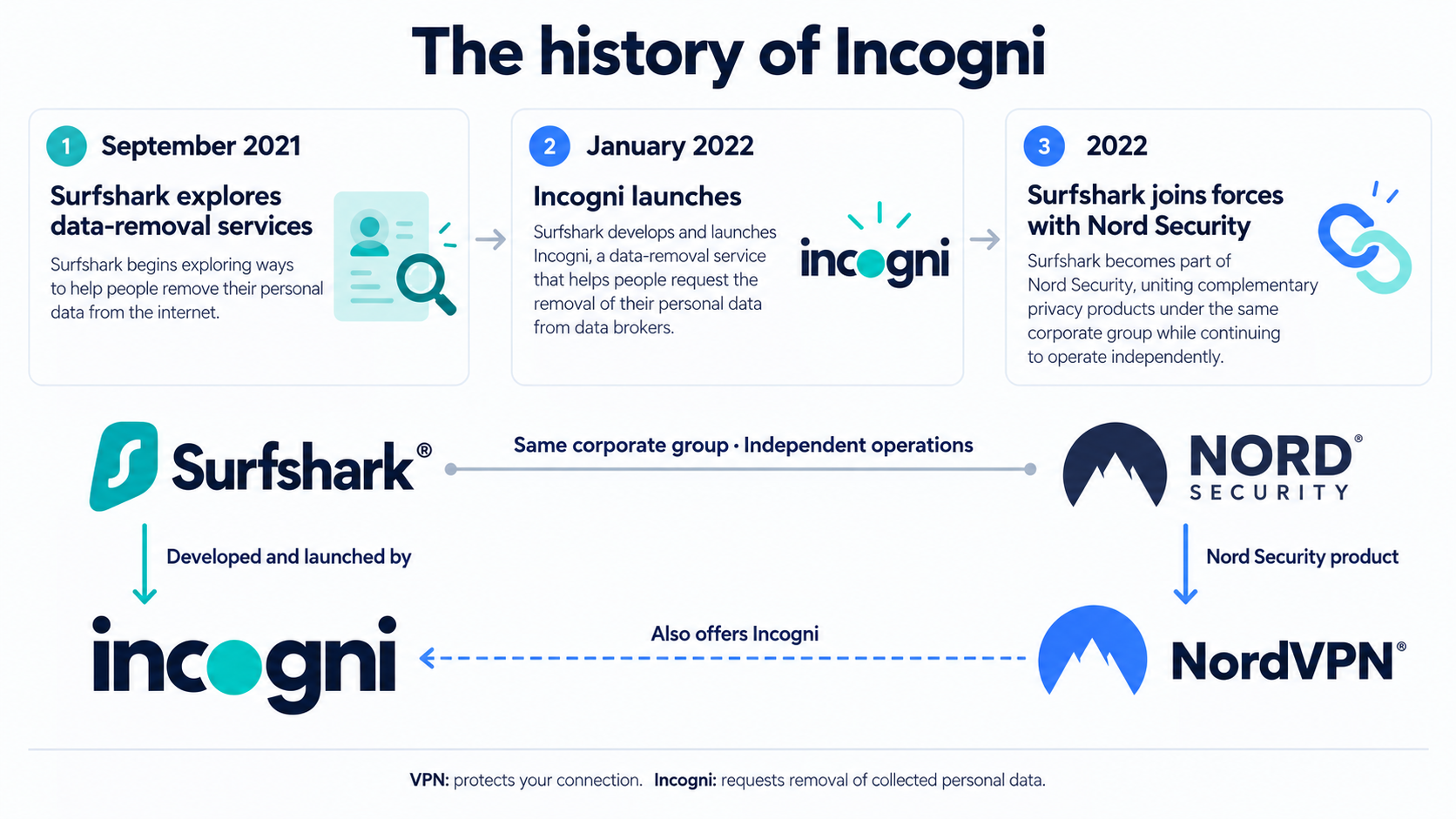
Incogni was developed by Surfshark, the cybersecurity company best known for its VPN—another service you’ve almost certainly seen sponsoring YouTube videos.
According to Incogni’s company history, the idea began in September 2021, when the Surfshark team was exploring other privacy issues it could tackle. That led them to data brokers.
A VPN helps protect your connection while you’re online, but it doesn’t do anything about personal information that companies have already collected about you. Surfshark launched Incogni in January 2022 to help with that problem.
Surfshark later joined forces with Nord Security, putting Incogni under the same umbrella as NordVPN.
Although both companies retained independent operations, NordVPN also offers Incogni through its website.
Why Data Brokers Can Be a Problem
Data brokers are companies that collect information about people, combine it into profiles, and sell that information—or access to it—to other businesses.
Mathematician Clive Humby famously said, “Data is the new oil.” His point was that raw information becomes much more valuable when it’s processed into something useful.
Effective advertising is no longer limited to securing prime-time commercial spots, newspaper space, or massive billboards.
Technology allows everyone from Fortune 500 companies to one-person businesses to put their products in front of people whose interests, habits, and circumstances suggest they’re likely buyers.
Data brokers help supply the information used to build those buyer profiles. But how do they acquire that information?
When most people think of personal data leaks, they imagine some nefarious hacker breach. While those obviously happen, your information doesn’t have to be stolen to end up in a broker’s database. You don’t even have to post your life online.
For example:
- Public information. Property records, court filings, business registrations, and some voter records can contain your name, address, and other personal details. What’s available varies by record and location.
- Information you give businesses. You may have noticed that some services explicitly tell you they’ll never sell your data. Other businesses sell or share customer information—and this isn’t limited to online businesses. Registering a product warranty, for example, provides information that may reach data brokers.
- Tracking built into websites and apps. Web tracking can record browsing activity, and apps on your phone can collect information too. Apps can contain third-party software called a software development kit (SDK) that provides features such as analytics and data collection. An app with location permission may share your coordinates, timestamps, and a device identifier with another company via its SDK.
- Other data brokers. If one data broker already has a batch of information, another may decide it’s easier to buy that information rather than collect its own.
One broker might have your name and address from a property record, another might have your purchase history from a loyalty program, and another might record your browsing or location activity.
When that information is combined, it can help someone impersonate a person you trust, make a scam sound more believable, or find you offline.
You can’t do anything about information that’s already been shared, but you have a weapon against data brokers.
Depending on where you live and which laws apply, you may have the right to request that they delete your personal information.
You could do it yourself, but it would require a significant time investment.
You’d have to find the brokers, send removal requests, and manage follow-ups. And because brokers can collect your information again after deleting it, it isn’t necessarily a one-time job.
Incogni automates much of that work. It contacts covered brokers, tracks responses, follows up, and sends recurring removal requests where needed.
It can’t remove every trace of you from the internet, but it can help reduce how widely your personal information is available.
How Incogni removes your data from data brokers
Incogni sends removal requests on your behalf and follows up with brokers. The brokers handle deletion within their own systems. Here’s how the process works:
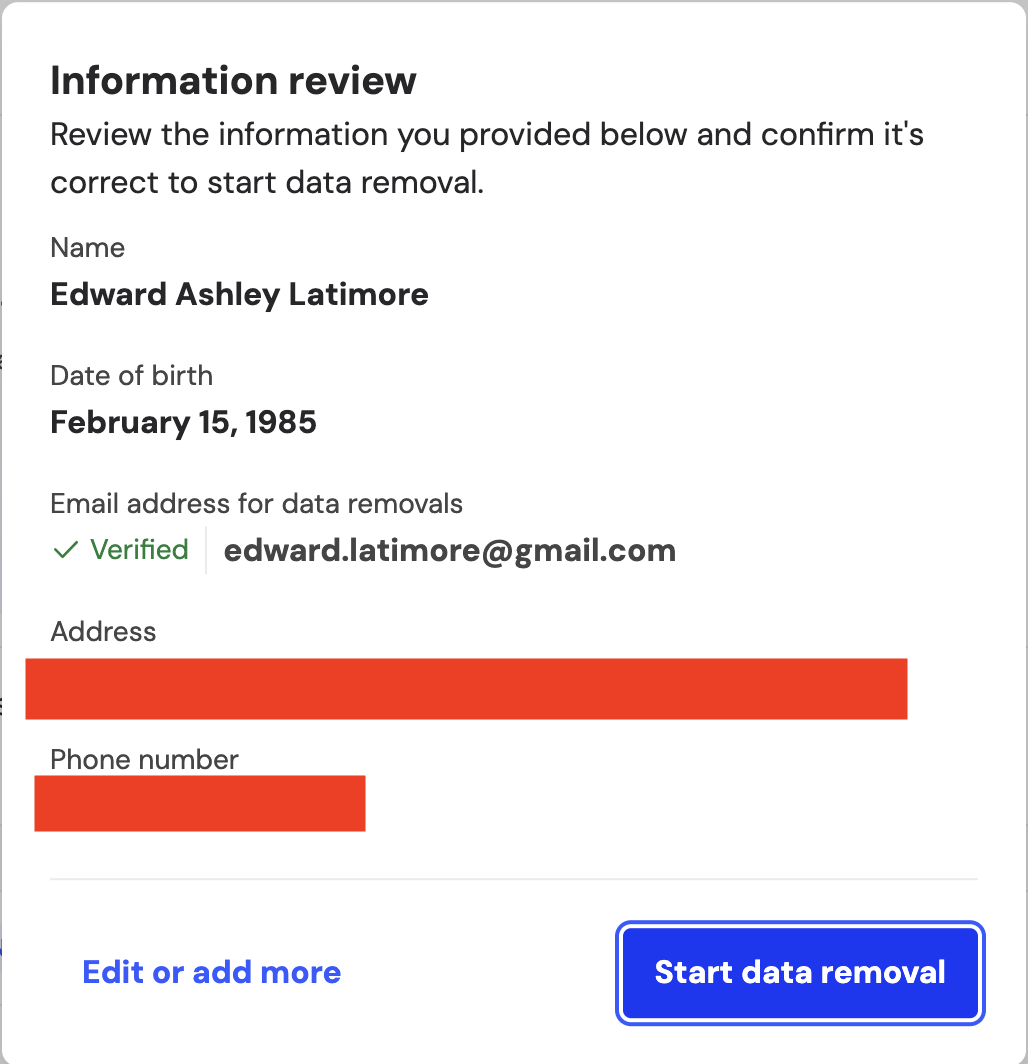
- Provide your identifying information. Your name, addresses, emails, and phone numbers help Incogni locate the right records.
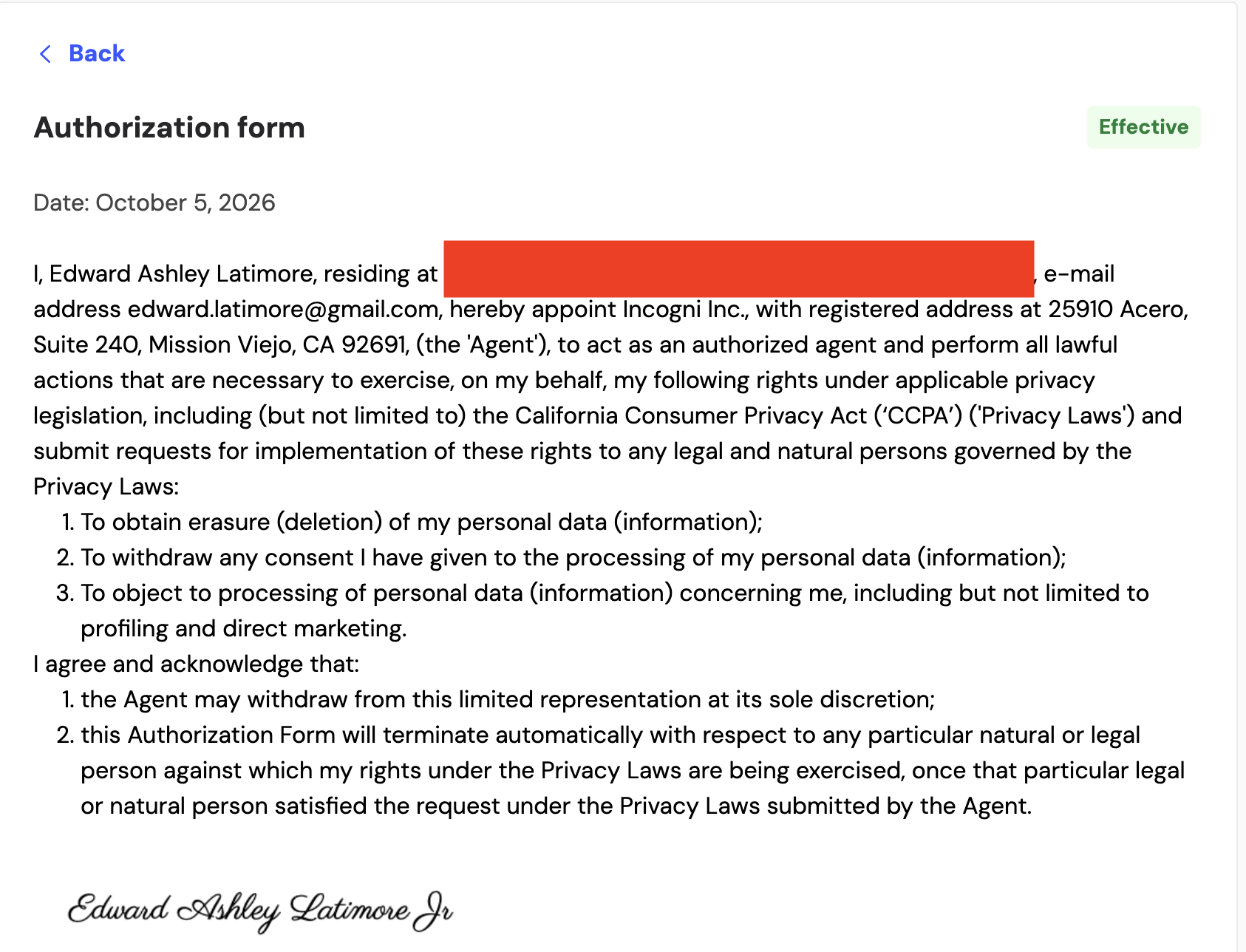
- Give Incogni permission. You sign an authorization form allowing it to submit requests on your behalf.
- Identify relevant brokers. Incogni can scan supported public people-search sites for matching profiles. Private databases generally aren’t publicly searchable, so it also sends requests to relevant brokers that may hold your information.
- Send requests and follow up. Incogni submits requests through the brokers’ accepted channels, tracks responses, and follows up as needed.
- Repeat where needed. Brokers can collect your information again after deleting it, so Incogni sends recurring requests. Some brokers instead use suppression, keeping enough identifying information to recognize you and prevent your details from being added back to their listings or products.
Why brokers comply with Incogni’s request—and what happens if they don’t
Well, that depends on where you live and what privacy laws you fall under.
Once you authorize Incogni to represent you, it submits deletion and opt-out requests on your behalf because it has the weight of privacy laws behind them.
Sure, some companies just remove the valuable data they’ve collected on you out of the kindness of their heart, but let’s be real here. Many companies are either compelled to or reluctant to face the potential hassle of legal intervention.
So just because you aren’t protected by something like the General Data Protection Regulation (GDPR) or the California Consumer Privacy Act (CCPA) doesn’t mean you aren’t protected. Know your state’s privacy laws.
Where those laws require a broker to honor a valid request, the broker has a legal obligation to act.
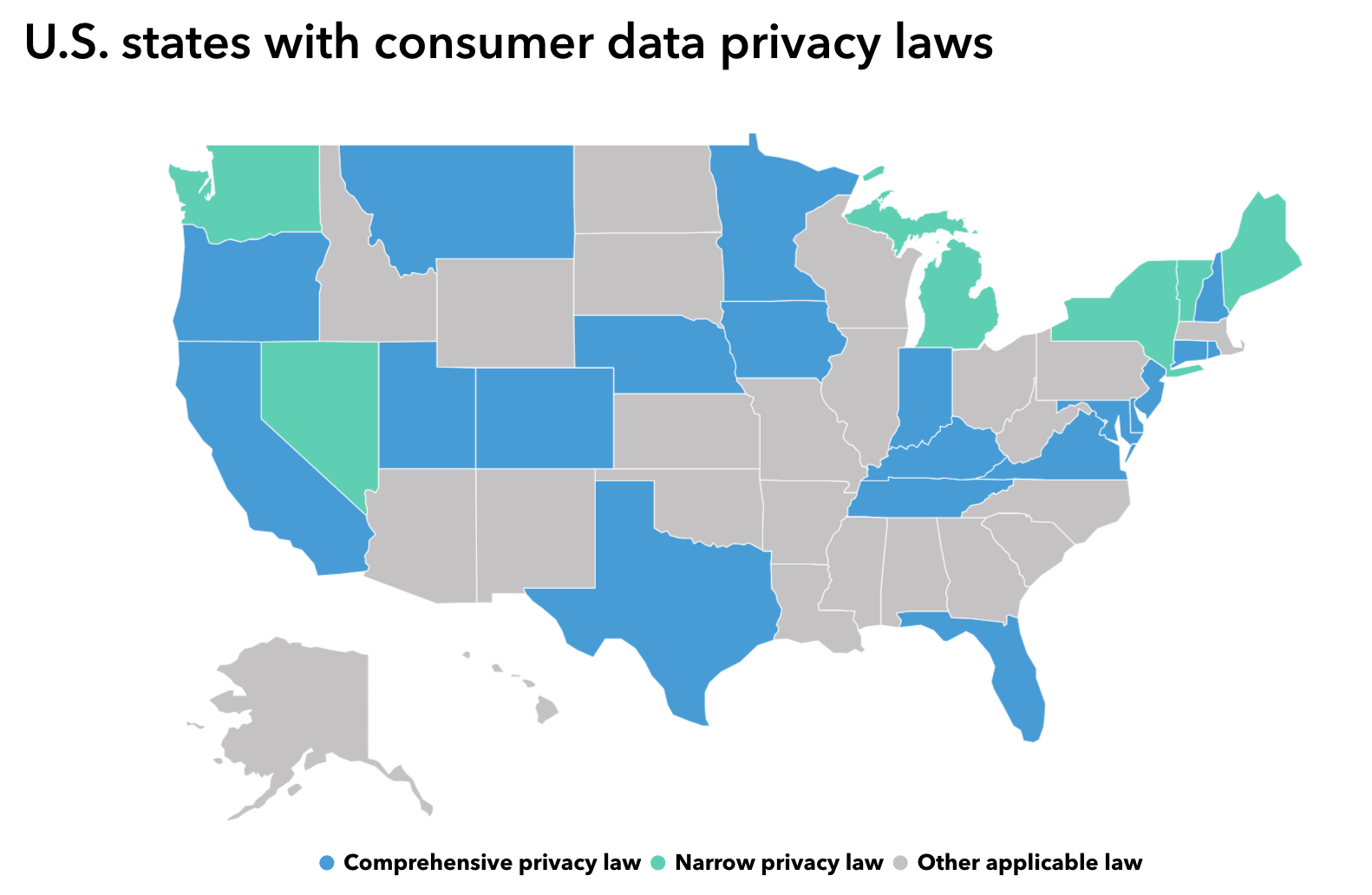
That doesn’t mean every broker must erase everything it knows about you. The obligation depends on which laws apply, the type of request, and whether any legal exceptions allow information to be retained.
If a broker ignores a removal request it is legally required to honor, Incogni can follow up and escalate the case.
Incogni keeps track of brokers who want to play hardball with an “escalated” designation in your dashboard. The authorization you signed when you first signed up for Incogni allows them to file complaints with relevant data protection agencies.
Those agencies can investigate and, where warranted, require changes or impose financial penalties. Incogni doesn’t impose those consequences itself, but it can get the ball rolling.
And the penalties for non-compliance are real.
In May 2025, California’s privacy agency required clothing retailer Todd Snyder to change its privacy practices and pay a $345,178 fine to resolve allegations that included failing to process opt-out requests for 40 days.
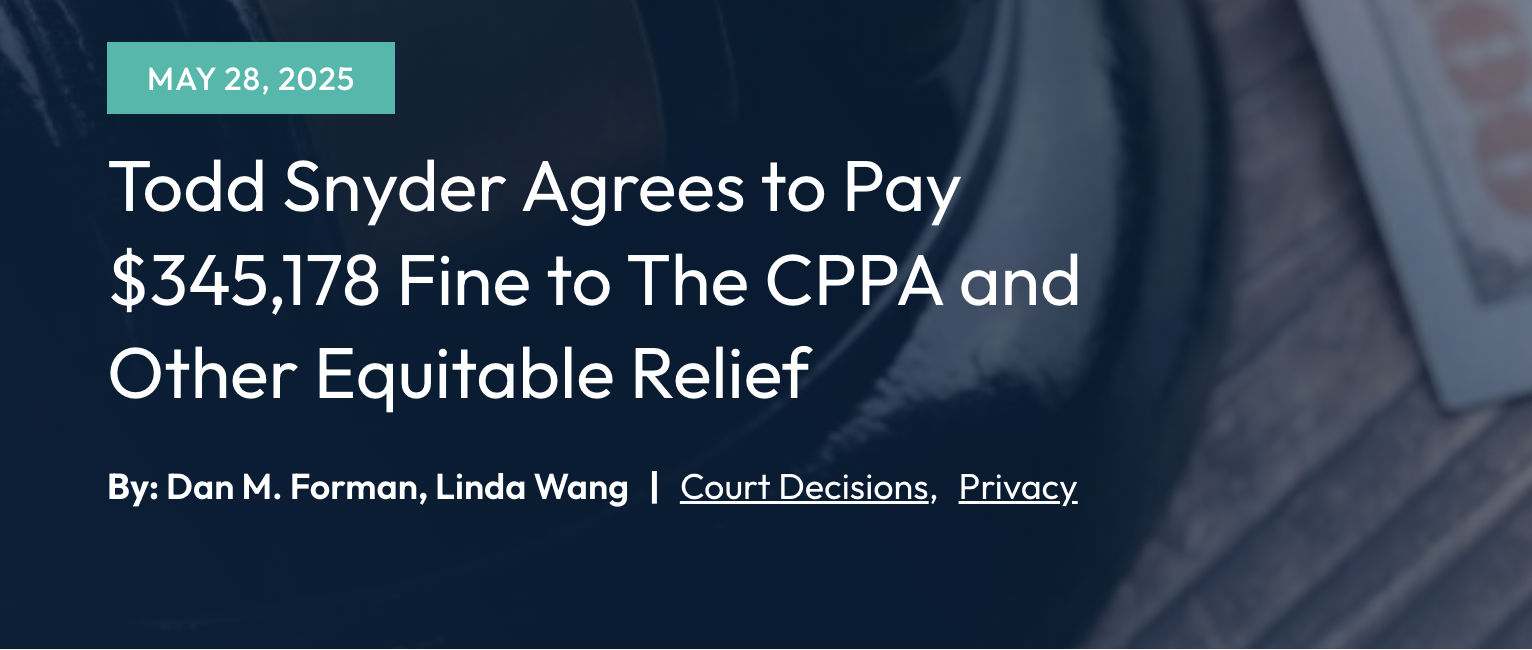
Todd Snyder is a retailer, rather than a data broker, but the case demonstrates that there are steep penalties for failing to honor consumer privacy rights.
Complaints alone don’t automatically trigger a fine, nor does it guarantee immediate removal.
But the possibility of legal enforcement makes companies far more likely to comply. The only reason why they didn’t remove your data before was that you probably didn’t even know that you have the right to ask and they have the legal obligation to comply.
Incogni’s tracking makes sure that this isn’t something that consumes a lot of your time or energy worrying about.
Furthermore, they handle the follow-up on requests you’ve made while also continually scanning public databases and making inquiries to private databases to know if they add you again.
Sign up for Incogni
How safe is Incogni?
Here’s a paradox that might annoy you, but it must be addressed:
Incogni needs your personal information to request the removal of your information from data brokers.
Before handing that information over, it’s reasonable to ask: how can I be sure that Incogni isn’t going to accidentally leak or intentionally sell my data?
If they did that, it would be quite the hustle and ensure a never-ending flow of customers, but it would probably result in severe penalties. It’s a far-fetched scenario, but trust is a premium asset in something like data removal.
You’re not paranoid for wondering if:
- They might also sell your data.
- They have adequate security measures.
Fortunately, Incogni has earned positive recognition from tech outlets like PCMag and has gone through two third-party, independent assessments to help put your mind at ease:
A Deloitte limited-assurance report and a SOC 2 Type II examination.
Each report addresses a different aspect of Incogni’s security, but both provide valuable information to put the skeptical consumer’s mind at ease.
Incogni’s Deloitte limited-assurance report explained
In August 2025, Deloitte issued an independent audit in the form of a limited-assurance report examining specific claims about Incogni’s removal operations and whether it sold customer data.
Deloitte tested Incogni’s data removal procedures, checked recurring requests, and compared their reported request volumes with underlying system records. They basically made sure that Incogni did what it said it would do, and that its reporting to the customer was accurate.
Deloitte also reviewed Incogni’s 2024 financial records for revenue from customer-data sales, and found nothing contradicting Incogni’s claim that it didn’t sell customer data that year.
While I don’t think they’ve changed their policy since then, it’s only fair to note that this covers 2024.
It’s important for me to point out that Deloitte only conducted a “limited assurance” audit, which is less extensive work than “reasonable assurance.”
Limited assurance means the examiner performed specified procedures and found nothing that suggested the claims were materially inaccurate.
Reasonable assurance involves more extensive testing to support a stronger conclusion that the claims are accurate in all material respects.
Said another way, limited assurance says, “Our checks didn’t uncover a material problem.” Reasonable assurance says, “We gathered enough evidence to have a high level of confidence in these claims.”
Neither guarantees absolute certainty, but reasonable assurance provides substantially greater confidence. That’s not a knock against Incogni, but it is worth mentioning.
With that said, the Deloitte assessment adds weight to Incogni’s claims. Just keep in mind that the report focused on specific removal procedures and the customer-data sales claim.
It explicitly excluded broader cybersecurity and encryption testing, so it should not be treated as a comprehensive assessment of Incogni’s security.
You can download and read the independent Deloitte assessment here.Incogni’s SOC 2 Type II report examined
SOC stands for System and Organization Controls, the name of a suite of reporting services developed by the American Institute of Certified Public Accountants (AICPA).
SOC 2 concerns controls relevant to security and other specified system criteria. Incogni says its examination covered security, availability, confidentiality, and processing integrity.
SOC 2 examinations come in two types:
- Type 1: The system description and suitability of control design at a specified date.
- Type 2: Those matters plus whether controls operated effectively over a specified period.
There is also a SOC 3 report, which covers the same general trust services criteria as SOC 2 but provides less detail and is intended for public distribution. Incogni’s SOC 2 Type II report wasn’t publicly available when I looked, so I wrote in to request a copy.
To get a sense of what this looks like, consider something like employee access to customer information.
A Type I examination assesses whether access controls are appropriately designed and implemented on the examination date.
A Type II examination would additionally test evidence showing that permissions were reviewed and departing employees’ access was revoked during the review period.
That’s just an example, rather than a description of Incogni’s specific controls. Incogni says it completed a SOC 2 Type II examination, but until I review the report, I can’t confirm that.
Unlike the Deloitte assessment, the SOC 2 Type II examination isn’t publicly available.
Other Incogni security measures
Incogni also documents encrypted data transfers and lets you enable two-factor authentication via an authenticator app.
Encryption helps protect information in transit; two-factor authentication provides customers with an additional barrier against account takeover.
These measures, independent assessments, and positive Trustpilot reviews provide evidence beyond a promise to take privacy seriously.
All of these security checks and measures don’t guarantee that every broker erased every copy of your information or that Incogni can never suffer a breach.
But they do give customers a reason to trust them.
Setting up Incogni and using the dashboard
As soon as you sign up, you’ll fill out an authorization form. This form is what gives Incogni the power to make the requests to data brokers.
You’re then asked to fill in information that would be used to identify you in a data broker’s system. This means your name, address, phone number, and birthday.
Incogni doesn’t require your Social Security number, but if you choose the identity theft protection package that comes with Coveron, they may ask for it, as that’s often part of monitoring the dark web. I can’t be sure, because I’m not on that plan.
You’ll receive an email explaining exactly how things go, but if you miss it, the dashboard is incredibly easy to understand.
I’ll break down all things you can explore, but just know that part of the beauty of Incogni is that it is an automated service that works in the background. Once you fill in your information and click the button to start scanning, just let it do its thing.
With that said, here are some of the features of the dashboard.
Navigating the Incogni Dashboard
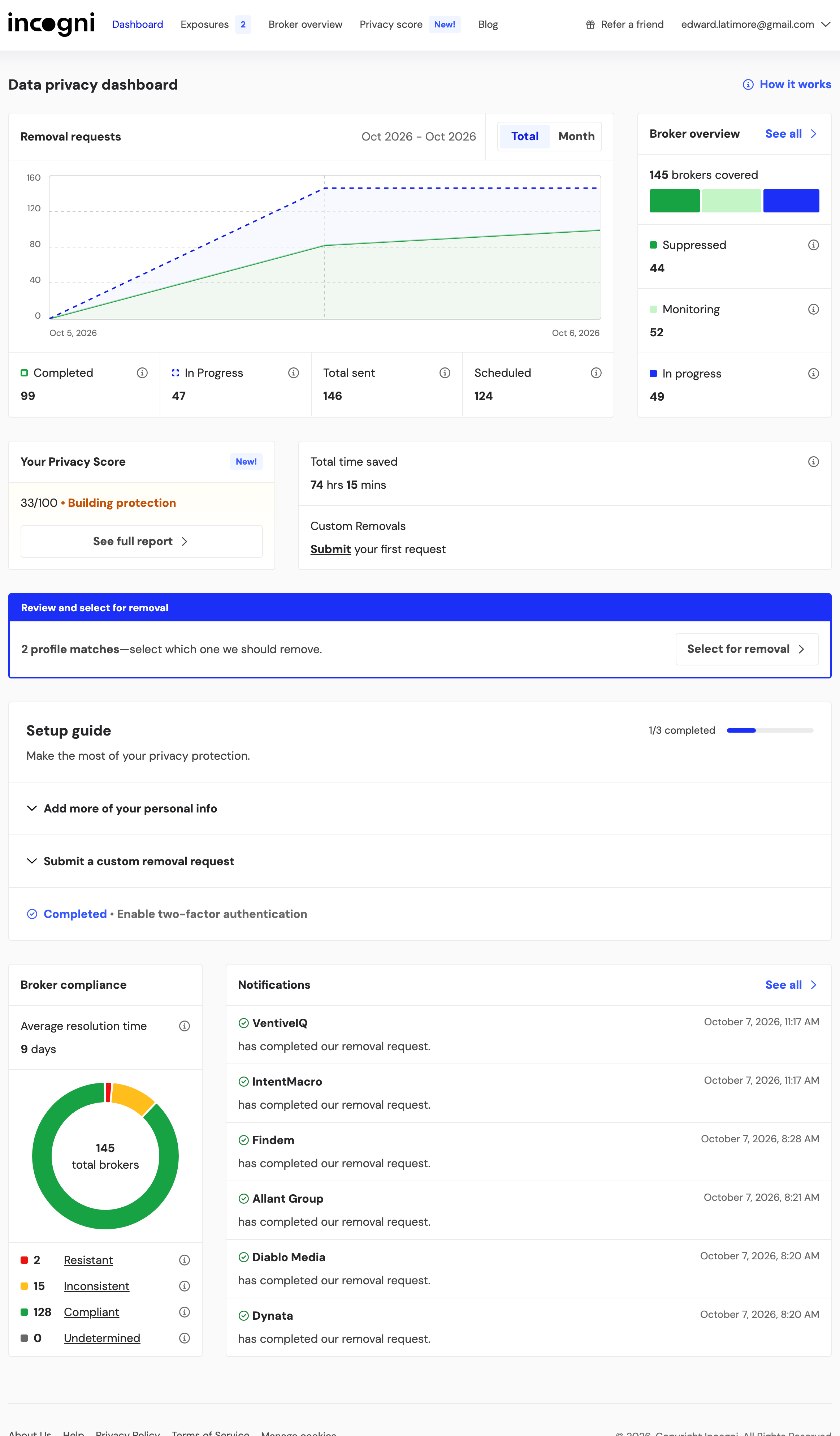
The dashboard shows the progress of your removal requests, which brokers still need attention, and any steps you need to take.
This is the full image, and I’ll break down each section seperately.
Broker overview
This panel groups the brokers being handled for your account.
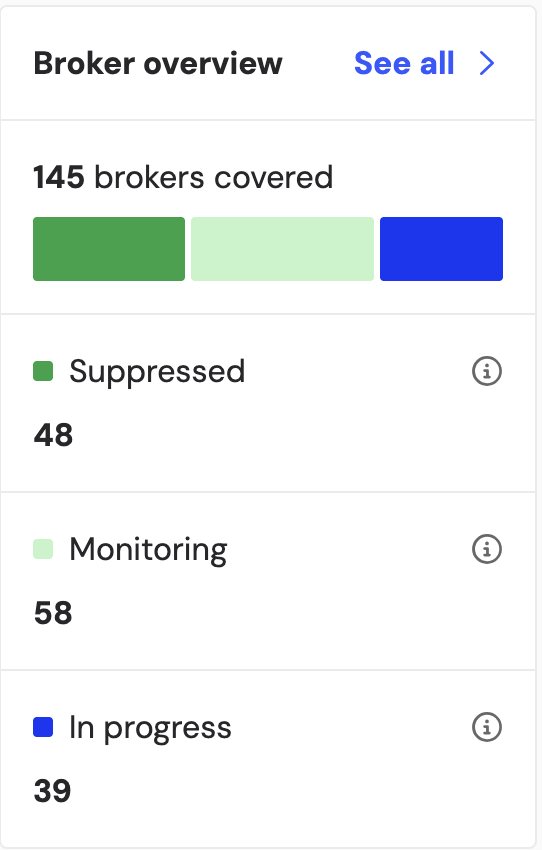
- Brokers Covered: I wondered why my “brokers covered” section didn’t include all 420+ that Incogni claims they have access to. These are the brokers Incogni has deemed relevant to me, based on my location and their severity risk.
- Suppressed: Data brokers that added you to their suppression lists, meaning they won’t collect, trade, or store information about you again.
- Monitoring: Data brokers Incogni will be sending recurring removal requests to because many re-list your data after the initial removal.
- In progress: Data brokers Incogni is actively working with to remove your personal information.
Privacy Score
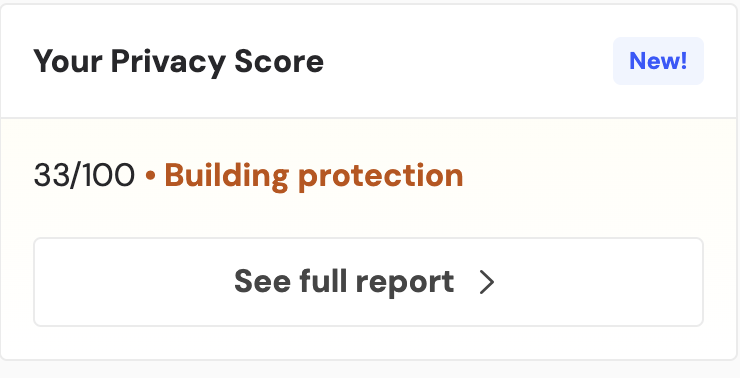
Incogni’s measure of how exposed your personal information is, based on the exposures it knows about, how easily others can discover them, and your removal history.
A higher score means greater privacy.
Tracking progress over time
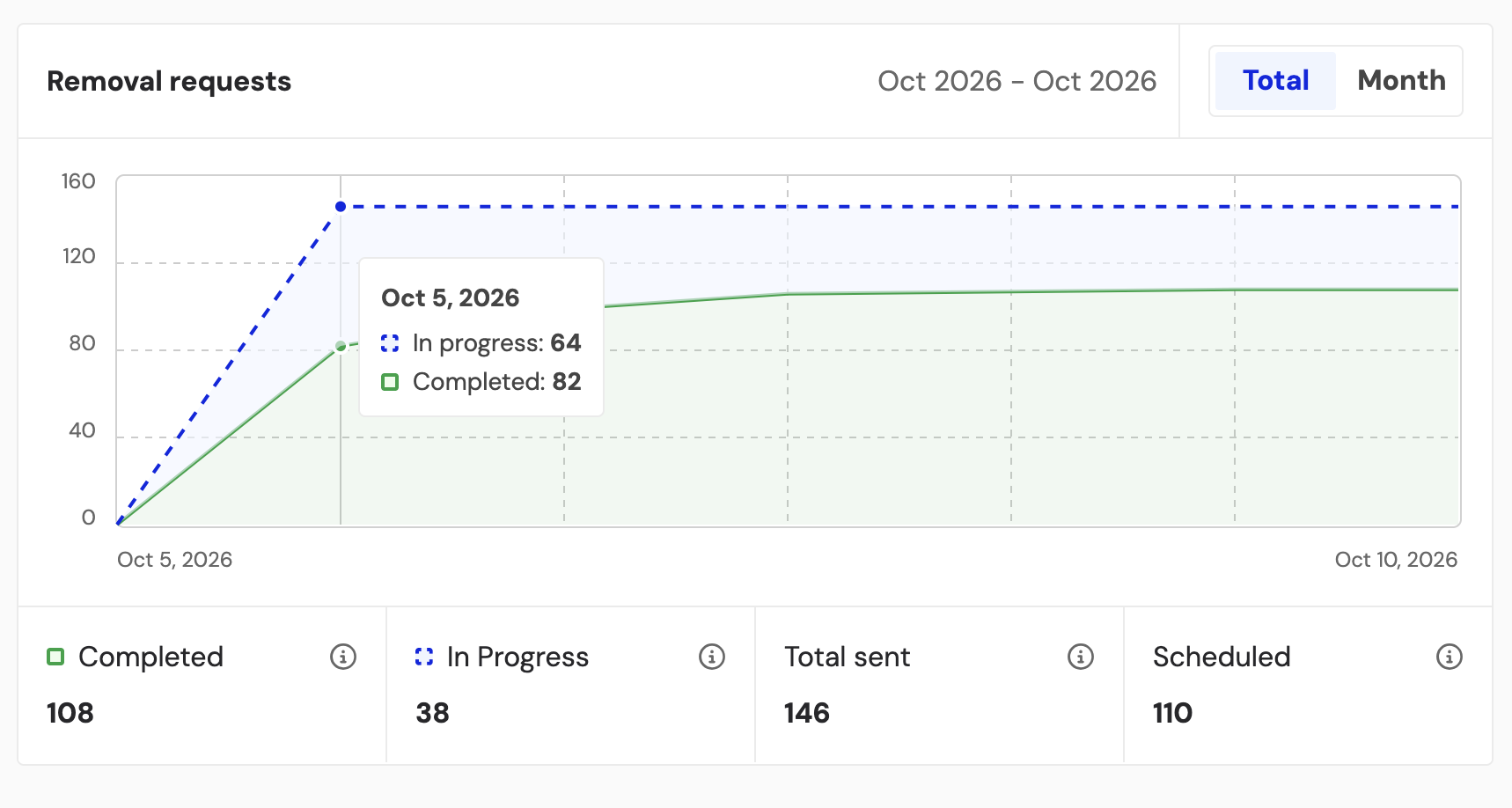
The best way to read this graph is as a simple progress indicator. The dashed line shows how many requests are in progress and how many have been completed.
Below the graph, there are four metrics that provide additional information about the removal requests sent by Incogni.
- Completed: Requests that were processed successfully, meaning your information was removed.
- In Progress: Requests that are currently being processed by data brokers.
- Total Sent: All the removal requests we’ve sent on your behalf.
- Scheduled: Recurring requests to brokers who previously removed your data (as they may re-list it) as well as scheduled follow-ups to non-responsive brokers.
Note: In my screenshot, you may have noticed that the “math ain’t mathin’” when it comes to totals in broker over, removal requests, and even the numbers in each category. These numbers don’t add up perfectly because some requests are resent and are at different stages of resending.
Total time saved
Incogni estimates how much time you would have spent manually sending the removal requests.

Review and select for removal

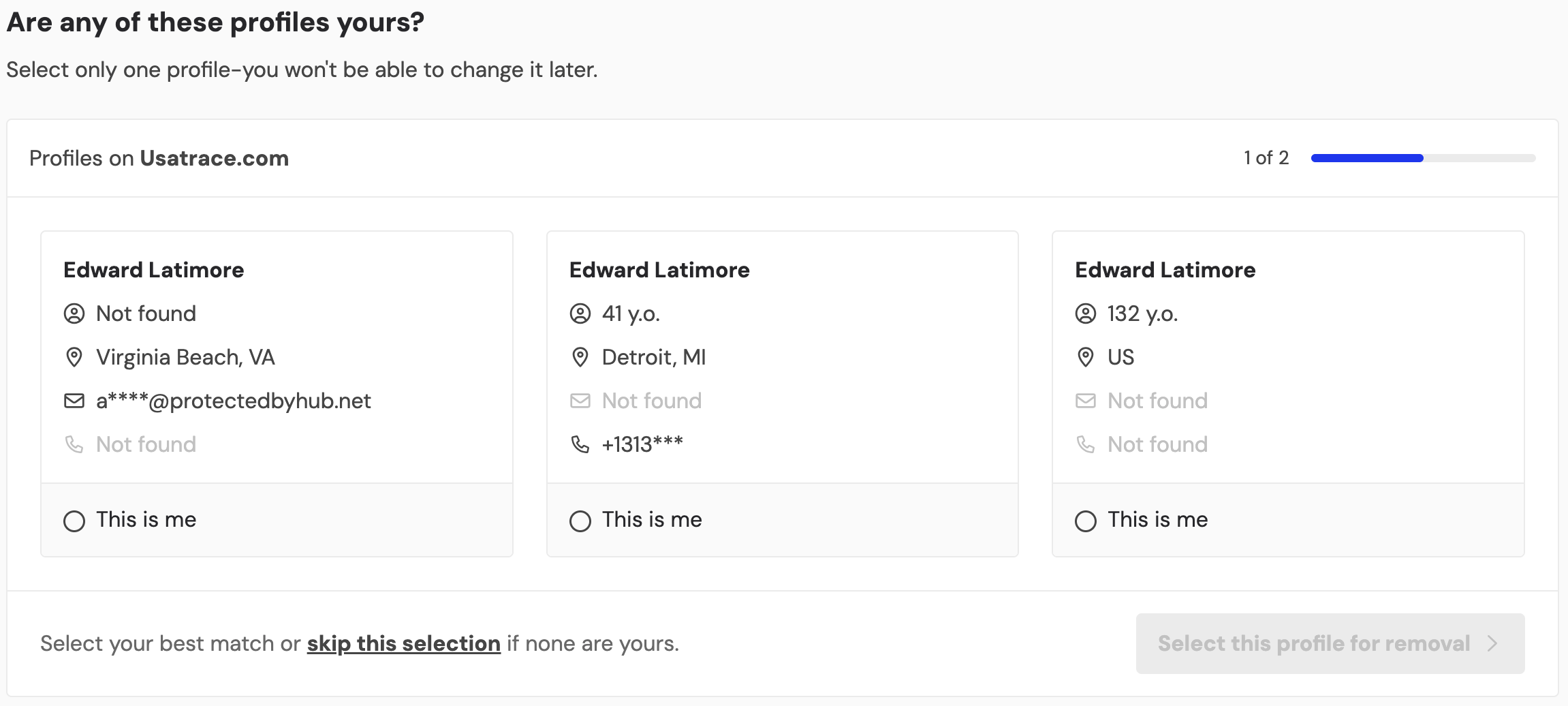
If a data profile comes back with the same name, Incogni shows you the profiles so you can select the correct one for removal.
Below you can see that there are a few Edward Latimore’s who come back from a data broker site called USAtrace.com, so Incogni needs my help to figure out which one is me.
Setup guide
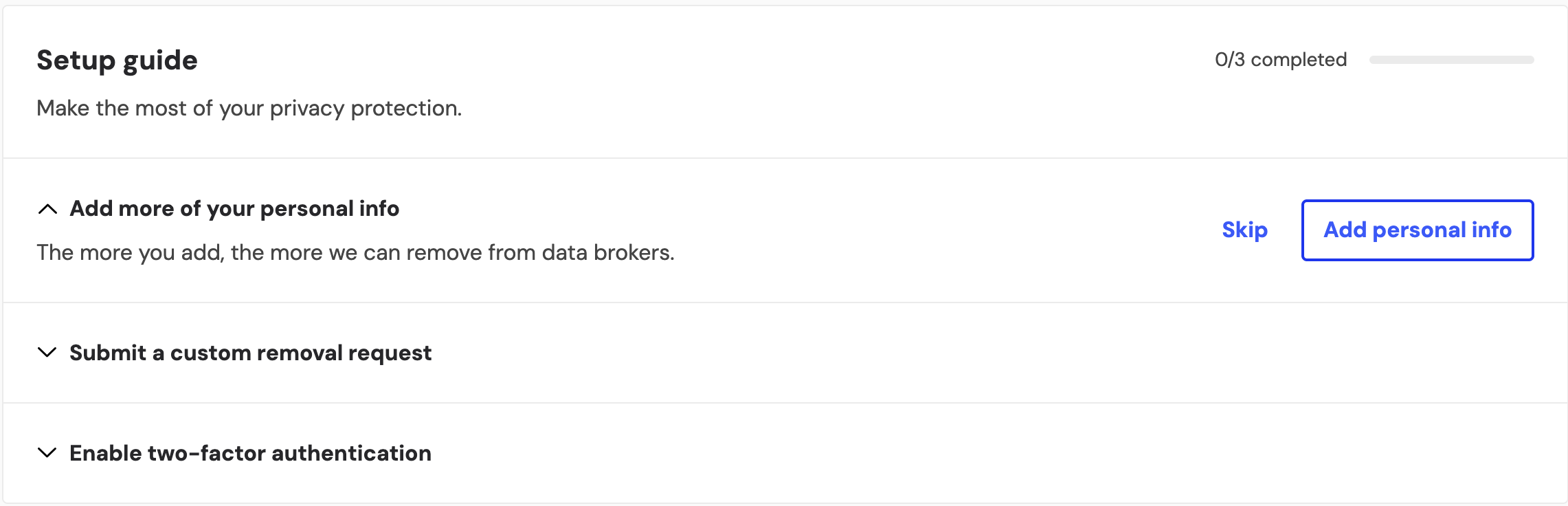
- Add more of your personal info: You can add more information to your initial profile, including additional addresses and email addresses.
- Custom Removal: if you find a data broker that is not in Incogni’s network, this section lets you submit a specific removal request for that broker. Custom removals are only available on the Unlimited plan or higher.
- Enable two-factor authentication: Make your Incogni account more secure.
Broker compliance
The broker compliance section shows how reliably each company responds to Incogni’s removal requests.
These categories describe a broker’s response history, and they’re separate from the status of your individual removal request.
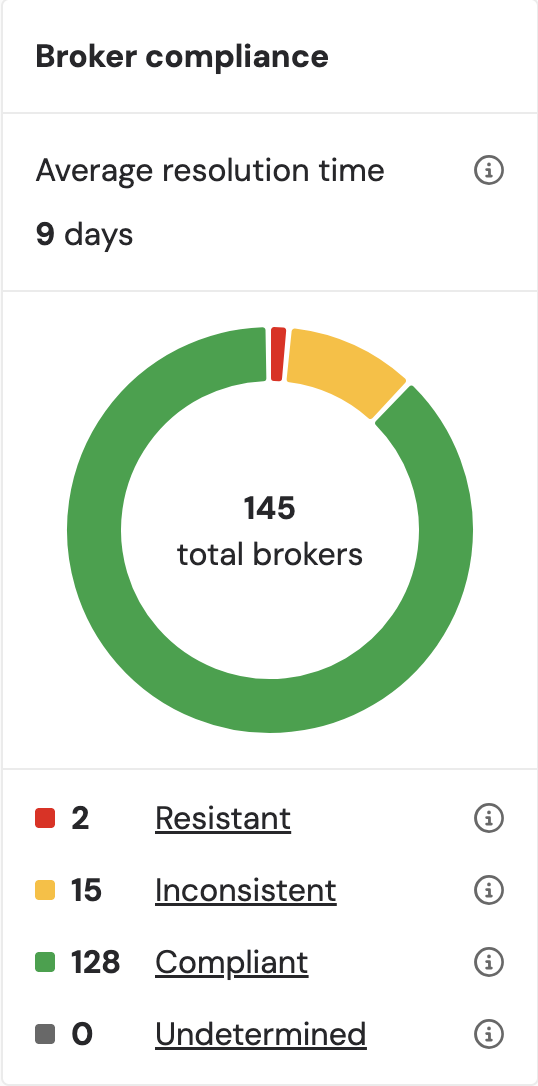
- Compliant: These brokers consistently process requests within the expected timeframes.
- Inconsistent: These brokers have an uneven response history. They may process some requests promptly while taking longer or requiring follow-ups on others.
- Resistant: These brokers have recently failed to process requests within legally required timeframes.
- Undetermined: Incogni doesn’t yet have enough response history to assign a reliable compliance rating.
The panel also reports an average resolution time of nine days. That gives you an idea of how quickly requests are being resolved overall, but individual brokers’ response times can vary.
Notifications
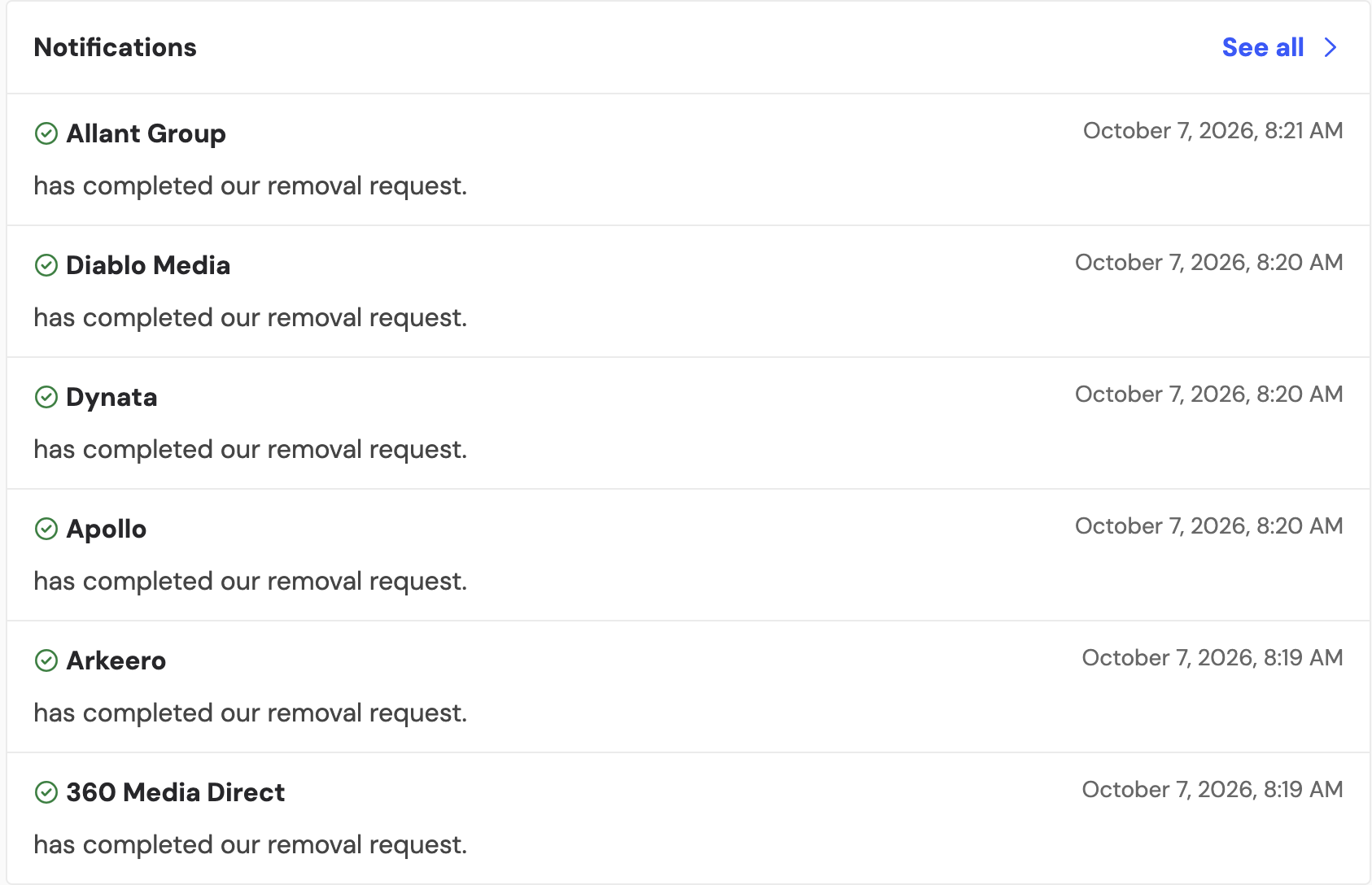
The notification feed provides dated updates about which requests are completed and with which data brokers.
Incogni Pricing and Plans
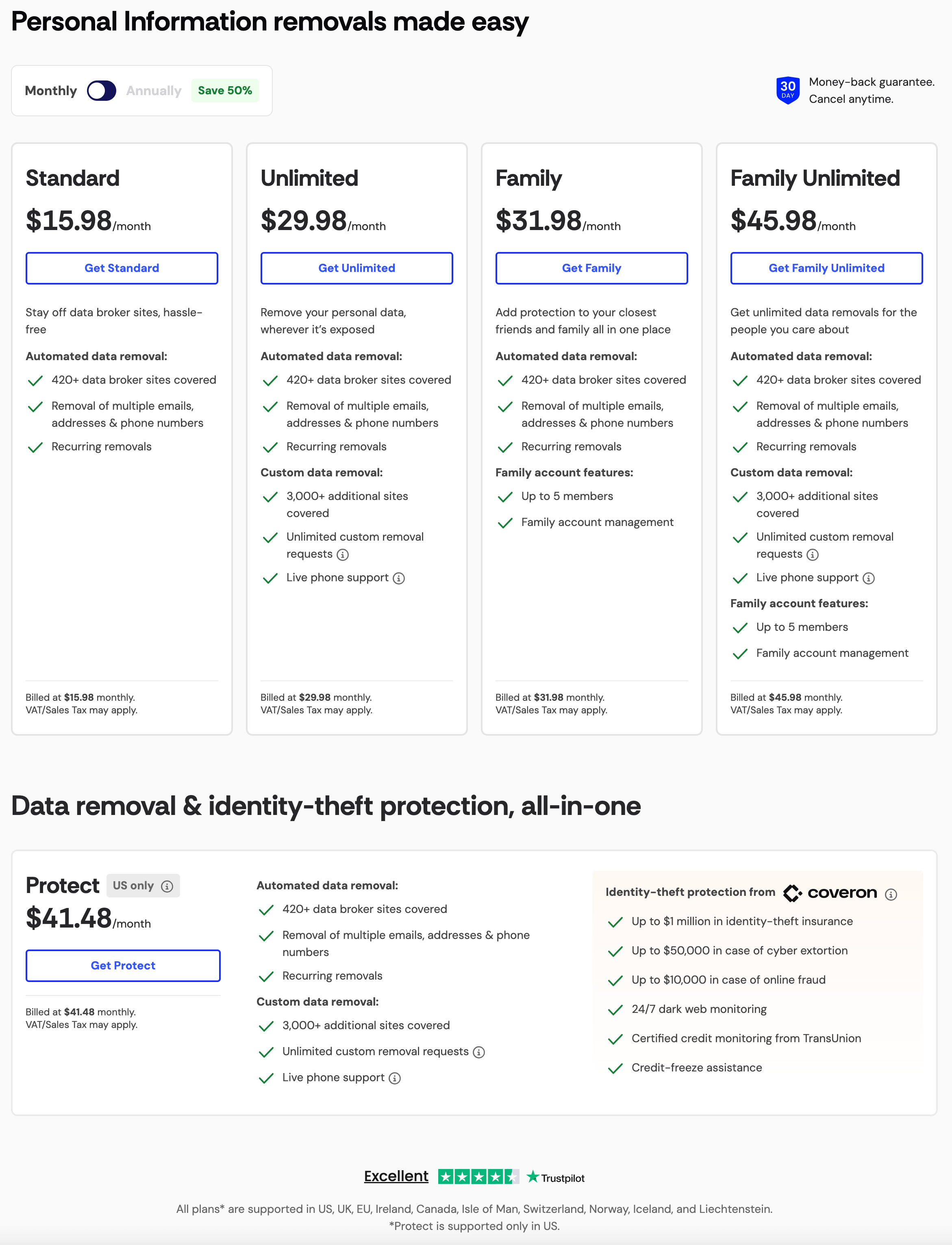
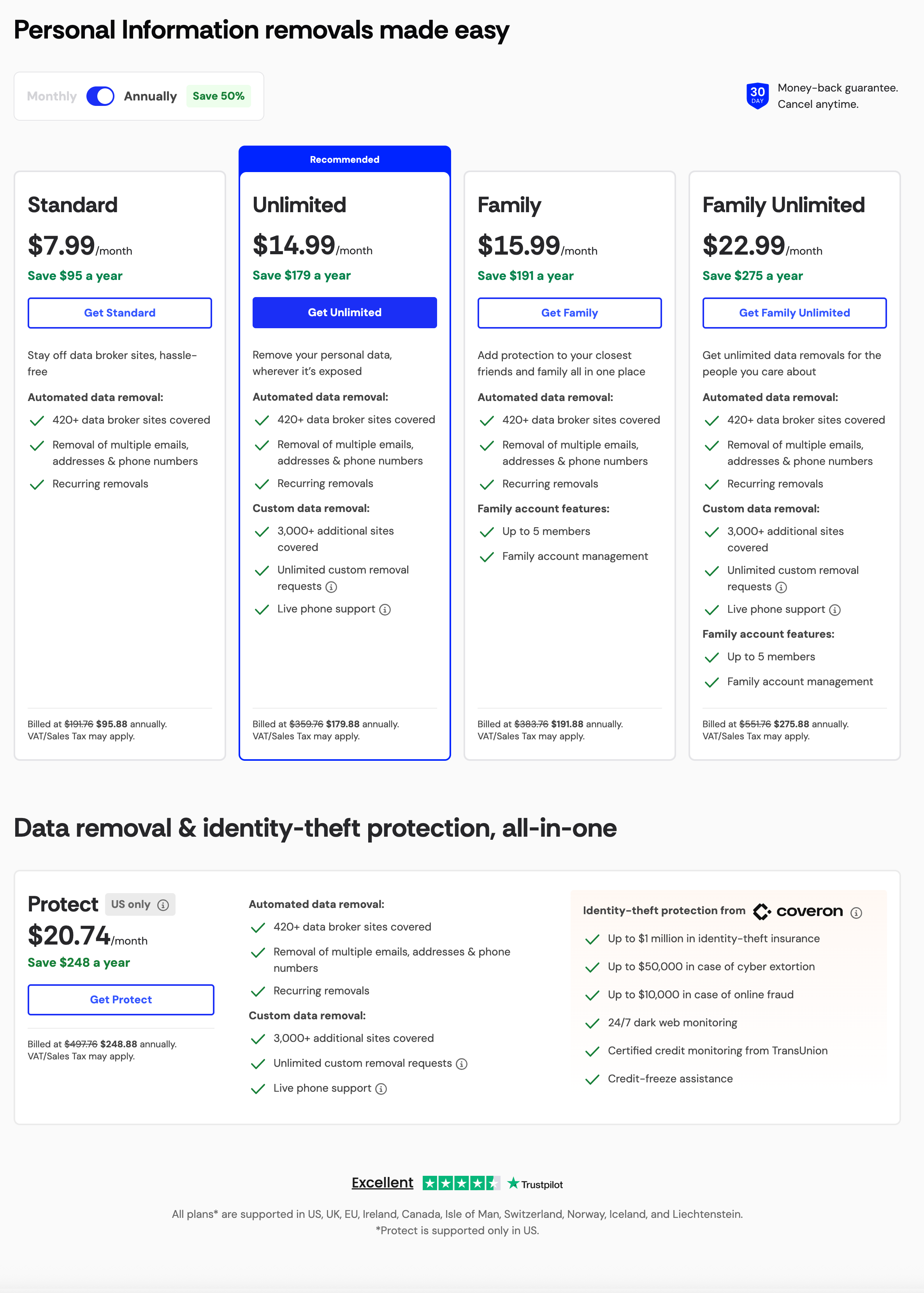
Incogni offers five different pricing plans, each backed by a 30-day money-back guarantee.
The monthly figures are monthly equivalents billed annually, rather than month-to-month payments. VAT or sales tax may apply.
Incogni monthly pricing plans
Incogni annual pricing plans
Unlimited removal features plus identity-theft protection
The Standard plan includes automated removal requests across 420+ data-broker sites, support for multiple email addresses, physical addresses, and phone numbers, and recurring removals.
The unlimited plan adds custom removals covering 3,000+ additional sites, unlimited custom removal requests, and live phone customer support.
Family extends Standard’s features to up to 5 members and includes family account management. The Family Unlimited plan combines that coverage with Unlimited’s custom removal features and phone support.
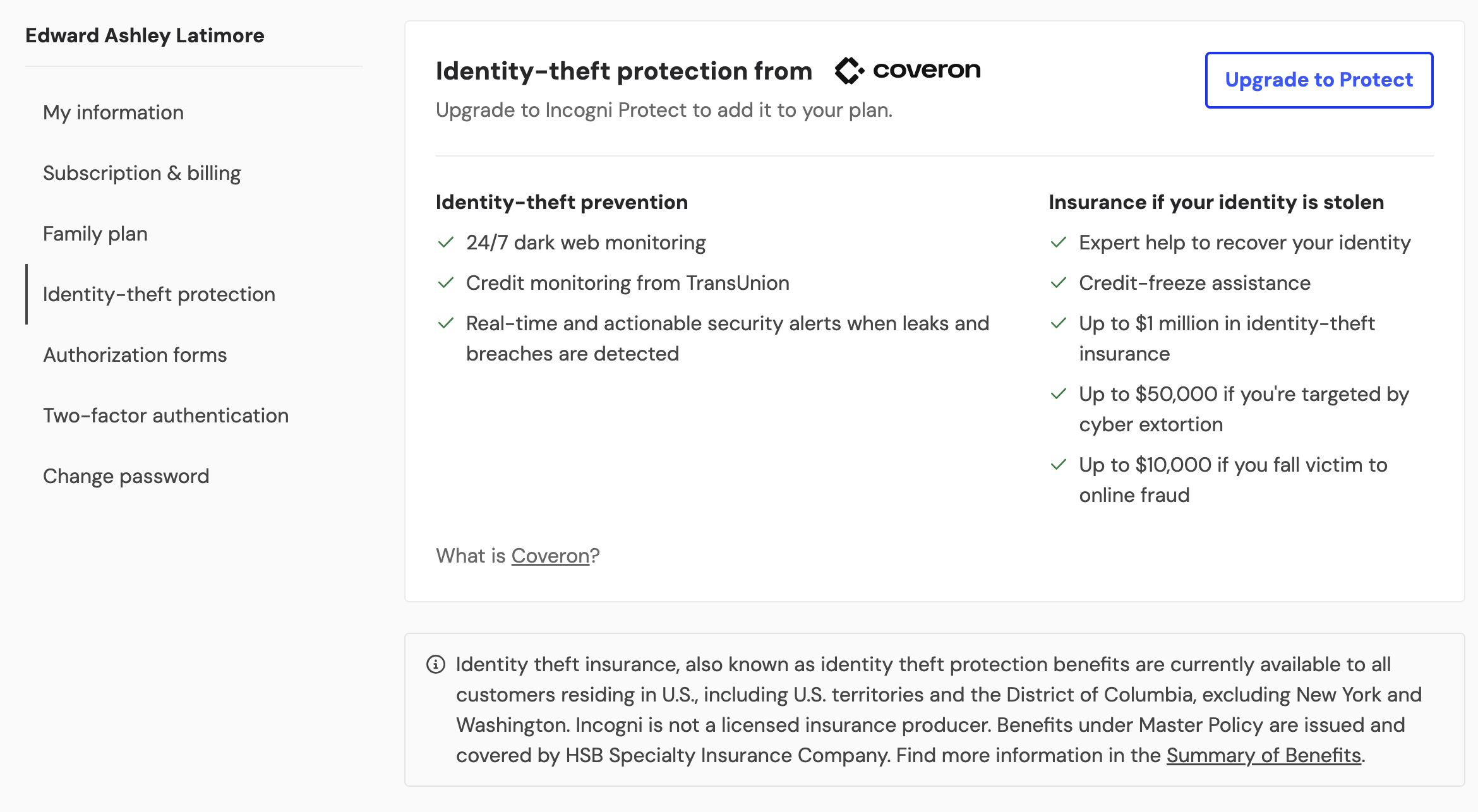
Protect, available only in the United States, combines the automated and custom removal features with identity protection and theft defense from Coveron.
The benefits of Incogni’s Protect Plan include:
- 24/7 dark web monitoring
- Credit monitoring from TransUnion
- Credit-freeze assistance
- Identity theft insurance limits of up to $1 million for identity theft, $50,000 for cyber extortion, and $10,000 for online fraud.
Sign up for Incogni
Incogni vs. DeleteMe vs. Optery
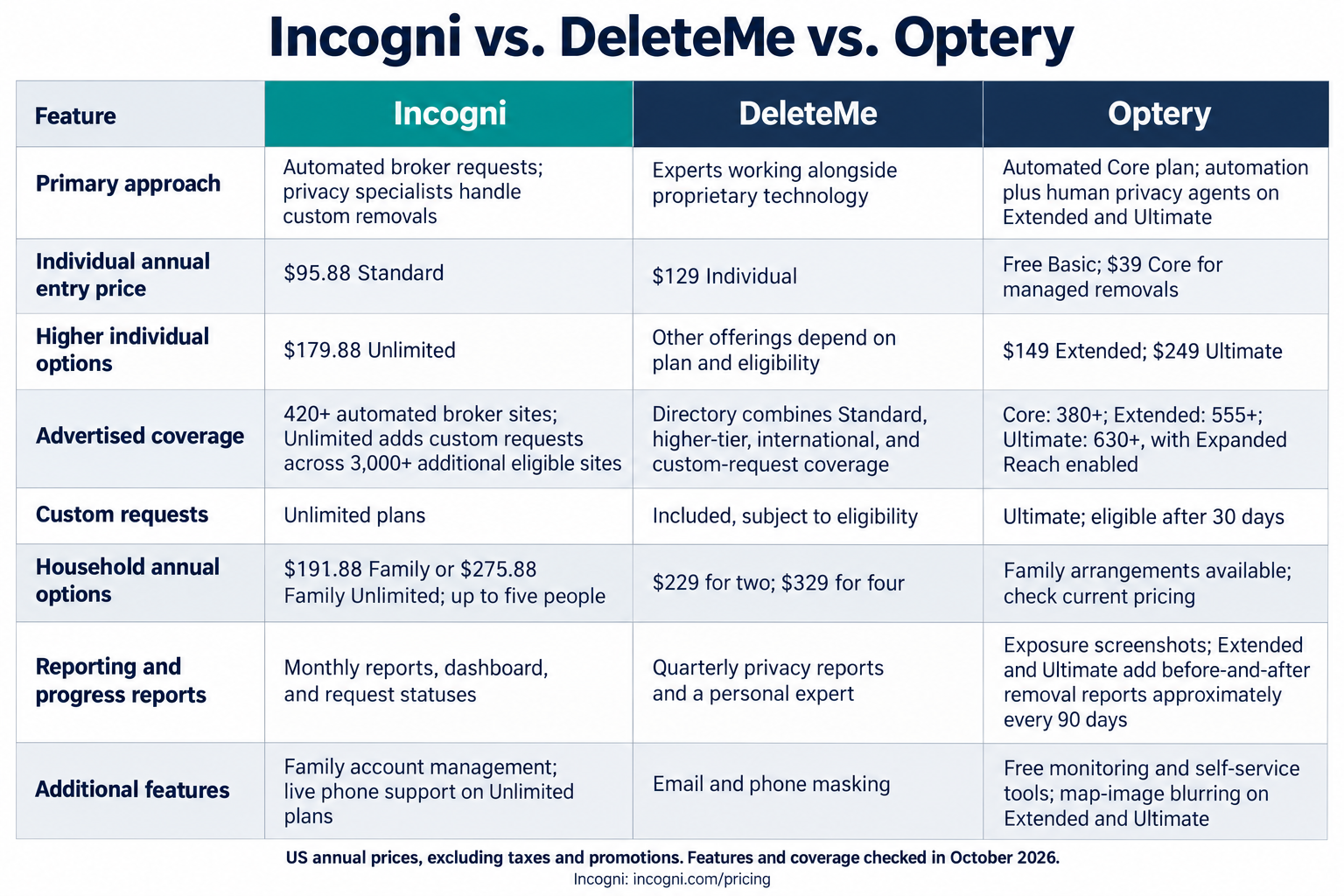
DeleteMe and Optery are the main alternatives to Incogni. All three manage removal requests, but they differ in price, human involvement, reporting, and which sites each subscription covers.
Incogni: Automated removals and household value
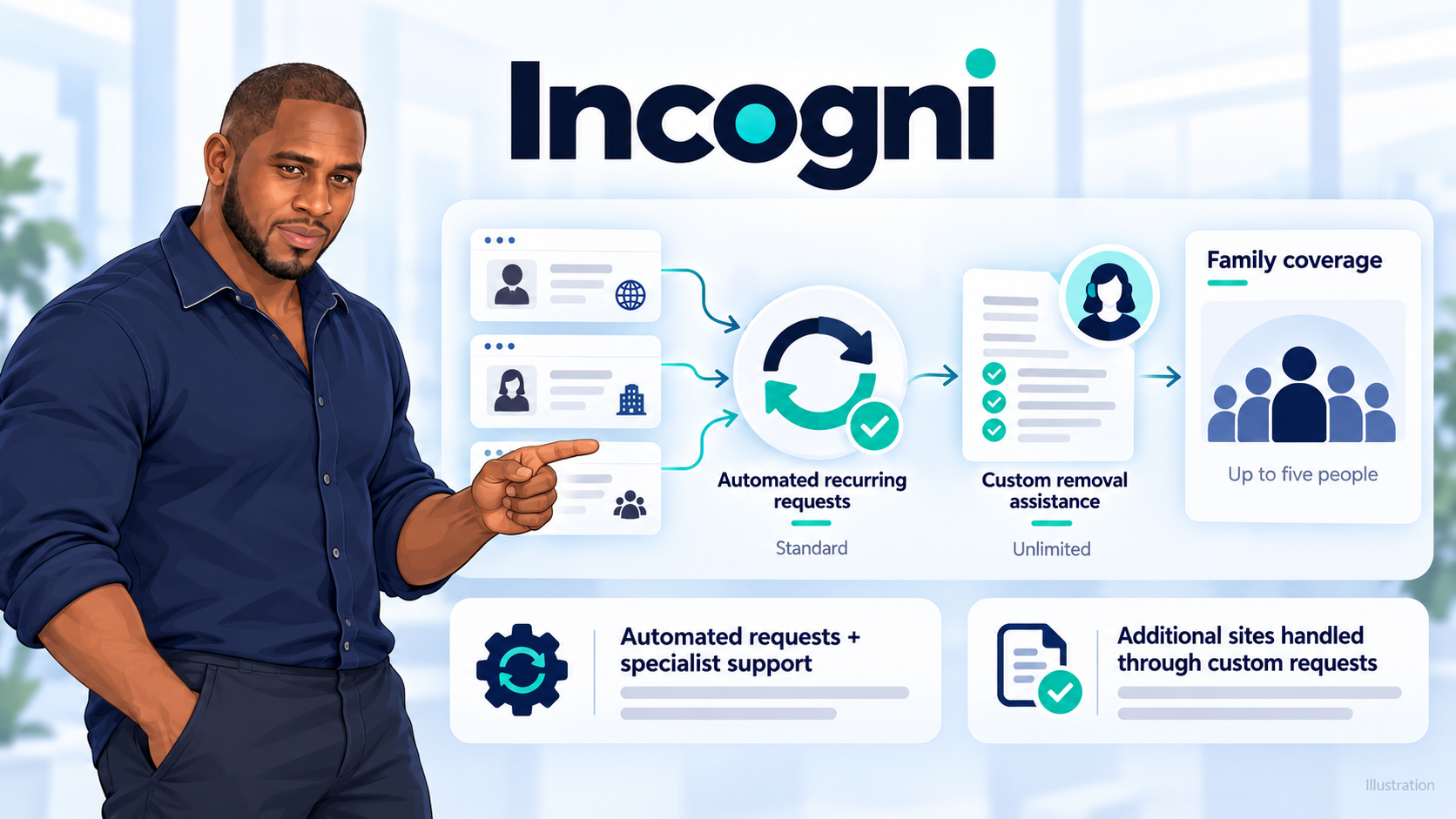
Incogni’s appeal lies in its straightforward, automated service. Standard handles recurring broker requests, while Unlimited adds specialist assistance with specific exposures outside that network.
It is probably more precise to describe this as automation than “AI-driven removal.”
Incogni also isn’t purely automated: its custom-removal service involves privacy specialists. Its advertised additional-site coverage pertains to custom requests, rather than to thousands of sites being automatically scanned for every subscriber.
Incogni costs less than DeleteMe’s individual entry plan, but Optery Core is cheaper than both. Incogni’s family plans are particularly worth comparing when you need coverage for several people.
DeleteMe: Expert assistance and masking tools
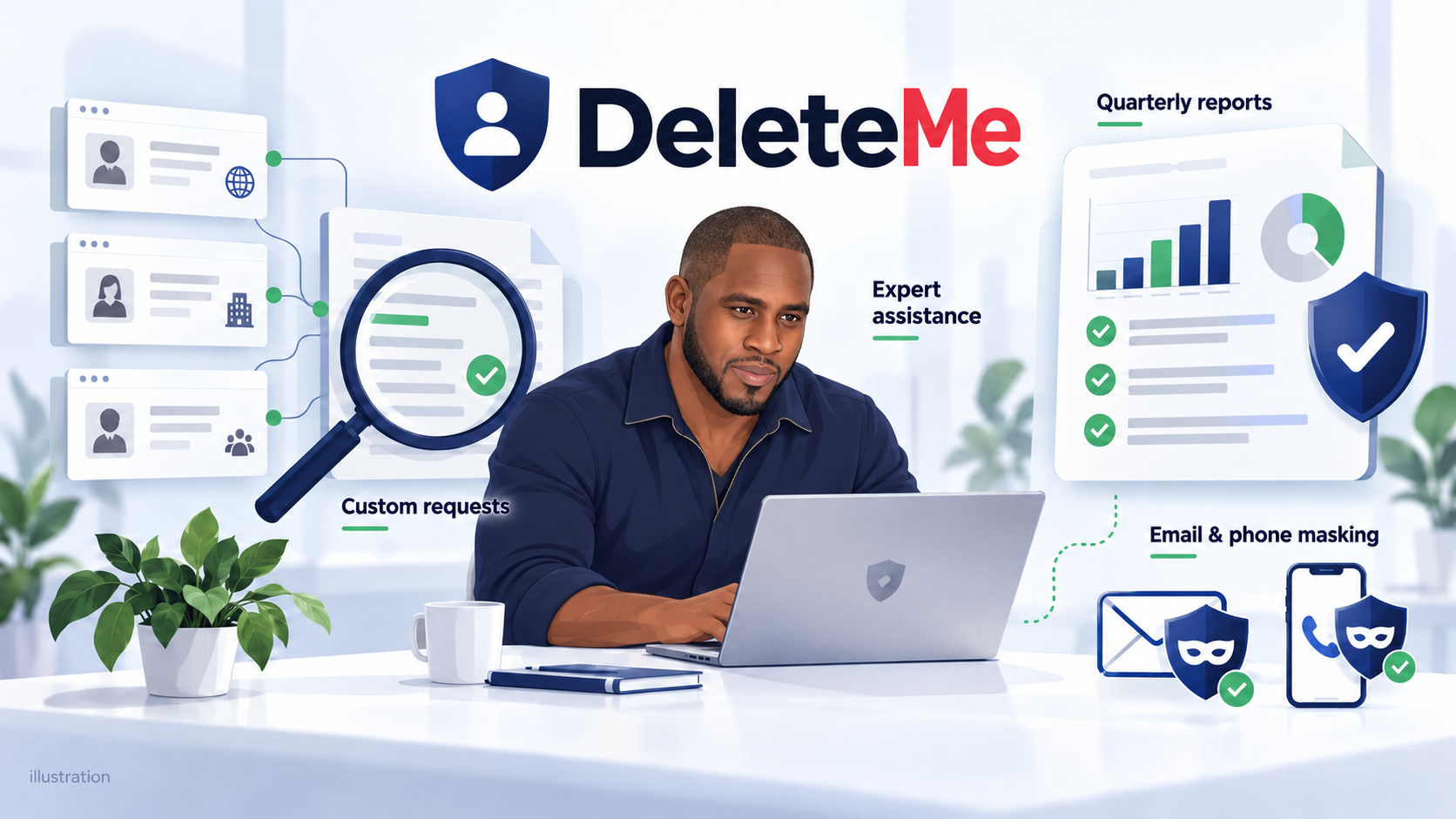
DeleteMe combines human expertise with technology rather than handling everything manually.
Their plans include a personal expert, custom requests, quarterly reports, and email and phone masking. That makes it worth considering if you value assistance and tools that help limit future exposure.
Its full coverage directory also includes sites available through different plans and custom requests.
Optery: Free monitoring and screenshot-based reporting
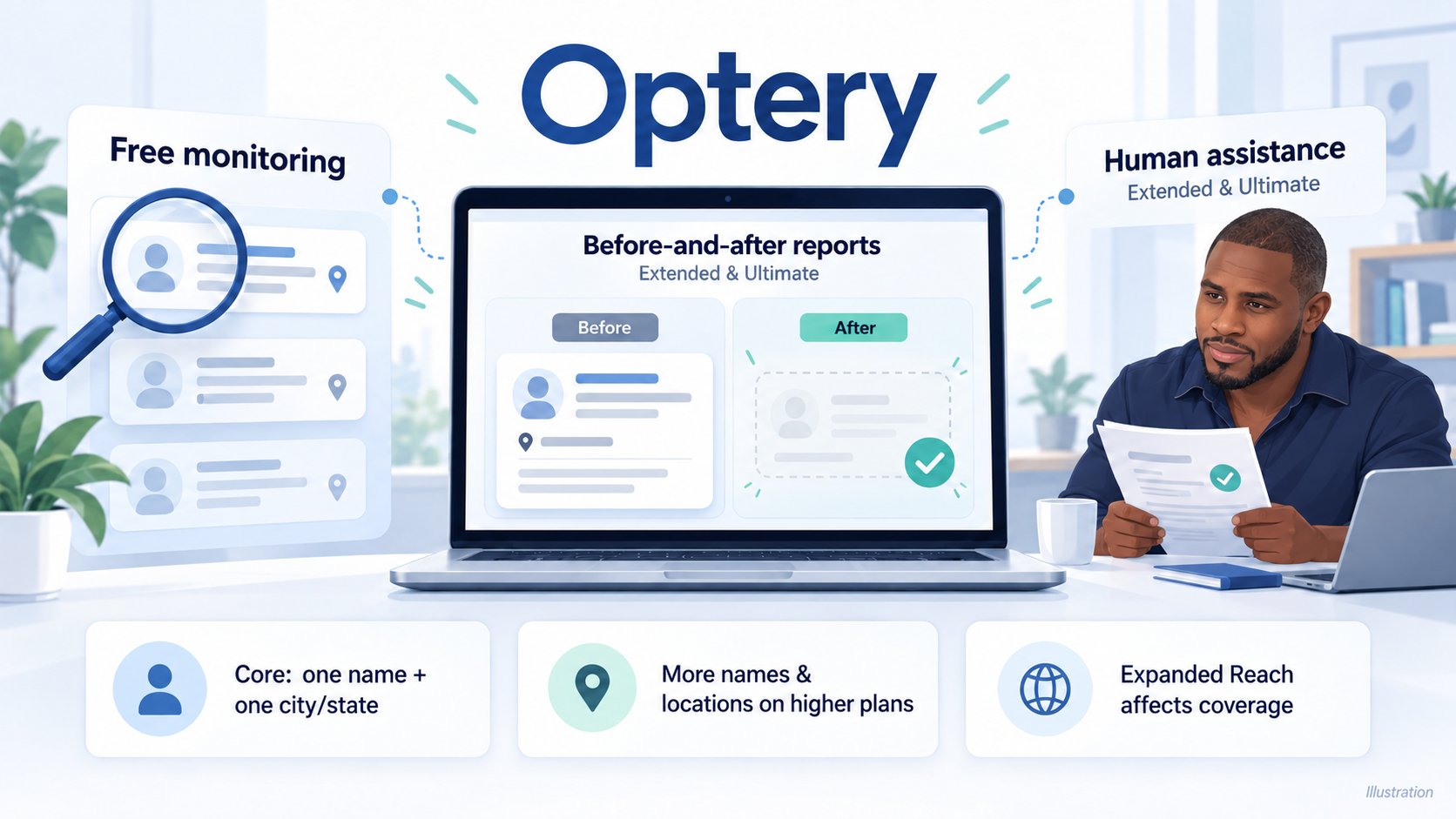
Optery offers a free account for exposure monitoring and self-service tools. Paid plans handle removals, with Extended and Ultimate adding human assistance and before-and-after screenshot reports.
Its larger coverage figures depend on enabling Expanded Reach. Optery’s Core plan limits managed removals to one name and one city/state combination, so you’ll need higher plans to support additional name variations and past locations.
Final Verdict: Is Incogni Worth It?
I like the idea of making my personal information harder to find online.
To be honest, this just isn’t something I thought about before having a family. If someone found me and wanted to pull up, I’m more than capable. But now I have a wife and child, so I’d rather not deal with that.
If you live by yourself or aren’t overly concerned about your privacy—maybe you’ve got a bunch of debt and a prior conviction, and you figure anyone trying to steal your identity would just be doing you a favor—Incogni might fall squarely in the “nice to have” category. Better to have it and not need it than need it and not have it.
My perspective is a little influenced by being public-facing, but it is nice to know that my address and phone number are in fewer places on the web.
I like that Icogni targets relatively well-known people search sites like
- Usatrace.com
- peoplesearch.com
- 411.com
- Whitepages.com
- searchpeoplefree.com
- freepeopledirectory.com
- unitedstatesphonebook.com
- phonebooks.com
- peoplewin.com
- spokeo.com
- and many others.
As a test, I checked some sites where I knew my profile had previously appeared, and I couldn’t find it anymore. So, on the sites I checked, Incogni worked.
I haven’t independently verified every deletion—nor do I plan to—or measured a long-term reduction in spam calls. I also don’t know whether those removals will decrease the number of scams I’m targeted by. But my checks gave me something more concrete than a dashboard telling me the job was done.
At $95.88 annually, Standard is a reasonable starting point for automated broker removals. Unlimited costs $179.88 annually and adds custom removal requests for eligible websites beyond the automated network.
Annual billing saves 50% compared with 12 monthly payments, while family plans offer better value when several people need coverage. I think that’s quite a bargain. Standard works out to less than $10 a month to have someone handle removal requests and follow-ups for you.
Again, I want to keep your expectations in line with reality.
Incogni cannot erase you from the internet, remove stolen dark web data, or guarantee an end to spam calls or identity theft. Information can reappear, which is why recurring requests matter.
And if someone has already maxed out a bunch of credit cards using your identity, removing a people-search listing won’t fix that. You need identity-theft recovery assistance. Incogni’s Protect plan adds monitoring and insurance, but any coverage is subject to the policy’s limits, exclusions, and eligibility requirements.
For me, Incogni’s greatest value is that it works in the background. Once you’ve set it up, there’s little ongoing work unless you need to review a matching profile or submit a custom removal request.
I’d rather spend time with my family than chase down companies selling my address and phone number. Incogni handles much of that chasing for me, and that’s what makes it worth it.
Sign up for Incogni today
Frequently Asked Questions about Incogni
Does Incogni Remove Data From the Dark Web?
Incogni does not remove personal information from the dark web. Its removal service focuses on covered data brokers and websites. The Protect plan adds dark web monitoring through Coveron, which can alert you to detected exposures, but monitoring is different from removal.
Does Incogni Reduce Spam Calls?
Incogni may help reduce spam calls over time by limiting how widely your phone number is distributed. When brokers remove your number and the profile attached to it, fewer marketers and other buyers can obtain that information through those brokers.