Speak Softly, Carry a Big Stick: Hood Rules And The Game Theory of Respect

Speak Softly, Carry a Big Stick: Hood Rules And The Game Theory of Respect
The Great Hood Sage Lil’ Jon once famously said: “Don’t start no shit, won’t be no shit.”
I learned this growing up in the projects, but if you don’t speak hood, I’ll translate:
If you don’t provoke people or cause problems, your interactions with them will be free of provocation and problems.
The idea seems simple enough, but rarely does it ever go as planned, because some ornery humans will always—in their pursuit of more—end up in conflict with those whom they think are victims to take from or belittle in an effort to make themselves feel better.
But let’s say you’re not one of those ornery humans.
You’re actually a sensible person, so you abide by this simple rule for easy living. You mind your business and try to do your time on this planet as peacefully as possible.
It’s a noble goal to pursue—and I believe most people try to live this way— but they go about it all wrong.
In an effort to avoid the discomfort of a confrontation, they’re either too nice, too accommodating, or too agreeable, and people walk all over them…
Or they go the other way, and try to scare anyone into ever trying them by acting too hard, too stoic, and by never being kind to others because they’ve seen—time and time again—kindness treated as weakness
Both approaches make life miserable, albeit for entirely different reasons. So we need a third path.
One that lets you retain a bit of humanity while also sending the message to people that you are not the one.
For that, we draw inspiration from two completely different fields: international relations and game theory.
Looking at former president Theodore Roosevelt’s Big Stick Policy and one remarkably successful strategy for playing the most famous game in game theory, the Prisoner’s Dilemma, we learn something valuable:
If you want to live a life where people don’t try you, it helps to gain a reputation as a nice guy who will mess someone up if they get out of pocket.
It’s the same strategy that explains why some relationships work and others collapse.
It’s the same thing I learned growing up in the hood, and it’s an approach to dealing with people that I carry into my dealings with people every day.
Walk Softly And Carry A Big Stick
Roosevelt was president in 1904, when America was becoming a world power, but it was surrounded by chaos.
There were wars in the Caribbean, European empires were trying to carve up South America, and it felt like the entire world was testing the limits of how much they could get away with before an all-out war started.
Roosevelt’s idea to keep America from being tested was simple.
He said America should be kind, polite, helpful, and negotiate. We should speak softly.
But behind all of that, we should be so obviously capable of violence that nobody wants to find out. We should have a navy so big and so modern that we never actually have to use it. The capacity for force does the work, so the use of force becomes unnecessary.
Peace is not maintained by good intentions alone. It is maintained by making cooperation rewarding and disrespect expensive.
You begin by speaking softly. You treat people fairly, remain reasonable, and avoid unnecessary conflict. But you also carry a big enough stick that anyone tempted to mistake your kindness for weakness has a strong incentive to reconsider.
The goal is not to become aggressive. It is to become so predictably fair—and so reliably dangerous when crossed—that aggression against you stops looking profitable.
He built the Great White Fleet— sixteen battleships painted white, sent around the world. The ships weren’t sent out to attack but, rather, to make a statement. We are friendly, but we are not to be played with.
This was Roosevelt’s international relations strategy, called “Big Stick Ideology.”
He claimed to have drawn his inspiration from a West African Proverb that says, “Speak softly and carry a big stick,” although no evidence of this proverb has ever been found.
Later on, he clarified, saying:
“If you simply speak softly, the other man will bully you. If you leave your stick at home, you will find the other man did not. If you carry the stick only and forget to speak softly, in nine cases out of ten, the other man will have a bigger stick.”
Like passports, condoms, and guns, Roosevelt was saying that when it comes to the ability to do damage or defend yourself, it’s far better to have it and not need it than need it and not have it.
In his own words, he described the Big Stick Ideology as “the exercise of intelligent forethought and decisive action sufficiently far in advance of any likely crisis.”
Roosevelt’s approach can be distilled into five parts.:
- Serious military capability that would force the adversary to pay close attention
- Acting justly toward other nations. The foreign relations equivalent of “Don’t start no shit, won’t be no shit.”
- Never bluff. You must follow through with your threats to ensure people take them seriously.
- “Strike only when prepared to strike hard.” I learned this dealing with bullies in the projects. Winning every fight wasn’t guaranteed, but I could make sure that attacking me never felt free. Whether I won or lost, the other person paid a price for trying me.
- “Be willing to allow the adversary the ability to save face.” There’s no need to beat an opponent mercilessly. Always give them a way out.
Now, you might never guess this, but that exact idea - being friendly first, but being credibly dangerous if you’re crossed - is not just politics. It’s math.
It closely resembles the strategy that won one of the most famous tournaments in game theory.
Today’s Sponsor: Prism Potion
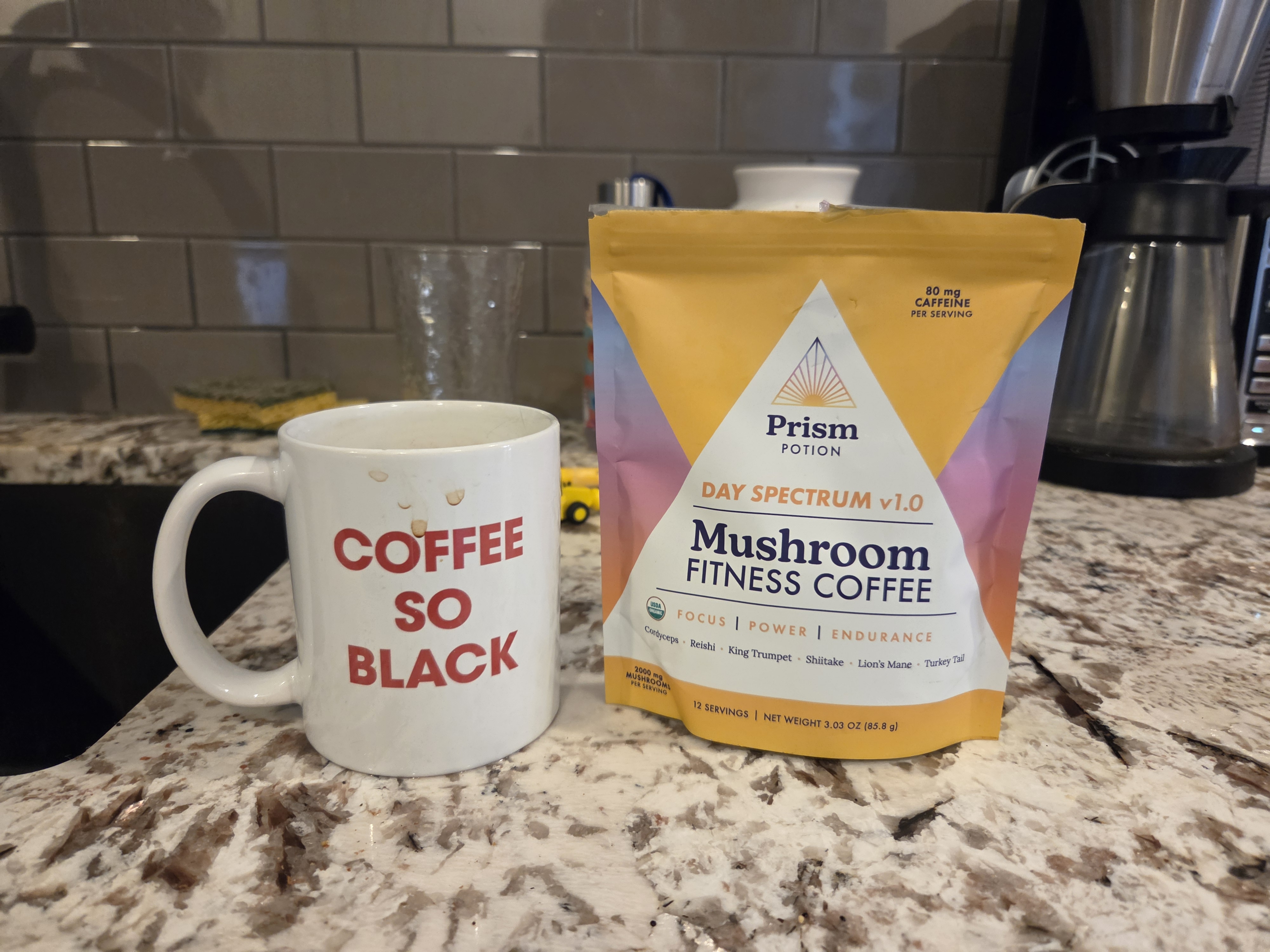 I love coffee, but I also know that drinking too much of it—especially late in the day—can do a number on my heart. Plus, coffee—especially the way I drink it, which is so black it was brewed with water from a separate-but-equal faucet—is just hot water and coffee beans.
It’s a taste I’ve learned to love, but sometimes I would like something different, but it has to serve a purpose. I drink coffee for the taste, but I also like the benefits of caffeine.
I use my coffee not only to help me think clearly but also to perform physically, as I do my workouts between 5 and 6 am before my kid wakes up. I thought a simple cup of coffee was great, but then I discovered Prism Potion.
Each serving of Prism Potion contains 80 milligrams of caffeine—enough to support alertness, concentration, and reaction time without the massive stimulant dose found in some coffees and pre-workouts.
It also contains two grams of PeakO2, a six-mushroom blend studied for its potential effects on oxygen utilization, power output, and resistance to fatigue. That includes cordyceps for physical performance, lion’s mane for cognitive support, rhodiola and ashwagandha to keep cortisol levels optimal, and MCT powder for even more energy and clarity.
So whether I’m sitting down to write or getting ready to train, Prism Potion gives me one drink designed to support both my brain and my body.
Prism is instant coffee, meaning you boil the water and add the mix. I’ve tried those before, and the coffee I had in the army was better.
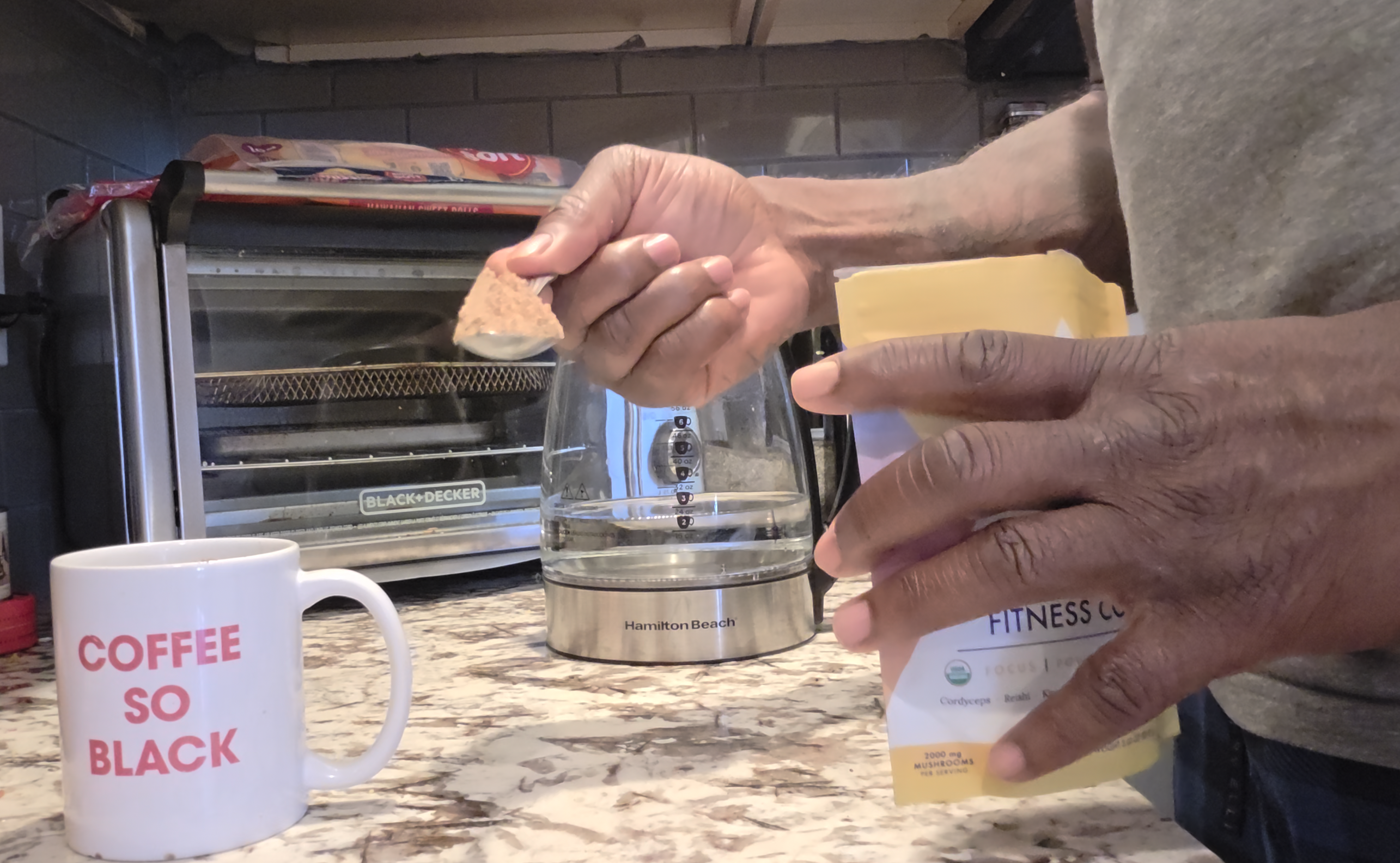 But I genuinely enjoy the taste of Prism Potion. If you’ve ever put MCT oil in your coffee, it’s a little like that.
I’ve gone through 6 bags of this stuff since I found it, so I was super excited when—after I reached out to them—they agreed to sponsor an essay. Shit, I’m drinking some right now while editing this essay.
So if you like coffee and want something that tastes great and enhances your performance, pick up a bag today!
Game Theory: Why It Never Pays To Be An Asshole or a Snitch
“Game theory is a branch of mathematics that studies strategic decision-making in situations where multiple players interact, and the outcome for each player depends on the actions of all participants.”
That’s the official definition, but if you strip away the technical precision, you’re left with a straightforward idea:
Game theory studies how the decisions and motivations of one person affect everyone else.
The most famous problem from game theory is known as “The Prisoner’s Dilemma,” and it’s usually presented as follows:
Two suspects, A and B, are arrested for a crime. The police lack sufficient evidence to convict them, so they separate the suspects and offer each the same deal:
- If you both stay silent, each of you will only do a year.
- If you snitch and the other guy stays silent, you walk, but he does ten years.
- If you stay silent and he snitches, you do ten years, and he walks.
- And if you both snitch, you both do five years.
So what do you do?
Before I get into that, let me use this part of the essay to clarify something for any squares reading: It’s only snitching if you were also doing dirt.
Here’s a simple example.
If a law-abiding, tax-paying citizen calls the cops on the dope boys they see in the morning on the way to work, that’s not snitching. They’re just being a concerned citizen. They might still get their head busted for it, but that person didn’t break street code because they aren’t part of the street.
Now if rival drug dealers call the cops OR one of the dope boys from the crew gets picked up and he starts cooperating to get a lighter sentence, THAT is snitching.
If that’s not clear enough for you, I’ll put it in corporate speak: Whistleblowing is just the gentrification of snitching.
The whistleblower is an insider—someone who belonged to the organization, benefited from it, and then cooperated against it. Whether that betrayal is morally justified is a different question, but it’s still just a whitewashed version of snitching.
With that out of the way, let’s get back to our jammed-up criminals.
What should they do?
To answer that, it helps to put yourself in the shoes of a criminal—assuming you aren’t one already.
If your partner stays silent, you’re better off snitching because you walk instead of doing a year. If he snitches, you’re still better off snitching because you do five years instead of ten.
For the greater good of the group, both of you should just hold water, but most people—criminals especially—don’t tend to think about group dynamics when individual benefits are on the line.
From an individual standpoint, no matter what he does, snitching is better for you, in that one moment. But if you do that, you’ve got a new problem.
When you’re a criminal and you “turn states” or start cooperating with law enforcement, you end up as a man with no country. You’re no longer someone other criminals trust—as far as trust between criminals goes, anyway—but civilians will still look at you as an untrustworthy criminal.
The Prisoner’s Dilemma captures the power of trust and cooperation when facing a penalty and what happens in repeated encounters with people. Yes, snitching seems like the obvious play, but that’s only if you plan to leave a life of crime behind and go into witness protection.
Either way, you either die while committing a felony or live long enough to become a confidential informant.
Now I’m using crime to demonstrate the overarching principle of the Prisoner’s Dilemma—it is called the “Prisoner’s Dilemma” after all—but once you see what it’s really trying to demonstrate, then you see it everywhere.
- Is it better to be loyal in a relationship, try to get something on the side, or just be in an open relationship?
- Is it better to keep a secret, betray someone’s trust, or never let people tell you things in the first place?
- When someone is rude to you, should you be rude back, meet them with respect, or ignore it and let it slide?
The Prisoner’s Dilemma is a test of whether you should cooperate with someone or betray them. Put your ethics and morals aside for a moment, because when we look at the question that way, it’s obvious that you should keep your word.
But what about for financial gain, political ambition, or in the case of our prisoners, your freedom?
If you face a Prisoner’s Dilemma situation just once, then it’s ALWAYS in your best interest to betray since you can’t know what the other side is going to choose and, once chosen, the interaction ends.
That’s kind of depressing, but it’s also not real life.
In real life, you interact with the same people repeatedly. Furthermore, word about your character tends to travel.
You might think you’ve gotten away with something, but people will talk—especially in the internet and digital surveillance era, where everything is tracked, and people can easily reach out to inquire about your past.
In fact, I like to describe “bad karma” as pissing off people with greater reach than you thought.
And in 1980, political scientist Robert Axelrod organized a tournament to determine which strategies performed best when the Prisoner’s Dilemma was played repeatedly.
The winning strategy showed that cooperation works best when it is backed by the willingness to retaliate—a result remarkably similar to Roosevelt’s Big Stick approach.
Tit for Tat: The Strategy That Makes Everyone Stay Respectful
Axelrod invited game theorists, economists, psychologists, and mathematicians to submit computer programs to play the Prisoner’s Dilemma against each other, 200 times in a row to see which strategy would win.
Fourteen programs entered. Some had incredibly complex rules for what to do, while others had random moments of sneakiness where they betrayed without warning.
However, the winning program was the simplest one there. It only had four lines of code and two rules:
Rule one: Always cooperate on the first move. In other words, be nice or “speak softly” or “don’t snitch”
Rule two: After that, just do whatever the other person did to you on the last move. They didn’t snitch? You stay quiet too. They sang like a canary? You do the same.
The winning program was appropriately called “Tit for Tat.”
To understand why Tit for Tat worked, look at what Roosevelt’s Big Stick Policy was designed to accomplish.
“Speak softly and carry a big stick” was not a command to threaten everyone you meet. It was a strategy for avoiding unnecessary conflict.
Roosevelt believed you should begin with diplomacy, remain calm, and seek cooperation—but possess enough credible power that other nations understood there would be consequences for taking advantage of your restraint and perceiving your kindness as weakness.
The Tit for Tat program applied the same principle to repeated trials of games where you have to decide whether to honor your word or start some shit. When it comes to personal interactions, you can look at the interplay of Tit for Tat and Big Stick Policy like this:
Big Stick Policy tells everyone what your plan is for interacting with them. Tit for Tat is its execution.
The former attempts to prevent an attack; the latter prevents an attack from becoming profitable.
Speak softly: cooperate first.
Carry a big stick: retaliate when the other person defects.
But there’s a final part of this that gets overlooked, not only in discussions of the game and Big Stick Policy, but also in our personal lives.
By the natural extension of the second rule in Tit for Tat—do whatever the other person did to you on the last move—you leave room for a return to civility. If they continue to attack, you attack back. But the moment they stop, you stop.
In other words, don’t start a fight, but make sure you end it. And once it’s dead, it’s dead unless the other guy brings it back to life.
That last part is important because neither strategy is about punishment for its own sake.
The purpose of retaliation is to correct the other person’s behavior and restore cooperation.
You’re not trying to destroy every person who crosses you. You’re teaching them how to have a relationship with you.
You’re telling them to get on your page or pick up another book.
This is why Tit for Tat succeeds: it is nice, retaliatory, forgiving, and clear.
First, it is nice. It never defects first.
In human relationships, that means beginning with respect.
You are polite, generous, and willing to give people the benefit of the doubt. You don’t come into every room suspicious, hostile, or looking for a fight.
Second, Tit for Tat is retaliatory. The moment the other player attacks, it responds in kind.
In real life, retaliation does not necessarily mean violence or revenge. Very often, it just means ensuring that violating your boundaries carries a consequence.
Someone wastes your time, so you stop arranging your schedule around them.
Someone talks down to you, so you address it.
Someone betrays your trust, so they lose the privileges that depended on it.
The response should be prompt and proportional, and the idea isn’t to inflict maximum pain but to remove the reward for mistreating you.
And prompt is key here, because if you wait too long to respond, your response will almost certainly be much greater than necessary due to pent-up frustration. It might feel good to get out, but it usually ends up making you look like the bad guy.
Tit for Tat is also forgiving.
Once the other player returned to cooperation, Tit for Tat did the same.
It didn’t continue punishing someone after the behavior was fixed. This prevented a single betrayal from escalating into a Hatfield-and-McCoy-type feud where each person feels justified in his retaliation.
Forgiveness does not mean pretending nothing happened or repeatedly trusting someone who has proven untrustworthy. It means that when someone genuinely corrects the behavior, you stop charging interest on a debt they have already paid.
Without retaliation, forgiveness becomes permission. Without forgiveness, retaliation becomes vengeance.
And lastly, Tit for Tat is clear.
Cooperation is answered with cooperation. Attack brings a proportionate consequence.
There is no passive aggression, silent punishment, or pretending everything is fine while resentment builds until it explodes. People know where your boundaries are, what happens when they cross them, and how they can restore the relationship if they do.
That predictability is what makes the strategy peaceful, but it only works when the other person expects to deal with you again.
If someone believes this is a one-time interaction—or simply does not care what happens tomorrow—the threat of retaliation loses much of its force.
The strategy also assumes that you can accurately distinguish betrayal from accident.
In real relationships, people misunderstand each other, make mistakes, and occasionally cause unintentional harm. This is why your response must be proportional rather than automatic. The objective is to correct exploitation, not punish every imperfection.
Roosevelt applied this logic between nations. Tit for Tat demonstrated it mathematically between players. But the same principle governs confrontation between ordinary people:
Begin peacefully. Make cooperation worthwhile. Make exploitation costly. Retaliate only as much as necessary. And always leave a path back to peace open.
That is how you remain a good person without becoming an easy target.
You need a big stick, but it’s your last resort. And when you use it, use it only as much as necessary—and even less, if you can get away with it.
Be Firm But Not An Asshole
People are self-interested, but that does not make every interaction zero-sum.
Cooperation allows two people to create more value together than either could capture alone. The problem is that cooperation becomes impossible when betrayal is rewarded, and restraint is mistaken for weakness.
This is where Big Stick Policy and Tit for Tat meet.
Big Stick Policy tells people what will happen if they cross you. Tit for Tat tells you what to do when they do. Make it easy to be your friend and expensive to be your enemy.
Respond decisively but proportionally, and leave open a path back to peace.
Some people are kind but incapable of confrontation. Others are so committed to appearing dangerous that they create the confrontations they claim to want to avoid. Both approaches fail because one invites exploitation while the other makes cooperation impossible.
The goal is to become peaceful by preference, dangerous by necessity, and predictable in either direction.
Or, as the Great Hood Sage Lil Jon put it:
Don’t start no shit; won’t be no shit. Don’t tolerate shit. And once the shit is over, let it be over.