Should Boxers Take Creatine? Benefits, Dosing, Weight Cuts & Performance

Should Boxers Take Creatine?
Yes. Most boxers would benefit from creatine supplementation. Creatine improves explosive power, recovery, training volume, cognitive performance, and ATP regeneration. The main consideration for fighters is managing water retention during weight cuts.
My boxing career with creatine
When I boxed as an amateur and professional, I don’t think I ever saw a boxer using creatine. I certainly never used it either, but now that I know a lot more about it, I believe that creatine should be a staple of every boxer’s supplement stack.
I wish I had used it myself, but since I can’t go back in time, I’m doing the next best thing: using it now as I prepare for a comeback fight after 8 years off, and educating other boxers on why they need to incorporate it into their training routine.
Creatine is the most well-researched studied supplement in the fitness world, but you will never see boxers incorporate it into their supplement stack. I imagine it’s because creatine has a reputation as something you use to add muscle and increase performance lifting weights so you can lift more and get bigger—and most boxers have a mismatched idea of strength training in boxing.
On the one hand, you have the old school purist who doesn’t believe that strength training and muscle building activities have any place in boxing training. These types of fighters and trainers believe that muscle slows you down and that the time spent trying to gain strength would be better served working on boxing skills.
After all, despite the crazy knockouts you see, boxing is very much a sport of skill, and the more skilled fighter usually wins, even if he’s more athletic and physically gifted.
On the opposite end of the spectrum are fighters who spend more time in the weight room than in the boxing ring, honing their craft. These fighters and trainers understand that while boxing is a skill sport, skills can only take you so far if you don’t have a base level of strength and size. To this camp’s credit, strength and size have historically played a decisive role in the heavyweight, cruiserweight, and, to a lesser extent, light heavyweight divisions.
Also, more recently, fighters are getting better at cutting weight, creating monster scenarios where both fighters may make 147 lbs on the official scale, but on fight night, it’s not unheard of for a fighter to regain 15-25 lbs.
This means that the truth is somewhere in the middle. Fighters can’t neglect building size and strength, but it should not consume the majority of their training. So, to maximize their strength gains, one of the best possible supplements for a boxer is creatine—but it does so much more than help fighters get the most out of their strength training muscle building sessions in the gym.
The rest of this article will explain why boxers need to take creatine and examine the numerous benefits, many of which extend beyond building strength and muscle. Before getting into it, we have to answer the question on every boxer’s mind when it comes to using a supplement.
Is creatine allowed to be used in boxing?
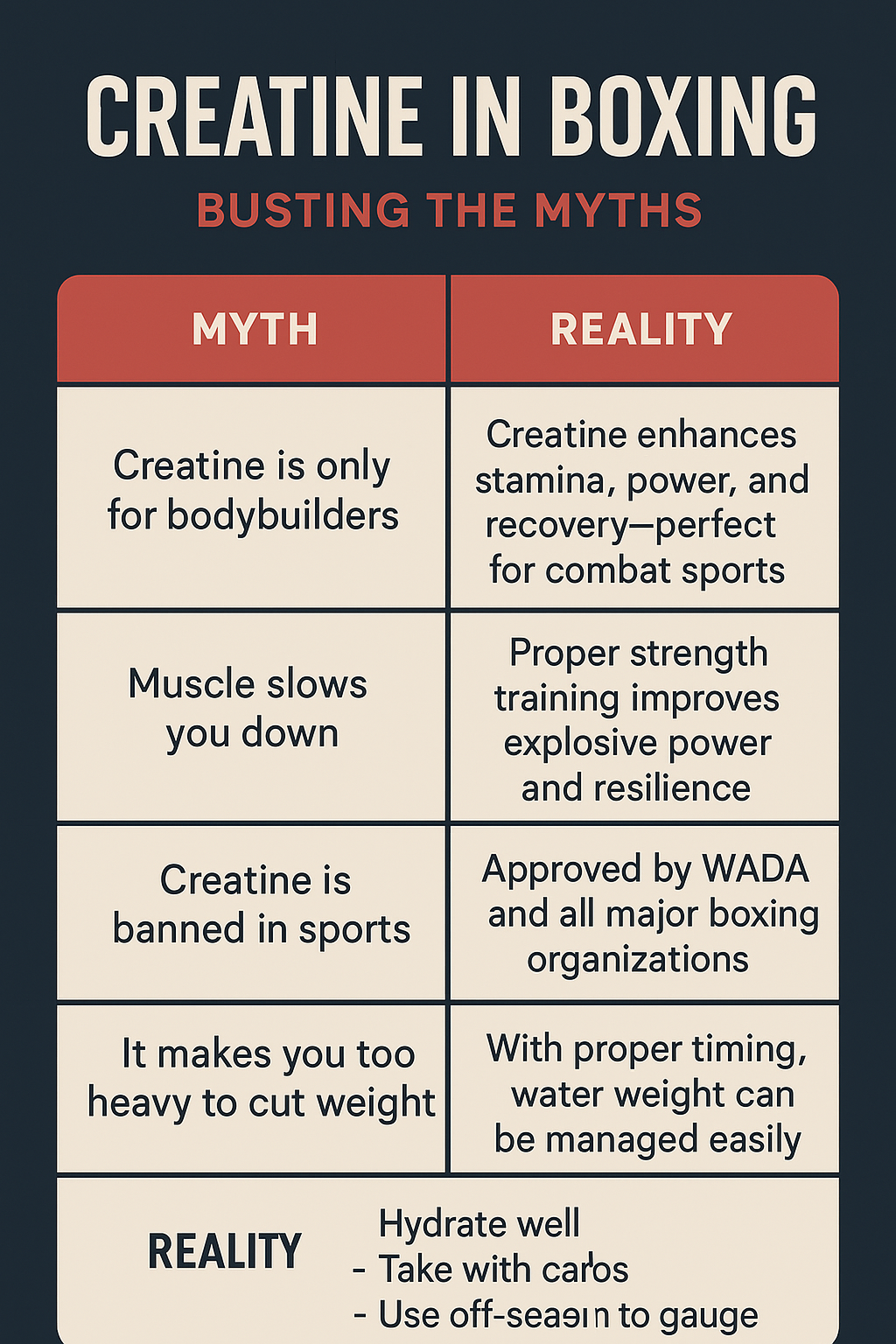
The best part about creatine is that the World Anti-Doping Agency (WADA) approves its use, so you’re safe. Creatine is legal in professional and amateur boxing and is approved by all major athletic governing bodies. This supplement is expressly excluded from WADA’s “prohibited substance” lists and is widely accepted, both in and out of the combat sports community—despite many boxers not using it.
WADA, which sets international standards for anti-doping policies in all sports, explicitly permits creatine use at all levels of competition. All legitimate boxing regulatory bodies in the world follow the guidelines set by WADA, so a boxer never has to worry about a sanction or suspension if they take creatine.
Do pro boxers take creatine?
Many professional fighters use creatine during portions of training camp, but some discontinue it before weigh-ins because of water retention concerns.
Heavyweights often have fewer reasons to stop supplementation than lighter fighters.
The fact that many boxers don’t openly discuss supplementation doesn’t mean they aren’t using it.
What is the best type of creatine for boxers?
If you’re a boxer looking for the best type of creatine, the answer is simple:
Creatine monohydrate remains the most effective, most researched, and most cost-efficient form of creatine available.
Despite what supplement marketing would have you believe, newer forms of creatine have consistently failed to demonstrate meaningful advantages over monohydrate in scientific studies.
Here are the most common forms you’ll encounter:
Creatine Monohydrate
This is the gold standard.
Nearly every study demonstrating creatine’s benefits for:
- strength
- power output
- recovery
- muscle growth
- cognitive performance
- athletic performance
was conducted using creatine monohydrate.
It’s inexpensive, widely available, highly effective, and extremely safe.
For most boxers, this should be the default choice.
Micronized Creatine Monohydrate
Micronized creatine is simply creatine monohydrate that has been processed into smaller particles.
The smaller particle size allows it to dissolve more easily in water and may reduce stomach discomfort for some users.
Performance benefits are identical to regular creatine monohydrate.
The primary advantage is improved mixability.
Creatine Hydrochloride (HCl)
Creatine HCl is marketed as having superior absorption and requiring smaller doses.
While it may dissolve more easily in water than monohydrate, current research has not demonstrated superior performance benefits.
It’s typically much more expensive than monohydrate and doesn’t produce better results.
Buffered Creatine (Kre-Alkalyn)
Buffered creatine was developed to reduce the conversion of creatine into creatinine.
Manufacturers claim it improves absorption and reduces water retention.
However, studies comparing buffered creatine to creatine monohydrate have generally found no meaningful performance advantage.
Creatine Ethyl Ester
Creatine ethyl ester was heavily marketed as a superior form of creatine several years ago.
Unfortunately, research found that it is actually less effective than creatine monohydrate because it breaks down more rapidly in the digestive system.
Today, it’s largely fallen out of favor.
Creatine Magnesium Chelate
This form binds creatine to magnesium.
Some research suggests it may perform similarly to monohydrate, but the evidence remains limited.
It’s usually more expensive and lacks the extensive research backing that monohydrate possesses.
Creatine Nitrate
Creatine nitrate combines creatine with nitrate compounds and is often included in pre-workout formulas.
While nitrates may improve blood flow and muscular endurance, there is little evidence showing that creatine nitrate provides superior benefits compared to standard creatine monohydrate.
Which Form Should Boxers Choose?
For nearly every boxer, the answer is simple:
Choose creatine monohydrate.
It is:
- the most researched
- the most effective
- the least expensive
- the most widely available
- the form used in the overwhelming majority of sports-performance studies
When a supplement has thousands of studies supporting its effectiveness, there’s little reason to gamble on newer and more expensive alternatives.
As a boxer, your goal isn’t to find the most exotic form of creatine.
Your goal is to recover faster, hit harder, train longer, and perform better.
Creatine monohydrate accomplishes all of those goals better than anything else on the market.
Is creatine good for boxing?
Yes. In fact, creatine may be one of the best supplements a boxer can take.
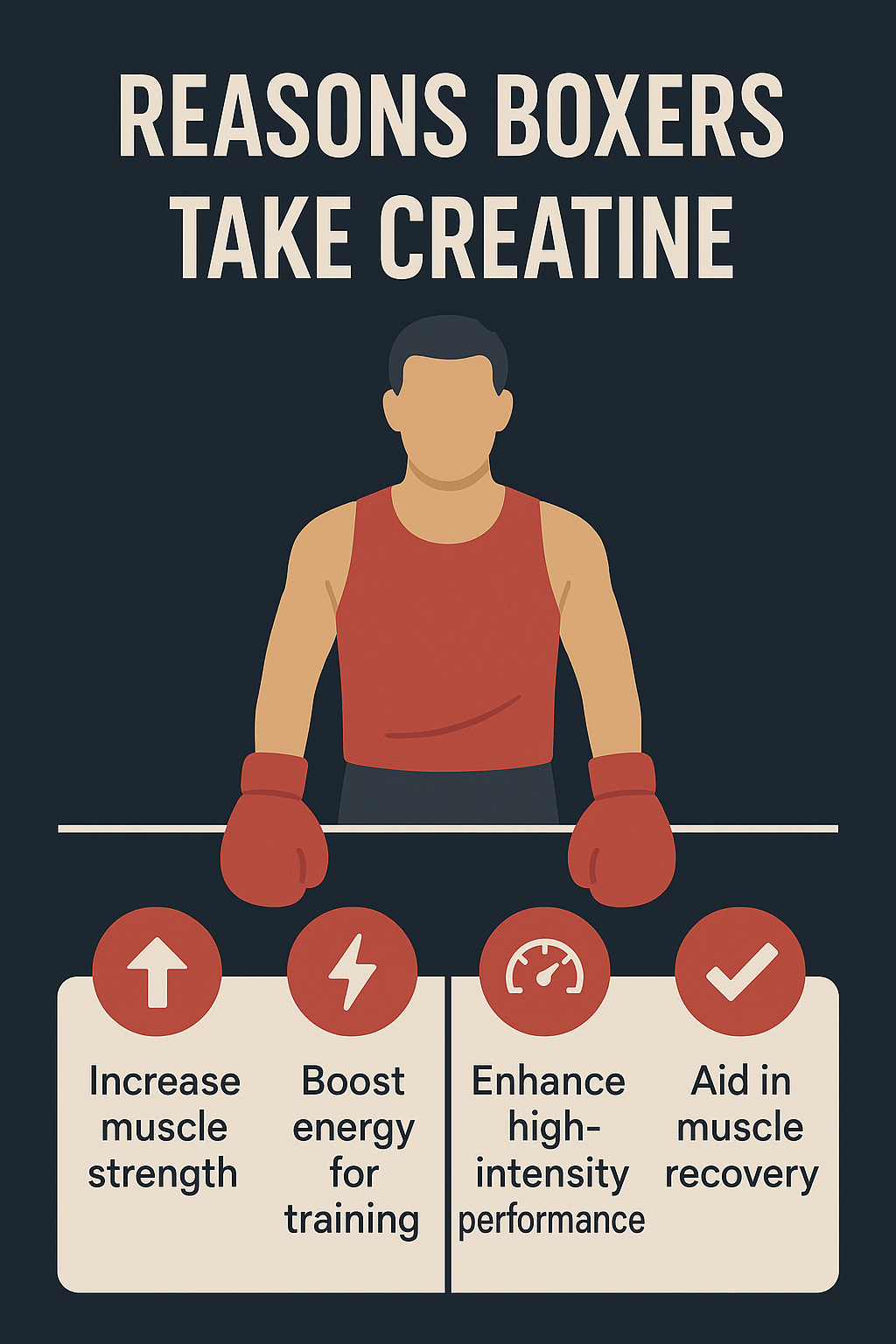
Most fighters associate creatine with bodybuilders and powerlifters because of its reputation for increasing strength and muscle mass. While those benefits are real, they only scratch the surface of what creatine can do for a boxer.
Boxing is a sport that requires repeated bursts of explosive effort separated by short periods of recovery. Every punch, defensive movement, combination, clinch, and explosive exchange relies on ATP, the body’s primary energy currency.
Creatine helps regenerate ATP faster.
That alone makes it uniquely valuable for fighters.
By increasing phosphocreatine stores within muscle cells, creatine helps boxers maintain power output during intense exchanges, recover more efficiently between rounds, and sustain higher levels of performance throughout a fight.
The benefits don’t stop there.
Research has consistently shown that creatine can improve:
- explosive power
- strength
- muscular endurance
- recovery between training sessions
- reaction time
- cognitive performance under fatigue
- training volume and work capacity
For boxers, that translates into practical advantages inside and outside the ring.
A boxer supplementing with creatine can often perform more high-quality work during training. More quality repetitions mean better conditioning, better skill development, and more opportunities to improve. Over time, those additional training adaptations compound into meaningful performance gains.
Creatine may also provide an advantage in the later rounds of a fight.
As fatigue accumulates, punching power, reaction speed, concentration, and decision-making begin to decline. Because creatine supports both muscular and cognitive energy systems, it helps boxers maintain a higher level of performance when their opponents are starting to fade.
Perhaps most importantly, creatine is one of the safest and most thoroughly researched supplements ever studied. Unlike many sports supplements that rely on hype and marketing, creatine’s benefits are supported by decades of scientific research and real-world athletic performance.
If your goal is to hit harder, recover faster, train longer, think more clearly under pressure, and perform better deep into a fight, creatine deserves a place in your supplement stack.
Creatine increases a boxer’s stamina, energy, and recovery between rounds
Creatine directly enhances a boxer’s phosphocreatine system, the primary energy pathway utilized during high-intensity bursts of activity in the ring. During explosive movements like combinations and power punches, the body rapidly depletes adenosine triphosphate (ATP), the molecule that carries energy in the cell. ATP is so important for life that cyanide kills because it halts the production of ATP.
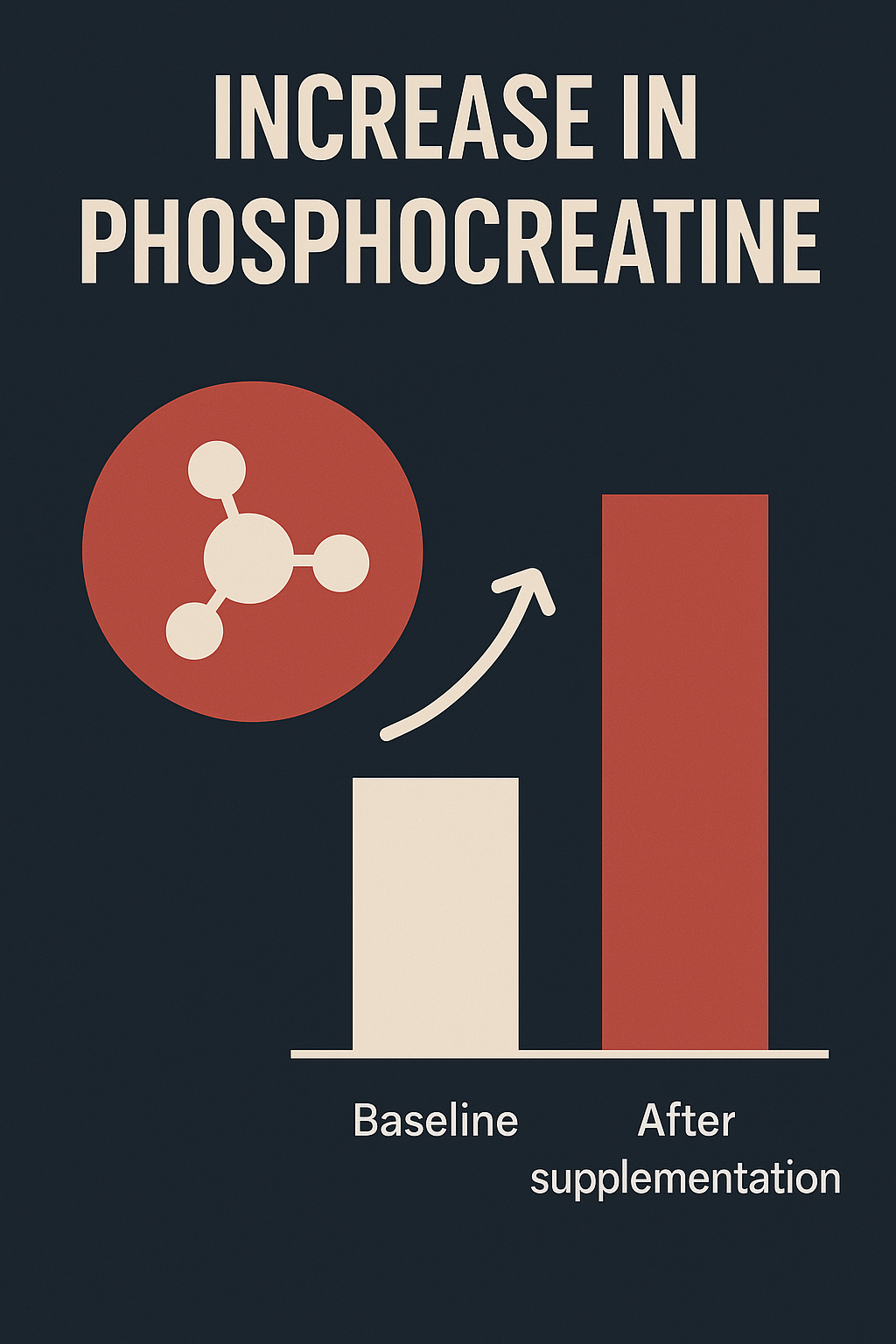
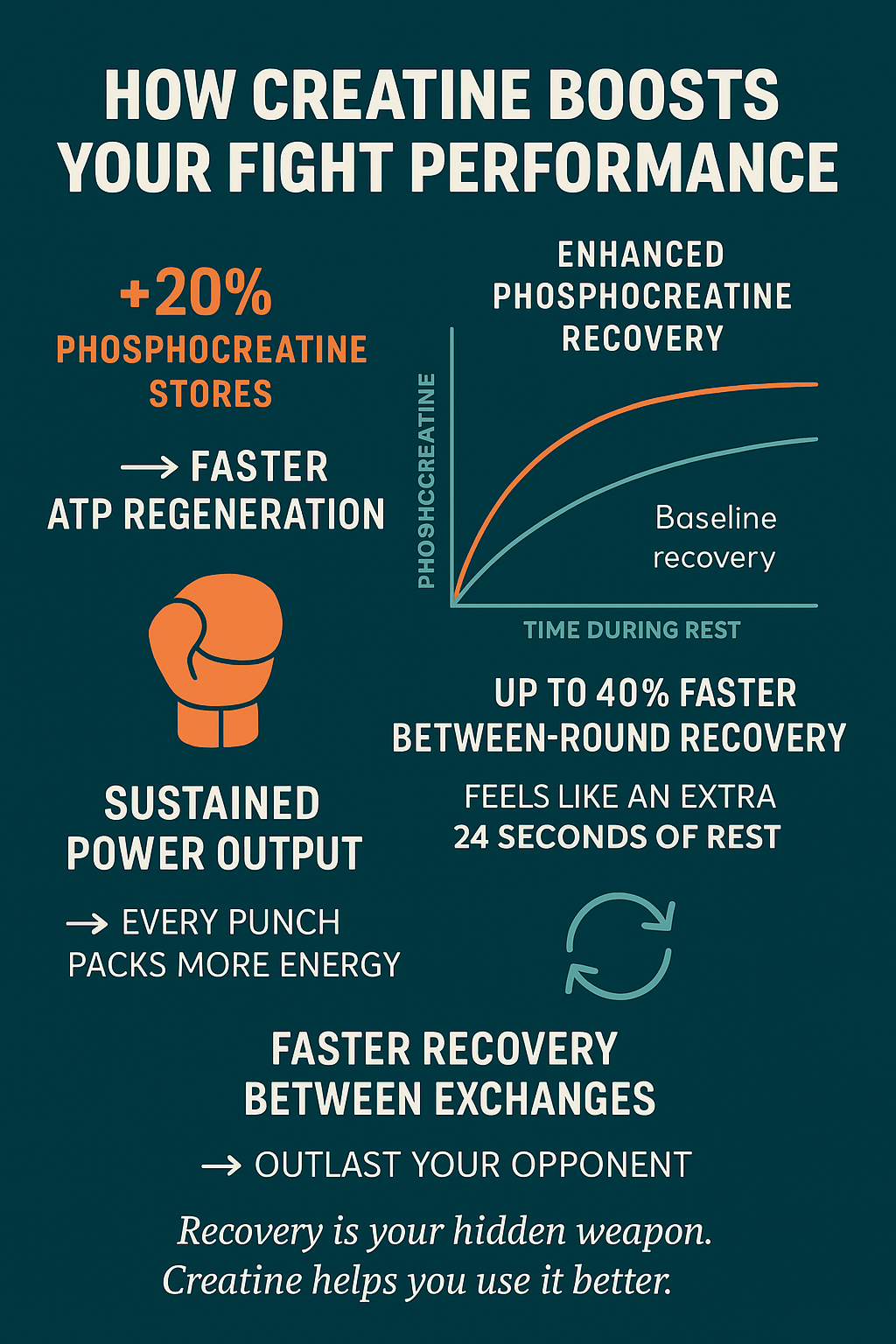
Creatine supplementation increases phosphocreatine stores by approximately 20% (Greenhaff et al., 1994), allowing for faster ATP regeneration after intense bursts of activity. Quickly regenerating ATP is a significant biochemical advantage, which translates to sustained power output not just during punch exchanges but throughout the entire fight.
With creatine supplementation, boxers can recover faster during the one-minute rest period between rounds. Research has shown that creatine accelerates the replenishment of phosphocreatine stores during rest intervals, resulting in up to 40% faster recovery rates than non-supplemented athletes (Harris et al., 1992).
To put that recovery boost into perspective, creatine supplementation is like adding an extra 24 seconds (40% of 60 seconds) in recovery time to the rest between rounds.
This boost in recovery efficiency means supplementing with creatine gives a boxer a significant advantage. This speedy, efficient recovery means that not only does a boxer get more out of the rest period between rounds, but he also recovers faster during the rest period between exchanges.
The advantage gets bigger in later rounds when opponents have depleted their phosphocreatine reserves, reducing their punching power, punching output, and recovery between rounds. This alone is a significant advantage in a high-intensity sport like boxing, but creatine has another fantastic property that will make a fight seem like a walk in the park.
Does creatine increase punching power?
The question every boxer wants answered is simple:
Will creatine help me hit harder?
The honest answer is yes—but probably not in the way most people think.
Creatine does not magically increase punch force overnight. Taking a scoop of creatine won’t suddenly transform you into George Foreman.
What creatine does is improve many of the physical qualities that contribute to punching power.
Punching power is ultimately a product of several factors:
- strength
- explosiveness
- speed
- technique
- timing
- coordination
- fatigue resistance
Creatine positively influences several of those factors.
By increasing phosphocreatine stores within muscle cells, creatine improves the body’s ability to rapidly regenerate ATP during explosive movements. Since every punch requires a brief burst of maximum effort, having a larger phosphocreatine reserve allows a boxer to produce high levels of force more consistently during training and competition.
Research consistently shows that creatine supplementation improves strength and power output in athletes. Over time, stronger and more explosive athletes generally develop the ability to generate more force.
For boxers, however, the biggest benefit may actually come from training quality.
Creatine allows you to perform more high-quality work before fatigue sets in.
You can:
- throw harder combinations
- perform more explosive repetitions
- recover faster between rounds
- recover faster between training sessions
That improved training capacity compounds over weeks and months.
A boxer who can consistently train at a higher intensity is likely to develop greater punching power than a boxer who cannot.
Creatine may also help preserve power late in fights.
As fatigue accumulates, ATP availability decreases and punching power naturally drops. Because creatine helps regenerate ATP more efficiently, it can help maintain explosive output deeper into sparring sessions and later rounds.
In other words, creatine may not dramatically increase your hardest punch, but it can help you throw powerful punches more often, recover faster between exchanges, and maintain your power longer as fatigue sets in.
For a boxer, that’s often even more valuable than a small increase in peak punching force.
Creatine reduces lactic acid accumulation in the muscles
Lactic acid is the byproduct of energy metabolism, and it builds up over time as you engage in physical activity without sufficient rest periods. This accumulation is responsible for the burning sensation in your muscles during physical activity, making you feel slow and weak. Every athlete, boxer or not, knows exactly what this feeling is like and how much of a problem it can be in competition.
Supplementing with creatine is a game changer for boxers looking to not just perform better but also feel better during tough rounds. Creatine significantly reduces the burning sensation and muscle fatigue that boxers experience during sustained exchanges (Bemben & Lamont, 2005), making it a miracle supplement for boxers.
To make a long biochemistry lesson short, the body has two methods of energy creation: aerobic respiration, which uses oxygen, and anaerobic respiration, which occurs in the absence of oxygen. Aerobic respiration is more efficient but slower. For intense activities, the body relies on anaerobic respiration for quick energy demands.
The problem with anaerobic respiration is the byproduct, lactic acid. Ceatine doesn’t directly reduce lactic acid production. Instead, it works through a different mechanism entirely.
Creatine supplementation increases the availability of phosphocreatine (PCr) in muscle cells, which serves as an immediate energy reserve for regenerating ATP, your body’s primary energy currency. During high-intensity exercise like boxing, the PCr system provides energy for the first 10-15 seconds of explosive activity before other energy systems kick in (Harris et al., 1992).
By enhancing this PCr energy system, creatine allows boxers to rely less on anaerobic glycolysis (the process that produces lactic acid) and more on the PCr system during short bursts of activity. This effectively delays the onset of anaerobic glycolysis, resulting in a reduced rate at which lactic acid accumulates (Greenhaff et al., 1993).
Additionally, creatine enhances the efficiency of aerobic metabolism by improving mitochondrial function, which allows the body to clear lactic acid more effectively during recovery periods between rounds (Gufford et al., 2010). This dual action - delaying lactic acid production and enhancing its clearance - creates a significant performance advantage for boxers, especially in the later rounds..
Studies have shown that athletes supplementing with creatine can perform more high-intensity work before reaching their lactate threshold (the point where lactic acid begins to accumulate faster than it can be cleared). For boxers, this translates to throwing more power punches with less fatigue for longer (Volek et al., 1997).
Creatine helps boxers make better decisions
Creatine plays an important role in the brain because your brain uses nearly 20% of your body’s daily calories (source). This energy is used for all of the automatic functions that brain is responsible for as well the conscious and nearly subconscious moves and reactions you make during a boxing match. That energy requires phosphocreatine.
As a quick refresher, phosphocreatine is the molecule that acts as an energy source for your skeletal muscle, heart, and brain and allows for the rapid regeneration of ATP. Therefore, creatine supplementation also keeps you mentally sharper in the fight by giving you more phosphocreatine to power the brain.
Research has demonstrated that creatine supplementation improved decision-making speed and accuracy during high-pressure cognitive tasks, especially under fatigued conditions (McMorris et al. 2006). Interestingly enough, that study was conducted on people who were sleep deprived for 24 hrs, and those who supplemented with creatine had a much smaller drop off in performance than the placebo.
A boxing match is a high-pressure cognitive task that takes place while fatigued, and it translates into better fighting in the later rounds when mental fatigue typically impairs judgment and makes a boxer more prone to mistakes. However, resistance to mental fatigue is just one of the powerful cognitive benefits.
Creatine supplementation reduced reaction time by 10-15% in cognitive-motor tasks (Rawson and Venezia et al. 2011). In boxing, there is no time to think. It’s a game of action and reaction, where milliseconds are the difference between slipping a shot and getting knocked out. A 10% reduction in reaction means quicker counter-punching and better defensive against incoming strikes, and more precise timing when launching combinations.
Creatine has been proven, in multiple studies, to be a powerful tool for improving the ability to concentrate for extended periods of time. A 2002 study demonstrated that creatine supplementation helps maintain cognitive function during extended periods of mental exertion (Watanabe et al. 2002) and another showed that creatine supplementation improved subjects’ ability to maintain attention during physiologically stressful situations (Hammett et al. 2010).
This translates into a better brain for fighting because it can react faster and resist fatigue longer. I’ve talked a lot about the benefits of creatine for the later rounds, but amateurs can benefit too—especially if they’re fighting in multi-day tournaments that are often more grueling than professional fights.
Creatine vs Pre-Workout For Boxing
Many boxers confuse creatine and pre-workout supplements because both are commonly used to improve athletic performance.
The reality is that they do completely different things.
Creatine is not a stimulant.
Pre-workout is usually built around stimulants.
Creatine works by increasing phosphocreatine stores in your muscles, which improves ATP regeneration, power output, recovery, and training performance over time. It works whether you’re tired or fully rested because its benefits come from changes in muscle energy systems.
Pre-workout supplements typically rely on ingredients such as caffeine, theobromine, and other stimulants to increase alertness, focus, and perceived energy. They make you feel more awake and motivated to train, but they don’t directly improve your body’s ability to regenerate ATP like creatine does.
Think of it this way:
Creatine helps your engine perform better.
Pre-workout makes you press harder on the gas pedal.
For boxers, creatine is generally the more important supplement because it supports adaptations that improve performance both in training and in competition. Better recovery, more power, increased work capacity, and improved cognitive performance all translate directly to better boxing.
Pre-workout can certainly be useful before hard training sessions, sparring, or conditioning workouts, but its benefits largely disappear once the stimulants wear off.
If I had to choose only one supplement for boxing performance, I would choose creatine every single time.
It’s safer, better researched, legal under WADA regulations, improves both physical and mental performance, and continues working long after the workout ends.
Ideally, a boxer doesn’t choose between creatine and pre-workout.
They understand that they serve different purposes and use each appropriately.
I personally use a Morning Would Non-Stim pre-workout. Read my review of Morning Would here.
Creatine dosing protocol for boxers
So one thing boxers have to be cautious about with creatine supplementation is that creatine causes you to retain water. So, if cutting water weight is a part of your fighting camp, you’ll have to be careful when it comes to your dosing to ensure you get the maximum benefit but are still able to make weight.
Phase-Based Approach for Fighters
The most effective protocol for boxers involves a periodized approach that aligns with training camp phases:
Early Camp (8-12 weeks out)
- Loading Phase: 20g daily for 5-7 days, divided into 4 equal doses of 5g
- Maintenance Phase: 3-5g daily
- Benefits: Maximum creatine saturation during the heaviest training period
- Water Retention: Expect 2-4 pounds of additional water weight
Mid Camp (4-8 weeks out)
- Maintenance Dose: Continue with 3-5g daily
- Training Benefit: Sustained power output during intense sparring sessions
- Water Retention: Body typically adjusts, often reducing to 1-3 pounds
Pre-Fight Phase (2-4 weeks out)
- Reduced Dose: Taper to 2-3g daily
- Purpose: Maintain most benefits while beginning to manage water retention
- Monitoring: Track weight more carefully during this phase
Fight Week Protocol
- Cessation: Stop supplementation 5-7 days before weigh-in
- Water Clearance: Most excess water weight will dissipate within this timeframe
- Performance Impact: Creatine stores remain elevated enough to benefit performance on fight night
- Post Weigh-in: Can resume with 5g dose after making weight to help with rehydration
Weight Class Considerations
- Heavyweight/Cruiserweight: Can typically maintain supplementation closer to fight date
- Light heavyweight/Middleweight: This is the most variable range. Some fighters will drop the excess water better than others, depending on their body composition.
- Welterweight/Lightweight: More conservative tapering timeline is recommended
- Bantamweight/Flyweight: Most sensitive to water retention; consider shorter supplementation cycles
Maximizing Benefits While Managing Weight
- Creatine Timing: Taking creatine post-workout with carbohydrates enhances muscle uptake
- Hydration: Maintain higher water intake during supplementation periods
- Carb Intake: Pair with carbohydrates to improve cellular uptake and reduce intestinal discomfort
- Type Selection: Creatine monohydrate is the most well-researched and cost-effective form
Most importantly, boxers should test their response to creatine during off-season or early in training camp to understand personal water retention patterns before implementing this protocol during fight preparation.
Frequently asked questions about boxers taking creatine
Should boxers take creatine?
Yes. Creatine can improve power output, recovery, training volume, reaction time, and cognitive performance while remaining legal in amateur and professional boxing.
Do professional boxers take creatine?
Many professional fighters use creatine during training camps. Some reduce or stop supplementation before weigh-ins to manage water retention.
Is creatine good for boxing?
Creatine is one of the most effective supplements for boxing because it supports explosive energy production, recovery, and repeated high-intensity efforts.
Is creatine allowed in boxing?
Yes. Creatine is legal in boxing and is not included on the World Anti-Doping Agency (WADA) prohibited list.
Is creatine banned by WADA?
No. Creatine is not a prohibited substance under current WADA regulations.
Does creatine increase punching power?
Creatine may indirectly improve punching power by increasing strength, power output, training quality, and recovery between training sessions.
Does creatine help boxing endurance?
Creatine helps maintain high-intensity performance and improves recovery between rounds and training intervals, which may improve overall fight endurance.
Does creatine make weight cuts harder?
Creatine can increase water retention, which may complicate aggressive weight cuts. Many fighters adjust dosing or temporarily discontinue supplementation before weigh-ins.
What is the best creatine for boxers?
Creatine monohydrate is the most researched and widely recommended form of creatine for athletes and fighters.
Should amateur boxers take creatine?
Yes. Amateur boxers may benefit from improved recovery, training quality, reaction time, and cognitive performance, especially during tournaments requiring multiple fights in a short period.
Final thoughts on why boxers should use creatine
The greatest advantage of creatine for boxers is that it allows them to fight hard, longer, and with greater concentration and faster recovery. If you’re worried about making weight, monitor your weight before you start using it, and see how much weight you put on.
Assuming you’re active in your training and you have a lifestyle and habits that support your training, any weight you put on will be water. Light heavyweights, cruiserweights, and heavyweights don’t need to worry about this as much as the lighter weights.
If you really want to supercharge your training, consider adding trimethylglycine (betaine) and beta-alanine to your creatine stack. It will take your energy levels even further and give you more punching power to boot. You can learn more about trimethylglycine for boxers in this article and beta-alanine for boxers in this article.
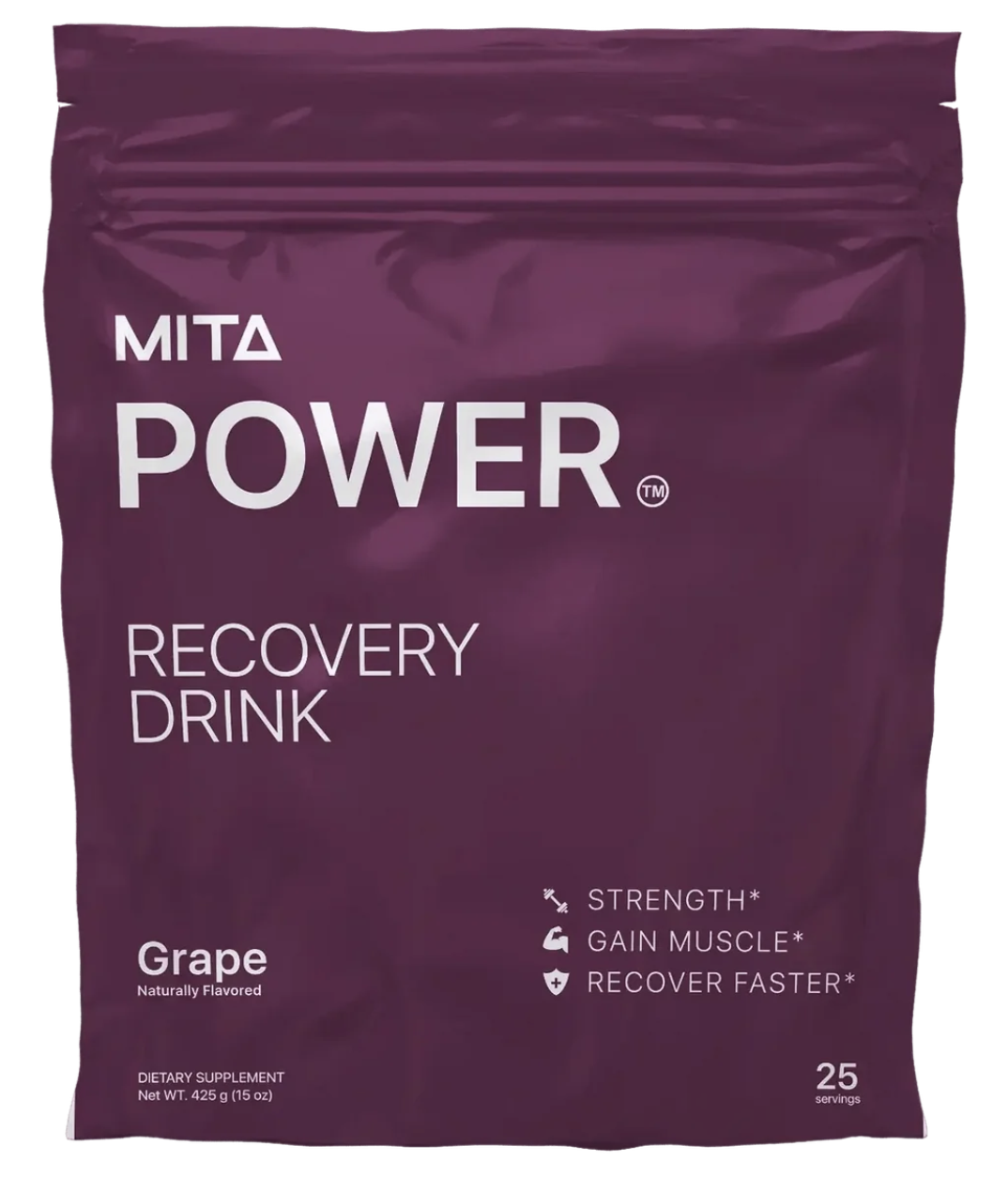
Or, if you already know about them and you’re tired of mixing and buying your supplements separately, check out Mita Nutrition’s “Power.” Each serving contains 5 grams of creatine, 2 grams of trimethylglycine, and 3.6 grams of beta-alanine.
If you grab Power from the link above and use discount code EdLatimore, you get 20% off your first order.

Written by
Ed Latimore
Ed Latimore is a best-selling author, professional heavyweight boxer, and physicist. He writes about self-improvement, sobriety, fighting, and the lessons he learned growing up in the projects of Pittsburgh.
Follow @EdLatimore