Best Electrolyte Powder for Athletes: A Boxer’s Evidence-Based Review

I started drinking Morning Would before my boxing workouts while preparing for my last fight in July 2025. Although I won that fight with a devastating first-round knockout, I decided to officially retire so I could focus on my family—and finally take peptides, which are banned by WADA.
That said, I still coach boxing, work out regularly, and do light sparring. All of that means I still spend a lot of time sweating and losing electrolytes.
Morning Would is a pre-workout drink that also delivers a substantial amount of electrolytes, which is one of the reasons I continue to use it.
But I don’t drink Morning Would solely for the electrolyte blend.
Morning Would contains a host of hydration and performance-enhancing ingredients that you typically won’t find in a standard electrolyte powder.
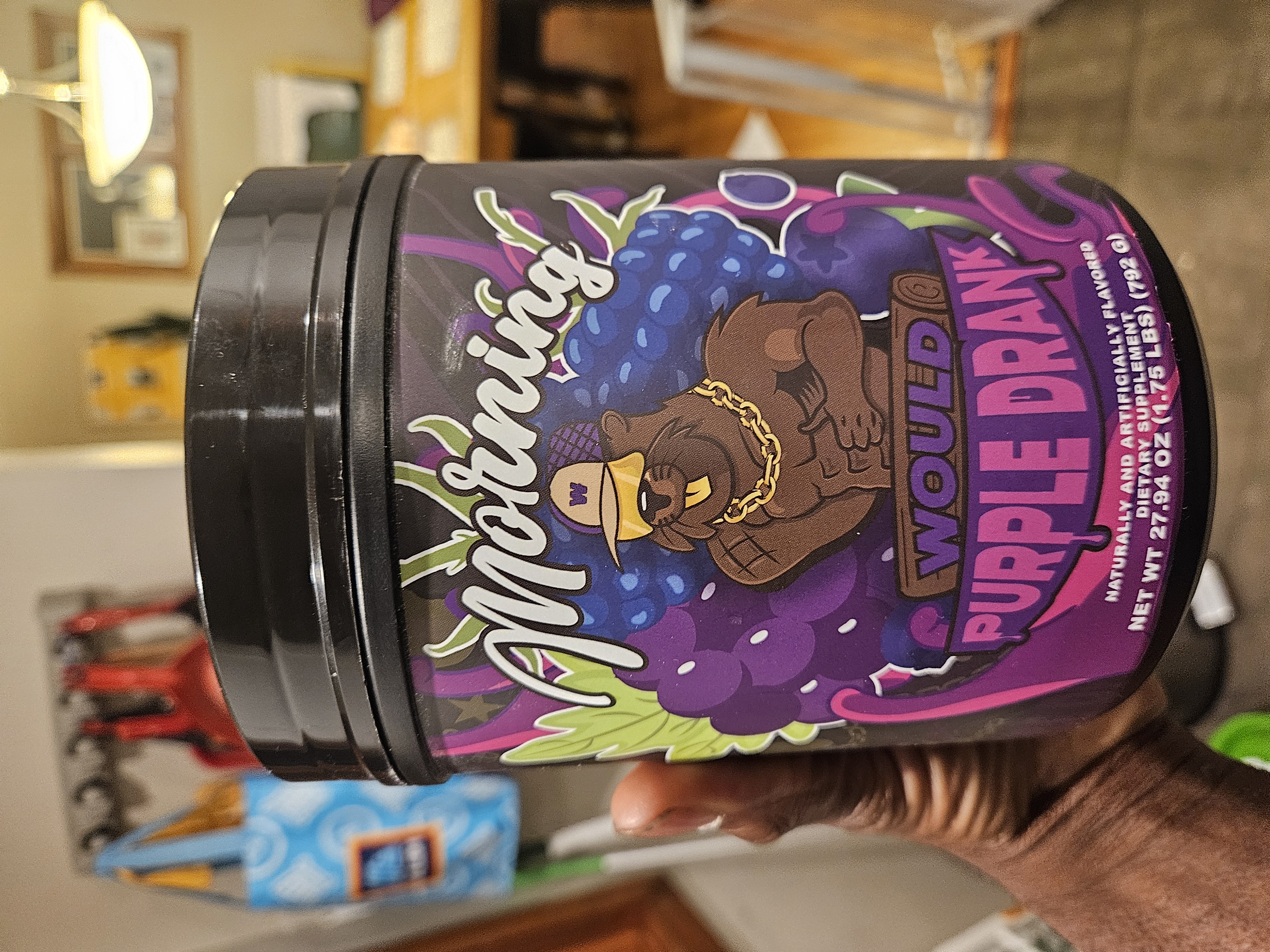
Before we get to those ingredients, though, we need to talk about why electrolytes are so important for athletes—not just fighters.
What happens when athletes lose electrolytes?
Most athletes think dehydration is simply a matter of losing water.
In the purest sense of the word, this is technically correct. Dehydration is the act of losing water. The bigger problem—the one that many athletes don’t consider—is that you lose many other vital nutrients along the way.
When you sweat, you lose water and electrolytes. These electrically charged minerals—including sodium, potassium, and magnesium—play a critical role in muscle contraction, nerve signaling, fluid balance, and athletic performance. [13]
When electrolyte losses aren’t replaced, performance starts to decline long before you feel completely dehydrated. [1][15]
Furthermore, when you lose water, it makes it harder to retain what you’ve lost and reduces the functionality of what remains. [13]
Performance decline from mild dehydration
Research has consistently shown that losing as little as 2% of your body weight through sweat can negatively impact athletic performance. [1][15]
At first, the effects are subtle and are often just mistaken for the typical fatigue you experience during training. Your reaction time slows, your workouts feel harder, and it feels impossible to concentrate. [1]
For athletes competing in sports that require quick decisions, precise timing, and sustained effort, even mild dehydration can create a significant performance disadvantage. When the difference between “good,” “great,” and losing your starting job comes down to milliseconds, the small delays in reaction create big gaps in performance. [1]
In combat sports, the consequences can be even more severe.
The Manuel Velazquez Boxing Fatality Collection, which tracks boxing deaths dating back to 1890, records more than 2,000 fatalities resulting from injuries sustained in the ring. Despite the heavyweight division producing the largest and hardest punchers, only five of those deaths have occurred among heavyweights.
One reason is that lower-weight fighters often undergo aggressive weight cuts that can remove significant amounts of water from the body, including water that helps cushion the brain inside the skull. [2]
Even after rehydration, restoring lost fluids throughout the body takes time. Fighters usually enter the ring still partially dehydrated and then continue losing water through sweat during the contest. [2]
The result is a dangerous combination: reduced physical performance, slower reaction times, diminished endurance, and less protection against head trauma. [2]
For athletes, proper hydration isn’t just about performing better. In some situations, it can be a matter of life and death.
Muscle Cramping
Few experiences are more frustrating than having a workout or training session interrupted or cut short by muscle cramps.
While cramping is influenced by several factors, significant electrolyte losses—particularly sodium losses—can increase the risk. [6] Sodium helps regulate the electrical signals that tell muscles when to contract and relax. [13]
When sodium levels drop too low, communication between the nervous system and the muscles can be disrupted, increasing the likelihood of painful involuntary contractions. [13]
Athletes who sweat heavily often lose far more sodium than they realize, making electrolyte replacement especially important during long training sessions and competitions. [3]
Reduced Power Output
Electrolytes don’t just keep you hydrated. They also help your muscles generate force.
Sodium and potassium are directly involved in the electrical impulses that trigger muscle contractions, while magnesium supports energy production and muscle function. [4][13]
When electrolyte levels fall, muscles become less efficient. This efficiency loss manifests itself in every performance metric—fewer watts on the bike, slower sprint times, reduced punching power, less explosiveness in the weight room, etc.
For strength and power athletes, electrolyte depletion can mean leaving performance on the table even when training, nutrition, and recovery are otherwise dialed in.
Reduced Endurance
Endurance is often the first thing athletes notice when electrolyte levels start to drop.
As dehydration progresses, blood volume decreases. The heart must work harder to deliver oxygen and nutrients to working muscles. As a result, perceived effort rises while performance falls. [1]
This is one reason a run, ride, sparring session, or conditioning workout can suddenly feel dramatically harder, even while maintaining the same pace.
Proper electrolyte intake helps support fluid retention, maintain cardiovascular efficiency, and delay the onset of fatigue, allowing athletes to perform at a higher level for longer. [1][13][15]
How Many Electrolytes Do Athletes Actually Lose?
Every drop of sweat contains sodium, potassium, and magnesium. [3][14]
The exact amount varies dramatically from athlete to athlete based on genetics, heat acclimation, training intensity, environmental conditions, and individual sweat composition, but sweating also equals the loss of electrolytes. [3]
But all of the loss is not created equal. Some electrolytes come out in buckets and the body can adapt, while others are lost in drops but their effects quickly flood the system with deficiencies.
Sodium: The Big One
Of all the electrolytes lost during exercise, sodium is by far the most important. [13][14]
Research shows that sweat sodium concentrations can range from as little as 200 mg per liter of sweat to more than 2,000 mg per liter in so-called “salty sweaters.” [3]
Average losses are often around 800-1,000 mg per liter. Athletes training in the heat can lose 0.5 to 2.0 liters of sweat per hour, meaning sodium losses can easily exceed 1,000 mg per hour and, in extreme cases, several grams over the course of a long training session. [3]
To put that in perspective, a two-hour run, football practice, or sparring session can result in sodium losses greater than what many electrolyte products provide in an entire day’s worth of servings. [3]
Sodium is the primary electrolyte responsible for regulating how much water your body retains and where that water is distributed. It helps maintain blood volume, supports the transmission of electrical signals throughout the nervous system, and plays a direct role in muscle contraction. [13][14]
Every time a muscle contracts, sodium is involved in generating and transmitting the electrical impulses that make that movement possible. [13][14]
When sodium levels fall too low, your body struggles to retain the fluids you drink. Blood volume can decrease, the cardiovascular system has to work harder, and communication between nerves and muscles becomes less efficient. [13][14]
This is why athletes who sweat heavily can sometimes feel exhausted, sluggish, or dehydrated even after drinking plenty of water. Without enough sodium, much of that water simply isn’t being utilized as effectively as it could be. [13]
Potassium: The Forgotten Electrolyte
Potassium doesn’t receive as much attention as sodium, but it plays an equally important role in athletic performance. [14]
Potassium helps regulate muscle contractions, nerve signaling, and fluid balance inside cells. Every movement you make—from taking a step to throwing a punch—depends on the coordinated movement of sodium and potassium across nerve and muscle cell membranes. [14]
Fortunately, potassium losses in sweat are much lower than sodium losses. Most athletes lose approximately 160 to 320 milligrams of potassium per liter of sweat. Even so, over multiple hours of training, those losses can become meaningful, especially when combined with inadequate dietary intake. [3]
Potassium is also often associated with muscle cramps, though the relationship is more complex than many people realize. Severe potassium deficiency can contribute to cramping, muscle weakness, fatigue, and impaired muscle function. However, most exercise-associated muscle cramps appear to result from a combination of neuromuscular fatigue, dehydration, and broader electrolyte imbalances rather than potassium loss alone. [6]
Potassium works alongside sodium to regulate fluid movement in and out of cells, helping maintain proper hydration and supporting efficient communication between the nervous system and working muscles. [14]
Magnesium: Small Losses, Big Impact
Magnesium losses through sweat are relatively small compared to sodium and potassium.
Research suggests athletes typically lose only about 4 to 15 milligrams of magnesium per liter of sweat. However, focusing solely on sweat losses misses the bigger picture. [4]
Magnesium is involved in more than 300 enzymatic reactions throughout the body, many of which directly influence athletic performance. It plays a critical role in energy production, muscle contraction and relaxation, protein synthesis, nervous system regulation, and recovery from exercise. [4]
Low magnesium levels can contribute to muscle weakness, fatigue, impaired exercise performance, poor recovery, and increased susceptibility to muscle cramps. While magnesium deficiency is unlikely to be the sole cause of exercise-associated cramping, inadequate magnesium can impair normal muscle relaxation and nervous system function, making cramping more likely when combined with dehydration, fatigue, and other electrolyte imbalances. [4]
Magnesium also helps regulate calcium within muscle cells. Without sufficient magnesium, muscles may have difficulty relaxing properly after contracting, leading to increased tension, stiffness, and fatigue. [4]
The more significant concern is that many people may not consume enough magnesium in the first place. Research suggests that nearly half of Americans fail to meet recommended magnesium intake levels. [5]
For athletes, this is particularly important because training increases the demand placed on the systems that rely on magnesium, including energy production, muscle function, and recovery. [4]
In other words, sweat losses alone are unlikely to cause a magnesium deficiency. But when modest sweat losses are combined with inadequate dietary intake and the increased physiological demands of training, magnesium status can become a meaningful factor in athletic performance and recovery. [4][5]
For this reason, magnesium remains an important component of a well-designed electrolyte formula, even if it isn’t lost in the same quantities as sodium.
What makes an electrolyte powder good for athletes?
Walk into any supplement store, and you’ll find dozens of products claiming to be the best electrolyte powder for athletes.
The problem is that most of them are judged by marketing claims rather than the factors that actually matter for performance.
Some products are little more than flavored water with a sprinkle of minerals. Others provide plenty of sodium but ignore recovery and performance. Still others load up on sugar while providing relatively small amounts of electrolytes.
To objectively evaluate the best electrolyte powders, I scored products on five criteria that directly impact athletic performance.
1. Electrolyte Content (35%)
Athletes don’t lose electrolytes equally.
Sodium is lost in the greatest amounts and is the primary mineral responsible for maintaining fluid balance during exercise [13][14][15].
Potassium and magnesium also play important roles in muscle contraction, nerve signaling, and recovery [4][14].
A quality electrolyte powder should provide meaningful amounts of all three minerals, with particular emphasis on sodium.
2. Performance Support (25%)
Most electrolyte powders are designed exclusively for hydration.
For athletes, that’s only part of the equation.
Performance ingredients such as creatine monohydrate, L-citrulline, betaine anhydrous, and Alpha-GPC have substantial research supporting their ability to improve power output, muscular endurance, recovery, focus, and training performance [7][8][10][12].
An electrolyte powder that also supports athletic performance provides more value than one that simply replaces minerals lost through sweat.
3. Sugar Content (15%)
For endurance athletes competing for several hours, carbohydrates can be beneficial.
For everyone else, excess sugar is often unnecessary.
Many traditional sports drinks contain large amounts of added sugar that increase calorie intake without providing additional electrolyte benefits.
In this review, lower-sugar products receive higher scores unless the carbohydrate content serves a specific performance purpose.
4. Ingredient Quality (15%)
The form of an ingredient matters.
For example, magnesium glycinate is generally better tolerated than magnesium oxide. Potassium citrate is often preferred over cheaper alternatives. Transparent labeling also matters.
Products that fully disclose their ingredients and use effective forms of key nutrients score higher than those that rely on proprietary blends or lower-quality ingredients.
5. Cost Per Serving (10%)
Even the best formula loses value if it costs too much.
Cost shouldn’t be the primary consideration for athletes, but we also can’t ignore it.
Products were evaluated based on what they deliver relative to their price. A slightly more expensive product may still score well if it provides substantially more hydration and performance benefits.
The product with the highest overall score isn’t necessarily the best choice for every athlete.
A marathon runner has different needs than a boxer, football player, CrossFit athlete, or powerlifter.
However, this framework makes it possible to compare products using the factors that matter most for hydration, performance, and recovery.
Why Morning Would is the best electrolyte powder for athletes
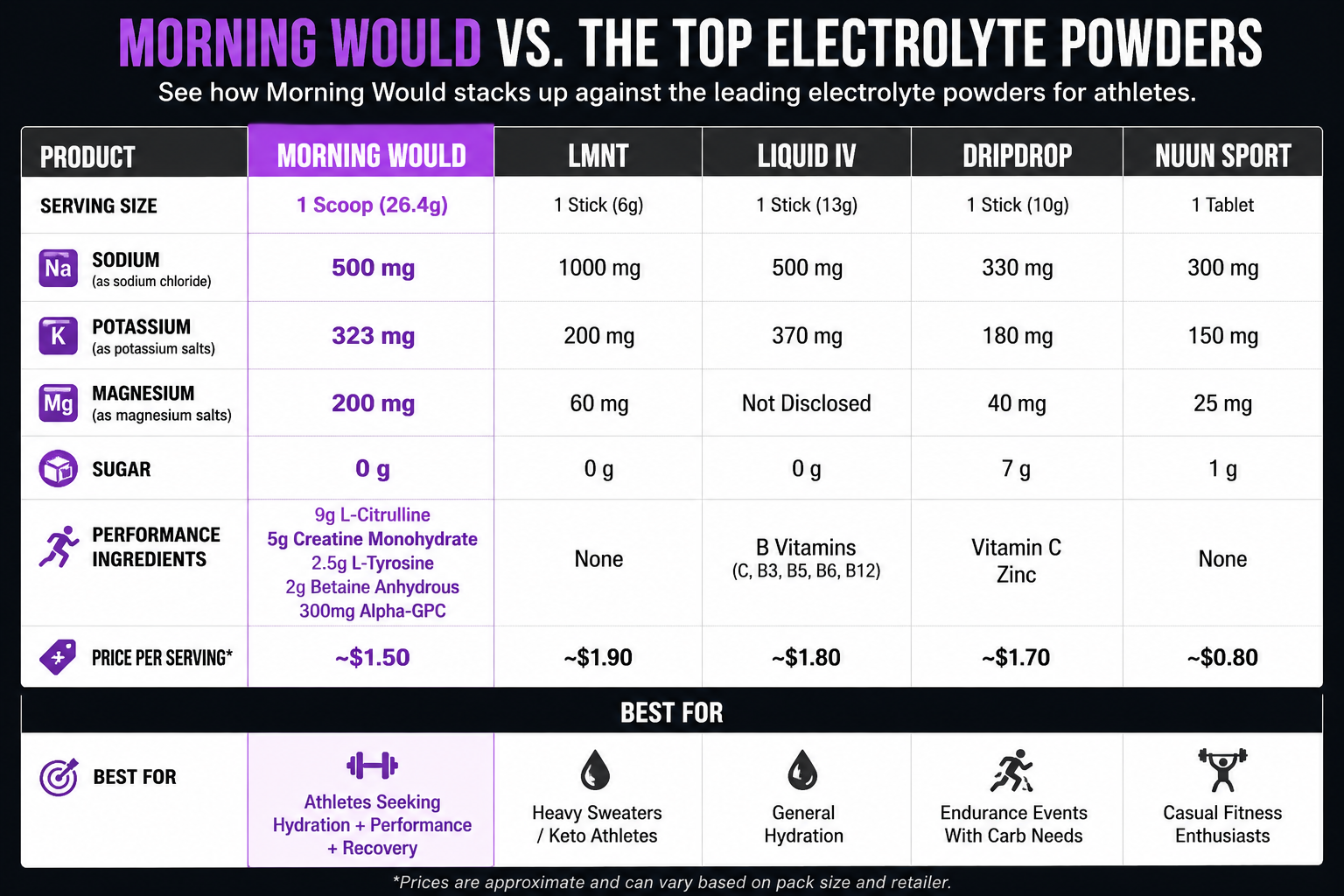
Most electrolyte powders solve only one problem: replacing minerals lost through sweat.
Morning Would does that while also addressing the physiological demands of athletic performance.
Compared to LMNT, Liquid IV, DripDrop, and Nuun, Morning Would delivers:
- More magnesium than any competitor in this comparison
- More potassium than LMNT, DripDrop, and Nuun
- Zero sugar
- 500 mg sodium, enough for most training sessions
- 9 grams of L-citrulline to support nitric oxide production and blood flow
- 5 grams of creatine monohydrate, the most studied performance supplement in sports nutrition [8]
- 2.5 grams of tyrosine to support focus under fatigue
- 2 grams of betaine anhydrous for power output
- 300 mg Alpha-GPC for cognitive performance
The result is that Morning Would functions as both an electrolyte powder and a comprehensive performance formula.
While LMNT focuses almost exclusively on sodium replacement and Liquid IV primarily on hydration, Morning Would combines hydration, performance, recovery, and mental focus in a single serving.
Morning Would Ingredient Breakdown
Instead of simply replacing minerals lost through sweat, Morning Would combines electrolytes with several of the most extensively researched performance-enhancing ingredients in sports nutrition.
Let’s examine what each ingredient contributes.
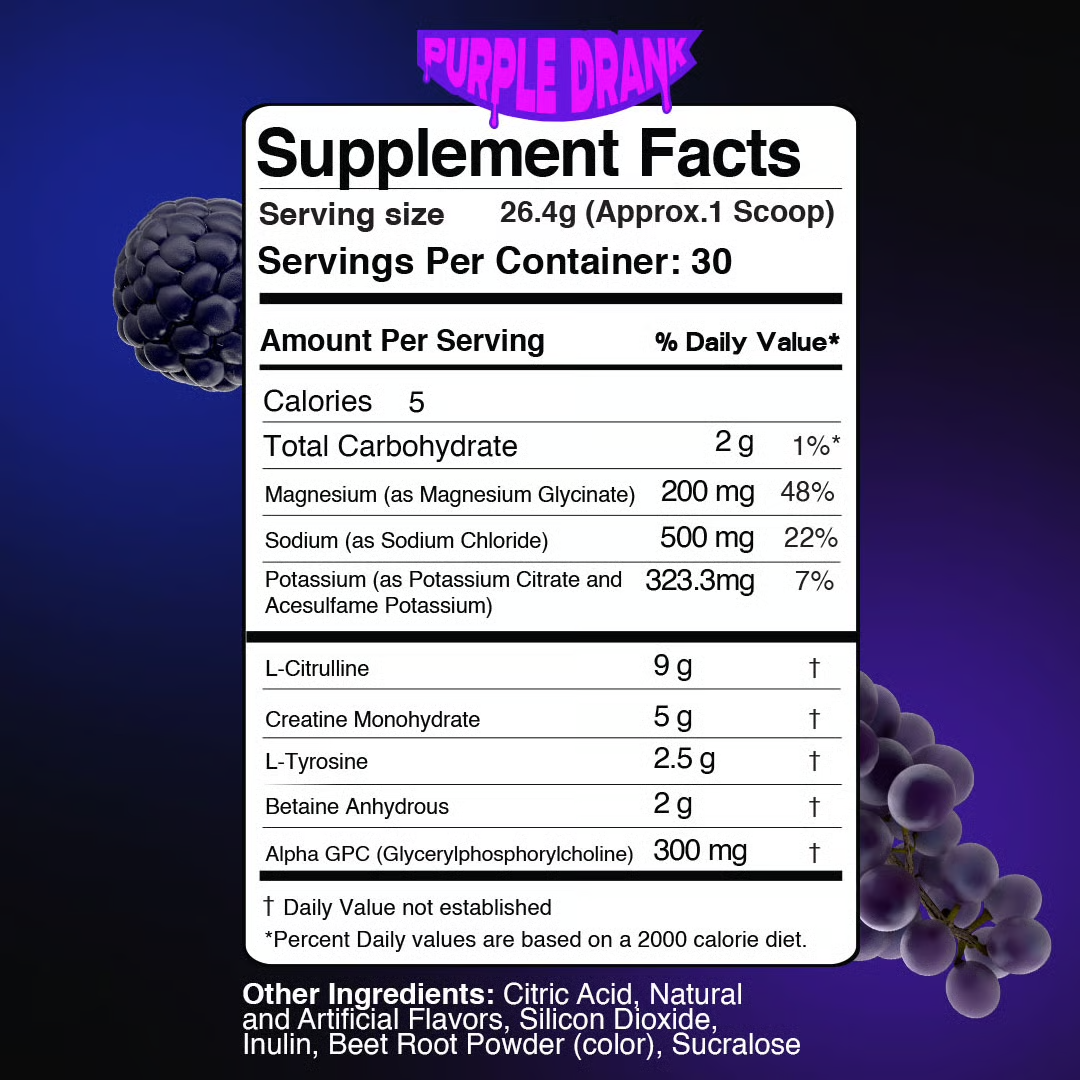
Sodium (500 mg)
Sodium is the most important ingredient for electrolyte powders—and it’s not even close.
Research shows athletes can lose anywhere from 200 to more than 2,000 milligrams of sodium per liter of sweat. During long training sessions, intense conditioning workouts, sparring sessions, or competitions in hot weather, total sodium losses can easily exceed 1,000 milligrams per hour. [3]
Morning Would provides 500 milligrams of sodium per serving—enough to meaningfully support hydration for most training sessions without reaching the extremely high levels found in products designed specifically for endurance events and heavy sweaters. [13][14]
Potassium (323 mg)
Morning Would provides 323 milligrams of potassium per serving, a higher amount than many popular electrolyte products.
Combined with sodium, potassium helps maintain proper hydration while supporting muscular and cardiovascular performance. [14]
Magnesium (200 mg)
This is where Morning Would stands out.
With 200 milligrams of magnesium per serving, it contains substantially more magnesium than many competing electrolyte powders.
This puts Morning Would in a class of its own.
L-Citrulline (9 grams)
L-citrulline is one of the most effective ingredients available for increasing nitric oxide production.
Nitric oxide helps relax blood vessels, improving blood flow and nutrient delivery to working muscles. [7]
Research has shown citrulline supplementation can improve muscular endurance, increase training volume, reduce perceived exertion, and decrease post-exercise muscle soreness. [7]
Many pre-workout supplements contain 6 to 8 grams of citrulline.
Morning Would provides 9 grams, placing it firmly within the evidence-based range used in performance research. [7]
Creatine Monohydrate (5 grams)
If there is a gold standard performance supplement, it’s creatine monohydrate.
Few ingredients in sports nutrition have been studied more extensively.
Research consistently shows creatine supplementation improves strength, power output, sprint performance, training capacity, and lean muscle mass development. [8]
Creatine works by increasing phosphocreatine stores within muscle tissue, allowing athletes to regenerate ATP more rapidly during high-intensity efforts. [8]
Morning Would provides 5 grams of creatine monohydrate per serving, which matches the standard daily dose used in most research studies and for stand-alone creatine supplementation. [8]
This means that Morning Would is not only one of the best electrolyte products on the market, but you can also get your daily dose of creatine while you’re at it.
L-Tyrosine (2.5 grams)
Physical performance isn’t only about muscles.
Mental performance matters too.
L-tyrosine is an amino acid that serves as a precursor to dopamine and norepinephrine, neurotransmitters involved in motivation, focus, attention, and stress resilience. [9]
Research suggests tyrosine supplementation may help preserve cognitive performance during physically and mentally demanding situations, particularly when fatigue begins to accumulate. [9]
Betaine Anhydrous (2 grams)
Betaine is one of the most overlooked performance ingredients in sports nutrition.
You may know it as TMG or Trimethylglycine.
Research suggests betaine may improve power output, muscular endurance, work capacity, and body composition when combined with resistance training. It may improve the body’s ability to generate force during repeated high-intensity efforts. [10]
But it doesn’t just stop there. It turns out that betaine is also a powerful ingredient to add to an electrolyte powder because it amplifies the effect of electrolyte replacement. [11]
Morning Would provides 2 grams of betaine anhydrous, a dosage consistent with amounts commonly used in performance studies and the dosage that many stand-alone betaine supplements contain. [10]
Alpha-GPC (300 mg)
Alpha-GPC is included for one primary reason: performance starts in the nervous system.
Alpha-GPC increases the availability of choline, which the body uses to produce acetylcholine—a neurotransmitter involved in attention, focus, learning, and muscle contraction. [12]
Several studies have found Alpha-GPC supplementation may improve power output and cognitive performance. [12]
Athletes often describe the effect as enhanced focus, improved mind-muscle connection, and greater readiness to perform.
At 300 milligrams per serving, Morning Would provides a meaningful dose capable of supporting both mental and physical aspects of athletic performance. [12]
The addition of this ingredient means that Morning Would functions as both an electrolyte powder and a pre-workout.
What makes Morning Would Unique
Most electrolyte powders focus on replacing what you lose.
Morning Would does that while also supporting the systems responsible for athletic performance.
The formula provides meaningful amounts of sodium, potassium, and magnesium to support hydration while including evidence-based doses of citrulline, creatine, tyrosine, betaine, and Alpha-GPC to support endurance, strength, recovery, blood flow, and mental performance [7][8][9][10][12].
That’s why it stands out not merely as an electrolyte powder, but as a complete athletic performance formula.
How I Use Morning Would
I’ve experimented with just about every hydration strategy imaginable over the years.
As a boxer, I’ve had to think about hydration differently than most athletes.
A hard sparring session can leave me several pounds lighter than when I started. Add running, strength training, conditioning work, and weight management, and proper hydration becomes a performance issue—not just a comfort issue.
Fortunately, I competed in the heavyweight division, so I’ve never had to think about cutting weight, but hydration is always on my mind because I want to perform at my best.
That’s why I like Morning Would. It doesn’t just replace electrolytes. It also contains ingredients that support performance, recovery, and mental focus.
Here’s how I would use it.
Before Training
This is my preferred approach.
If I’m lifting weights, running intervals, sparring, or doing a hard conditioning session, I’ll drink Morning Would about 30 to 60 minutes beforehand.
This timing window not only ensures I start training hydrated, but it also makes sure I don’t feel a cramp from having extra liquid on my stomach while trying to perform high impact movements.
Drinking 30-60 minutes before also gives the ingredients time to start working before my training starts.
During Long Training Sessions
If I’m doing a particularly long session in the heat, I can also see value in drinking it during training.
While training sessions are typically 2 hours, I have had times where I’m in the gym for up to 4 hours. That type of training means I’m losing a lot of water and, as we’ve discussed, it also means I’m losing a lot of electrolytes.
And this length of time for boxers is relatively unusual. Athletes in other disciplines have much longer training and competition demands. For example.
- Runners
- Cyclists
- Football players
- Wrestlers
- Anyone training outdoors during the summer
When you’re sweating heavily for hours, replacing electrolytes becomes increasingly important.
After Training
Post-workout is another good option.
After a hard session, your body is trying to restore fluid balance and recover from the stress of training.
The electrolytes help replace what was lost through sweat, while the creatine, magnesium, and other ingredients continue supporting recovery.
Also, If someone prefers to train fasted, this is probably the approach I’d recommend. Fasted training will cause you to dump even more water, as your glycogen stores are more readily depleted.
On Rest Days
One thing many athletes forget is that hydration doesn’t stop mattering when training ends.
If you sweat heavily, spend time in the sauna, work outdoors, or simply live in a hot climate, maintaining electrolyte balance is an everyday concern.
There’s also the creatine factor.
Research consistently shows that daily creatine intake matters more than timing.
Since Morning Would provides a full 5-gram serving of creatine monohydrate, using it consistently—even on rest days—can help maintain saturated creatine stores.
My Recommendation
If you asked me for the single best way to use Morning Would, I’d tell you to drink it about 30 to 60 minutes before training.
That’s when you’ll benefit from the hydration support, electrolyte replacement, blood-flow enhancement, cognitive support, and performance ingredients all at the same time.
Could you use it during or after training? Absolutely.
But if your goal is maximizing performance, pre-workout is where I think Morning Would shines.
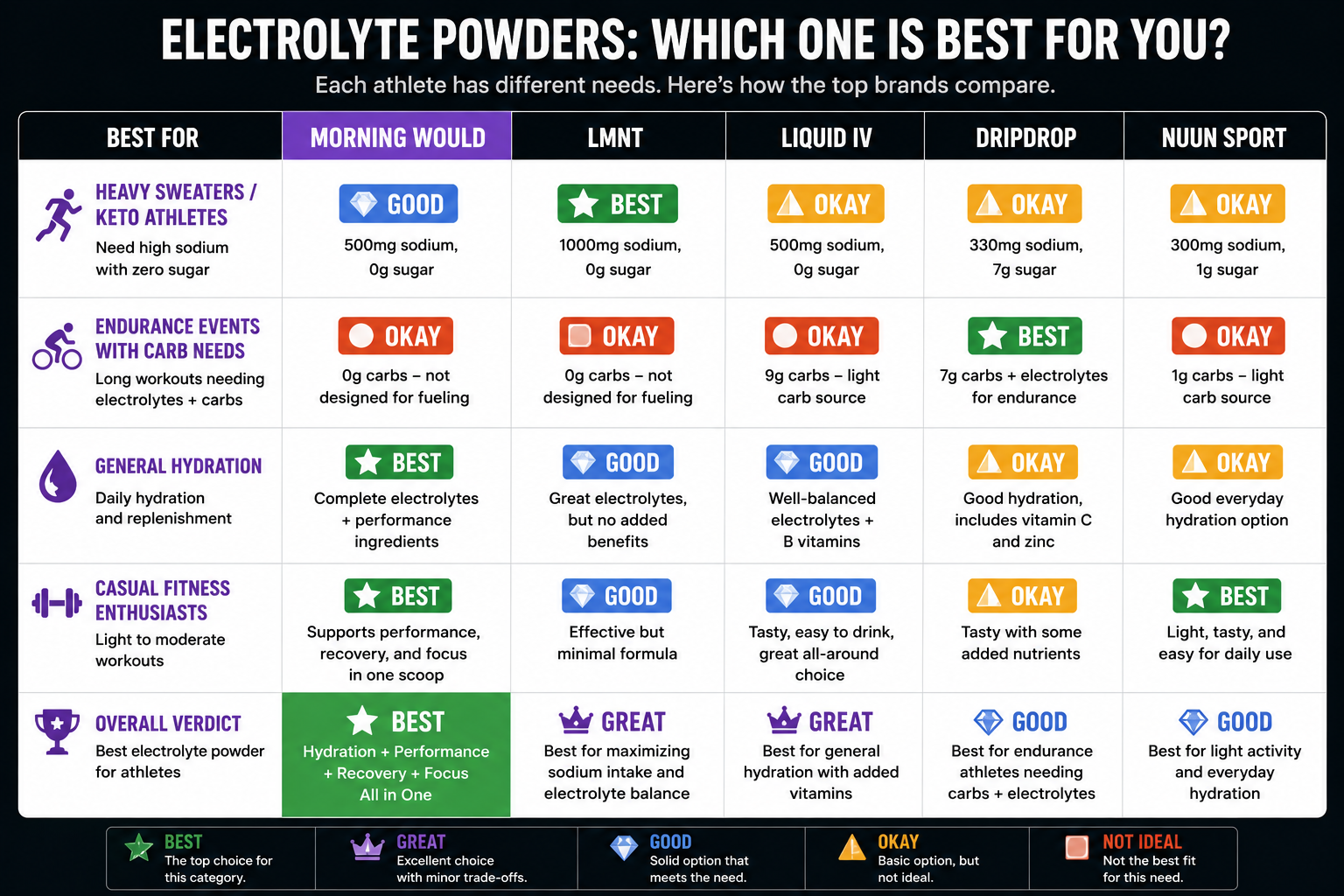
Who Shouldn’t Use Morning Would?
No supplement is the right fit for everyone. Anyone who tells you otherwise is just trying to make a buck off of you, without consideration for how it fits your specific needs.
While Morning Would is my personal top choice, and I recommend it for for most athletes, there are a few situations where another electrolyte powder may be a better option.
Athletes Who Need Extremely High Sodium Intake
If you’re a heavy sweater, endurance athlete, or someone who regularly trains for several hours in hot conditions, you may need more sodium than Morning Would provides.
A single serving contains 500 mg of sodium, which is sufficient for most training sessions.
However, athletes losing 1,000 to 2,000 mg of sodium per hour may benefit from a higher-sodium product such as LMNT or may need multiple servings throughout the day.
Athletes Looking Only for Electrolytes
While I don’t understand why anyone wouldn’t want the added benefits of the other ingredients, I’m sure there are situations where an athlete is only looking for electrolyte support.
Morning Would is designed as a performance formula, not merely an electrolyte supplement.
If you’re specifically looking for a basic electrolyte product with no additional performance ingredients, a simpler formula may better suit your needs.
Athletes Training Close to Bedtime
Morning Would doesn’t contain caffeine, but several of its ingredients are specifically included to enhance focus, drive, and training performance.
For example, Alpha-GPC has been shown to increase acetylcholine levels, a neurotransmitter involved in attention, learning, and muscle contraction. [12] Many athletes report feeling more mentally engaged and focused during training after taking it.
L-Tyrosine serves as a precursor to dopamine and norepinephrine, neurotransmitters involved in motivation, alertness, and the ability to perform under stress. [9] Research suggests tyrosine supplementation may help maintain cognitive performance during physically and mentally demanding situations. [9]
Combined with performance-enhancing ingredients such as citrulline, creatine, and betaine—which can improve blood flow, muscular endurance, and training output—Morning Would is designed to help athletes train harder and perform better. [7][8][10]
As a result, some athletes may find it better suited for morning or afternoon workouts than sessions performed immediately before bed.
While it won’t affect everyone the same way, those who are particularly sensitive to ingredients that enhance focus and mental drive may prefer to avoid taking it late in the evening.
Casual Exercisers Who Rarely Sweat
If your primary activity consists of light walks, easy yoga sessions, or short workouts in climate-controlled environments, you may not need a comprehensive hydration and performance formula.
For these individuals, water and a balanced diet are often sufficient to maintain hydration status.
Who Is Morning Would Best For?
Morning Would shines for athletes who want more than hydration alone.
It’s particularly well-suited for:
- Strength athletes
- Boxers and combat sport athletes
- CrossFit athletes
- Team sport athletes
- Runners and endurance athletes
- Lifters training in hot environments
- Anyone who wants hydration, recovery, and performance support from a single product
For most athletes, that’s a combination that’s difficult to find in a traditional electrolyte powder.
If this review was helpful, I’d love for you to grab a bottle of Morning Would here at my affiliate link.
References
[1] American College of Sports Medicine; Sawka MN, Burke LM, Eichner ER, Maughan RJ, Montain SJ, Stachenfeld NS. American College of Sports Medicine position stand. Exercise and fluid replacement. Med Sci Sports Exerc. 2007 Feb;39(2):377-90. doi: 10.1249/mss.0b013e31802ca597. PMID: 17277604.
[2] Jetton AM, Lawrence MM, Meucci M, Haines TL, Collier SR, Morris DM, Utter AC. Dehydration and acute weight gain in mixed martial arts fighters before competition. J Strength Cond Res. 2013 May;27(5):1322-6. doi: 10.1519/JSC.0b013e31828a1e91. PMID: 23439336.
[3] Baker LB. Sweat Testing Methodology in the Field: Challenges and Best Practices. https://www.gssiweb.org/sports-science-exchange/article/sse-161-sweat-testing-methodology-in-the-field-challenges-and-best-practices
[4] National Institutes of Health Office of Dietary Supplements. Magnesium Fact Sheet for Health Professionals. https://ods.od.nih.gov/factsheets/Magnesium-HealthProfessional/
[5] Rosanoff A, Weaver CM, Rude RK. Suboptimal magnesium status in the United States: are the health consequences underestimated? Nutr Rev. 2012 Mar;70(3):153-64. doi: 10.1111/j.1753-4887.2011.00465.x. Epub 2012 Feb 15. PMID: 22364157.
[6] Schwellnus MP. Cause of exercise associated muscle cramps (EAMC)—altered neuromuscular control, dehydration or electrolyte depletion? Br J Sports Med. 2009 Jun;43(6):401-8. doi: 10.1136/bjsm.2008.050401. Epub 2008 Nov 3. PMID: 18981039.
[7] Kerksick CM, Wilborn CD, Roberts MD, Smith-Ryan A, Kleiner SM, Jäger R, Collins R, Cooke M, Davis JN, Galvan E, Greenwood M, Lowery LM, Wildman R, Antonio J, Kreider RB. ISSN exercise & sports nutrition review update: research & recommendations. J Int Soc Sports Nutr. 2018 Aug 1;15(1):38. doi: 10.1186/s12970-018-0242-y. PMID: 30068354; PMCID: PMC6090881.
[8] Kreider RB, Kalman DS, Antonio J, Ziegenfuss TN, Wildman R, Collins R, Candow DG, Kleiner SM, Almada AL, Lopez HL. International Society of Sports Nutrition position stand: safety and efficacy of creatine supplementation in exercise, sport, and medicine. J Int Soc Sports Nutr. 2017 Jun 13;14:18. doi: 10.1186/s12970-017-0173-z. PMID: 28615996; PMCID: PMC5469049.
[9] Jongkees BJ, Hommel B, Kühn S, Colzato LS. Effect of tyrosine supplementation on clinical and healthy populations under stress or cognitive demands—A review. J Psychiatr Res. 2015 Nov;70:50-7. doi: 10.1016/j.jpsychires.2015.08.014. Epub 2015 Aug 25. PMID: 26424423.
[10] Cholewa JM, Guimarães-Ferreira L, Zanchi NE. Effects of betaine on performance and body composition: a review of recent findings and potential mechanisms. Amino Acids. 2014 Aug;46(8):1785-93. doi: 10.1007/s00726-014-1748-5. Epub 2014 Apr 24. PMID: 24760587.
[11] Craig SA. Betaine in human nutrition. Am J Clin Nutr. 2004 Sep;80(3):539-49. doi: 10.1093/ajcn/80.3.539. PMID: 15321791.
[12] Bellar D, LeBlanc NR, Campbell B. The effect of 6 days of alpha glycerylphosphorylcholine on isometric strength. J Int Soc Sports Nutr. 2015 Nov 17;12:42. doi: 10.1186/s12970-015-0103-x. PMID: 26582972; PMCID: PMC4650143.
[13] McDermott BP, Anderson SA, Armstrong LE, Casa DJ, Cheuvront SN, Cooper L, Kenney WL, O’Connor FG, Roberts WO. National Athletic Trainers’ Association Position Statement: Fluid Replacement for the Physically Active. J Athl Train. 2017 Sep;52(9):877-895. doi: 10.4085/1062-6050-52.9.02. PMID: 28985128; PMCID: PMC5634236.
[14] Institute of Medicine (US) Panel on Dietary Reference Intakes for Electrolytes and Water. Dietary Reference Intakes for Water, Potassium, Sodium, Chloride, and Sulfate. Washington, DC: National Academies Press; 2005. https://www.nationalacademies.org/projects/HMD-FNB-19-P-139
[15]Thomas DT, Erdman KA, Burke LM. Position of the Academy of Nutrition and Dietetics, Dietitians of Canada, and the American College of Sports Medicine: Nutrition and Athletic Performance. J Acad Nutr Diet. 2016 Mar;116(3):501-528. doi: 10.1016/j.jand.2015.12.006. Erratum in: J Acad Nutr Diet. 2017 Jan;117(1):146. doi: 10.1016/j.jand.2016.11.008. PMID: 26920240.