Why Yapper Might Be the Healthiest Energy Drink on the Market (Without Making You Feel Cracked Out)

The Problem With Most Energy Drinks
Most energy drinks are designed around one idea:
Make you feel something immediately.
That’s why so many of them are loaded with massive doses of caffeine, artificial sweeteners, mystery “performance blends,” and enough stimulants to make you feel like you could outrun a crackhead on meth.
And to be fair, they work—which is great news if you ever have fight a crackhead.
You open a can of Bang, Ghost, or even a large Celsius, and within 15 minutes your ready to go.
Your heart rate skyrockets, your thoughts speed up, you start moving around like you’re on coke.
The problem is that most people—unless they need to stay up late (which I don’t recommend)—don’t actually need this level of stimulation.
They need sustainable energy. Not a super intense high that stresses their heart.
They need to feel awake without feeling cracked out.
They want focus without jitters.
They want something that helps them stay mentally engaged and socially present instead of locked into a weird overstimulated tunnel vision where they want to do something, but can’t focus long enough to actually get something done.
That’s where Yapper stands out.
Technically, it’s an energy drink.
It contains all the usual suspects: caffeine, nootropics, adaptogens, and ingredients commonly found in functional beverages.
But after going through multiple cases of the stuff, I don’t think “energy drink” is really the best category for it.
Yapper feels more like a social-performance drink.
If you insist on calling it an energy drink, it’s better to think of it as a performance energy drink. It might legitimately be the healthiest energy drink you can take.
It gives you energy, but the goal isn’t to tweak you out to maximum levels of stimulation.
The formula is clearly designed around calm focus, verbal fluency, social ease, and sustained engagement. Instead of making you feel intensely wired, it makes you feel more “on.”
That’s a subtle but key difference, and part of what makes Yapper a healthy energy drink.
Because most energy drinks are optimized for intensity. Yapper is optimized for functionality.
And after spending years experimenting with everything from coffee and conventional nootropics to nicotine gum and kratom—not to mention spending over a decade sober—I can honestly say Yapper occupies a very unique lane.
It’s one of the few drinks I’ve used that actually makes socializing, writing, and deep work feel easier without also making me feel chemically overstimulated.
That’s why I think Yapper has a legitimate argument for being one of the healthiest energy drinks currently on the market—not because it’s some magical wellness elixir, but because it solves the biggest problem with modern energy drinks:
Most of them push you too hard.
Yapper doesn’t.
What Makes an Energy Drink “Healthy”?
The phrase “healthy energy drink” is a little deceptive because, technically speaking, all energy drinks are artificial ways of manipulating your energy levels, which is not the healthiest thing in the world to put your body through.
You’re consuming stimulants to alter how your nervous system functions. There’s no getting around that.
But there’s a massive difference between a drink that gives you smooth, sustainable energy and one that feels like you activated fight-or-flight mode because you just did an 8-ball.
Most traditional energy drinks are built around a very aggressive stimulation model. The formula usually looks something like this:
- very high caffeine
- massive sweetness
- artificial flavoring
- synthetic additives
- and ingredients designed to maximize intensity rather than usability
The goal is to make you feel the product immediately.
That’s why so many people describe conventional energy drinks the same way:
- jittery
- anxious
- shaky
- heart racing
- locked in for an hour
- exhausted afterward
Ironically, this often makes them worse at exactly the things people actually need energy for.
If you’re trying to socialize or focus, being overstimulated can make you talk too fast, interrupt people, disrupt your focus, or feel just too wound up.
If you’re trying to work, too much stimulation can push you into a weird hyperfocus where you’re technically productive, but mentally chaotic. You’re busy, but you aren’t getting anything done.
That’s why I think the healthiest energy drinks aren’t necessarily the strongest ones.
The healthiest energy drinks are the ones that create the least physiological and psychological friction while still helping you perform better.
A good formula should ideally:
- improve alertness
- reduce fatigue
- support cognitive performance
- avoid massive blood sugar spikes
- minimize jitters and crashes
- and be sustainable enough that you could realistically use it regularly, perhaps even multiple times a day
That last point matters a lot.
A drink isn’t “healthy” if using it consistently makes you feel progressively worse over time or it disrupts your ability to relax in the evening, even if you had it at noon.
This is one of the biggest differences between Yapper and more aggressive energy drinks. Yapper’s formula is clearly built around moderation and balance rather than brute force stimulation.
The caffeine dose is moderate.
The nootropics are moderate.
Even the sugar content is just enough to give it taste..
It’s a subtle formula, with nothing in excess to overwhelm your nervous system. Instead, the ingredients work together to create a smoother and more controlled experience.
And honestly, that’s probably the biggest thing most people misunderstand about energy optimization:
More stimulation is not always better.
Very often, the healthiest form of energy is the kind that barely feels forced at all.
What Is Yapper?
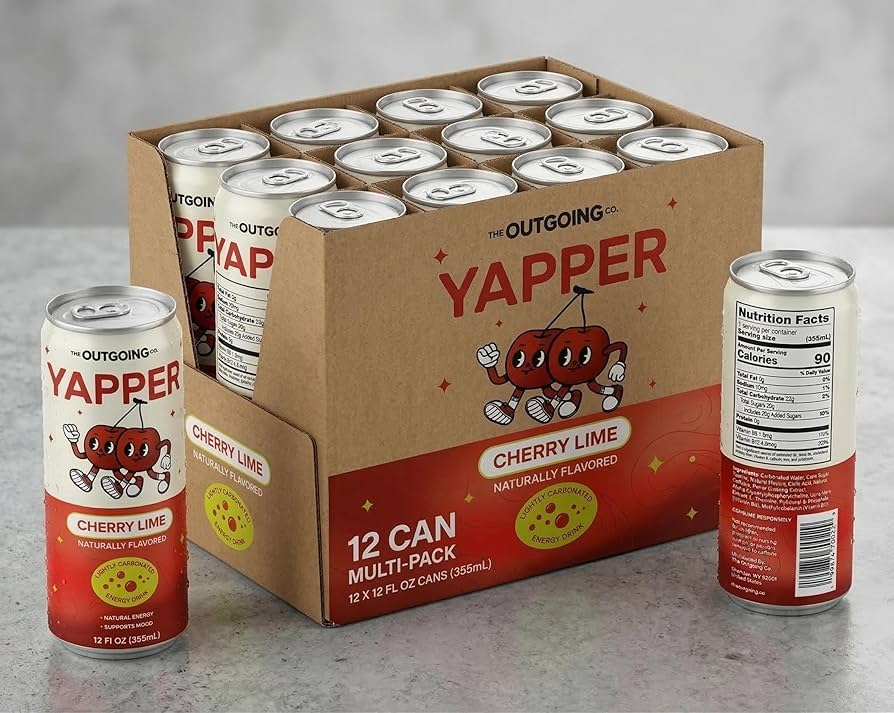
Yapper is technically an energy drink, but after drinking multiple cases of it, I don’t think that description fully captures what it actually does.
If you hand someone a can and tell them it’s an “energy drink,” they’re going to expect one of two things:
Either:
- a gym-focused stimulant bomb like Bang or Ghost
Or:
- something closer to Red Bull or Celsius that primarily exists to wake you up
Yapper doesn’t really fit either category.
The better way to think about it is as a hybrid between:
- a lightweight energy drink
- a nootropic beverage
- and an alcohol alternative
That combination sounds strange on paper, but once you drink it, the positioning makes sense almost immediately.
The goal of Yapper doesn’t seem to be maximum physical energy.
It’s trying to create a very specific psychological state:
- relaxed alertness
- verbal sharpness
- social engagement
- calm focus
- and sustained mental presence
That’s a very different target than most energy drinks aim for.
Most energy drinks are built for intensity:
- hard workouts
- staying awake at all costs
- partying
- grinding through exhaustion
- or feeling hyperstimulated as quickly as possible
Yapper is restrained by comparison.
The result is a drink that makes you feel more mentally “online” without feeling like your nervous system is redlining.
That’s probably why the drink works so well for social engagement.
A lot of highly caffeinated drinks make you energetic but not necessarily pleasant to interact with. You become intensely focused on whatever is happening in your own head. Great for pre-workout aggression. Not always great for conversation.
Yapper has almost the opposite effect.
It increases engagement without creating that internally frantic feeling. You feel more interested in talking, more present in conversations, and more mentally fluid without becoming overstimulated.
As someone who’s been sober since 2013, this was probably the most interesting part of the experience for me.
One of the hardest parts about long-term sobriety isn’t avoiding alcohol itself. After enough time passes, that part becomes relatively easy.
The harder part is learning how to reduce social friction without chemical assistance.
Alcohol lowers inhibition, quiets self-consciousness, and makes socializing feel effortless. The problem is that it also destroys judgment, wrecks sleep, impairs recovery, and can completely derail your life if you’re wired the wrong way.
Yapper obviously doesn’t replicate alcohol. You are not intoxicated. You are not impaired.
But it does recreate a small part of what people actually seek from alcohol:
- easier engagement
- reduced mental resistance
- conversational flow
- and the ability to feel more present socially
That’s what makes it unique.
It’s less of a “high-performance” energy drink and more of a “functional social and cognitive performance” drink.
And frankly, there aren’t many products on the market occupying that lane right now.
Yapper Ingredients Breakdown
Nothing is dosed aggressively enough to dominate the entire drink on its own. The ingredients work more like supporting pieces that create a combined effect:
- moderate caffeine for alertness
- l-theanine for calmness
- taurine for smoother nervous system regulation
- nootropics for cognitive sharpness
- adaptogens for stress resilience
The result feels less like getting hit with a wall of energy and more like gradually becoming mentally “locked in.”
Another thing I appreciate about the formula is that it avoids the trap many “healthy” drinks fall into: trying to market every ingredient as a miracle compound.
Yapper’s ingredient stack is actually relatively modest compared to hardcore nootropic supplements.
For example:
- The Alpha GPC dose is supportive rather than extreme
- The Lion’s Mane dose is more maintenance-oriented than performance-oriented
- The caffeine dose is noticeable but controlled
That makes the drink sustainable.
You could realistically drink Yapper regularly without feeling like you’re stress-testing your adrenal system every day.
And that’s probably the biggest thing that separates a genuinely functional energy drink from a novelty stimulant product:
A functional drink should improve your ability to perform consistently.
Not just make you feel temporarily superhuman before wrecking your nervous system an hour later.
How Yapper’s Ingredients Support Energy, Focus, and Overall Health
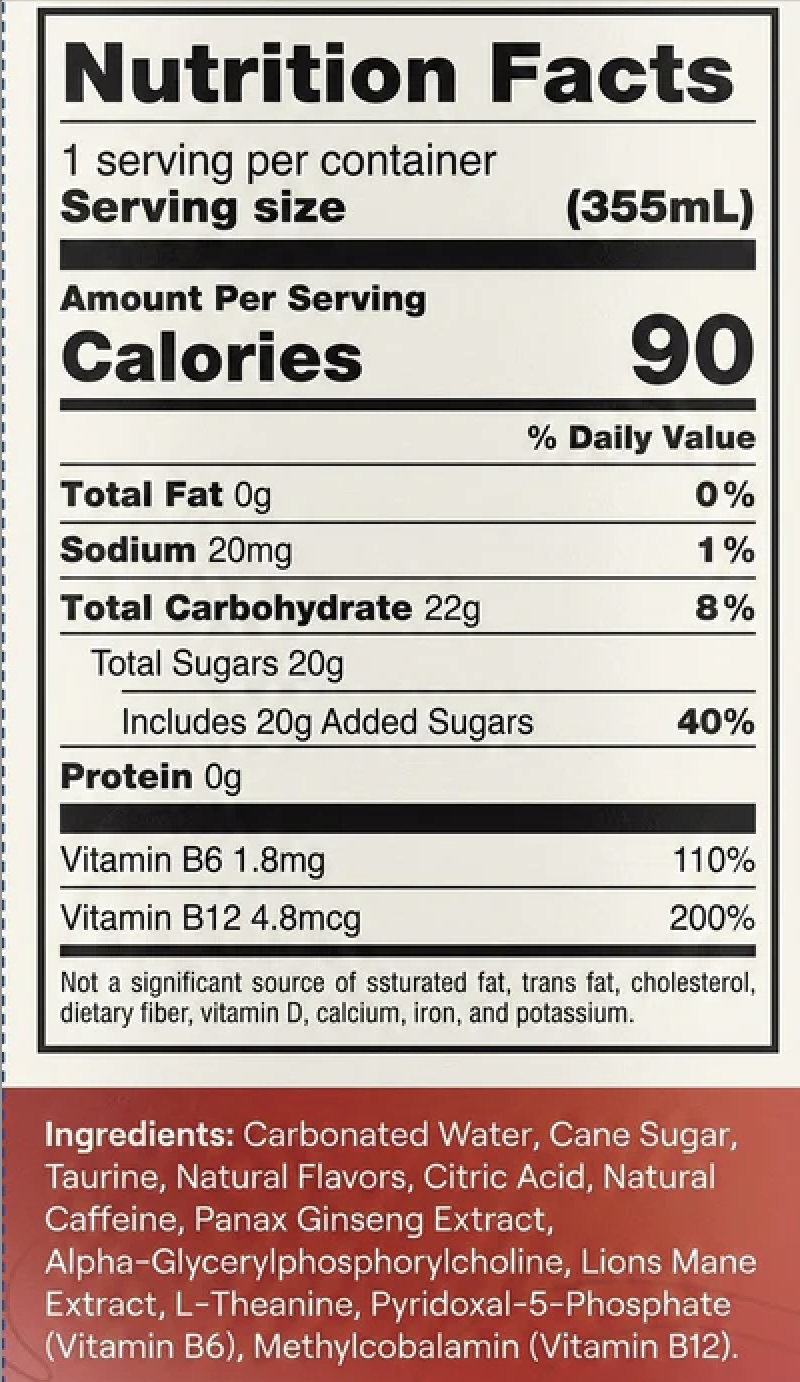
One of the biggest reasons I think Yapper deserves to be in the conversation for the healthiest energy drink is that the formula isn’t built purely around stimulation.
A lot of energy drinks are essentially just caffeine-delivery systems with enough flavoring and sweetness added to make the experience tolerable. The goal is immediate intensity, not long-term usability.
Yapper feels different because nearly every ingredient contributes to either:
- smoother energy
- cognitive performance
- stress regulation
- hydration
- or nervous system support
That doesn’t magically turn it into a health supplement, but it does make it a much more balanced formula than the average gas-station energy drink.
My Personal Experience With Yapper
The strongest effect I noticed from Yapper wasn’t physical energy. It was reduced mental resistance.
I noticed this most clearly in two areas of my life: writing and social situations.
As someone who writes professionally, a large part of my work depends on verbal fluency and sustained cognitive engagement. Often the hardest part of writing isn’t generating ideas. It’s overcoming the invisible mental friction involved in fully locking into the process. Yapper seemed to reduce that friction.
Not in some exaggerated “limitless pill” kind of way where suddenly I became superhuman. The effect is much subtler than that. It simply became easier to stay mentally engaged for longer periods without feeling tense, mentally scattered, or drained.
I noticed something similar socially. Even though I don’t struggle with social anxiety, I often find myself mentally split during social events. Part of me is present, but another part of me is thinking about work, future essays, business ideas, or the next thing I need to build.
Yapper didn’t magically erase that tendency, but it did make it easier to settle into the moment and actually participate instead of mentally hovering outside of it.
And honestly, I think that’s the best way to describe the drink overall: it reduces friction without reducing awareness.
You remain completely sober and mentally sharp, but engaging with people feels slightly more natural and less mentally effortful. That’s not something I can say about most energy drinks.
What Yapper Tastes Like
Cherry Lime Flavor Review
One of the biggest surprises with Yapper is that it actually tastes good without falling into the extremes most energy drinks tend to choose between.
It doesn’t taste like syrupy liquid candy, but it also doesn’t taste like a watered-down “healthy alternative” trying desperately to convince you that flavor is optional.
The cherry lime flavor lands in a very balanced middle ground. It tastes noticeably more natural than most mainstream energy drinks while still being flavorful enough to feel satisfying. There’s enough sweetness to make it enjoyable, but not so much that it becomes overwhelming or exhausting halfway through the can.
The best comparison I can make is that it drinks more like an actual beverage someone would casually enjoy than something engineered purely to deliver caffeine as aggressively as possible.
Importantly, it doesn’t have that medicinal “functional drink” flavor profile that many healthier beverages fall into. A lot of nootropic or wellness drinks taste like compromise. Yapper doesn’t.
Why Sugar Actually Helps Here
I think one reason Yapper tastes better than many “healthy” energy drinks is that it doesn’t completely eliminate sugar.
Many zero-sugar drinks rely heavily on artificial sweeteners to deliver sweetness without calories. The result is often a strange metallic aftertaste, an overly sharp sweetness, or that weird coating sensation some sugar-free drinks leave behind.
Yapper avoids that almost entirely because the sugar content creates a much smoother and more natural drinking experience.
The sweetness feels integrated into the flavor rather than artificially layered on top of it. It improves mouthfeel, rounds out the cherry-lime profile, and prevents the drink from tasting chemically aggressive.
Honestly, it reminds me more of lightly sweetened natural lemonade than a conventional energy drink.
No Harsh Energy Drink Aftertaste
Most energy drinks leave behind what I can only describe as “battery acid aftertaste.”
You know exactly what I mean.
There’s often an aggressively synthetic fruit flavor, a metallic finish, or a lingering chemical sharpness that makes you want water afterward.
Yapper doesn’t really have that problem.
The finish is surprisingly clean. Even though you can clearly tell it contains caffeine, it drinks much more like a lightly carbonated functional beverage than a traditional stimulant-heavy energy drink.
And honestly, I think that cleaner flavor contributes heavily to why the overall experience feels more balanced and less chemically aggressive than most products in the category.
Is Yapper Actually Healthy?
The Honest Answer
I think it’s important to be realistic here.
Yapper is still an energy drink. It contains caffeine, it contains sugar, and it is not a “health food.”
Simply adding nootropics and adaptogens to a beverage does not magically transform it into something equivalent to sleep, exercise, or proper nutrition.
But compared to most energy drinks on the market, I do think Yapper makes a legitimate case for being one of the healthier and more balanced options.
Instead of trying to push your body into overdrive, it focuses on sustainable energy, calm focus, social engagement, and smoother cognitive performance. The result feels much more usable in everyday life and much less likely to leave you anxious, shaky, or mentally fried afterward.
That doesn’t make it objectively “healthy” in the same way vegetables or sleep are healthy. But relative to the broader energy drink market, it’s clearly formulated with more balance and intentionality than the average can sitting in a gas station refrigerator.
And honestly, that may be the healthiest thing an energy drink can realistically aim for:
improving performance without making your nervous system pay for it afterward.
If this article made you curious about Yapper, you can order case here. I’ll get a small affiliate comission at no extra cost to you.