Raised By a Single Mother: The Psychological Effects No One Talks About

This essay tells my experience of being raised without my father around, how it affected me, and what I did to overcome it.
If you’re a single mom doing right, then you already know this ain’t about you. If you’re a single dad, the same thing applies—I just don’t have any personal experiences with single dads, and I keep my content within the realm of things I’ve experienced.
And as always, any statistics I use or research I cite in this essay—and there will be a few—I’ve included the links in the end so that you know I’m not just talking out of my ass.
What Are The Effects Of Being Raised By A Single Mother?
Being raised by a single mother does not automatically doom anyone to failure.
I need to say that first because people hear these conversations and immediately assume someone is attacking single mothers.
I’m not.
Single parenting is hard as hell.
But growing up with one parent—especially when the missing parent is largely absent—can create challenges that children often don’t recognize until adulthood.
Some of the most common effects can include:
- trust issues
- difficulty regulating emotions
- problems with relationships
- fear of rejection
- attachment issues
- hypervigilance
- low self-worth
- confusion around identity and boundaries
Not everyone experiences these.
And many people raised by single mothers become incredibly successful.
But these patterns show up often enough that we should be honest about them.
Because you can’t fix what you refuse to acknowledge.
Most—but not all—men are lying to save face
It’s become all the rage to bash single moms as horrible parents who are solely responsible for producing misfit children who—depending on the source you use—make up 50 to 70% of all drug users, high school dropouts, and prison inmates.
But despite the childhood euphemisms, babies aren’t delivered by a stork. Little ones don’t just come out of thin air. It takes a man AND a woman.
I used to be one of those guys who put all the blame for the growing single motherhood epidemic on women. I used to think, “She should have picked better.”
I used to think those things about my mom, too. And then I had a kid, and I went from being indifferent towards my father’s lack of presence in my life to being so angry that there were a few nights where I shed some man tears while rocking my son sleep.
I can’t imagine being out of my son’s life. You’d have to either end my life or put me in prison. I believe that if you made the life, that life is your responsibility.
Now, I’ve heard all the excuses about how “the courts are against fathers” and “the system keeps men away from their kids.” But here’s the reality:
- 90% of custody cases are decided via mediation, without a judge’s ruling. In 51% of those cases, both parents agree that mom should be the primary caregiver (Kaur, 2022).
- In the remaining 10% of cases where a judge rules, a father who is actively seeking custody receives it 70% of the time (Maged, Frankel, 1990).
- Judges have consistently shown a bias towards fathers by having higher standards for custody for the mother than the father (Maged, Frankel, 1990).
Let that sink in: 9 out of 10 custody arrangements are decided by the parents without a judge ever getting involved and, in half of them, fathers get custody. And now, 40% of states automatically award 50/50 custody unless there’s a good reason not to, like criminal charges, substance abuse, or chronic unemployment (Fifield, 2021; Micklin, n.d.).
So men, let’s be real - if a father is not in his child’s life, it’s rarely because the system kept him out. I don’t care if he and the mother don’t get along or if she makes it difficult. That’s his child, and it’s his responsibility.
Of course, “rarely” isn’t “never,” so if that’s you or you know someone who, despite fighting to be in their child’s life and having their life together, got no custody at all, that man is the exception—not the rule. Just make sure the story doesn’t involve the man giving up and letting her break the law by taking the kids somewhere.
In other words, men, you almost never have any reason not to be a part of your kid’s life.
I don’t care if you and the mother don’t get along or if she makes it difficult. If that pisses you off, there are plenty of essays and videos on the internet that will tell you that you aren’t the bad guy at all, and it’s all her fault.
Single parenting is hard, but it’s no excuse for bad parenting
My mom was a single mom.
Growing up, I never admitted this to anyone, even though it was obvious because my dad wasn’t around. I didn’t admit this to anyone, not because I was trying to deceive myself into a fairy tale of a two-parent household, but rather because I didn’t realize it myself.
See, I knew who my dad was. I saw him a few hours a year and even stayed with him for a week during 3 or 4 summers. But when I stayed with him, I never saw him, and when he came to visit in Pittsburgh, it was never to spend time with us—it was just to see his friends, and my sister and I tagged along.
I wasn’t really excited to see him when he did come around, so much as I was relieved to be out of my mom’s house for a few hours.
So I knew who my father was. I saw him, and he paid child support. He wasn’t a deadbeat who only functioned as a sperm donor—even though the money was dragged out of him by a court order.
I’m telling you this for transparency because I know there are many out there who had it much worse. Kids who never met their fathers. Kids whose fathers abused them and their mom and kept making money the street way, so they didn’t give a damn about a court order.
So even though I only saw my dad a few times a year, and I have no memories of my mom and dad ever living together or ever really being civil towards each other, I didn’t think of myself as a child of a single mother. However, my dad was such a non-factor in my life that my baby sister —who has the same father as me—started calling the dude my mom was dating “dad” because she didn’t know any better.
I was just old enough to know otherwise, and it messed me up to watch. I even tried to call him dad a few times, and I still remember it never feeling right. Even now, at 40 years old—more than 3 decades after the fact—I feel messed up thinking about even trying.
But you know what messed me up even more? That same sorry-ass dude my sister mistook for her biological father.
This dude used to put fierce beatings on us with all types of objects like plastic coat hangers and shoes. He beat my 3-year-old little sister so badly the homies on the block were looking for ass for weeks.
I was thinking about this memory while writing my memoir “Hard Lessons From The Hurt Business: Boxing and the Art of Life”, which you can pick up here. I wondered how common this type of abuse is at the hands of step-parents, and what I found was shocking.
When it comes to the death of a child at the hands of an adult, stepparents are only the second most common perpetrators. The mother herself is most frequently the murderer of a child, 2x more likely than the father.
When I shared that stat on Twitter, you had your typical smooth-brained idiots who overdosed on the red pill, saying that it’s something about female nature. I’m not saying that all women make good mothers, but I don’t buy that there’s something inherent in women that makes them more likely to end their own child.
This is obviously not an excuse, but as a single mom, there are no days off. Hell, there aren’t really days off with two parents, but at least there’s someone to pick up the slack when the other is sick, worn down, or just needs a break.
My wife is sick right now, so we’re technically a man down, but we’re still in the game. We can sub in and out. That’s not the case in a single-mom household.
After the stress of work, paying bills, and disciplining a kid who probably needs more of it because his father isn’t around, with no reprieve except for what is likely an extremely restless sleep, you snap.
The normally calm mom flips.
The mom who only yells puts, slaps her child.
The woman who only slaps beats him so badly that he can’t go to school without making up excuses for the bruises and the limp…
And so on…
I’m obviously not excusing hurting a child. I just need people to understand what many kids are suffering through—many of them silently, because they’re scared as hell to say something—in situations like this.
Because, as bad as that dude beat us, my mom easily beat us just as badly.
Childhood experiences become adult patterns
She already had a violent hair-trigger temper, so it was nothing to set her off, and between those beatings and the beatings at the hand of that asshole my sister confused for her father, I ended up pretty mistrustful of adults.
Actually, I didn’t really trust anyone. I still have trust issues to this day because in my formative years, I never bonded with any adult and developed any safe attachment to anyone in charge of me. This outcome isn’t uncommon for people who grow up in situations like this.
In psychology, there’s an idea called “attachment theory” that describes how we form relationships. We know that children who experience inconsistent care or abuse during their formative years (typically ages 0-5) often develop what’s called “disorganized attachment.”
These kids struggle to trust others, maintain healthy relationships, and regulate their emotions. This was me, and even now, with a strong relationship and a few close friendships, my natural state is distrust and skepticism of people—especially when they’re nice to me for no reason.
And this isn’t just psychology, which, to be honest, is a bit of a soft, subjective science. MRI brain scans show early childhood trauma changes the way the brain develops, and these patterns don’t just disappear when kids grow up.
It’s taken a lot of work to manage this, and I think I’m doing a good job, but this will always be part of me, and these changes are likely why.
When we experience trauma as young children, our brains adapt by remaining in a constant state of hypervigilance. At the center of this response is the amygdala, the brain’s fear-processing center, which becomes overactive in response to chronic trauma. This is the same part of the brain responsible for the “fight-or-flight” response, and the reaction to constant trauma makes you think everyone is attacking you for everything you do.
This hyperactivity creates a vicious cycle: the amygdala becomes increasingly sensitive to perceived threats, making it harder to regulate emotions and respond appropriately to stress. Even minor stressors can trigger intense fear, anxiety, or anger. Even now, my wife tells me that I sometimes see criticism where there isn’t any, and that’s a terrible trait because it makes people less willing to give you feedback, and without that, you can’t even get better.
The other problem with this dysregulation of emotion is that you don’t realize when your tone of voice is aggressive or confrontational. My sister got hit with this problem hard, and it’s cost her many job opportunities because her ability to regulate the emotional tone of her voice is shot—though fortunately, she’s done a lot of work on fixing this. Still, it will always be with her, like a sort of emotional herpes that you can only manage and never cure.
These neurological changes don’t just fade with time. Instead, they create a persistent pattern of heightened emotional responses and difficulty managing stress, often carrying these effects of childhood trauma well into adulthood. This leads nicely into another area I struggled with: healthy relationships later in life.
Mommy issues are as bad as daddy issues
In my early 20s, I was dating a girl who also had her fair share of dysfunctional traits as well, and during one of our frequent arguments, she said something truly profound that shook me to my core and made me think. She shouted out, “You know what your problem is? You ain’t ever seen a relationship before because your momma never had one. That’s why you can’t do shit right now.”
I ain’t even get mad at her. In fact, it snapped me out of my anger and made me think, because she was correct. Even a broken clock is right twice a day. I was the walking, talking embodiment of a red flag.
The only models of relationships I’d seen growing up were between my mom, her fights with my dad, and her abusive boyfriend, and an occasional man who’d only come over at night. By the time I’d gotten older and spent time around people whose parents were in loving marriages, I couldn’t really pick up anything.
There’s a lot of talk about girls having daddy issues—you know, when their father isn’t in their life and how his absence negatively affects the girl’s choice of men. But the way those issues affect men doesn’t get talked about nearly as much. But the effect is real, and a lot of men end up picking toxic women because they never had any guidance or role models for that.
Here I was, arguing with a woman who had a baby by another man that my dysfunctional mother had moved into her house because she was so excited about the prospect of grandkids that she didn’t accept the negative blood test, and I was so down bad that I was living in this toxic environment.
After I finally hustled up enough money to move out and leave that toxic wasteland behind, my mother had the balls to ask me if I wasn’t coming around as much because the girl was still living there.
The whole question just reaffirmed what I had come to believe growing up—my mother resented me the same way she resented my father.
You will never be good enough unless you’re worse
Because my mom had all this anger and frustration towards my father, her favorite insult was to tell me I was behaving just like him. That didn’t make me feel a certain way towards my father, but knowing how she felt about my dad, it made me think she felt a certain way towards me.
I obviously didn’t feel any type of love, approval, or acceptance from my dad either, since he wasn’t around to give it. So I ended up with the idea that people didn’t like me or really wanted to be my friend, despite any evidence to the contrary.
I spent most of my life not believing that people would ever come to any of my parties or social gatherings, so I never had them. I always felt like I was a burden on people, so I tried to avoid hanging out, but at the same time I was desperate for some kind of connection, so I had a bad habit of just showing up at people’s houses uninvited and staying until I was kicked out.
Now, I’m truly blessed because, against all odds and personality flaws, I ended up crossing paths with some truly amazing people as a teenager when I went to a high school across the city at a completely different socioeconomic level.
I’m friends with many of those people today—and their families—more than 2 decades out of high school. Many of them I no longer talk to. They all contributed to a small amount of healing that likely kept me from becoming another victim of my circumstances.
Any of those old friends who happen to be reading, who gave me a place to stay, a spot at your dinner table when I showed up unannounced, or a ride home to projects after dark, you know who you are, and from the bottom of my heart, I thank you.
Still, despite their kindness, making connections and trusting were difficult. I used to believe that people didn’t want to spend time with me unless there was something else in the background worth doing. For a while, for most of my adult life, that “something else to do” was alcohol.
I used alcohol as a way to bring people together, but I always took it too far because I was simultaneously numbing the fear of being rejected while trying to make myself into a likable guy—because I didn’t believe people could like me just for me—by being the life of the party.
This, of course, led to a vicious drinking problem, and it was in getting sober that I was able to deal with the pain that got me to that point.
The difference between being liked and being respected
Many of my problems started with being raised by a single mom, but there are two major things I did that helped me overcome them—both are challenging, but each for entirely different reasons.
The first thing I realized was that there’s a tremendous difference between being liked and being respected.
I always say that being liked and being respected look the same to people who aren’t used to being either. To really appreciate this and how it helped me, we have to define “respect.”
Being liked is comfortable. It’s warm. People smile at you, laugh at your jokes, and invite you places to have fun—that last part is key, and we’ll come back to it. But being liked often means being convenient—never disagreeing, always going with the flow, and letting others cross your boundaries just to keep the peace. Hell, it means never having any boundaries or real standards for yourself in the first place.
Because I learned that having boundaries meant getting an ass-whooping or cussed out, I spent a lot of my early life with no strong morals to stand on, and rarely standing up against wrong because I learned to fear consequences.
But respect? Respect is earned through hard choices. It’s what happens when you stand firm, even when it’s uncomfortable. When you say “no,” even though it might cost you a friend. This is when you choose what’s right over what’s easy.
I remember when I realized the stark difference between the two. Everyone knew me as the friend to hang out and get drunk with or go chase girls with. However, I was not the guy who got invited to family functions, even though many of my friends had treated me as family over the years. It was because my behavior and life revolved around being liked.
Being liked is a shallow, short-term comfort. Being respected is a deep and enduring way of life. When you focus on being likable, you’re more likely to do things that make you lose respect and have people stop liking you. Most importantly, if you have any type of conscience at all, you stop liking yourself.
When you start to carry yourself with respect, you learn that while people may not like you, you will always like the person you see in the mirror, and that matters more than anything. When you like and respect yourself, you stop engaging in self-destructive behavior.
This small change goes a long way. It doesn’t heal the wounds, but it stops them from bleeding, so you can start to heal.
Forgiveness is freedom from the past
The second thing I learned to do was forgive.
My mother died one year before my son was born. I still struggle with forgiving her and my father, but I know that I have to continue trying, or else I risk being consumed by anger and resentment. Avoiding this fate is why you practice forgiveness.
You don’t do it to make the other person feel better. You don’t even do it to make yourself feel better, though that’s often a benefit. You practice forgiveness so that past events lose their grip over your present emotions, so you don’t do something in the future that ruins your life.
Victims of childhood abuse are more likely to suffer adverse outcomes in the future for several reasons. So often, they are destitute, impoverished, or incarcerated because they were trying to fill an emotional void caused by growing up without receiving guidance, protection, love, and support.
Whether it be committing violent crimes or consuming addictive substances, these actions are motivated by a need to belong. However, anger and a loss of hope often motivate these actions.
When most of your experiences involve disappointment and harm, it’s easy to become bitter and sad. If a person spends the first decades of their life in a constant state of fight-or-flight, but with nowhere to run and no way to defend themselves, it’s easy to see how one loses faith in humanity and becomes incensed towards it.
I wish she were alive so I could tell her that I forgive her for everything, and not only because it would grant me peace of mind. Forgiveness is for me, but the path I took to this place of emotional peace helped me see my parents in a different light.
I see my mother as a flawed woman who did the best she could to raise her children despite the physical and sexual abuse she endured growing up and the effect it left on her. Now that I have a son, I recognize that, as a single mother, she was doing her best with the few resources and abilities she had.
The way forward
The hardest part about being raised in a fatherless home is that you only get one gender’s perspective of the world—and that perspective will almost certainly be tarnished and tainted by the bad experiences that led to the choices and outcomes that resulted in her becoming a single mother in the first place.
You’ll have to seek guidance, take on responsibility, and navigate your personal rites of passage. You’ll have to learn emotional discipline and control because the world will punish you for lacking it way harder than a woman.
The deck is stacked against you, but if you follow these suggestions, you have a decent chance of making it through all of this.
Frequently asked questions about being raised by a single mom
What are the effects of being raised by a single mother?
Being raised by a single mother can affect trust, emotional regulation, attachment patterns, self-esteem, and relationships, especially if childhood involved instability, trauma, or an absent parent.
What are the psychological effects of being raised by a single mother?
Some people experience hypervigilance, trust issues, fear of rejection, emotional defensiveness, or relationship difficulties. Outcomes vary significantly based on environment and support systems.
Can boys raised by single mothers become successful?
Absolutely. Many successful men were raised by single mothers. Challenges may exist, but mentorship, discipline, support, and self-awareness can help overcome them.
How does fatherlessness affect boys?
Fatherlessness can affect identity, emotional development, boundaries, relationships, and role modeling. Effects vary based on environment and support systems.
Can childhood trauma affect adult relationships?
Yes. Early experiences often shape attachment styles, trust, emotional regulation, and relationship behavior well into adulthood.
Can you overcome being raised without a father?
Yes. Childhood influences people, but it does not permanently define them. Awareness, mentorship, emotional work, and healthy relationships can change long-term outcomes.
Why do people raised in unstable homes struggle with trust?
Children adapt to environments that feel unpredictable or unsafe. Hypervigilance and distrust often begin as protective survival mechanisms.
Do people raised by single parents always struggle?
No. Many children raised by single parents become healthy, successful adults. Outcomes depend on numerous factors including support, stability, relationships, and environment.
Statistics on custody outcomes
Statistics on the outcome of custody disputes
Kaur, J. (2022). Who wins custody battles: The effect of gender bias. The Macksey Journal, 3, Article 34. Johns Hopkins University. https://mackseyjournal.scholasticahq.com/article/38965-who-wins-custody-battles-the-effect-of-gender-bias.pdf
Maged, G. E., & Frankel, L. (1990) Gender bias study of the court system in Massachusetts**. New England Law Review V24: 745**
https://amptoons.com/blog/files/Massachusetts_Gender_Bias_Study.htm
State-by-state custody time
https://www.custodyxchange.com/topics/research/dads-custody-time-by-state.php
Psychology and Neuroscience
Disorganized attachment style and childhood trauma
https://www.verywellmind.com/disorganized-attachment-in-relationships-7500701
The neurobiology of childhood trauma
https://www.ncacia.org/post/the-neurobiology-of-childhood-trauma-insights-into-brain-development
Crime statistics
The Proclivity of Juvenile Crime in Fatherless Homes: an Urban Perspective
https://www.proquest.com/docview/2628794018?pq-origsite=gscholar&fromopenview=true
The interplay between neighorhood and children of single-mothers
https://pmc.ncbi.nlm.nih.gov/articles/PMC6516459/
Statistics on child fatalities by relationship to the perpetrator (2020 Child Maltreatment Report, prepared by Children’s Bureau of the U.S. Department of Health and Human Services.)
https://www.acf.hhs.gov/sites/default/files/documents/cb/cm2020.pdf
Screenshot of specific fatalities stats (if not interested in the entire report) https://x.com/EdLatimore/status/1664809993810460676
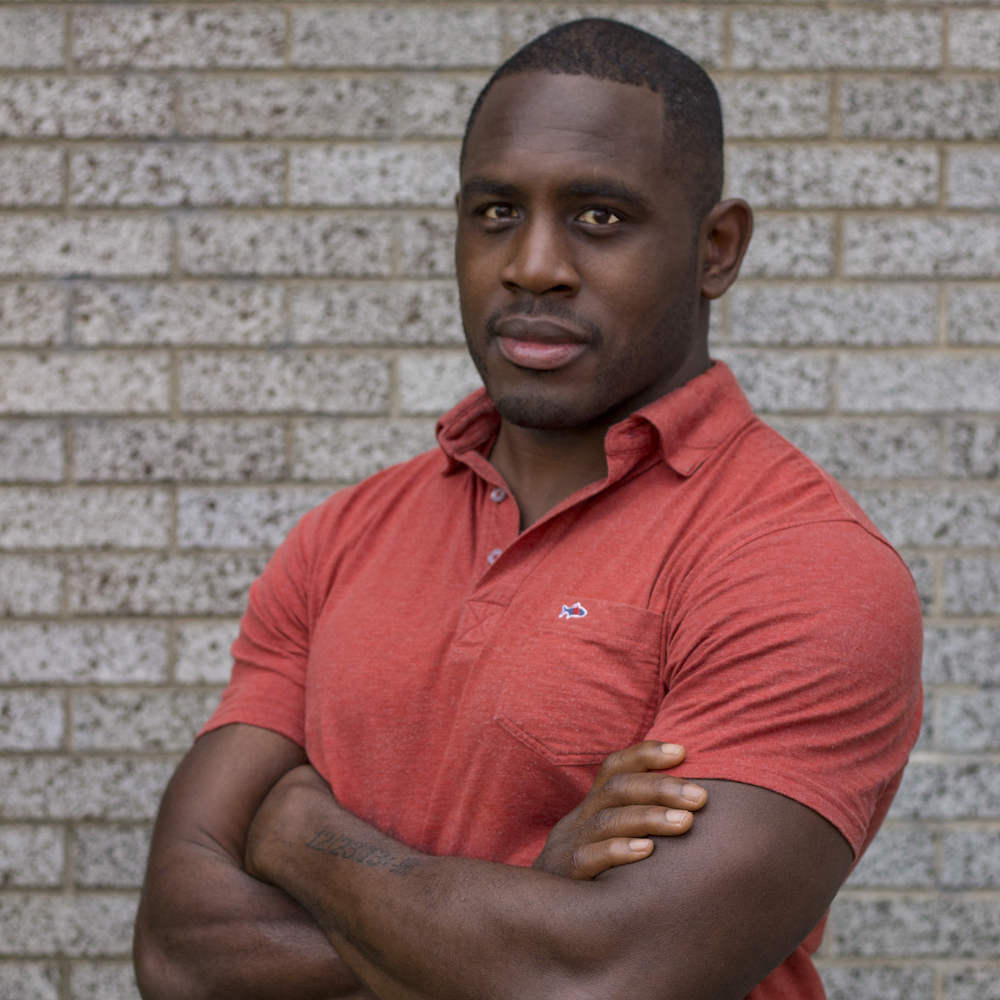
Written by
Ed Latimore
Ed Latimore is a best-selling author, professional heavyweight boxer, and physicist. He writes about self-improvement, sobriety, fighting, and the lessons he learned growing up in the projects of Pittsburgh.
Follow @EdLatimore