Is VanMan’s Sweet Onion Shampoo Worth It? Full Review & Buyer’s Guide

No man ever loses his hair in one fell swoop, like getting knocked out. Instead, it’s a slow, gradual decline.
Most guys see it happening in the mirror but remain in denial. After all, when you’re in your early 20s, there’s no way you can be losing your hair, right?
Unfortunately, that’s when most guys start losing their hair.
And when you’re that young, you don’t have the money for a hair transplant or red light therapy, and you’ve heard the horror stories about finasteride.
The good news is that you have time on your side, the one thing you can’t buy.
If you start a treatment like dermarolling, you can slow down your hair loss dramatically. A dermaroller is incredibly cheap, and it pairs well with another inexpensive treatment: VanMan’s Sweet Onion Shampoo.
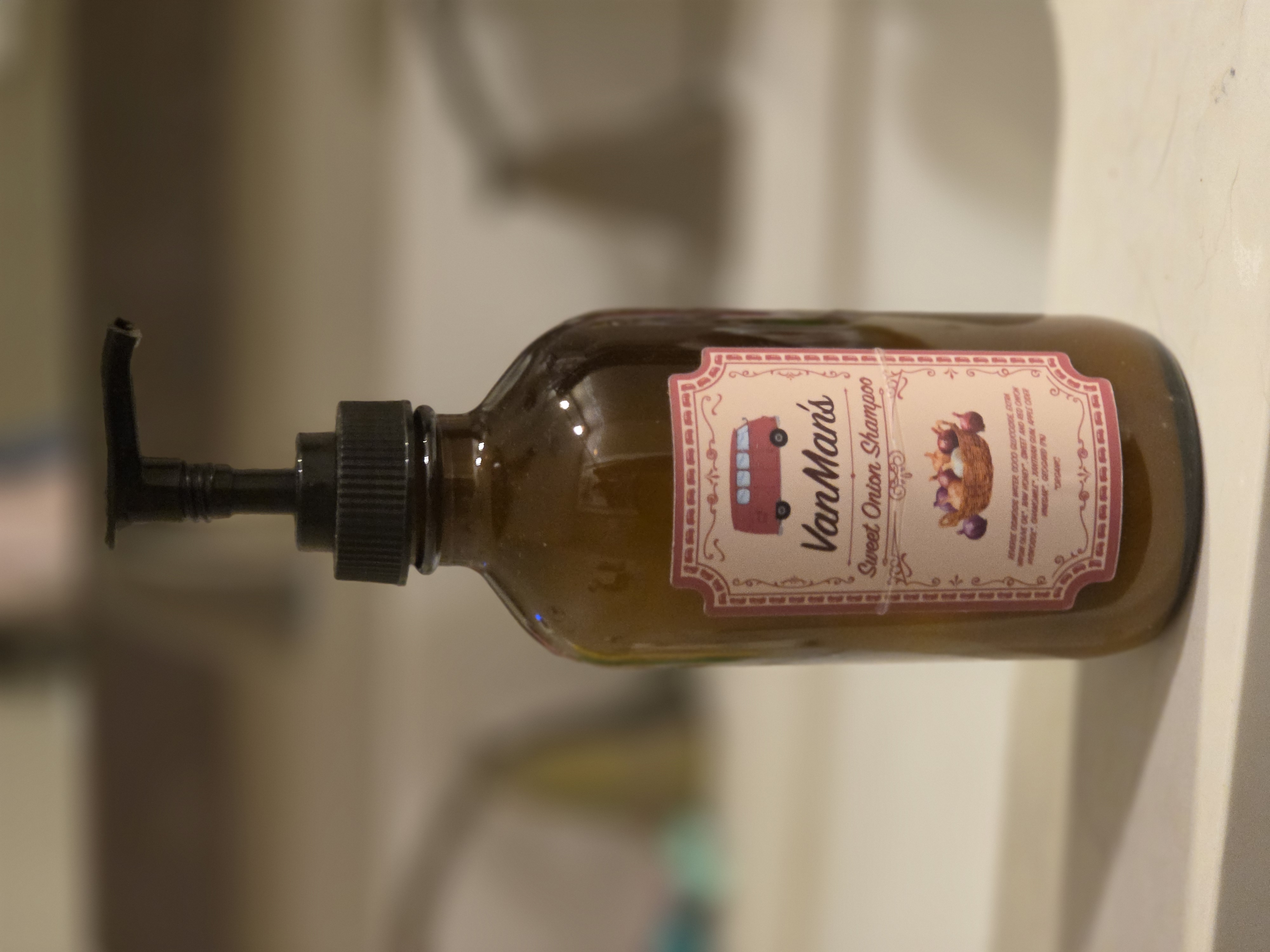
The VanMan Company makes its own onion hydrosol for hair growth.
I’ve done everything I can to preserve my hair:
And lately I’ve started using a Happy Head combination formula.
I’m not one of those guys who believes that you should shave it all off unless you’re too far gone.
I bring all this up to make it clear that I’ve got a bit of experience when it comes to the fight against hair loss, including natural and pharmaceutical solutions.
So I decided to check out VanMan’s Sweet Onion Shampoo. I researched the ingredients, ordered a bottle, and tried it out. The rest of this article tells you everything you need to know about it.
My verdict: It’s worth a look if you want a shampoo that leaves your hair feeling softer and fuller, which can make it look fuller if you’re not too far gone on the Norwood scale.
This isn’t going to magically regrow your hair—as of this writing, the only things that come close to that are pharmaceutical-grade chemical compounds like Happy Head. But for the price, this is easily one of the best additions to your hair loss routine.
And if you aren’t concerned about hair loss, it’s still a great shampoo that’s free of some additives found in typical commercial shampoos.
What’s in the bottle?
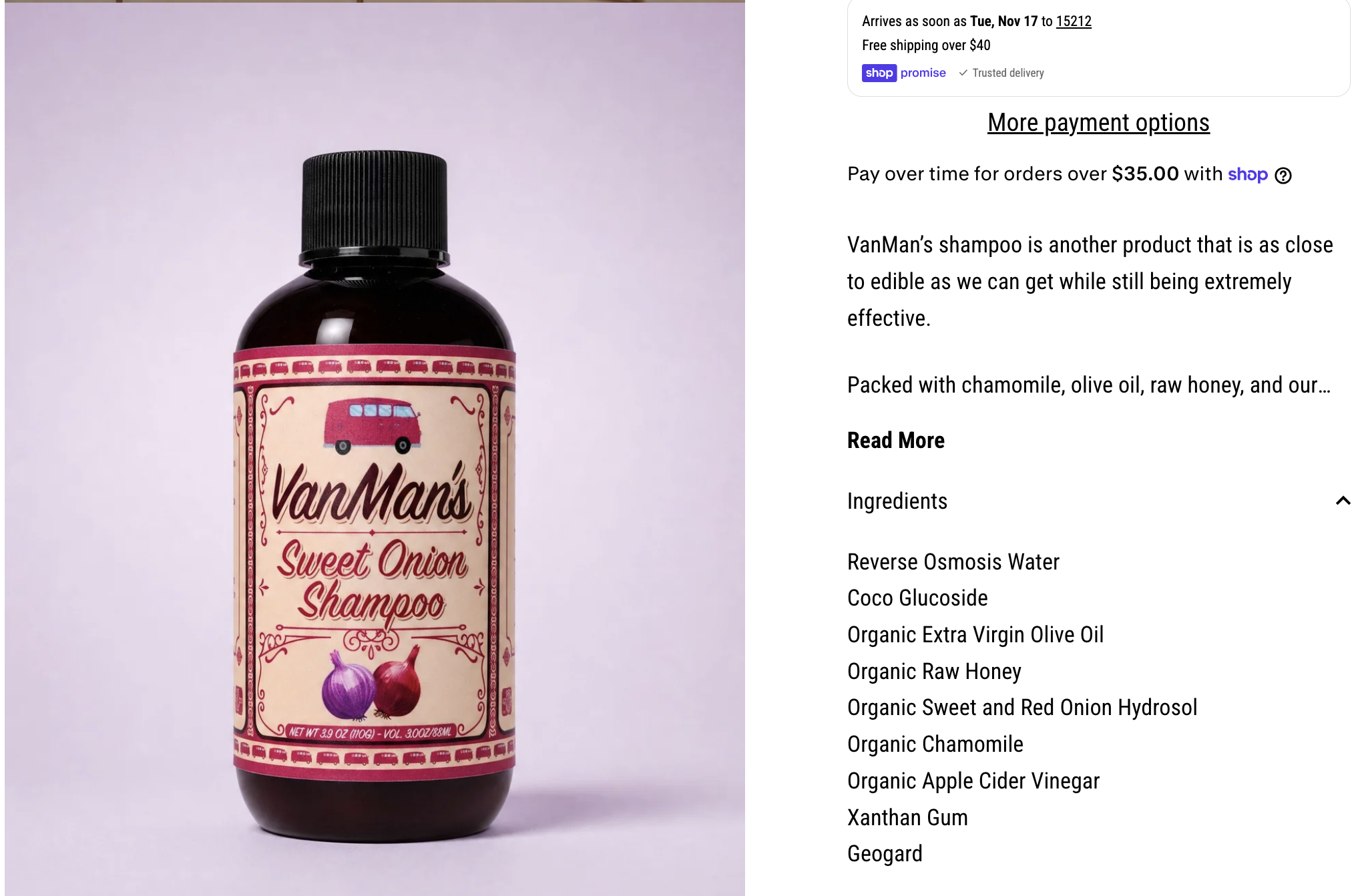
The VanMan Company uses reverse osmosis water. The name sounds fancier than it is, but it’s still nice. Reverse osmosis water is water filtered through a membrane to remove dissolved minerals and other impurities.
Coco glucoside does the cleaning. It’s a surfactant derived from coconuts and made with glucose—an ingredient that lifts dirt and oil away. One end of the molecule is attracted to oil and the other to water. That lets it pick up scalp oil and product buildup and carry them away when you rinse.
In a typical commercial shampoo, you’ll often see sodium laureth sulfate (SLES) doing the bulk of the cleaning and foaming, with cocamidopropyl betaine (CAPB) added to stabilize the lather and make the blend milder.
VanMan uses coco glucoside, a sulfate-free cleanser in the alkyl glucoside family, because it’s a mild surfactant and produces a richer lather.
This is nice if you’re one of those people who avoid sulfates in shampoo because of how they make your scalp feel. I’ve never noticed any issues with commercial shampoos, but this shampoo does make a decent lather.
I wouldn’t call it anything crazy, but you’d never be able to say that it didn’t produce a good, rich lather.
The addition of xanthan gum helps make the lather feel more real. Xanthan gum is a thickener that’s often used in shampoo to give it some weight and body.
Then there’s Geogard, a trade name for a family of preservatives that help control the growth of bacteria, yeast, and mold in the bottle.
Geogard blends are used in other shampoos, too. The reason to use one here is what’s inside the bottle. VanMan’s shampoo is water-based, so microbes that get in during normal use can multiply. A glass bottle holds the shampoo, but it doesn’t protect the formula from contamination once you start using it.
Organic apple cider vinegar is made by fermenting apple juice. Its main acid, acetic acid, can lower a shampoo’s pH. Based on what I could find, a more alkaline shampoo can increase friction between strands, making hair more prone to tangling and breakage. So the goal here is to increase the shampoo’s acidity.
Lowering the pH can also help preserve the shampoo. Some preservatives work better in an acidic formula. Geogard Ultra, for example, is designed to work at a pH of 3 to 6. This is cool to see because it means the ingredients are working in tandem.
Onion hydrosol and the hair growth claim
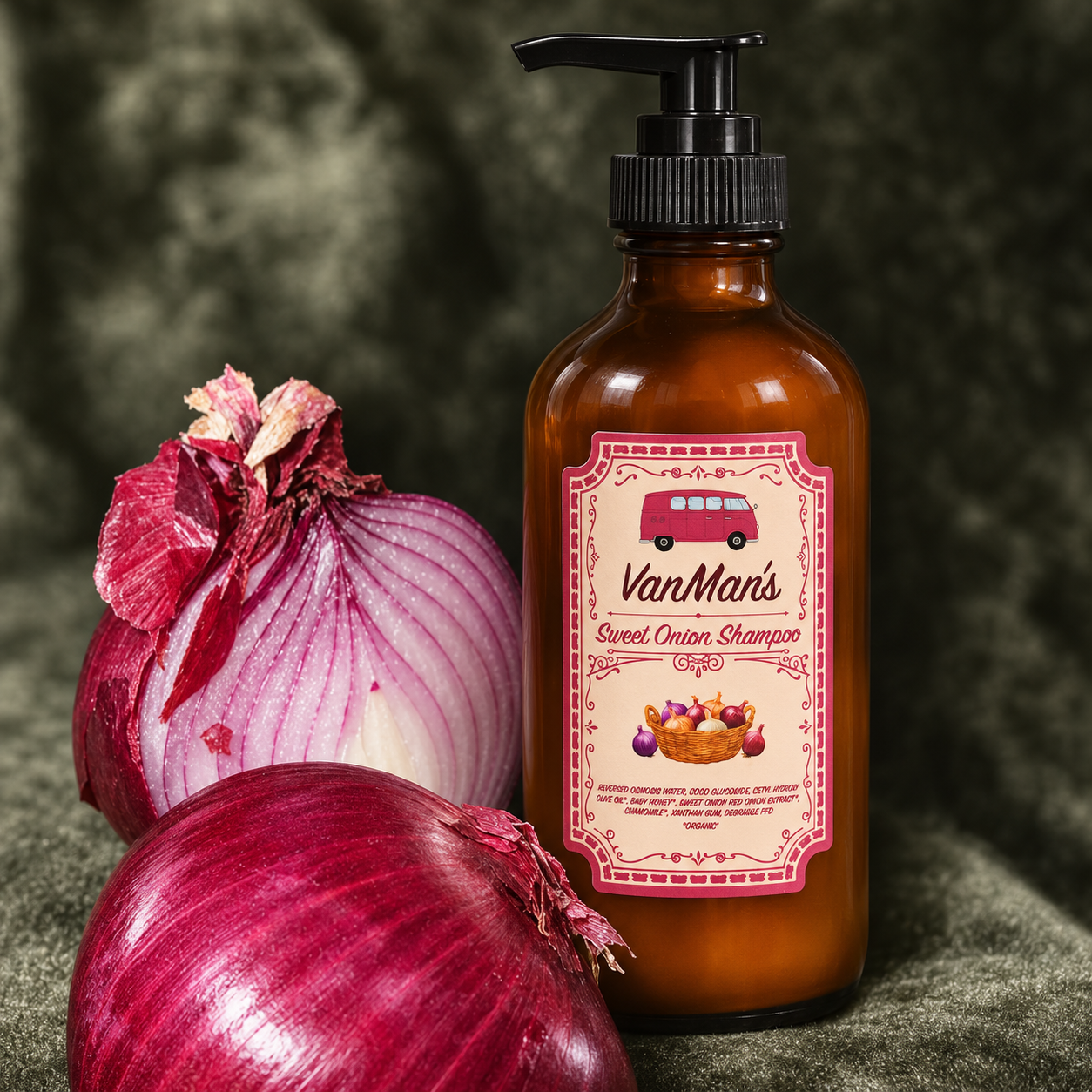
Organic sweet and red onion hydrosol is the main ingredient that gets all the hype for this product. But what exactly is that?
A hydrosol is the water-based liquid collected during distillation. So red onion hydrosol is the base liquid obtained from distilling red onions.
The proposed mechanism for hair regrowth makes sense, but the evidence for this ingredient’s effectiveness is limited. To be fair, whenever something natural is touted as a remedy, you will rarely find many rigorous trials because there’s little financial or regulatory incentive to study it.
For example, at least 29 studies have examined oral or topical minoxidil as a stand-alone hair loss treatment. For oral or topical finasteride, which still requires a prescription, I found at least 19.
By comparison, I found seven studies on microneedling alone and three on saw palmetto alone. It’s an unfortunate fact of life, but when there is no big pharma company willing to invest in a product, few resources are allocated to understanding its effectiveness.
You see the same thing going on with peptides. When a peptide is difficult to patent, a pharmaceutical company has less incentive to invest in it.
So when evaluating how well a potential non-pharmaceutical remedy performs, I like to examine its mechanism of action.
The sulfur compounds that give onions their smell can carry over into the hydrosol during distillation. Sulfur plays an interesting role in hair growth and hair thickness. Your follicles use cysteine, a sulfur-containing amino acid, to build keratin. Keratin makes hair strong, and when the hair shaft is weak and prone to breakage, hair can look thinner.
But that’s a cosmetic effect. It leaves open whether onion hydrosol might affect DHT, a major factor in androgenetic alopecia. A 2025 study found hair regrowth and evidence of increased DHT breakdown in a mouse model of androgenetic alopecia.
That mechanism concerns a specific sulfur-containing compound from broccoli. Whether the effect carries over to humans remains open, and there may be little financial incentive to study whether a naturally occurring sulfur compound can regrow hair.
There is one small study about hair regrowth that gets cited in defense of onion hydrosol. In that study, researchers used freshly prepared crude onion juice twice a day. By six weeks, 20 of 23 people in the onion group had some regrowth. By eight weeks, only 2 of 15 people in the tap-water group had regrowth.
While that’s a promising result, the people in the study had alopecia areata, which causes patchy hair loss and differs from androgenetic alopecia, also known as pattern hair loss. In that study, participants applied the juice directly to their scalps. The VanMan Company uses a distillate in a formula you rinse out.
So there’s a theory for how it might help with regrowth. In my experience, it makes hair look thicker and shinier. And it has a great smell.
The other natural ingredients also have potential benefits for your hair.
Raw honey, olive oil, and chamomile
- Organic raw honey attracts water. In a small study of people with seborrheic dermatitis and dandruff, participants used a 90% honey mixture and left it on for three hours. They reported less hair loss, but the researchers didn’t measure regrowth. That’s a different exposure from washing with a shampoo that contains honey.
- Organic extra-virgin olive oil can coat the hair shaft, add slip, and make strands feel smoother. That’s the benefit I’d give it credit for here. There’s little direct evidence that olive oil in a rinse-off product relieves scalp dryness or flaking.
- Organic chamomile has the strongest research evidence for pattern thinning. In one small trial, a specific German chamomile extract, used alongside 5% minoxidil, increased counts of thick, mature hairs compared with minoxidil plus placebo. The groups didn’t differ significantly in the study’s measure of newly grown hairs. The trial didn’t test chamomile alone, and the label doesn’t say whether it uses that extract.
My thoughts on VanMan’s Sweet Onion Shampoo’s lather, scent, and scalp comfort
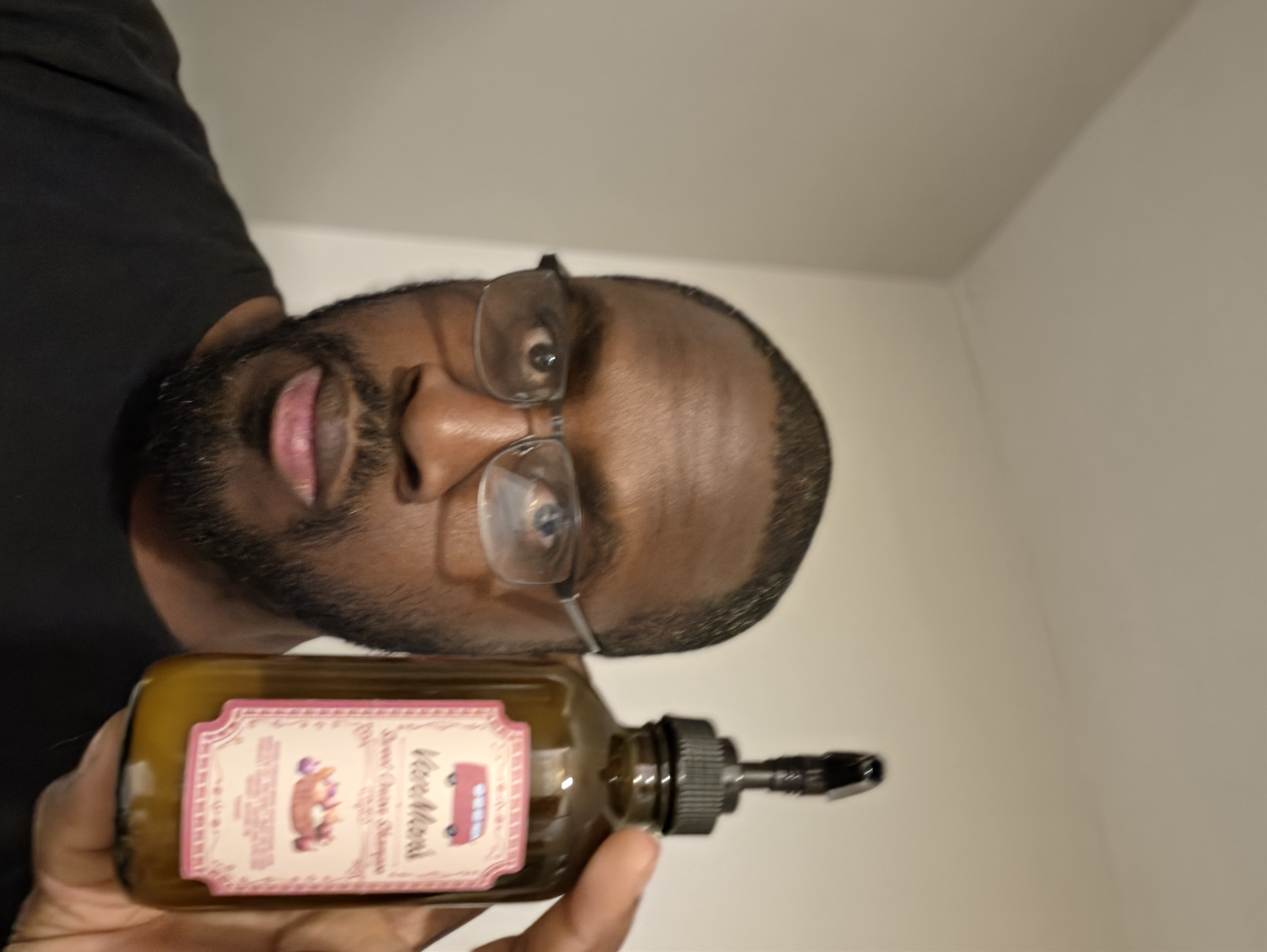
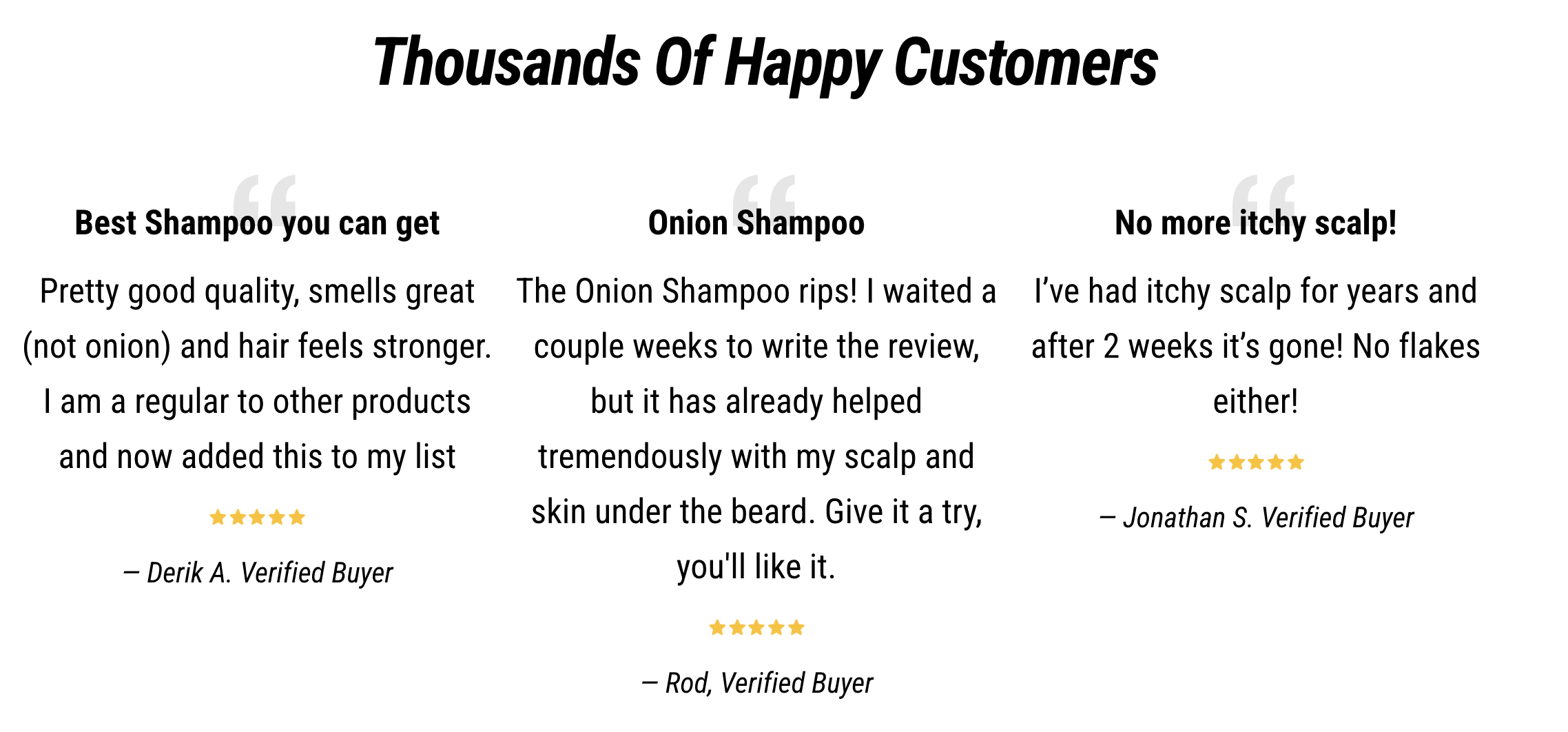
Several buyers on the product page describe easy rinsing, softer hair, or a more comfortable scalp. This is 150% true. It’s fantastic.
I typically wear my hair short, but when it gets a little length, the power of this shampoo shows. I haven’t had the flakes or dry scalp I’d expect, especially since I still use a topical minoxidil and finasteride blend. Both can leave my scalp dry and flaky.
It’s really helped with that, and that aligns with other user experiences.
One said their itch and flakes cleared up after two weeks. Another said their fine hair felt fuller.
That’s the kind of difference you can judge in your own shower or mirror.
As for regrowth, I’ve been using the shampoo for about six months, but I’ve paired it with other treatments, mainly weekly microneedling and topicals. Almost no one uses only one treatment, as losing hair is a multifaceted problem and most guys have figured out that multiple layers of attack work.
One reviewer who reported regrowth was also using Hair Mayo, so it’s unclear what role the shampoo played for that customer.
As for the smell, the name would make you think you’ll walk out of the shower smelling like an Italian restaurant.
The VanMan Company says its distillate avoids that, and featured reviewers describe little or no onion smell.
I think the smell is great and my wife hasn’t complained at all. She would definitely tell me if it had a terrible smell.
The VanMan Company says the formula works for all hair types. I can only judge from my own hair, and I didn’t see any reports of adverse reactions in the reviews I read.
How much does it cost per wash?
Sticker price only tells you what it costs to get the bottle home. To figure out what it costs to keep it in your hair care routine, divide the bottle price by the number of washes you actually get.
Bottle | Listed one-time price | Estimated cost per wash |
|---|---|---|
8 oz plastic | $16 | $0.40–$0.64 |
8 oz glass | $19 | $0.48–$0.76 |
3 oz travel | $9 | $0.60–$0.96 |
These are estimates before shipping. I used 25–40 washes for the 8-ounce bottles and the same amount of shampoo per wash for the travel size. Your pour matters more than the estimate.
The VanMan Company also offers subscriptions and a build-your-own VanMan bundle.
If all you want is to see how the shampoo feels, the travel size has the lowest upfront price. The plastic bottle costs less per ounce.
And if you want more from the brand’s hair care line, includes VanMan’s Sweet Onion Conditioner or VanMan’s Protection Oils Hair Serum with the cost of buying the products separately.

Who should buy it?
Everyone. It’s good for men and women.
Try VanMan’s shampoo if the wash you use now leaves your hair feeling rough and you want to try something with olive oil in the formula. I’d start with the travel size if you’re unsure about the scent or how your hair will feel once it dries.
Those are things you can judge in a few washes without counting hairs in the drain.
If the main reason you’re shopping for an onion shampoo is a receding hairline or a thinning crown, make sure you are using other interventions. Even 2% ketoconazole shampoo, which has some evidence for hair regrowth in androgenetic alopecia, is often used alongside other treatments.
Pick up your bottle of VanMan’s Sweet Onion Shampoo here.