Gen-Z stopped drinking. Here’s how crime and college fair

Gen Z stopped drinking, and it’s cost alcohol companies almost $830 billion dollars in the past 5 years.
But that’s not even the biggest story.
The bigger story is how this has fundamentally changed society and how it will topple the college scam market, possibly even faster than AI and the student loan crisis.
Fewer people are drinking alcohol than ever before. Now, I personally have been sober since December 23rd, 2013—almost 13 years—so my feelings on the matter should be obvious.
However, some people are pretty gung-ho about their booze and think that this is a national tragedy.
As the old saying goes, alcohol is the only drug where people think you have a problem if you don’t do it.
With that said, I think all rational people will agree—regardless of the frequency or intensity of their personal consumption—that society doesn’t get better when a bunch of drunk people are running around doing the things that drunk people tend to do.
As of early 2026, U.S. alcohol consumption has hit a 90-year low, with only 54% of adults reporting they drink, driven by health concerns and the “sober curious” movement. Studies show 53% of adults now believe moderate drinking is unhealthy, with Gen Z leading this decline.
And alcohol companies are not happy about this one bit, by the way.
The global alcohol industry has lost approximately $830 billion in market value over the past four years, according to a Bloomberg index. Major beer, wine, and spirits companies have seen a ~46% decline since June 2021.
I want you to remember this stat and that year, 2021.
The year 2021 is going to do a lot of heavy lifting in the middle of this essay, while the loss in revenue is going to highlight a tragic failure by the largely crumbling university and college system that Gen-Z is currently helping pull down.
Hate them or love them, Gen-Z has their uses.
Maybe they are a bunch of nerds who prefer to talk online and slide in DMs rather than socialize in person, which is part of what’s driving this sobriety trend—but Gen-Z is doing something that even the full force of the United States government couldn’t do with a variety laws including the only amendment to ever be reversed—they are, en masse, choosing to not drink alcohol.
One could argue that the reasons why they aren’t drinking aren’t particularly positive—after all, they’re the generation that doesn’t go on dates and has way less sex than previous generations.
So while this behavior means they aren’t adding to the population—just look at the birth rates for people under 25—they aren’t subtracting from the population either.
At least not nearly as fast as generations before them, and that’s because alcohol brings death on faster in two ways.
Alternatives to drinking are good for you, but there is a downside
Being sober is great for your health, but it can be terrible for your social life. In fact, one of the primary reasons people relapse—or not even try to get sober in the first place—is loneliness.
Mocktails and non-alcoholic beverages are great, but they don’t quite loosen you up the way that alcohol does. No matter how destructive booze can be, it’d be intellectually dishonest to say that it doesn’t facilitate social interaction.
But what if there was a drink that allowed you to get all of the social benefits of alcohol without experiencing any of the downsides of alcohol, but also being focused, energetic, dialed in, and social?
That’s where today’s sponsor, Yapper, comes into play.
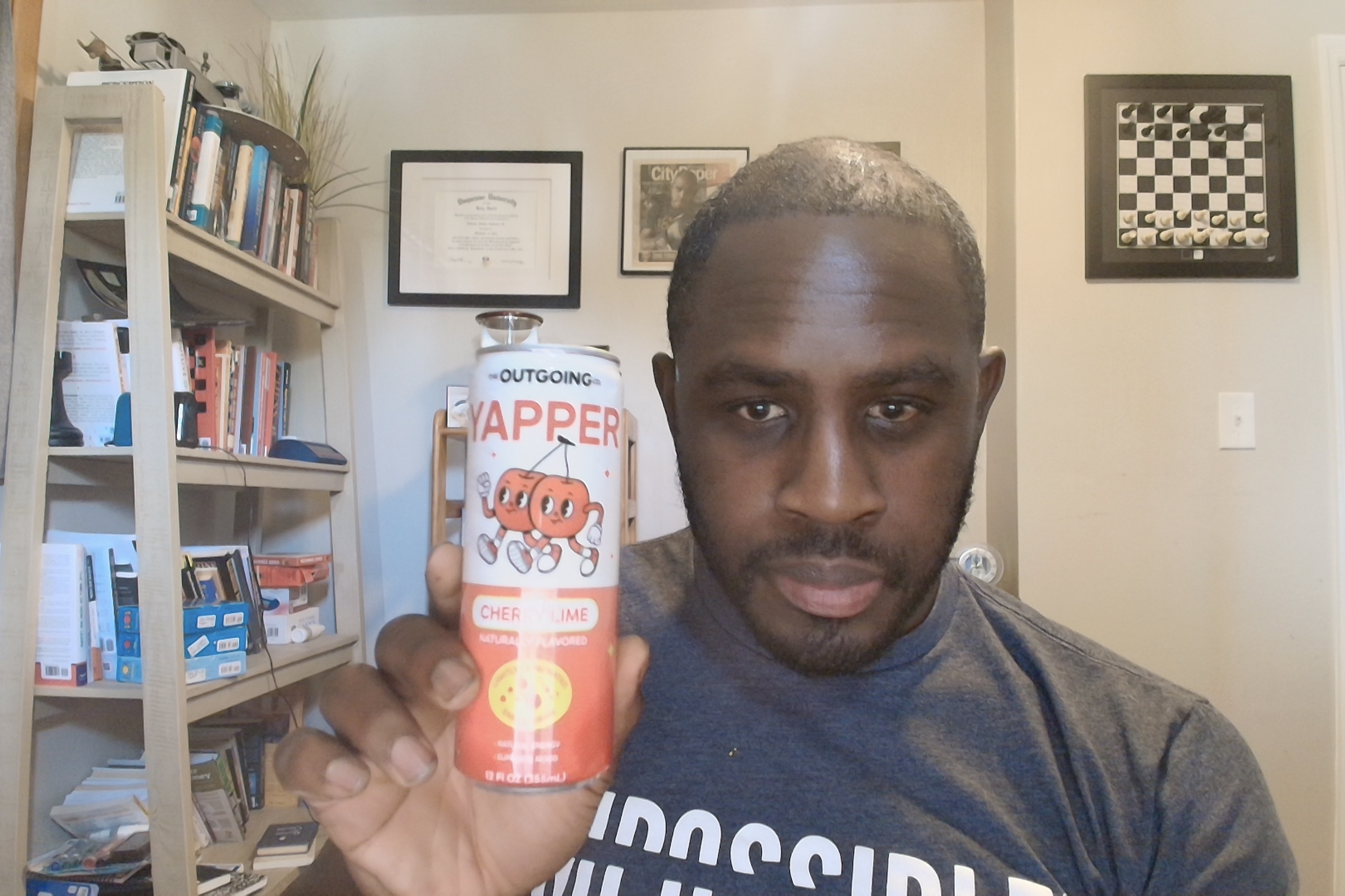 Yapper is an alcohol substitute, but it functions more like a lightweight energy drink crossed with a heavy-duty nootropic that also calms you down without slowing you down.
The combination of Lion’s Mane, alpha GPC, panax ginseng, and a low dose of caffeine get you in the zone, but it’s the l-theanine that makes you calm and relaxed. When you combine these two ingredient profiles, you get a drink that delivers the best parts of booze without the downsides.
You want to talk and be social, but you’re also relaxed and—unlike when you’re on your 5th drink—you actually remember what you’re talking about and aren’t annoying to other sober people.
And the cherry-lime flavor is delicious. Much tastier than a Red Bull and with way less caffeine.
Get a 12-pack of Yapper by clicking on my link here. Or, if you think you’ll drink them every day—and I think you will- especially once you see that it works both as a social drink and something to help you do deep work—just get 2.
Give Yapper a try by clicking on my link here.
Now, back to the death that accompanies alcohol, which does not follow around Yapper like the Grim Reaper.
Fewer young people are dying from drunk driving
First, let’s take the most obviously fatal outcome of alcohol that immediately comes to mind—drunk driving.
The most fully verified numbers are on vehicular deaths involving alcohol are only up until 2023—apparently the fully verified report takes a few years to compile and verify—but the total number of drunk driving accidents had a slight uptick around the pandemic, but over rates have been falling ever since, with the most recent estimates for 2024 and 2025 showing a 12 to 13% drop each year.
Back-of-the-napkin estimates show that a number that was already falling has been falling even faster over the past two years. And I want to put that drop into perspective.
The single biggest percentage drop in “alcohol impaired fatalities”—these are fatalities where at least 1 of the drivers had a blood alcohol level above the legal limit—was 8% from 2022 to 2023. Estimates are already showing double-digit percentages for both 2023-2024 and 2024-2025.
And when we break this down by age, we see where the biggest drops have come from.
Between 2014 and 2023, the number of people aged 21 to 24 and 25 to 34 decreased by 2 percent and 3 percent, respectively.
Millennials and Gen X stayed more or less constant, but those boomers can’t seem to drink responsibly before getting behind the wheel. In fact, they got worse at it, with ages 65 to 74 increasing their alcohol impaired fatalities by 2 percentage points and 74 plus by 3.
Now, one might argue that older people are more likely to cause accidents, and the statistics do bear this out: people over 65 are more likely to be in accidents. But the numbers I’m quoting show only fatalities where the BAC was above .08, the legal limit here in the states.
With that said, regardless of how you feel about alcohol, you can certainly agree that fewer people dying as a result of alcohol—especially the victims who were not drinking, just on the wrong road at the wrong time—is a good thing.
Fewer drunk young people = fewer violent crimes
The second, less obvious way that this drop in alcohol consumption has improved public safety is that drunk people tend to commit more violent crimes.
At the very least, the presence of alcohol dramatically increases the likelihood that something is gonna go down, and it’s not going to be some panties.
Approximately 40% of all violent crimes involve the use of alcohol by the offender. Some violent crimes have a higher rate of alcohol use—domestic violence and assault come in at 63% and 50% respectively, with sexual assault coming in at an underperforming 37%.
The overall relationship is clear, though—alcohol may not cause violent crime to happen, but it is definitely a highly correlated enabling cofactor.
And perhaps that is why the United States is in the middle of a historic free fall in the rate of violent crime.
During the pandemic years of 2020 and 2021, violent crime was at its peak because everyone was losing their effin minds. But then, in 2024, the homicide rate dropped 4.5%, and in 2025, it dropped another 21%.
This 2024-2025 drop held across all violent crimes.
By the end of 2025, 11 of the 13 crime categories were down, and 9 were down by more than 10%. The Trump administration announced that 2025 was on pace to have the lowest recorded violent crime rate since 1900.
Some credible outlets have disputed that, claiming it would be the lowest crime rate since 1968, but either way, one thing that detractors and proponents of the stat agree on is that in the past 3 years, the US has gotten a LOT safer than it has been since at least the Vietnam War.
If you match this up with Gen-Z, the most sober generation in history, those years of violent crime decline line up perfectly.
A kid born in 2003—the year I graduated high school, to date myself—would be entering his peak crime-producing years right around 2021, when he’d be turning 18.
Crime—particularly violent crime—is a young man’s game. Peak violent crime committing years are between the ages of 18 and 21. Nearly a third of Americans who are ever arrested will be arrested by their 23rd birthday.
In fact, if you make it to your 25th birthday without being in cuffs, there is only a 5% chance that you’ll ever find yourself in the back of a cop car for any reason, violent or non-violent.
In years before, “YNs” (if you don’t know what that is, you can look it up—but for those who do, I’m using YN as a general pronoun for all boys roughly between the ages of 13-24, the “official” YN age range) would be out doing what YNs do, but—and while this is all speculation and not been proven…yet—now there is a lot less arguing, fighting, assaulting, and murder because a lot of less of them are doing it on the sauce.
The only crime that experienced an increase was drug-related offenses because folks love to get high. Sexual assault remained about even, but there is an interesting story behind that, and it’s one that initially motivated this essay.
Sexual assault: The drunk elephant in the living room.
I technically started researching for this over 8 years ago, when I wrote my second book, “Sober Letters To My Drunken Self.”
I wrote that book to celebrate 5 years of sobriety and give something to people who are struggling with the emotional and social adjustment of sobriety. If that’s you, you should definitely check out the book.
This next part of the essay was originally started for a section I didn’t include in that book, titled “The Drunken Elephant In The Living Room,” where I explored the insidious relationship between alcohol abuse and college recruitment. I’m glad I revisited and expanded this, and the research we have now on this topic is much stronger.
Now, let’s talk about the elephant in the living room I’ve been hitting at—sexual assault. This is the one crime that appears to have stubbornly resisted the damping effects of a more sober, younger population.
When I looked at the data, sexual assault was one of the few crimes that decreased during the pandemic.
If you’re curious, the other big loser during the Covid were robberies of all sorts because people were home all day and, contrary to what most of the civilized world thinks, most break-ins happen during the day when no one is home.
This makes sense when you consider that, outside of your serial rapists, sexual assault requires exposure to the victim in an intimate setting.
This is obviously not to say that lockdowns eradicated it, but when you consider that many incidents start in socially familiar settings, a ban on social gatherings removes many of the opportunities for it to happen.
The other challenge I faced when looking at the data on sexual assaults was reporting.
On the one hand, 62-75% of them are not reported to the police, but on the other hand, 2-10% are false allegations.
To make my point clean and rigorous, I’m only going to focus on the number of forcible rapes reported, but I want anyone reading to know that this is not a rejection of the reality of the crime, nor is it an attempt to downplay its frequency or severity.
With that said, after a 2021 post-COVID “rebound,” the crime was already decreasing.
So the sobriety-driven decrease was already taking place, just earlier, and this is likely due to the type of crime sexual assault is opposed to: other violent crimes. The change in the socialization habits of a group of kids not drinking removes one of the most aggravating circumstances for sexual assaults.
Combine that with the fact that exposure is limited, because this generation doesn’t party or date as much, and you end up with an environment where more people are clear-eyed, a little too awkward to be too persistent, and even if they weren’t, they’re not around each other much in the first place.
And this isn’t just me extrapolating.
According to various sources, 30-50% of sexual assaults against young women involve 3 things: a social gathering, a person they know, and alcohol.
And because this always comes up when I discuss this, I’m not saying that it’s not the attacker’s fault and placing all the blame on alcohol. I am, however, saying that alcohol definitely makes people do things they would not do sober.
It’s like taking someone’s life if you’re driving under the influence. Most of us are not normally murderers, but the alcohol puts us in a state of mind where we commit murder, even if our intentions were not to.
Well, if you want to be technical about it, involuntary manslaughter, but the point is that booze carries with it significant social risks, and it’s probably not a bad thing that fewer people are drinking it.
Schools profit when kids drink—and they know it
Now I’ve taken a few swipes at college culture at the start of this essay, and I’m about to take a much bigger one.
Universities—places that are flooded with Gen-Z at the moment—have long claimed to want to reduce the drinking on campus. But if they do that, they’d have to face a few economic realities that, given the declining enrollment in colleges—which is only expected to worsen in the future—they aren’t ready to deal with.
While alcohol is illegal for at least half of your typical undergraduate student body at any given time, anyone who has ever been to college knows that there are more than a few ways to skirt the rules for alcohol.
And there are two ways that an inebriated student body lines the University’s coffers.
Campus sports make a lot of money from booze
First, there are the alcohol sales at sporting events.
College football is, by far, the biggest earner for schools in this regard. We’ll use the University of Wisconsin as an example, which sold $3.8 million in alcohol at football games in 2025. But the cash cow doesn’t stop producing milk there.
That $3.8 million number is just the top-line sales, not what the university actually extracts from it.
Most schools don’t run concessions themselves. They outsource it to companies like Aramark or Levy Restaurants, who handle everything from staffing to inventory.
In exchange, the university takes a cut of every dollar sold—often somewhere between 20% and 50%, sometimes with a guaranteed minimum baked into the contract.
So on $3.8 million in beer sales, the school might quietly pull in $800,000 to $1.5 million+ without a single drink being poured.
But that’s still not the full picture.
In addition to concession revenue, schools sign exclusive “pouring rights” deals with companies like Anheuser-Busch and Molson Coors.
These deals give one brand the right to be the beer inside the stadium—no competitors allowed. In return, the company pays upfront money (often millions over the life of the contract), annual sponsorship fees, and branding rights (logos on cups, signage, in-stadium ads, digital placements, and wherever else you can think of to get more eyes on their product)
So now the school isn’t just making money when a student buys a beer—they’re getting paid before the first drink is even sold, and that payment stacks faster than you can finish a game of beer pong.
Because those alcohol deals are usually bundled into larger sponsorship packages. Alcohol isn’t just a product—it’s a main vein in the school’s entire advertising ecosystem.
Then there’s the part that’s harder to exactly quantify, but definitely takes the cash extracted to a whole new level: alcohol increases per-fan spending.
A fan who might spend $10 on food will spend $30–$60 if they’re drinking. It keeps people in the stadium longer, reduces early exits, and turns a 3-hour game into a 5-hour revenue window. That lifts all concession sales, not just beer.
So when you add it all up—the direct concession cuts. guaranteed payments from vendors, multi-million dollar pouring rights deals, sponsorship and advertising revenue, and increased overall spending per attendee—a single football program can generate seven to eight figures tied to alcohol alone. And that’s at just one venue, during one game, during one season, from just alcohol
And it doesn’t stop at the stadium gates.
Campus bars help make even more money
Because even the bars that look like they exist for students are often quietly working for the university.
Some schools cut out the middleman entirely and run bars through their dining or hospitality arms. In those cases, every drink sold flows straight back into university accounts—sometimes managed day to day by contractors like Aramark or Sodexo, but ultimately owned by the institution itself. It’s the same model as concessions, just extended to a year-round setting.
More commonly, the university owns the space and lets someone else run the bar. That operator pays rent, but that’s just the floor. On top of that, there’s often a percentage of sales or a guaranteed minimum built into the contract. Which means every round of drinks isn’t just making money for the bar—it’s kicking a piece upstairs.
Then there are the “independent” bars that aren’t as independent as they seem. Many sit on university-owned land or inside development zones the school controls. The branding might be different, the staff might not be university employees, but the economics are the same: long-term leases, revenue participation, and steady payments flowing back to the institution.
And layered over all of it are the same alcohol deals that govern the stadium. If a university has an exclusive agreement with a company like Anheuser-Busch, that influence doesn’t stop at kickoff.
It can extend into campus venues and affiliated spaces, dictating what gets sold and reinforcing the same financial relationships. The university gets paid not just when a drink is bought, but for controlling which drink is bought.
If you’ve ever been approached by bar girls for a specific brand of booze, that’s part of the deal. Notice they’re only selling one beer, and it’s the beer that the bar happens to sell as well. You’ll also notice that you do not usually run into these girls at off-campus bars.
So whether it’s a crowded Saturday at a football game or a packed bar on a Thursday night, the mechanism is the same. The setting and branding change, but the flow of money doesn’t.
The drinks don’t just loosen students up—they tighten the university’s balance sheet.
And that’s just the first way an inebriated student body lines the university’s coffers. The other way is less direct but potentially even more impactful on a school’s bottom line.
Because alcohol isn’t just something students consume. It’s part of what universities sell.
Schools sell “consumption amenities”—something more valuable than education
Schools don’t compete solely on academics. They compete on what researchers call “consumption amenities”—a fancy economics way of saying “the experience of being there.”
And that experience includes athletics, social life, Greek life, and yes, drinking culture. In fact, one paper cited in this research suggests that for every dollar spent on academics, universities spend between 45 and 80 cents on these non-academic lifestyle features.
When a school lands on the Princeton Review’s “Top Party School” list, that’s marketing. The designation doesn’t significantly hurt applications or retention, but it does change who applies and who chooses to enroll.
The type of student drawn to a party-heavy environment is often less focused on academic rigor and more aligned with the social experience. The research shows a measurable decline in incoming academic performance after a school earns the “party school” label—lower test scores, fewer top-performing students, and a shift in the overall academic profile.
Now, if your institution is selling academic rigor, that’s a loss. But if it’s selling consumption amenities, then not only does it not hurt, it helps. First, with more money spent on beer, and second, in the tuition paid to the university.
Because those same students are more likely to fully participate in the “experience economy” of college—sports, nightlife, Greek life, and everything that comes with it.
And perhaps more importantly, they’re more likely to view that experience positively in hindsight. The same study even finds that alumni giving increases after a school is labeled a top party school.
Think about what that means for a second.
A school that builds its reputation on partying may damage its academic prestige—but it strengthens alumni loyalty and engagement, which is one of the most reliable long-term revenue streams a university has.
And then there’s a darker side of the same incentive structure, and it harkens back to something I mentioned earlier in this essay.
When the booze goes up, so does sexual assault
The same forces that drive engagement, spending, and school spirit—football, alcohol, and party culture—also correlate with spikes in sexual assault.
Research shows a 28% increase in reported rrapes on Division I football game days, and at schools already identified as party schools, that increase jumps to an estimated 70%.
At the same time, alcohol consumption rises during major athletic events like NCAA tournament runs, and those events generate major revenue for the school, but they have, in effect, sold their souls—or your daughter’s body—for cash.
So you end up with a system where the conditions that generate revenue—packed stadiums, heavy drinking, high-energy social environments—are the same conditions that lead to one of the worst experiences a woman can go through.
And yet, those conditions persist and are even encouraged because, from the university’s perspective, the incentives are aligned.
So as far as I’m concerned, this dramatic decrease in drinking driven by the generation currently churning through their college years is unequivocally a good thing. And it’ll be even better when the college system, which is one of its great enablers, finally falls for good.
References
Alcohol related driving fatalities up to 2023
https://www.iii.org/fact-statistic/facts-statistics-alcohol-impaired-driving
Forcible rape stats from 1990 to 2024
https://www.statista.com/statistics/191226/reported-forcible-rape-rate-in-the-us-since-1990/
Violent crime report 2025
https://counciloncj.org/crime-trends-in-u-s-cities-year-end-2025-update/
Impact of alcohol on violent crime
https://ncaddnational.org/addiction_articles/alcohol-drugs-and-crime/
Schools that make the most money selling booze at football games
https://www.thebiglead.com/college-football-schools-that-make-the-most-selling-booze/
Impact of being a top party school
http://pirate.shu.edu/~rotthoku/papers/Party%20Schools.pdf
Sexual assault and alcohol
https://pmc.ncbi.nlm.nih.gov/articles/PMC4616254/