Why Some People Thrive After a Traumatic Childhood (Most Don’t)

Most people who grow up in traumatic childhoods don’t make it.
Addiction, prison, poverty, broken relationships — the statistics are brutal.
But there’s something interesting about the people who do survive it.
There are a lot of bad outcomes for people who go through traumatic childhoods. This should come as no surprise, but children who endure abuse, suffer through neglect, and spend their formative years surrounded by drugs, poverty, and violence don’t have the best adult lives.
I’ve written several essays about my alcoholism and addiction, and walked you through the neurobiological and psychological roots of them in my childhood, which was full of pain and poverty in public housing projects.
I’m not going to rattle off all the stats to confirm the obvious—I’ll toss those in the end of the essay if you’re curious and skeptical—but I have to talk a little about the numbers.
Adverse childhood experiences are potentially traumatic events that occur when someone is a child. These are categorized as neglect, abuse, or general home dysfunction.
When looking at the United States prison population, 97% of them have had at least one adverse childhood experience, with 78% of them having experienced 4 or more. Compare this to the general population, where only 64% have had at least one adverse childhood experience, with only 15% having experienced 4 or more.
Even if they don’t end up in prison, we know that victims of childhood trauma are more likely to have lower self-esteem, mental health issues, suffer from obesity, abuse drugs, and suffer financial difficulties in their adult lives.
There’s a reason why kids who grow up in that environment are considered “at-risk youth”. However, not all who come from this environment end up in prison or with a lower quality of life. It’s not a guarantee that having a rough childhood sets you up for a rough adulthood, but the odds are not on your side.
How you start the race determines not just how you run it and how far you’ll go in it, but if you’ll even finish at all. But one thing that doesn’t get enough attention is the strengths people gain from surviving a childhood like that.
This essay will cover a few of the strengths you gain from growing up in a broken environment. Now, this essay in no way argues that a traumatic childhood is not so bad. I don’t want anyone to get the impression that I think it’s a good idea for a young person—or anyone, for that matter—to endure the pain of a traumatic childhood because somehow, it will make them stronger and tougher, because that does not happen.
Anyone who seriously tells you anything like that is afflicted with a serious case of survivor’s bias. With that said, people who survive horrible ordeals do so because they develop traits that make them resilient, resourceful, and adaptable—and they have done so in an environment marked by constant attacks and unrelenting scarcity, where hope is rarer than a two-parent household.
And that deserves some recognition.
This essay is for everyone who grew up in an environment like that or is growing up in one now, and who needs a way to believe in themselves and find the silver lining.
First, you’re resilient.
When you come from this type of environment, you’re resilient. This means that you’re able to take the abuse of reality and continue moving through it towards your goals. You’re the kind of person who can get knocked down 7 times and get up 8.
People who grow up in a stable home and with functional family members are protected from the harshness of the world. By the time they encounter it, it can be quite a shock to their system and way of viewing the world.
However, one of the hallmarks of a rough childhood is that it has forced you to function in a harsh environment. This is a place with no safety net if you fall, and where no one is coming to save you if you fail.
This comes in handy when it comes to dealing with the tougher parts of life.
I’ve always been able to work without complaining because I grew up with the idea that complaining didn’t help. If anything, complaining about my situation just made me angrier and did not get me any closer to fixing it.
You know what it’s like to lose, you know what it’s like to suffer. And while that may seem miserable as a child, it sets you apart from many of your peers, who are weak because they never had to be strong.
You have seen the worst of humanity. You’ve seen the horrors of poverty, poor discipline, and poor choices. You still get on with the business of living and making something of yourself.
Coming from this environment can bless you with empathy.
Now, this doesn’t mean it’s used, because many from this environment come out so tough that we develop emotional armor, making us seem cold. However, that’s merely an adaptation to protect yourself from the harsh environment you grew up in.
Because a kid from this environment intimately knows pain, they’re uniquely attuned to what hurts people. It’s going to be easier for them to put themselves in the other person’s shoes.
I hated the idea of teasing a kid because I knew what it was like to be teased and bullied. I hate the abuse of power. I knew how miserable the constant pain and threat of violence for just being me was. That made me more sensitive to the plight of others. It’s made me many friends and allies because I’m interested in how I can help someone rather than manipulate, control, or intimidate them. When you see injustice to someone, you’re more willing to stand up for them.
That’s because you aren’t afraid to take risks.
Taking risks to see how beautiful this life can be
When you come from the bottom, everything is a come-up. When you come from instability, everything is stability. When you come from degradation, everything is an improvement.
Kids from broken homes aren’t afraid to take risks to gain more because they have nothing to lose. The average person does not like to take risks, even if it means a better situation with more opportunities.
Many of my friends couldn’t understand why I chose to start boxing at 22. That seemed too risky and dangerous for them to imagine. But to me, it was something that changed my life and gave me far more opportunities.
A great thing about coming from the bottom is that you aren’t in the middle. At best, the middle can be a place of equilibrium and comfort, and at worst, a fight for survival to maintain a certain lifestyle. This means that no matter how a person feels about being middle class, they’re not going to take a risk to disturb that. These people are far more likely to stay on the path of least resistance and least risk.
They won’t let themselves fall out of the lifestyle they grew up in, but they won’t do anything dramatically different that might endanger their stability. Coming from the bottom means that you don’t have this problem. There is no stability or comfort to maintain.
Everything can be improved when you aren’t afraid to take risks. Now, despite having a great set of friends, because I didn’t meet them until I was in high school, my mind had been altered in another rather interesting way, and it’s something that many people from an unstable background have experienced.
No guidance is freedom
Because I didn’t have any role models, people I looked up to, or any constructive guidance, I didn’t have anyone telling me how to live my life, for better or worse.
Usually, this is for the worse. However, there are many instances where it can be beneficial not to have anyone telling you what to do from birth and trying to put you on a specific path.
I was free to choose whatever path in life I wanted.
Now, obviously, the role of parents is to guide and shape their kids, but that often comes at the cost of the kid feeling trapped on the same ideological path as their parents.
Growing up, I could never understand some of my friends and their obsession with pleasing their family at the expense of their own personal happiness. Even now, with a lot more experience and perspective, I have a hard time buying into the idea of doing what my family would approve of, because I never saw my family as people whose approval I should strive for.
I was never obligated to follow any particular religion. College wasn’t an expectation for me.
With no expectations other than not becoming a statistic, I got to chart my own course. And I’m not saying that this is ideal or that most people succeed growing up without guidance. I’m just saying that it’s a freedom that many people never get to embrace.
This freedom is one of the things that saved me from majoring in something stupid in college, since I didn’t have a stable environment telling me to go to college immediately, saying, “Any degree is a good degree.”
Gratitude is second nature
Because you grew up destitute, you know what it’s like to be resourceful and get it out of the mud. But more importantly, you know what it’s like to be grateful.
You know what it’s like to not have. Not only that, you likely know what it’s like to lose what you do have.
Gratitude is simply the appreciation of your current situation and possessions.
This is easier to develop if you know what it’s like to have nothing. Once you have something, you never forget that it could be taken away again. This gives you a great appreciation for the life you have.
It’s not that your life is good or bad. From experience and observation, you just know that it could be a lot worse.
It’s a lot easier to appreciate what you have, the people around you, the little moments, and the good times when you realize how much you have without having much at all. There’s a line in my book, Hard Lessons From The Hurt Business: Boxing And The Art of Life, that sums this up perfectly:
“I always tell young adults that some of their happiest moments will be living with a few roommates in a place barely fit for crackheads, surviving off canned tuna and ramen noodles. Once you make it past that, you’ll never want to go back…
But hopefully, during this phase of your life, you’ll learn that money does not buy happiness.
Only solid relationships and good experiences accomplish this, and one of the best–albeit hardest–ways to learn this lesson is by living in poverty with your closest friends.”
For better or worse, at-risk youth from a rough childhood know that money can’t buy happiness. The best times you’ll have are also going to be the times when you’re the most broke.
I remember growing up, we didn’t have a lot. This is part of living in the projects. It’s part of growing up in a broken home in a tenuous environment. But I had a few good friends and books, and I played outside a lot.
Money only solves your money problems
My greatest source of happiness was people and the relationships I had with them. Buying things is a poor substitute for what actually makes you happy. It’s hard to recognize this when you have nothing, and you see people seemingly getting enjoyment from stuff, but eventually, you’ll realize that money—by itself—can’t make you happy.
Money only solves your money problems, and sometimes those are significant enough to affect your quality of life. But that’s all money buys. Solutions to money problems. It can’t make people like, trust, or respect you. It can’t buy integrity, dignity, or courage. And nothing teaches you this quite like growing up in a rough background.
Coming from a traumatic childhood, you know that life is hard because your life was hard. Therefore, the harshness of the world doesn’t surprise you. You’re used to it. You not only know how to survive but how to thrive.
There’s another thing that happens when you come from a rough childhood, and that’s you become street smart. But it comes at a cost that really isn’t worth it. To learn what that cost is, and to know if you’ve paid it, read this essay here.
But either way, you know that money makes life easier, but it doesn’t make you happy. Only you can do that because no one is coming to save you.
The rest is up to you, and I’ll see you in the next essay.
References
Webster EM. The Impact of Adverse Childhood Experiences on Health and Development in Young Children. Glob Pediatr Health. 2022 Feb 26;9:2333794X221078708. doi: 10.1177/2333794X221078708. PMID: 35237713; PMCID: PMC8882933.
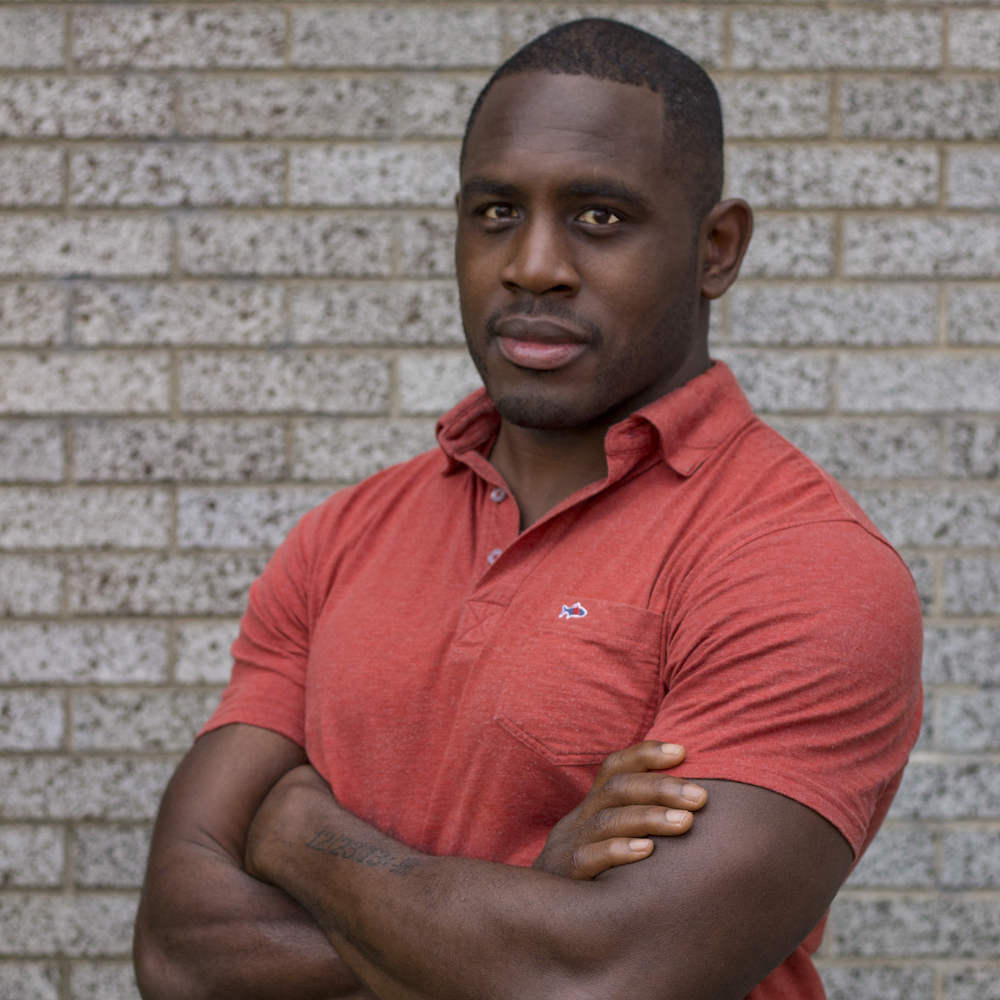
Written by
Ed Latimore
Ed Latimore is a best-selling author, professional heavyweight boxer, and physicist. He writes about self-improvement, sobriety, fighting, and the lessons he learned growing up in the projects of Pittsburgh.
Follow @EdLatimore